Size a pellet silo by hours of cover, not by annual tonnage. Multiply your rated output in kg/h by the hours you want covered, convert to tonnes, and divide by the bulk density of the pellets you will actually store.
Published bulk densities run from 450 kg/m³ for recycled pellets to 850 kg/m³ for engineering grades, so the density assumption changes the vessel you buy. Output is quoted as finished bagged pellets averaged over four hours, and an unplanned extruder stop is costed at US$5,000–50,000 per hour, which is the background the cover is bought against.
Cover first, density second
- Multiply rated kg/h by the hours of cover, then divide the tonnes by bulk density.
- Resin pellets are 500–650 kg/m³, settling to 620–680 kg/m³; recycled pellets run 450–650 kg/m³.
- Size against the output band of the machine, not against a peak melt rate.
- Always ask for the density the quoted volume was calculated on, and the residence time behind it.
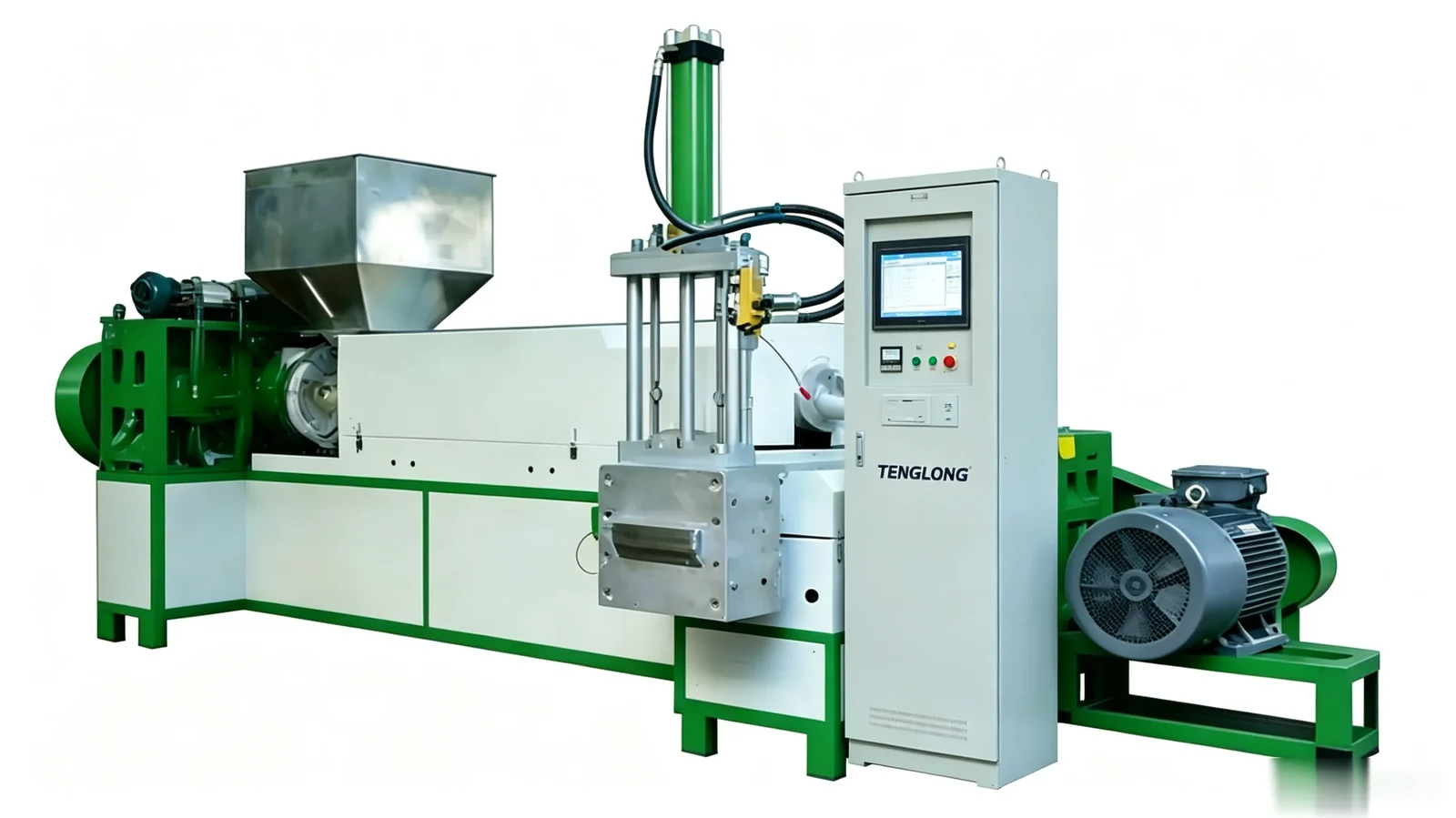
Start From Hours of Cover
Size a pellet silo by the number of hours you want covered, not by the tonnage you hope to produce in a year. The arithmetic is short: take your rated output in kilograms an hour, multiply it by the hours of cover you want, convert that to tonnes, then divide by the bulk density of the material you will actually store.
Hours are the right unit because the silo is bought against specific events, not against an annual average. A bag change, a shift change and a breakdown each have a duration, and the cover has to be longer than the sum of the ones you expect in a normal week. Against that background an unplanned extruder stop is costed at US$5,000–50,000 per hour depending on line size, and a silo that removes two four-hour stoppages a year covers a serious share of the project cost.
Do not size on the melt rate. Output is quoted as finished bagged pellets averaged over four hours, not as the peak rate in the first minutes after start-up, and the difference between the two is the difference between a vessel that sits right and one that costs for nothing.
The Density Figure Behind the Number

Published bulk densities for the material you will be storing: resin pellets typically 500–650 kg/m³, rising to 620–680 kg/m³ after settling; recycled plastic pellets at 450–650 kg/m³; engineering grades at 600–850 kg/m³. Any of those ranges can be the right one, and the choice changes the answer.
The phrase to notice in those figures is after settling. Pellets that have just been delivered hold more air than pellets that have been standing, and a vessel filled to the loose density will hold less material than the same vessel filled to the settled density. For a silo that is emptied and refilled, the settled figure is the honest basis for the volume you need.
A table is a starting point and a measurement is better. Weigh a known volume of your own pellets and you have the number the vessel has to be built around, including whatever the regrind line, the pigment and the cooling water have done to the product. Recycled material moves less predictably than virgin, and that is the argument for measuring rather than assuming.
Match the Vessel to the Pelletizer
The output band of the machine sets the ceiling on what the silo has to absorb. The comparison of 12 models sets the bands out plainly: the plastic granules production line runs 500–3,000 kg/h, the PET pelletizing line 500–2,000 kg/h, the underwater pelletizer 300–2,000 kg/h and the water ring pelletizer 100–1,000 kg/h. Each of those is a different buffer requirement.
A plant that runs two pelletizers into one bagging station is the case where the arithmetic gets interesting, because the silo has to cover the faster machine while the slower one fills the gaps. That is a scheduling decision before it is a capacity decision, and it belongs on the plant drawing rather than in a quotation.
Two things make the sizing realistic. Shift patterns decide how many hours of cover you actually need, because a night shift that does not run does not need storing. And the bagging station sets the floor: if the bagger takes an hour to change a pallet, a vessel smaller than an hour of production will stop the pelletizer every time.
Turning Volume Into a Size Class
Once the volume is worked out, the market’s own size classes are the vocabulary your quotation will use: 50–100 m³, 200–500 m³, 800–1,200 m³, and silo farms of 2,000 m³ and above. Quoting in those bands makes it easy to compare one supplier’s vessel with another, because a price per cubic metre only means something inside a band.
The building is part of the sizing. A vessel of a given volume can be tall and narrow or short and wide, and the second one needs floor area that a pelletizing hall may not have. The published footprints for the lines themselves run from 8–12 m for a strand line to 32–58 m for a full washing plus pelletizing plant, and the silo stands beside that space rather than inside it.
Access and delivery decide some of it too. A bolted silo fits in a 40 ft container and is assembled on site, which changes where it can be put and when. Where the vessel has to be welded on site instead, crane access and the erection period become part of the plant schedule, and a bagging hall closed for a week is a week of lost output.
Where Sizing Goes Wrong
The first error is sizing for the peak. A plant that buys a vessel for the top of the machine’s capacity band and runs it at the average pays for volume that stays empty, and pays again in the working capital tied up in pellets that are not moving. Empty space inside a silo is not free space; it is space in which the oldest material waits.
The second error is ignoring the residence time that goes with the size. The larger the vessel, the longer material sits before it reaches the outlet, and material that sits for weeks in a dead zone is a different proposition from material that moved through in a day. Sizing and flow design are the same decision seen from two sides.
The third is accepting a capacity figure without the density behind it. Ask any supplier to state the bulk density their volume is calculated on, and the age of the material they expect to sit in the vessel. A vessel quoted at a volume with no density assumption is a number, not a specification, and it is the first thing to check when two quotations look identical.
The published figures you size a pellet silo against
Silo volume follows from throughput and from how long the line has to keep running while bags are changed. The table shows the arithmetic.
| Figure | Published value | Why it matters |
|---|---|---|
| Resin pellet bulk density | 500–650 kg/m³ | The volume a tonne of clean pellets occupies |
| Resin pellets after settling | 620–680 kg/m³ | The figure for a vessel emptied and refilled |
| Recycled pellet bulk density | 450–650 kg/m³ | Measure your own, regrind varies |
| Engineering grade pellets | 600–850 kg/m³ | Heavier grades need less volume per tonne |
| Plastic granules line output | 500–3,000 kg/h | The ceiling on what the buffer absorbs |
| PET pelletizing line output | 500–2,000 kg/h | A different buffer requirement |
| Unplanned extruder stop | US$5,000–50,000 per hour | The background the cover is bought against |
Frequently asked questions
Q1: How do I calculate the size of a pellet silo?
Multiply your rated pellet output in kg/h by the hours of cover you want, convert that to tonnes, then divide by the bulk density of your pellets. Resin pellets are published at 500–650 kg/m³ and recycled pellets at 450–650 kg/m³.
Q2: How many hours of storage should a pellet silo hold?
Enough to cover a bag change, a shift change and the longest breakdown you can tolerate. An unplanned extruder stop is costed at US$5,000–50,000 per hour depending on line size, so the cover is bought against that exposure.
Q3: Should I size the silo for the maximum output of the pelletizer?
No. Output is quoted as finished bagged pellets averaged over four hours, not as a peak melt rate. Sizing on the top of a capacity band leaves you paying for volume that stays empty while the oldest material waits inside it.
Q4: What bulk density should I use for recycled pellets?
Recycled plastic pellets are published at 450–650 kg/m³, lower than the 500–650 kg/m³ of resin pellets. Use the figure for your own material, and measure it if the grade is unusual, because regrind moves less predictably than virgin.
The companion write-ups for this machine family are: Pellet Storage Silo: What It Does on a Pelletizing Line, Mass Flow vs Funnel Flow in a Pellet Storage Silo, Pellet Silo Cost: Vessel, Discharge and Installed Price and Silo Commissioning: Level, Discharge and Acceptance.
About the author
Zhou Gong (周工) commissions recycling machinery at TENGLONG Plastic Machinery in Linyi, Shandong, a factory of 18,000 m² and 30-plus staff that has delivered 820-plus lines across 46 export markets. I would rather weigh a bucket of your own pellets than quote you a density from a table, because recycled material never quite behaves the way the book says. The figures here come from test-floor readings and from published sources dated 2026, and the ones we could not verify have been left out.
The material form is the whole conversation: send it and you get a model, a price range and a test plan back within a working day. The run on 10-20 kg of your material is free, and if it comes up more than 5% short of the agreed output, the deposit is refundable.