
TL-ST · Pelletizing systems
Strand Pelletizing Line
The reference line for cubic pellets: water bath, air knife and 12-blade cutter, 150 to 800 kg/h.
- Output
- 150–800 kg/h
- Screw diameter
- —
- Feedstock
- PP, PE, ABS, HIPS, PVC compound strands
- Indicative price
- US$16,800 – 48,000
What this machine does
Strand pelletizing is the oldest and still the most transparent way to make pellets. Melt is pushed through a multi-hole die, the strands fall into a water bath long enough to freeze the core, an air knife strips the surface water, and a rotating cutter chops them into 2–4 mm cubes. Nothing is hidden: if the melt is bad, you see it in the strands.
The bath length is not cosmetic. A 4 m bath suits 150–250 kg/h; at 800 kg/h the strands need 6 m or the core stays soft and the cutter smears instead of cutting. Water temperature is held at 20–35 °C; below 18 °C the strands get brittle and break at the first guide roll.
The cutter uses a fixed bed knife and a 12-blade rotor; pellet length is set by the feed roll speed ratio, not by blade geometry, so a change from 3 mm to 2.5 mm takes one dial turn. A pneumatic strand-break detector stops the feed within half a second to keep the die from flooding.
Models and output
| Model | Output | Main motor | Pellet size | Cooling | Footprint | Weight |
|---|---|---|---|---|---|---|
| TL-ST-200 | 150–250 kg/h | 5.5 kW | 2–3 mm | 4 m bath | 8.5 × 1.2 × 1.5 m | 1.4 t |
| TL-ST-400 | 350–500 kg/h | 11 kW | 2–4 mm | 5 m bath | 10.5 × 1.4 × 1.6 m | 2.0 t |
| TL-ST-800 | 600–800 kg/h | 15 kW | 2–4 mm | 6 m bath | 12.5 × 1.6 × 1.8 m | 2.8 t |
Output figures refer to LDPE film at 85% bulk density with 3% moisture. Actual output depends on feedstock, flake size and filtration.
Engineering highlights
- Cubic pellets with clean edges — the most reliable shape for injection feeding
- Bath length matched to output (4 / 5 / 6 m) so the core always freezes
- Pneumatic strand-break detector stops feed in 0.5 s
- 12-blade rotor with counter bed knife; pellet length set by feed-roll ratio
- Stainless bath with weir and overflow, 20–35 °C controlled by chiller option
- Visible melt path: operators spot contamination before it reaches the cutter
How the line works
Die and strand
A multi-hole die (8–24 holes) forms strands that drop into the bath at a shallow angle.
Cool
The 4–6 m bath freezes the strand core in 8–15 seconds at 20–35 °C.
Dry
An air knife removes surface water so pellets do not clump in the bag.
Cut
Feed rolls pull the strands into a 12-blade rotor running at 200–600 rpm.
Where it runs
- PP and PE injection-grade regrind
- ABS and HIPS sheet regrind
- PVC cable compound
- Masterbatch with low output and many SKUs
- Compounding trials and laboratory lines
Options and upgrades
- Chiller and water temperature control to ±1 °C
- Extra guide rolls and a second air knife for 24 strands
- Vibrating screen and fines return
- Automatic bagging with weighing
- Stainless frame and food-grade belt for hygiene applications
Questions buyers ask
Why do my strands keep breaking at the die?
Usually die temperature is 10–15 °C too low or the screen pack is too fine, so melt pressure is high and the strand is extruded faster than it can be drawn. Raise die temperature first, then check screen mesh against the melt index.
Can one cutter handle 2 mm and 4 mm pellets?
Yes. Pellet length is set by the ratio of feed-roll to cutter speed, so both sizes come from the same rotor. Only the knife clearance changes: 0.05–0.08 mm for 2 mm pellets, up to 0.12 mm for 4 mm.
How much floor length should I reserve?
Allow for the extruder plus the strand line: 8.5 m for 250 kg/h, 10.5 m for 500 kg/h and 12.5 m for 800 kg/h, measured from the die face to the bagging station. Add 1 m at the end for bag access.
Related machines
Other platforms in the range
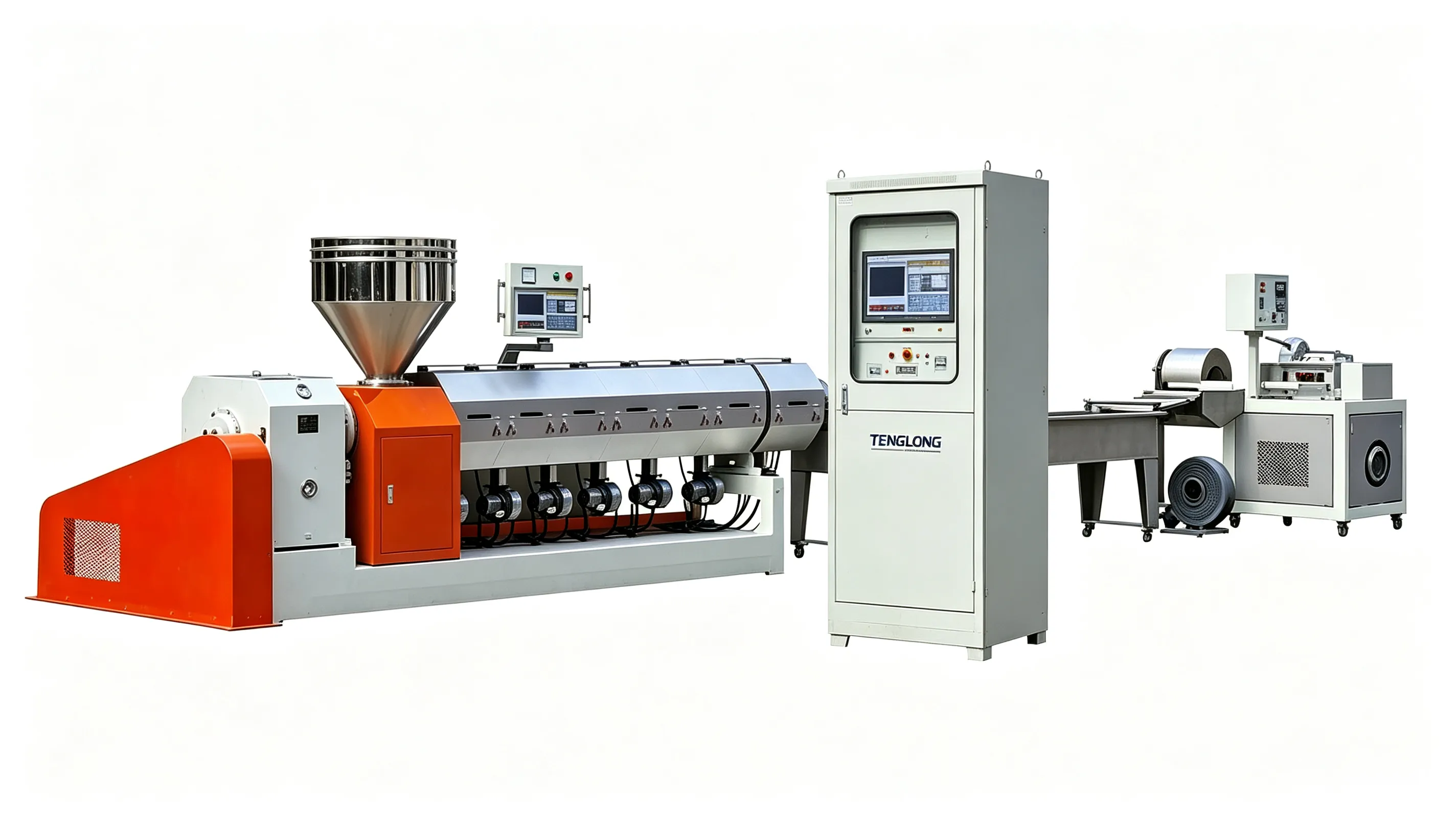 TL-SJ
Extrusion granulating
Single Screw Plastic Granulator
The workhorse pellet extruder for PP, PE and ABS regrind — 150 to 700 kg/h with one hardened screw.
- Output
- 150–700 kg/h
- Indicative price
- US$12,500 – 46,000
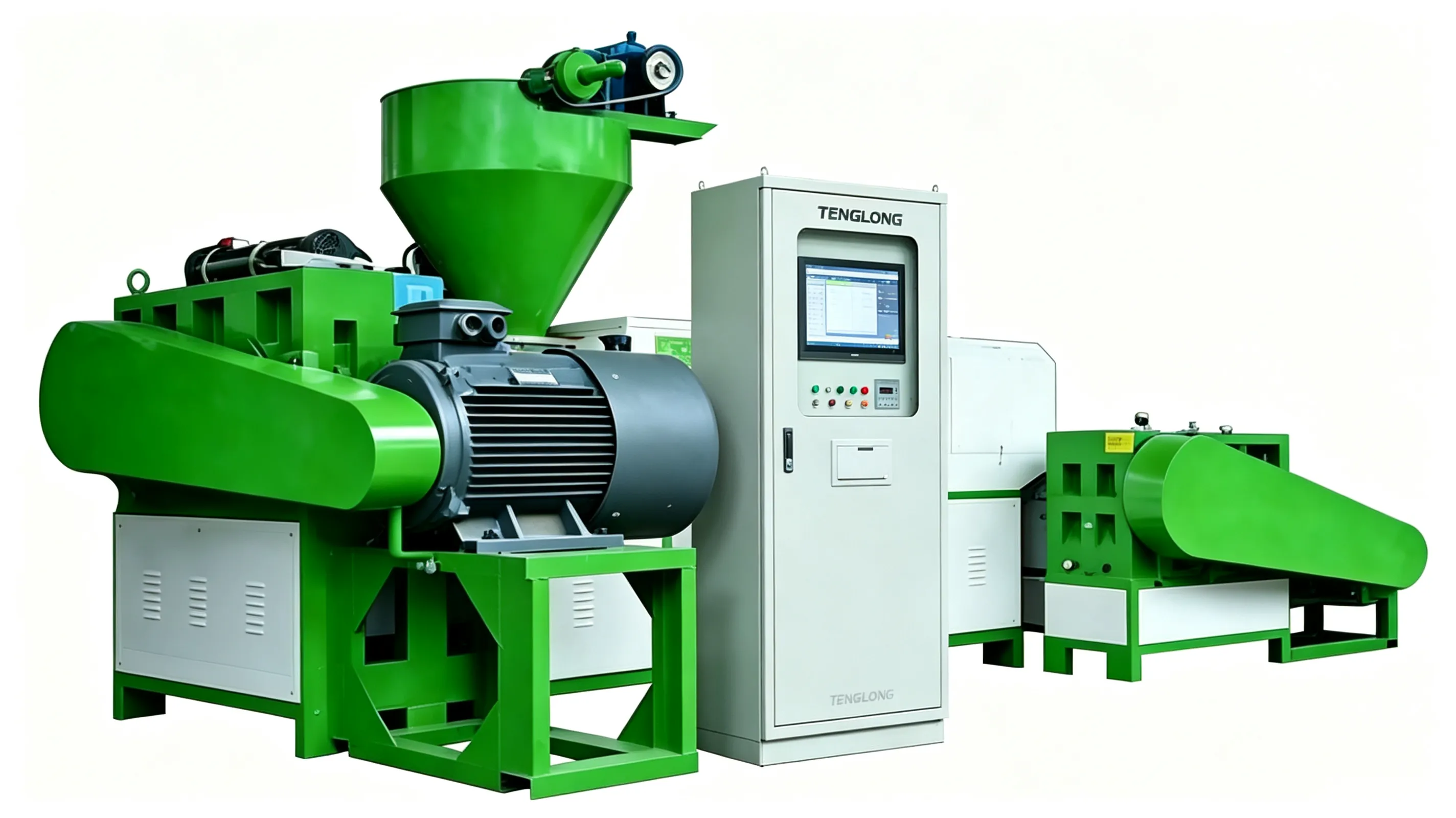 TL-WR
Pelletizing systems
Water Ring Pelletizer
Die-face cutting inside a water ring — 100 to 1,000 kg/h in 6 m of floor space, no strand bath.
- Output
- 100–1,000 kg/h
- Indicative price
- US$18,500 – 52,000
 TL-MB
Specialised lines
Masterbatch Granulator
Small-batch twin screw line for 20–60% pigment loading — 20 to 500 kg/h with minimal changeover loss.
- Output
- 20–500 kg/h
- Indicative price
- US$26,000 – 110,000
Need a line sized to your material?
Strand Pelletizing Line
Send the polymer, contamination level and target output. You get a model recommendation, power estimate and price range within one working day.
- Reply within 1 working day
- Sample test before you commit
- Factory visits and live video trials by appointment.
Tell us what you need to granulate
Six fields is enough for a first recommendation. Drawings, layout and a firm price follow after the material sample is tested.