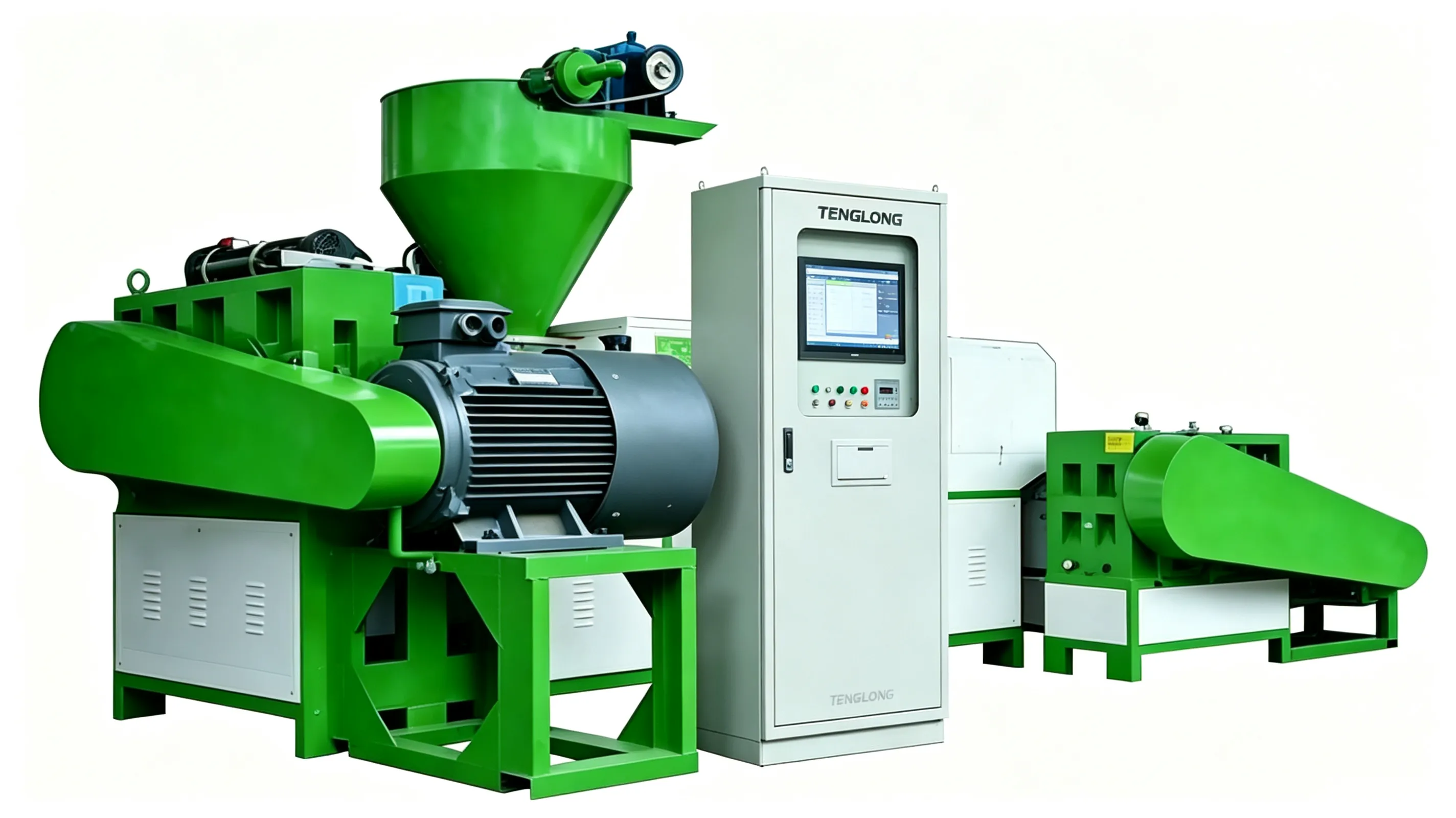
TL-WR · Pelletizing systems
Water Ring Pelletizer
Die-face cutting inside a water ring — 100 to 1,000 kg/h in 6 m of floor space, no strand bath.
- Output
- 100–1,000 kg/h
- Screw diameter
- —
- Feedstock
- PP, PE, ABS, PS and filled PP melt from any extruder
- Indicative price
- US$18,500 – 52,000
What this machine does
Strand cutting needs 8–12 m of length, a water bath, air knives and an operator who watches for strand breaks. A water ring pelletizer compresses that into a 3 m skid: the die is vertical, knives rotate across the face, and the pellets are quenched within 20 mm of being cut, which keeps them from sticking together.
The cutter head is spring-loaded, so knife pressure stays constant as the die plate wears; blade changes take ten minutes without pulling the die. Water is filtered through a 40 mesh screen and returned by a closed loop, so a 10 m³/h ring consumes roughly 0.3 m³ of make-up water per hour.
Pellets come out round rather than cubic. For injection moulding and rotomoulding that is an advantage — better flow, fewer bridging problems in the hopper. For customers who need cubic pellets for feeding ratios, the strand line remains the better choice.
Models and output
| Model | Output | Main motor | Pellet size | Cooling | Footprint | Weight |
|---|---|---|---|---|---|---|
| TL-WR-100 | 100–250 kg/h | 4 kW + 3 kW | 2–3 mm | 8 m³/h | 2.2 × 1.4 × 1.6 m | 1.1 t |
| TL-WR-200 | 300–550 kg/h | 7.5 kW + 4 kW | 2–4 mm | 12 m³/h | 2.6 × 1.6 × 1.8 m | 1.6 t |
| TL-WR-300 | 700–1,000 kg/h | 15 kW + 7.5 kW | 2–4 mm | 15 m³/h | 3.0 × 1.8 × 2.0 m | 2.3 t |
Output figures refer to LDPE film at 85% bulk density with 3% moisture. Actual output depends on feedstock, flake size and filtration.
Engineering highlights
- Vertical die plate with die-face cutting: 40% less floor space than a strand bath
- Spring-loaded cutter head compensates for die wear, 10-minute blade change
- Closed-loop filtered water: 0.3 m³/h make-up, no wastewater discharge
- Pellet moisture below 0.3% straight off the dewatering screen
- Interlock with extruder melt pressure: cutter stops if pressure drops
- Hard-chrome die plate, 1.5–4 mm holes, replaceable insert option
How the line works
Die feed
Melt passes a breaker plate and exits a vertical die plate through 1.5–4 mm holes.
Cut in water
Rotating knives shear the strands at the face while a water ring sweeps the pellets away.
Quench and convey
The 2–3 m ring cools pellets to below 40 °C and lifts them to the dewatering screen.
Dewater
A slotted screen drops surface water back to the tank; pellets leave at 0.3% moisture.
Where it runs
- PP and PE recycled pellets
- Filled PP compound
- Cable insulation compound
- Masterbatch (with underwater option)
- PS and ABS regrind
Options and upgrades
- Centrifugal dryer for pellets below 0.1% moisture
- Water temperature controller for 20–80 °C operation
- Air knife and vibrating screen for fines removal
- Quick-change die plate for 1.5 mm micro-pellets
- Stainless steel water tank and piping
Questions buyers ask
Can I retrofit a water ring pelletizer to an existing extruder?
Yes, if the extruder can hold 60–100 bar at the die and has a free 2.6 m of floor after the screen changer. We need the screw diameter, output and existing die flange drawing to match the adapter.
Why are my pellets sticking together?
Three causes in order of frequency: water temperature above 45 °C, cutter speed too low so pellets stay at the die too long, or knives worn past 0.3 mm clearance. Check water temperature first — it explains most cases.
What is the smallest pellet a water ring can make?
1.5 mm with a fine die and a 2,000 rpm cutter, but output drops roughly 30% and the fines load on the screen rises. Below 1.2 mm, underwater pelletizing is the more reliable route.
Related machines
Other platforms in the range
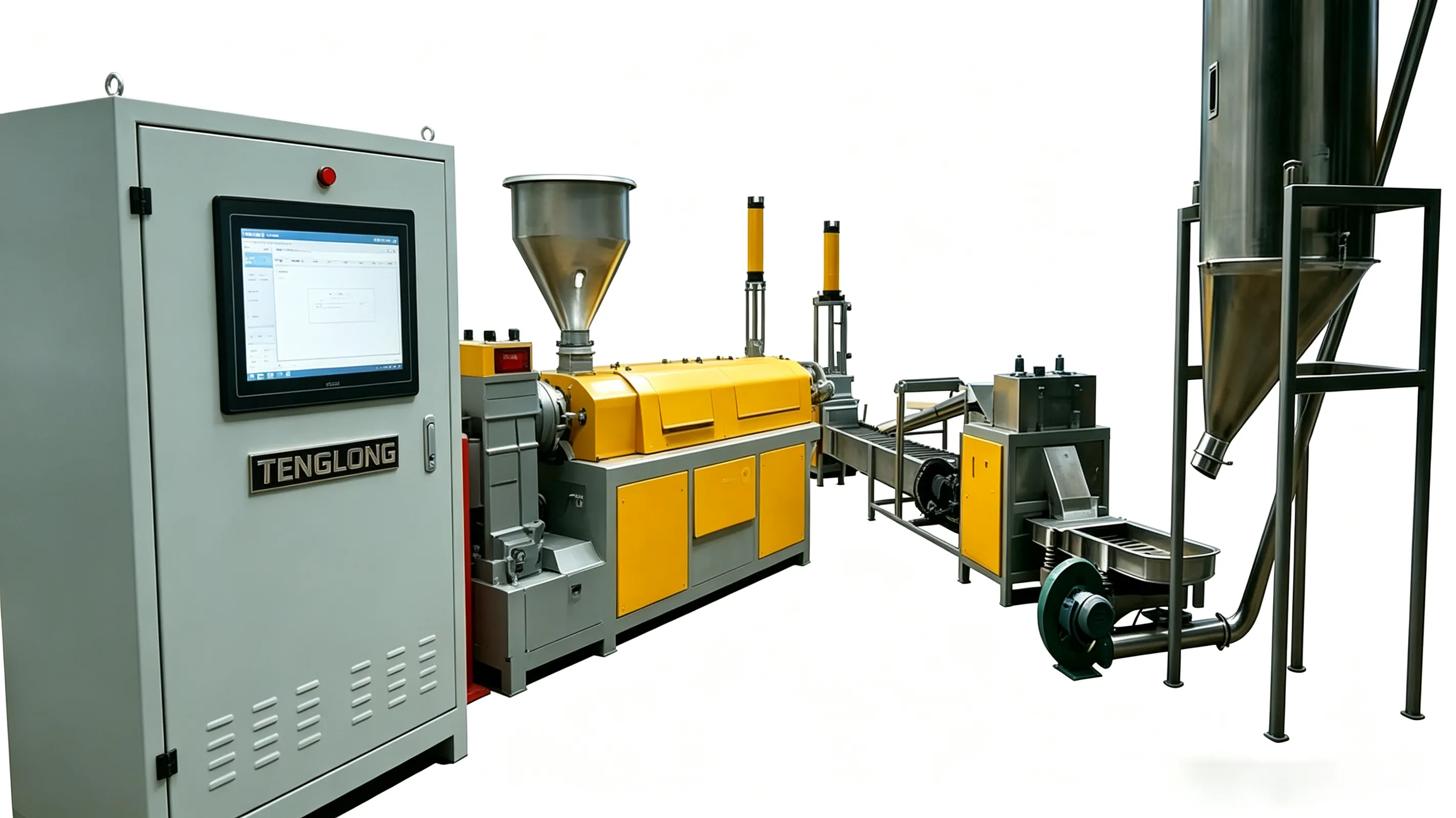 TL-UW
Pelletizing systems
Underwater Pelletizer
Shear-cut pellets in a pressurised water chamber — 300 to 2,000 kg/h with spherical, dust-free pellets.
- Output
- 300–2,000 kg/h
- Indicative price
- US$62,000 – 160,000
 TL-ST
Pelletizing systems
Strand Pelletizing Line
The reference line for cubic pellets: water bath, air knife and 12-blade cutter, 150 to 800 kg/h.
- Output
- 150–800 kg/h
- Indicative price
- US$16,800 – 48,000
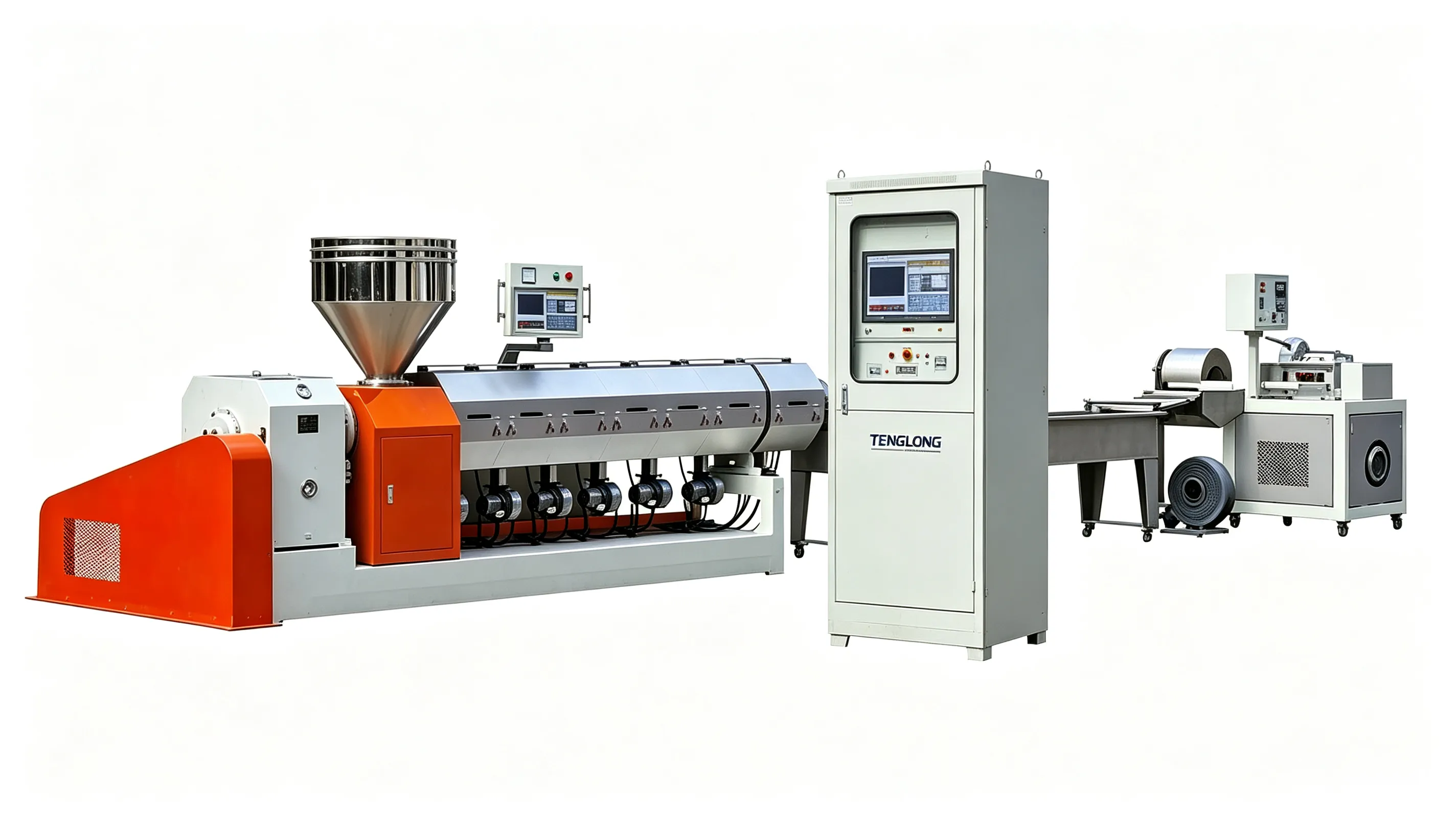 TL-SJ
Extrusion granulating
Single Screw Plastic Granulator
The workhorse pellet extruder for PP, PE and ABS regrind — 150 to 700 kg/h with one hardened screw.
- Output
- 150–700 kg/h
- Indicative price
- US$12,500 – 46,000
Need a line sized to your material?
Water Ring Pelletizer
Send the polymer, contamination level and target output. You get a model recommendation, power estimate and price range within one working day.
- Reply within 1 working day
- Sample test before you commit
- Factory visits and live video trials by appointment.
Tell us what you need to granulate
Six fields is enough for a first recommendation. Drawings, layout and a firm price follow after the material sample is tested.