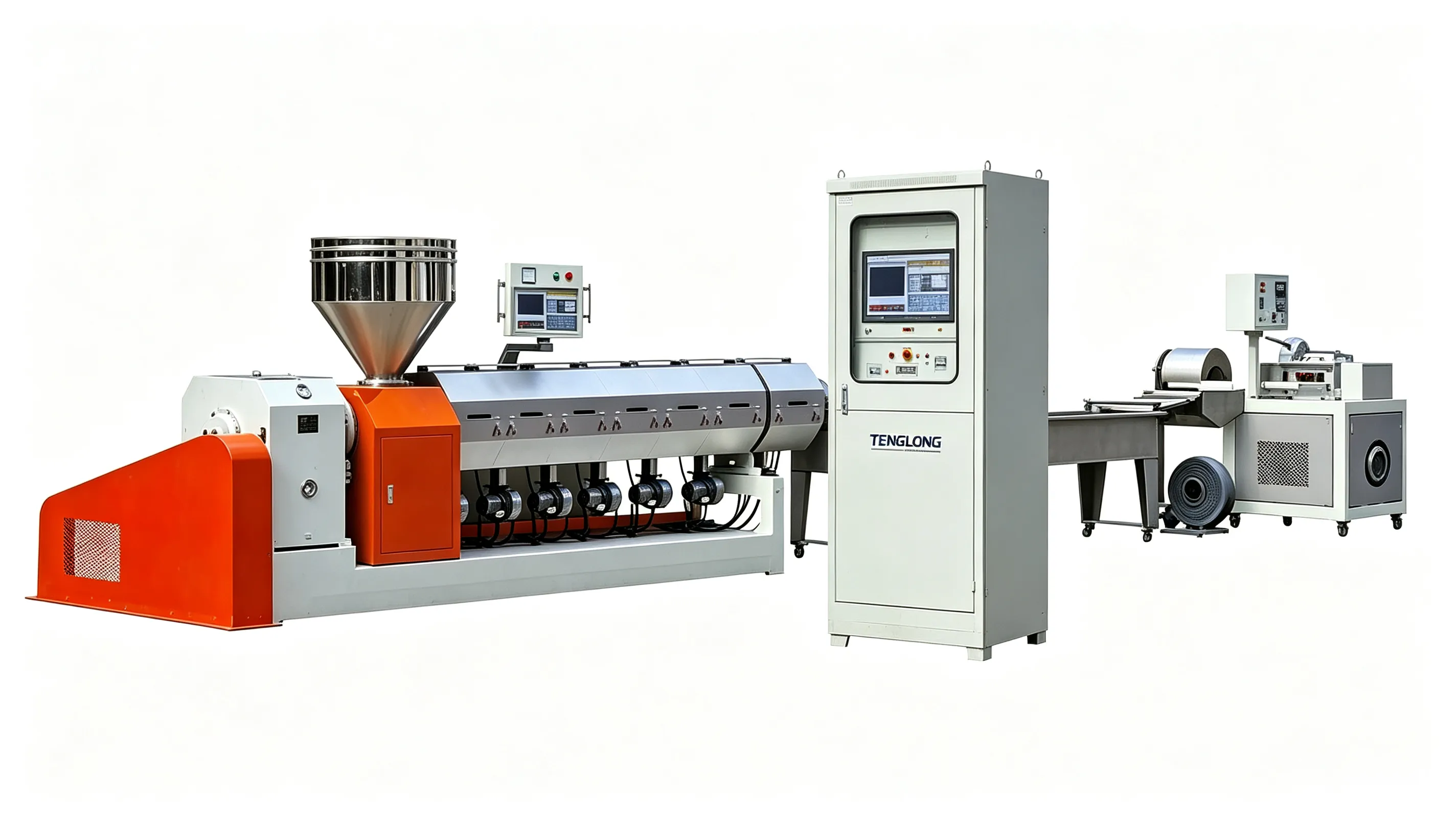
TL-SJ · Extrusion granulating
Single Screw Plastic Granulator
The workhorse pellet extruder for PP, PE and ABS regrind — 150 to 700 kg/h with one hardened screw.
- Output
- 150–700 kg/h
- Screw diameter
- 90 / 100 / 120 / 150 mm
- Feedstock
- PP, PE, ABS, PS, HDPE flakes or regrind
- Indicative price
- US$12,500 – 46,000
What this machine does
The TL-SJ is the machine most recycling plants start with. A 90–150 mm nitrided screw runs in a 30:1 barrel with three venting stages, so washed flakes with up to 3% surface moisture still produce a stable strand. The gearbox is a hardened helical unit rated at 1.8 times nominal torque, which matters when the feed is a mix of film, lumps and rigid regrind.
Melt is filtered through a double-piston hydraulic screen changer: one cavity works while the other is exchanged, so output does not drop at a screen change. Downstream you can run a water bath and strand pelletizer, or swap to a die-face water ring cutter when floor space is tight.
Every unit is run for four hours on customer material before shipment, and the test report ships with the machine: actual output, melt pressure, screen pack, pellet size distribution and specific energy. That report is what you use to commission the line on site.
Models and output
| Model | Output | Screw diameter | Screw L/D | Main motor | Footprint | Weight |
|---|---|---|---|---|---|---|
| TL-SJ-90 | 150–200 kg/h | 90 mm | 30:1 | 55 kW | 6.8 × 1.5 × 2.0 m | 2.6 t |
| TL-SJ-100 | 220–300 kg/h | 100 mm | 30:1 | 75 kW | 7.4 × 1.6 × 2.1 m | 3.1 t |
| TL-SJ-120 | 350–450 kg/h | 120 mm | 30:1 | 110 kW | 8.2 × 1.8 × 2.2 m | 4.2 t |
| TL-SJ-150 | 550–700 kg/h | 150 mm | 30:1 | 160 kW | 9.6 × 2.0 × 2.4 m | 5.8 t |
Output figures refer to LDPE film at 85% bulk density with 3% moisture. Actual output depends on feedstock, flake size and filtration.
Engineering highlights
- 38CrMoAlA screw, nitrided 0.5–0.7 mm to HV 900–1000, optional bimetallic barrel
- Double-piston hydraulic screen changer with 40–80 mesh packs and no output interruption
- Three-stage vacuum venting removes volatiles from printed or washed film
- PID barrel control in six zones, ±1 °C, with melt-pressure and melt-temperature alarms
- ABB inverter and Siemens PLC: recipe storage for each material, one-touch start
- Guarded belt drive, CE-interlocked covers and emergency stop at three positions
How the line works
Feed and compact
Flakes enter through a force feeder or gravity hopper; a metal detector protects the screw.
Melt and vent
Six PID zones bring the polymer to 190–240 °C; two vacuum vents pull off moisture and ink volatiles.
Filter
A 40–80 mesh pack in the double-piston changer holds back paper, sand and unmelted specks.
Strand, cool, cut
Strands pass a 4 m water bath, an air knife and a 12-blade cutter running at 300–900 rpm.
Classify and pack
A vibrating screen removes fines and longs; pellets drop into a 25 kg bag or a silo.
Where it runs
- PP woven bag and raffia regrind
- LDPE and LLDPE film flakes
- HDPE bottle and crate regrind
- ABS and PS e-waste regrind
- In-house injection scrap recycling
Options and upgrades
- Bimetallic screw and barrel for 30%+ glass-filled regrind
- Melt pump for ±0.5% output stability
- Die-face water ring cutter instead of the strand bath
- Automatic loader, hopper dryer and metal detector
- Remote IoT module: run hours, energy and alarms to your phone
Questions buyers ask
What output can I expect from a 120 mm single screw granulator?
On washed LDPE film at 85% bulk density, a TL-SJ-120 delivers 350–450 kg/h with a 110 kW motor. HDPE bottle flake runs 15–20% higher because bulk density is better; high-ink film runs 10% lower because the screen pack needs to be finer.
Do I need a crusher and a washing line before this machine?
Yes for post-consumer material. The granulator only melts and pelletizes; feed must be smaller than 30 mm and free of sand, metal and paper. For clean in-house scrap, a granulator plus a force feeder is enough.
Strand cutting or water ring cutting?
Strand cutting gives cubic pellets and is easier to inspect, but needs 8–10 m of floor length and one operator attention point. Water ring cutting saves 40% floor space and suits higher output, at the cost of slightly rounder pellets and a dewatering step.
Related machines
Other platforms in the range
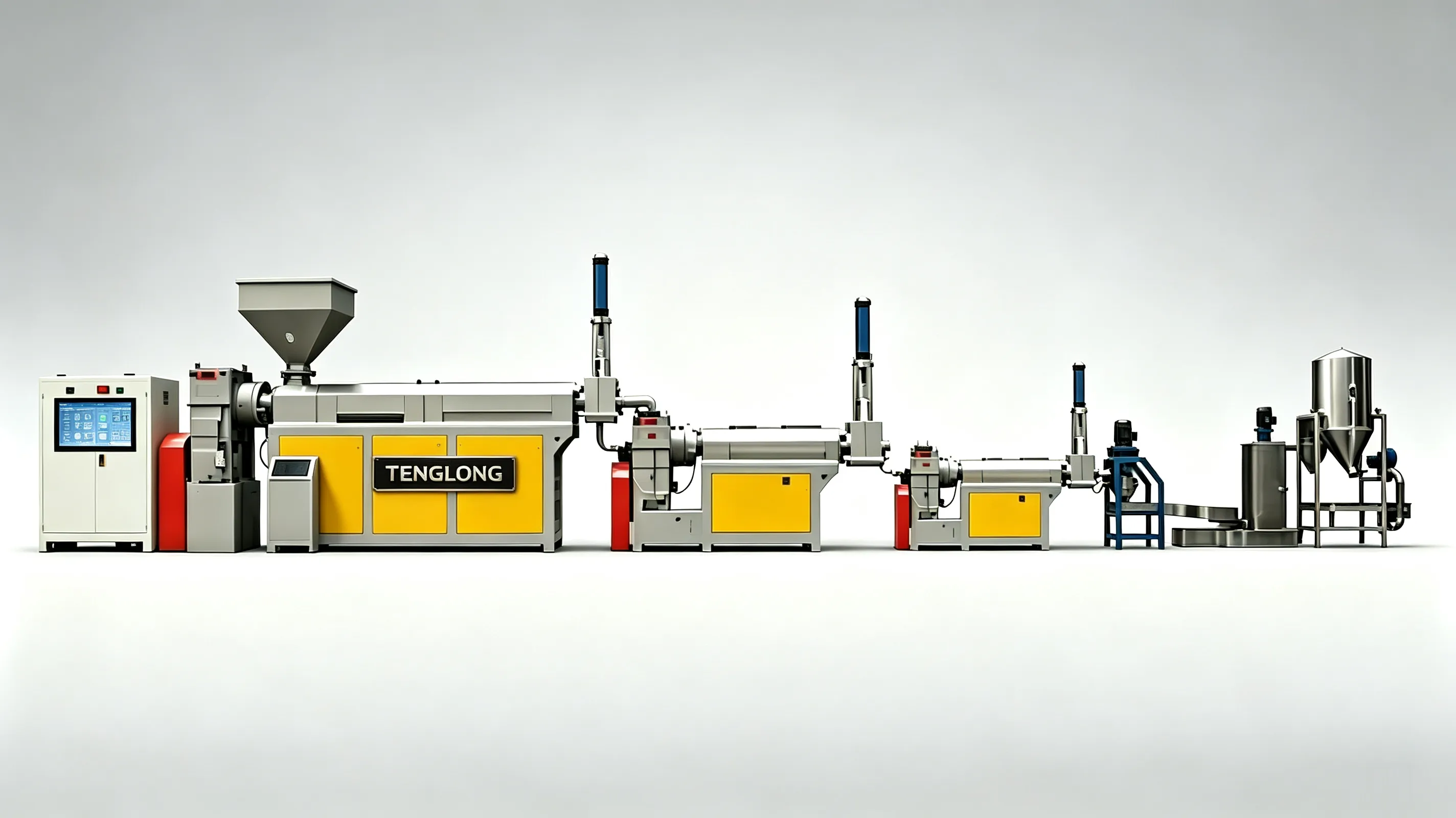 TL-2S
Recycling lines
Two Stage Granulating Line
First stage melts and filters heavy contamination, second stage pelletizes — 300 to 1,200 kg/h of dirty waste plastic.
- Output
- 300–1,200 kg/h
- Indicative price
- US$46,000 – 135,000
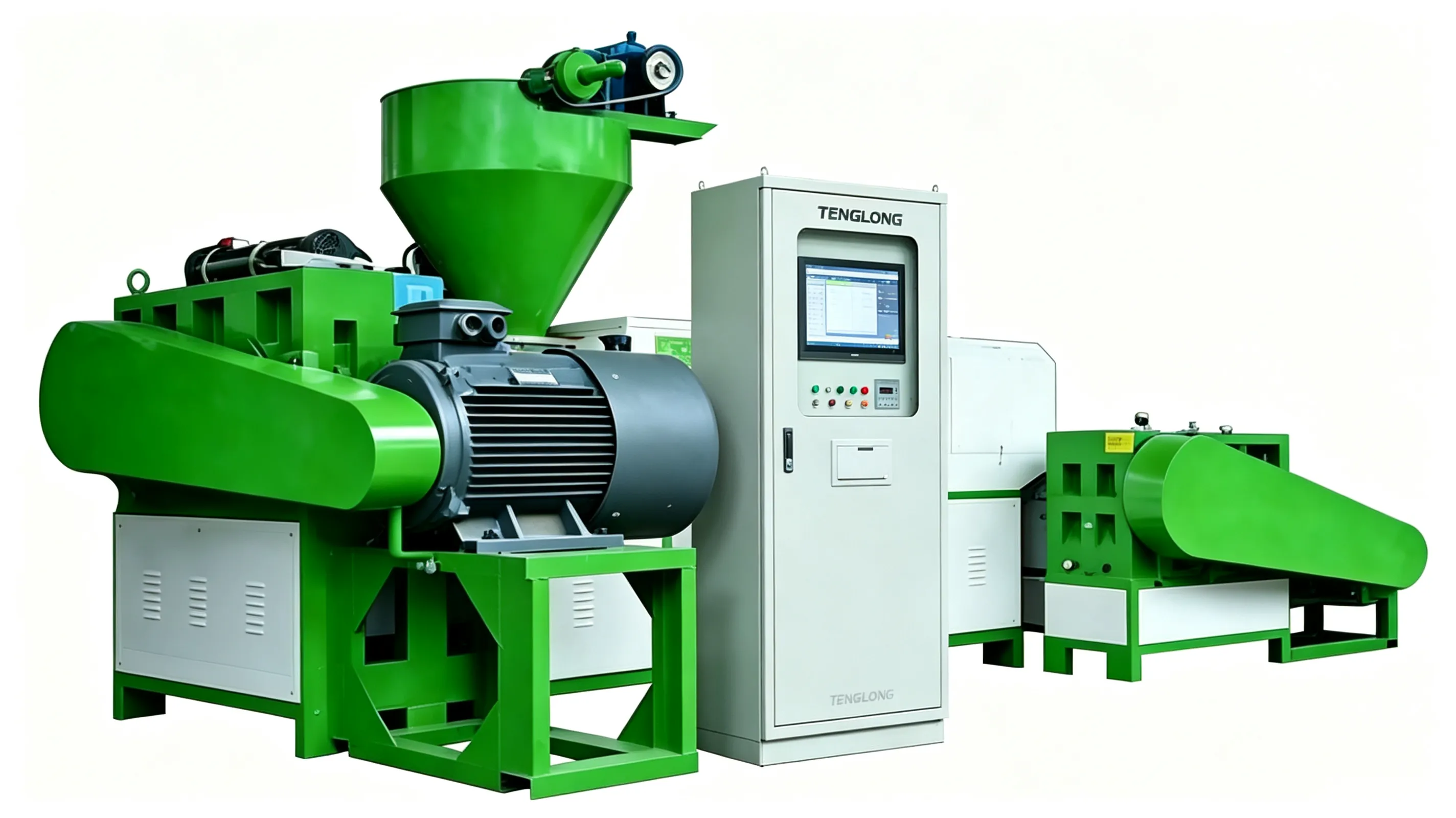 TL-WR
Pelletizing systems
Water Ring Pelletizer
Die-face cutting inside a water ring — 100 to 1,000 kg/h in 6 m of floor space, no strand bath.
- Output
- 100–1,000 kg/h
- Indicative price
- US$18,500 – 52,000
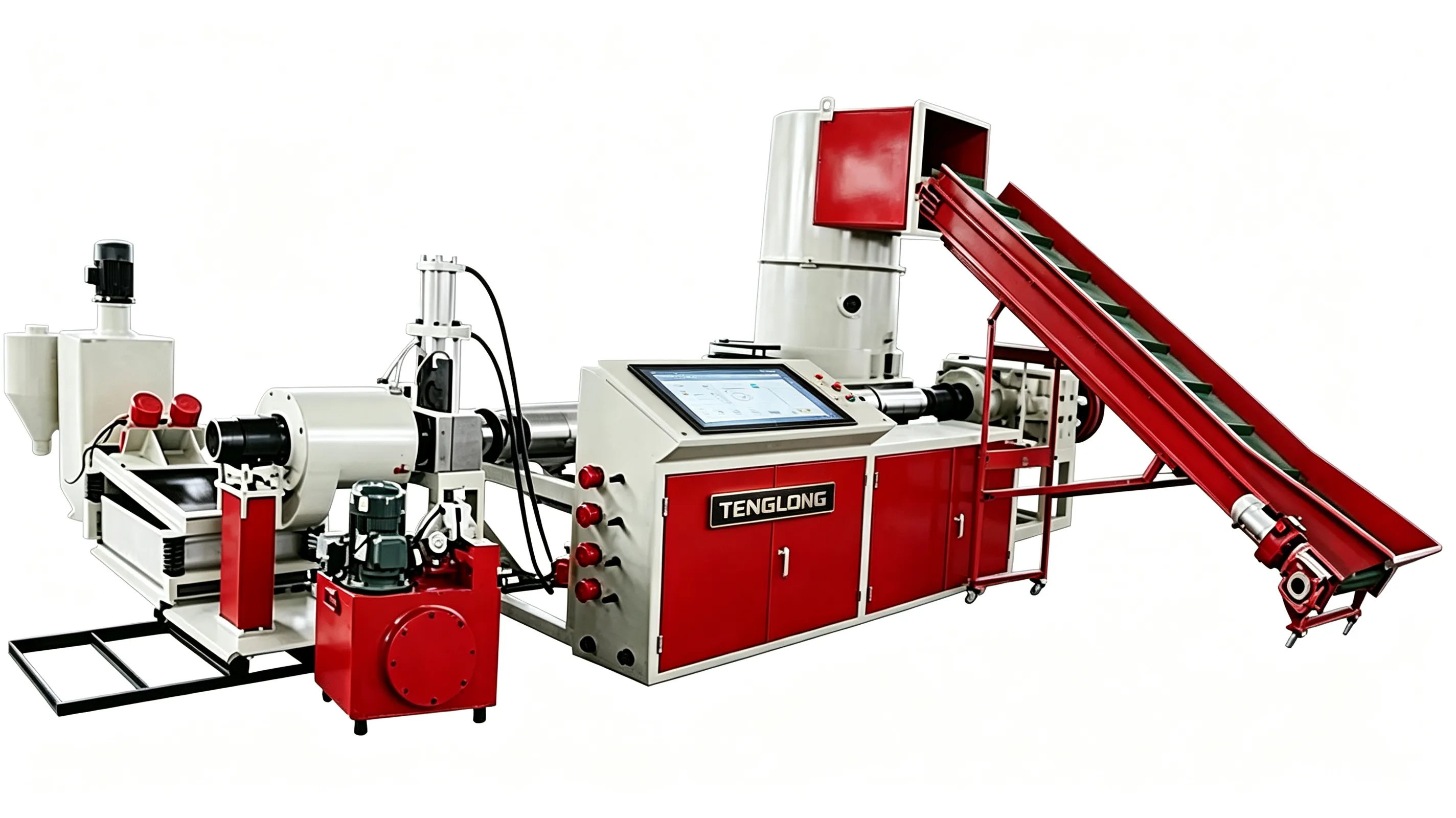 TL-FK
Recycling lines
Flakes Pelletizing Machine
Force-fed single screw for washed HDPE and PP flake — 300 to 1,000 kg/h at 0.26–0.36 kWh/kg.
- Output
- 300–1,000 kg/h
- Indicative price
- US$28,000 – 72,000
Need a line sized to your material?
Single Screw Plastic Granulator
Send the polymer, contamination level and target output. You get a model recommendation, power estimate and price range within one working day.
- Reply within 1 working day
- Sample test before you commit
- Factory visits and live video trials by appointment.
Tell us what you need to granulate
Six fields is enough for a first recommendation. Drawings, layout and a firm price follow after the material sample is tested.