
TL-PET · Specialised lines
PET Pelletizing Line
Crystallize, dry, extrude and underwater-cut bottle flake — 500 to 2,000 kg/h with IV loss under 0.03 dl/g.
- Output
- 500–2,000 kg/h
- Screw diameter
- 120 / 150 / 180 mm single screw
- Feedstock
- PET bottle flake, sheet regrind, fibre waste
- Indicative price
- US$120,000 – 380,000
What this machine does
Bottle-to-bottle recycling is a viscosity business. The buyer of food-grade rPET does not only ask for colour and cleanliness; they ask for IV, because that is what decides whether the pellet can be blown into a bottle again. Intrinsic viscosity is lost three ways: hydrolysis from moisture, thermal degradation from over-heating, and mechanical chain scission from over-shearing. The TL-PET line controls all three.
The sequence is fixed: flake is crystallized at 140–160 °C first, because amorphous PET softens at 75 °C and would fuse into a block inside a dryer. Crystallized flake then enters a 160 °C dehumidified hopper with −40 °C dew point air for four to six hours, coming out below 50 ppm moisture. Only then does it reach a deep-flighted 32:1 screw that melts gently at 275–285 °C.
After a melt pump and 150–200 mesh filtration, the strand is cut underwater at 70–85 °C. That water temperature is not arbitrary: cold water shocks the surface into amorphous, sticky pellets that block the dryer. The resulting pellets are spherical, dust-free below 0.1%, and ready for SSP or direct food-contact certification testing.
Models and output
| Model | Output | Screw diameter | Main motor | Crystallization | Footprint | Weight |
|---|---|---|---|---|---|---|
| TL-PET-500 | 500–700 kg/h | 120 mm | 160 kW | 1.5 m³, 145 °C | 18 × 4.5 × 6.0 m | 22 t |
| TL-PET-1000 | 1,000–1,300 kg/h | 150 mm | 250 kW | 3.0 m³, 150 °C | 22 × 5.5 × 7.5 m | 35 t |
| TL-PET-2000 | 1,700–2,000 kg/h | 180 mm | 400 kW | 5.0 m³, 155 °C | 26 × 6.0 × 8.0 m | 48 t |
Output figures refer to LDPE film at 85% bulk density with 3% moisture. Actual output depends on feedstock, flake size and filtration.
Engineering highlights
- Crystallizer before the dryer: no fusing, no blocked hoppers
- −40 °C dew-point drying to 50 ppm, monitored per batch
- Deep-flighted 32:1 screw and low-shear mixing: IV loss under 0.03 dl/g
- Melt pump + 200 mesh for colour and spec control
- Hot-water underwater cutting at 70–85 °C for amorphous pellets
- Energy recovery on the dryer: 0.45–0.60 kWh/kg including drying
How the line works
Crystallize
Flake is heated to 140–160 °C and held 20–30 minutes so the surface crystallizes.
Dry
A −40 °C dew-point hopper at 160 °C brings moisture below 50 ppm in 4–6 hours.
Melt gently
A 32:1 deep-flighted screw melts at 275–285 °C with minimum shear heating.
Filter and pump
A melt pump holds 80–120 bar through a 150–200 mesh pack.
Underwater cut
Cutting in 70–85 °C water gives 2–3 mm spherical pellets with no surface crystallization.
Where it runs
- Bottle-to-bottle rPET
- PET sheet and strapping regrind
- Fibre and filament waste
- Food-grade recycled pellet production
- RPET for thermoforming
Options and upgrades
- Inline IV measurement with closed-loop screw speed control
- Colour sorting and metal detection upstream
- SSP reactor integration for food-grade certification
- Stainless steel contact parts and nitrogen blanketing
- Waste-heat recovery to pre-heat the crystallizer
Questions buyers ask
How much IV do I lose per pass?
With 50 ppm feed moisture, 275–285 °C melt temperature and a 90-second residence time, the line loses 0.02–0.03 dl/g. Feeding at 200 ppm moisture instead of 50 ppm adds roughly 0.01 dl/g of loss — which is why drying matters more than screw design.
Can I skip the crystallizer if I buy crystallized flake?
You can, and some plants do. But crystallized flake re-absorbs moisture in storage and transport, so you still need a dryer, and you lose the ability to blend in amorphous sheet or fibre waste. Most buyers keep a small crystallizer for flexibility.
Is the output food-grade certified?
The line supplies the process conditions that certification bodies look for: 160 °C drying, 275 °C melt, 90 s residence and documented batch traceability. Formal food-contact approval also depends on feedstock sourcing and an SSP step, and is issued by the certification body, not the machine builder.
Related machines
Other platforms in the range
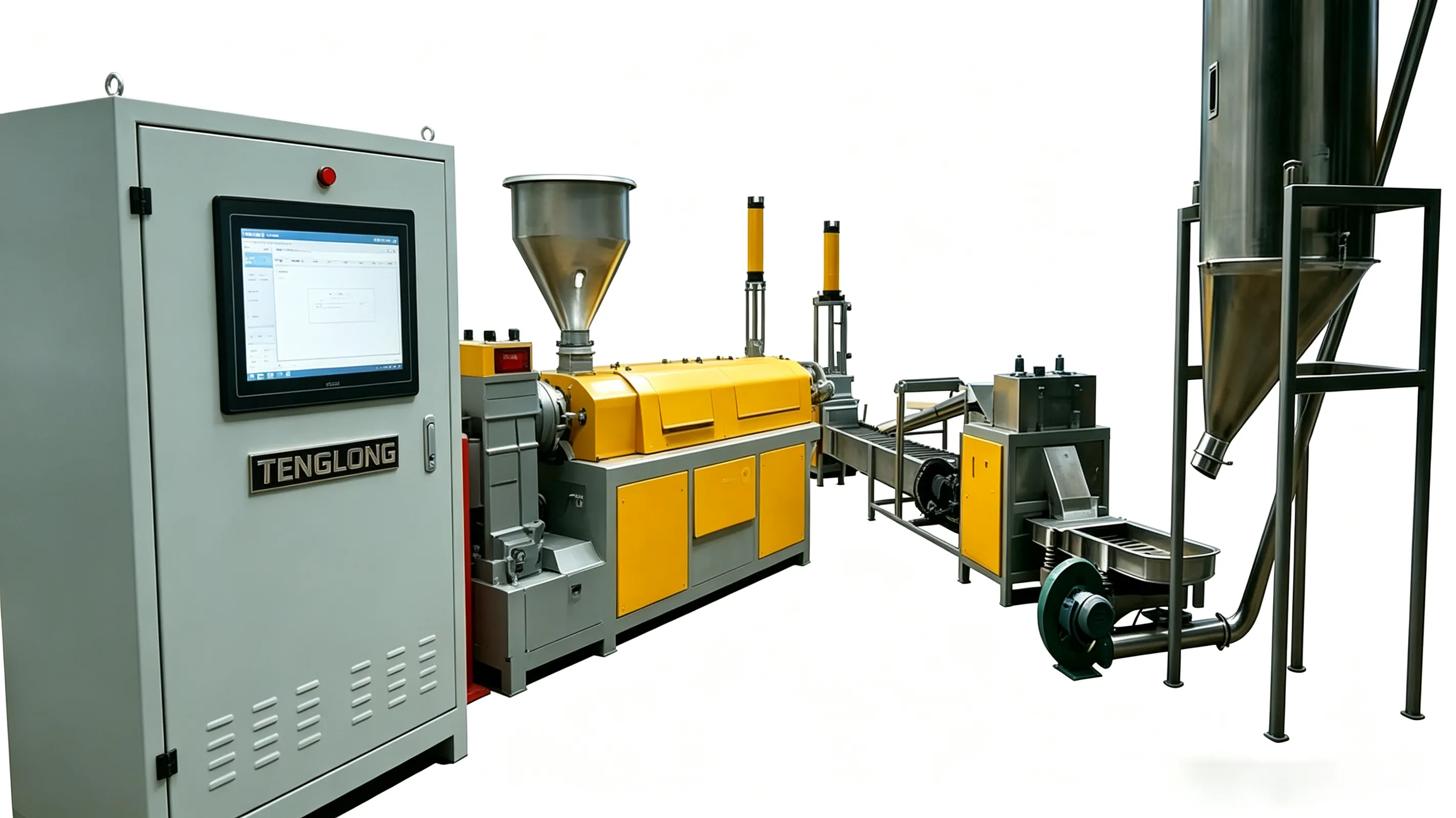 TL-UW
Pelletizing systems
Underwater Pelletizer
Shear-cut pellets in a pressurised water chamber — 300 to 2,000 kg/h with spherical, dust-free pellets.
- Output
- 300–2,000 kg/h
- Indicative price
- US$62,000 – 160,000
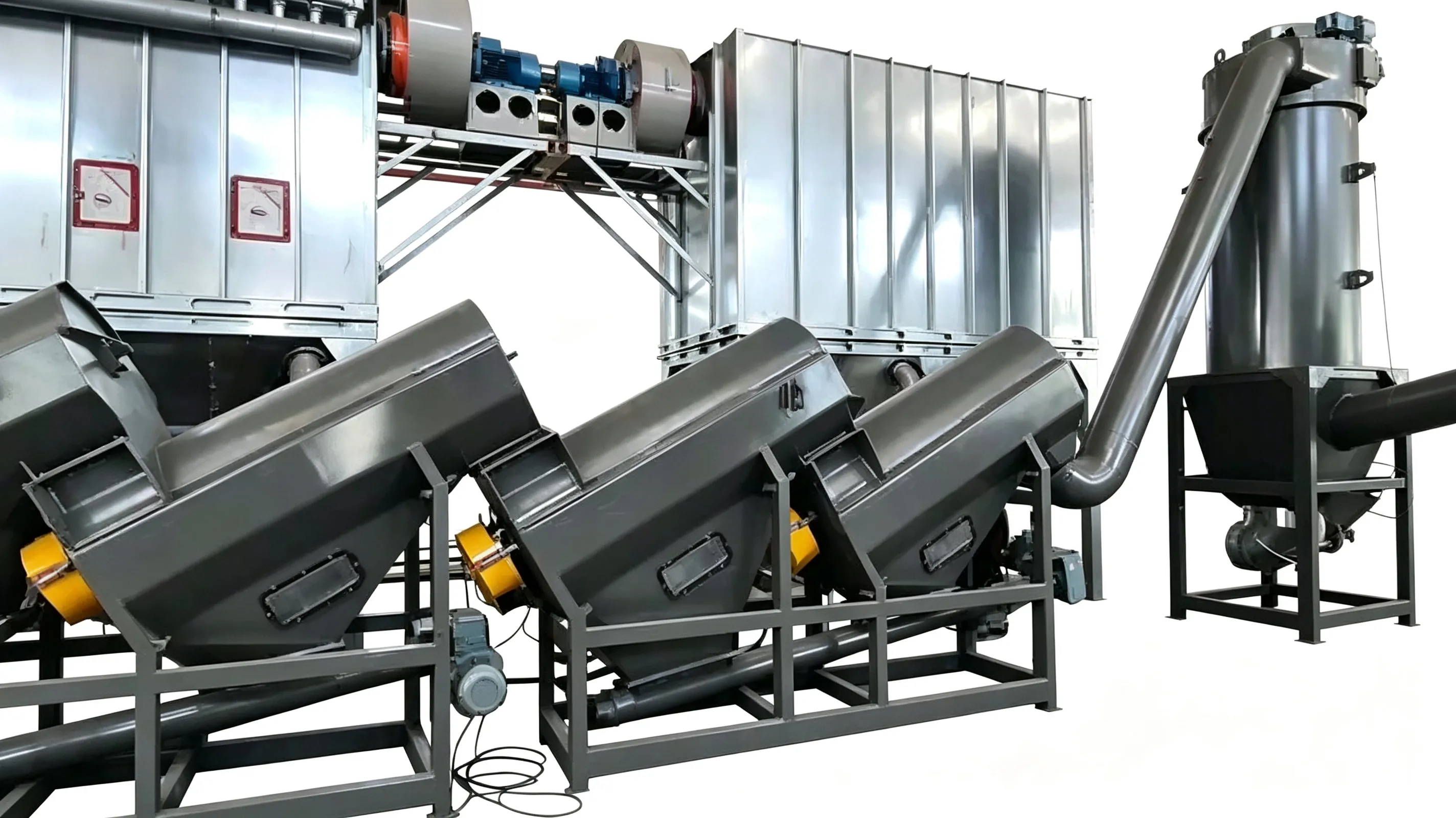 TL-GPL
Recycling lines
Plastic Granules Production Line
Turnkey washing and pelletizing: from baled bottles or film to bagged granules, 500 to 3,000 kg/h.
- Output
- 500–3,000 kg/h (finished pellets)
- Indicative price
- US$85,000 – 260,000
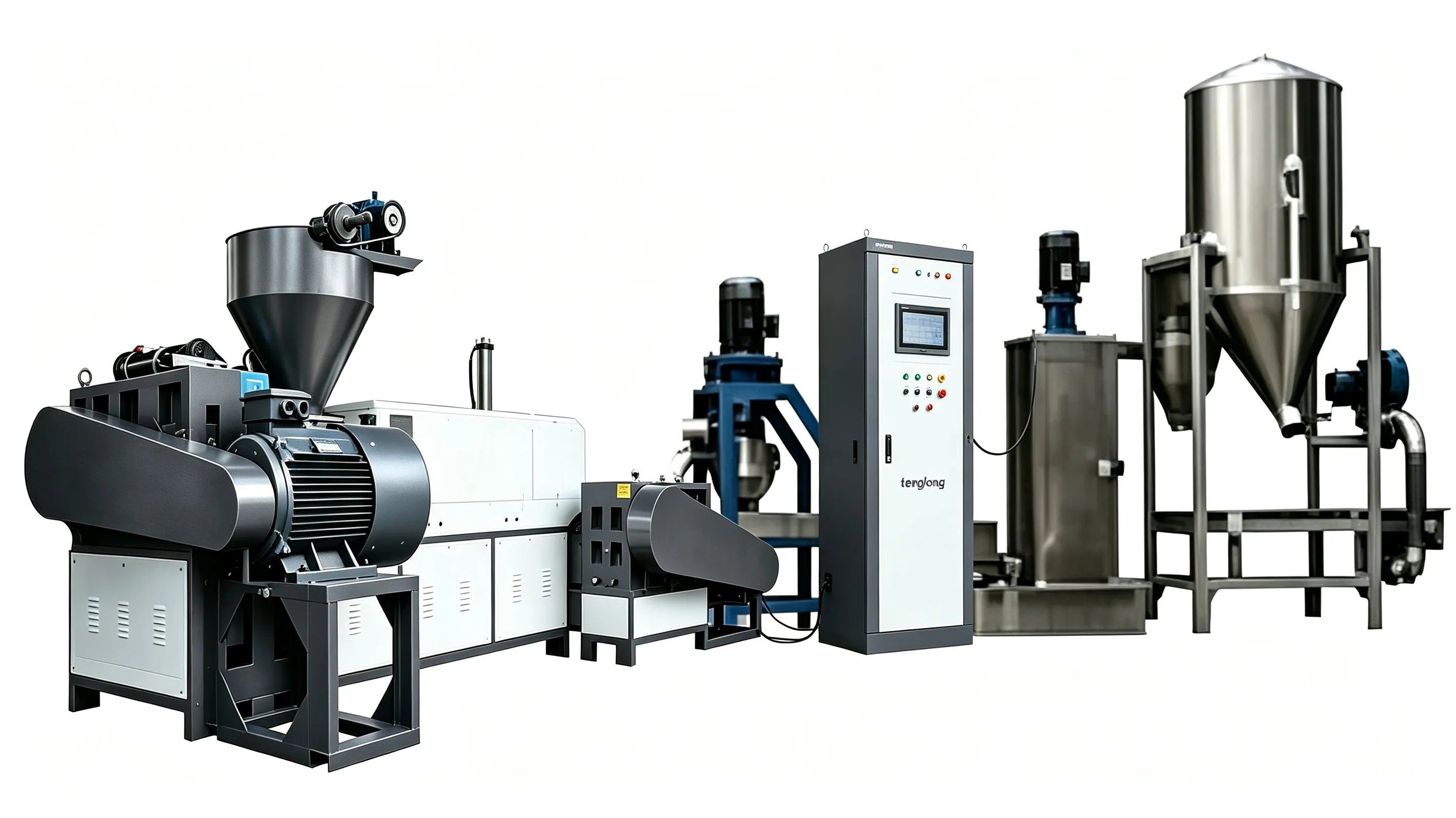 TL-TS
Extrusion granulating
Twin Screw Extruder Granulating Line
Co-rotating 65–95 mm screws for filled, reinforced and alloyed compounds — 300 to 1,500 kg/h.
- Output
- 300–1,500 kg/h
- Indicative price
- US$38,000 – 128,000
Need a line sized to your material?
PET Pelletizing Line
Send the polymer, contamination level and target output. You get a model recommendation, power estimate and price range within one working day.
- Reply within 1 working day
- Sample test before you commit
- Factory visits and live video trials by appointment.
Tell us what you need to granulate
Six fields is enough for a first recommendation. Drawings, layout and a firm price follow after the material sample is tested.