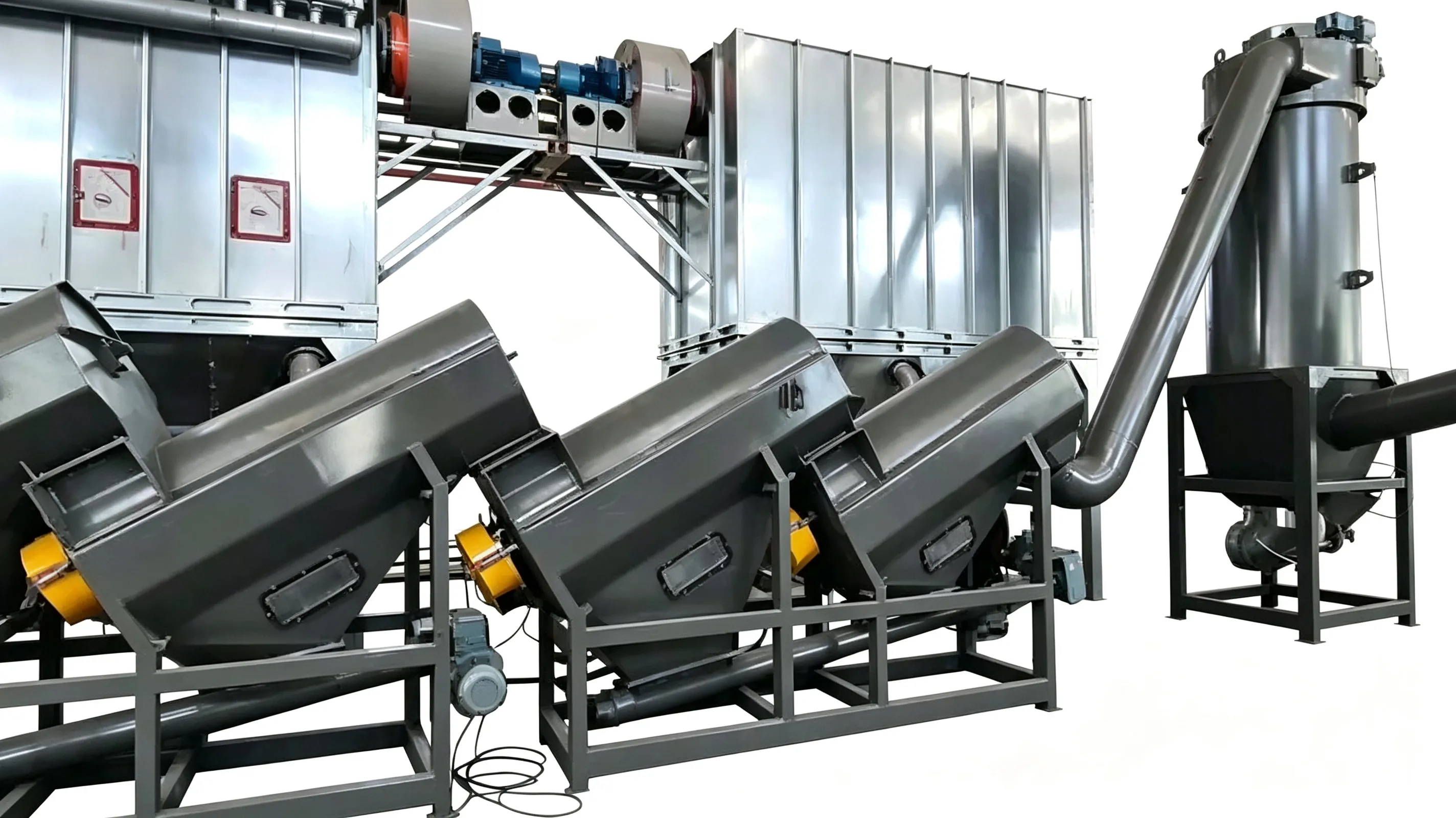
TL-GPL · Recycling lines
Plastic Granules Production Line
Turnkey washing and pelletizing: from baled bottles or film to bagged granules, 500 to 3,000 kg/h.
- Output
- 500–3,000 kg/h (finished pellets)
- Screw diameter
- —
- Feedstock
- Baled PET bottles, HDPE containers, LDPE film, PP bags
- Indicative price
- US$85,000 – 260,000
What this machine does
Most recycling projects fail on the washing stage, not the extruder. A line that produces clean-looking flake with 3% residual moisture and label glue will blind a 100 mesh screen in 15 minutes and give you dark, smelly pellets. Matching each stage to the next is the whole job: crushing to 25–30 mm, washing to below 0.5% contamination, drying to below 2% moisture, then pelletizing.
The TL-GPL layout is modular, so a 500 kg/h start can grow to 3,000 kg/h without rebuilding. Washing uses 90 °C water with a caustic dosing option for oil and labels; water is filtered and recirculated, with 0.8–1.2 m³ consumed per ton of flake. Dewatering is a screw press followed by a three-stage hot-air dryer, and the dryer exhaust is recycled to cut gas consumption by 25%.
The pelletizing module is specified around the polymer: water ring for PE and PP, underwater for PET, strand for rigid flake that must stay cubic. Because the whole line comes from one workshop, the interface conditions — flake size, moisture, buffer silo capacity — are guaranteed as a package rather than negotiated between four suppliers.
Models and output
| Model | Output | Installed power | Washing stage | Dewatering / drying | Footprint | Weight |
|---|---|---|---|---|---|---|
| TL-GPL-500 | 500–700 kg/h | 280 kW | 2 tanks | Press + 2-stage dryer | 32 × 8 × 5 m | 38 t |
| TL-GPL-1500 | 1,200–1,800 kg/h | 520 kW | 3 tanks | Press + 3-stage dryer | 45 × 10 × 6 m | 62 t |
| TL-GPL-3000 | 2,500–3,000 kg/h | 900 kW | 3 tanks + ultrasonic | Press + 3-stage dryer | 58 × 12 × 7 m | 95 t |
Output figures refer to LDPE film at 85% bulk density with 3% moisture. Actual output depends on feedstock, flake size and filtration.
Engineering highlights
- Five matched stages from bale to bag, one warranty and one commissioning team
- 90 °C friction washing with optional caustic dosing for oil and label removal
- Water recirculation: 0.8–1.2 m³ per ton of flake, below local discharge limits
- Screw press + 3-stage dryer with exhaust heat recovery, 25% gas saving
- Modular layout: 500 kg/h today, 3,000 kg/h later on the same footprint
- Central MCC with per-stage fault logging and remote diagnostics
How the line works
Crush
A wet granulator reduces bales or film to 25–30 mm flakes while water keeps the blades cool.
Wash
Pre-wash floats off caps and labels; a 90 °C friction washer scrubs the flake surface.
Dewater and dry
A screw press takes out free water, then a three-stage dryer brings moisture below 2%.
Pelletize
Flake is force-fed into the extruder, filtered at 80–100 mesh and cut into 3 mm pellets.
Bag
Pellets pass a metal detector and are weighed into 25 kg bags or 1 t jumbo bags.
Where it runs
- PET bottle washing and pelletizing
- HDPE container recycling
- LDPE film washing line
- PP woven bag recycling
- Agricultural film recovery programmes
Options and upgrades
- Caustic and surfactant dosing with pH control
- Label remover and cap separator for PET
- Colour sorter and NIR polymer sorter
- Wastewater treatment to discharge standard
- Automatic baling and weighing for finished pellets
Questions buyers ask
How much does a complete line cost?
Indicative FOB Qingdao: 500 kg/h from US$85,000, 1,500 kg/h around US$165,000, 3,000 kg/h around US$240,000 including washing, drying and pelletizing but excluding civil works, power supply and wastewater treatment.
What space and power do I need?
Roughly 32 × 8 m for 500 kg/h, 45 × 10 m for 1,500 kg/h and 58 × 12 m for 3,000 kg/h, with a 6–7 m ceiling. Power is 280–900 kW installed; plan the transformer at 1.25 times installed load.
Can you supply only the pelletizing section?
Yes, and about a third of our orders are that. Send flake samples and we will size the extruder to your actual bulk density and moisture rather than to the nominal throughput of the washing line.
Related machines
Other platforms in the range
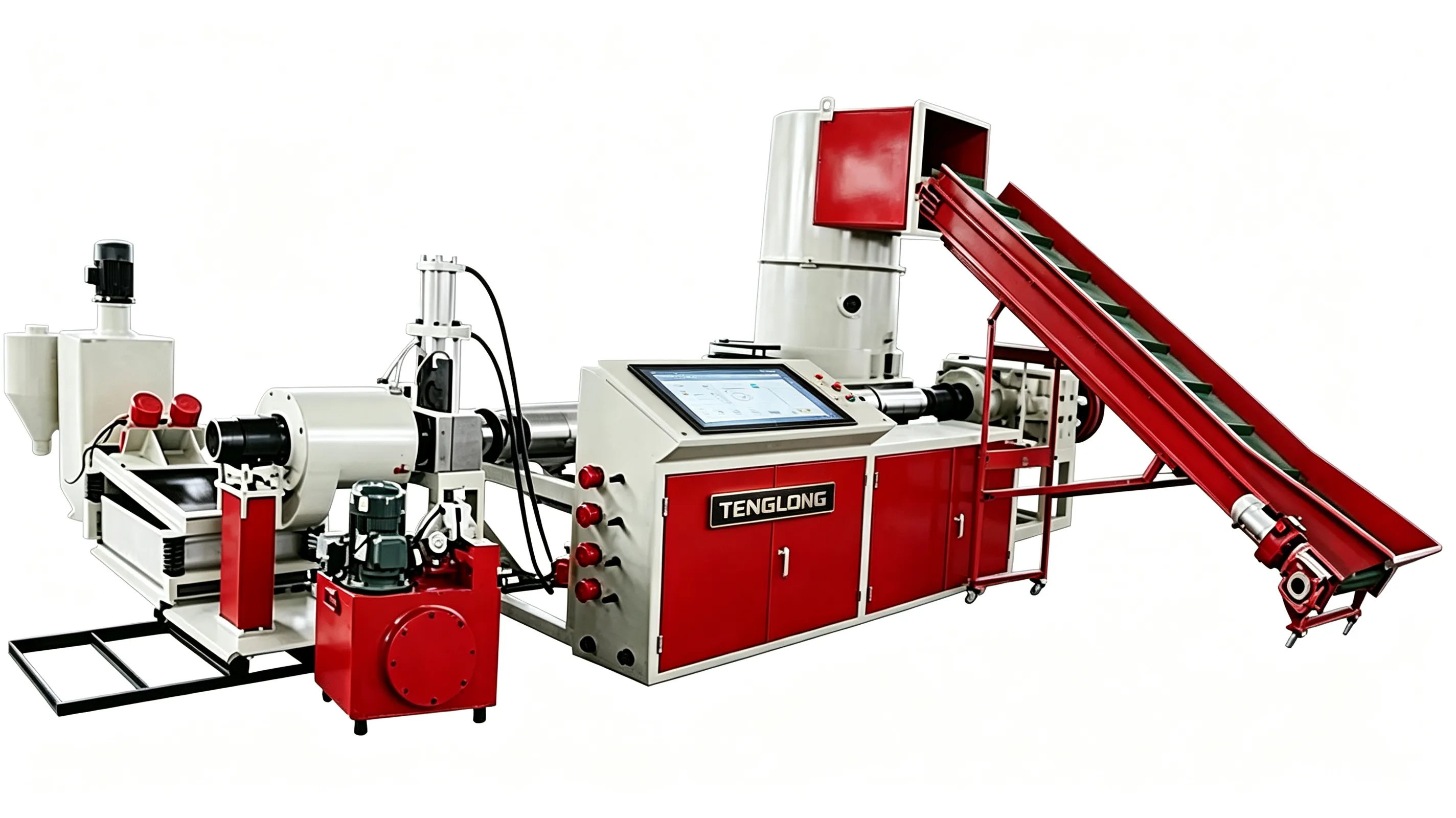 TL-FK
Recycling lines
Flakes Pelletizing Machine
Force-fed single screw for washed HDPE and PP flake — 300 to 1,000 kg/h at 0.26–0.36 kWh/kg.
- Output
- 300–1,000 kg/h
- Indicative price
- US$28,000 – 72,000
 TL-PET
Specialised lines
PET Pelletizing Line
Crystallize, dry, extrude and underwater-cut bottle flake — 500 to 2,000 kg/h with IV loss under 0.03 dl/g.
- Output
- 500–2,000 kg/h
- Indicative price
- US$120,000 – 380,000
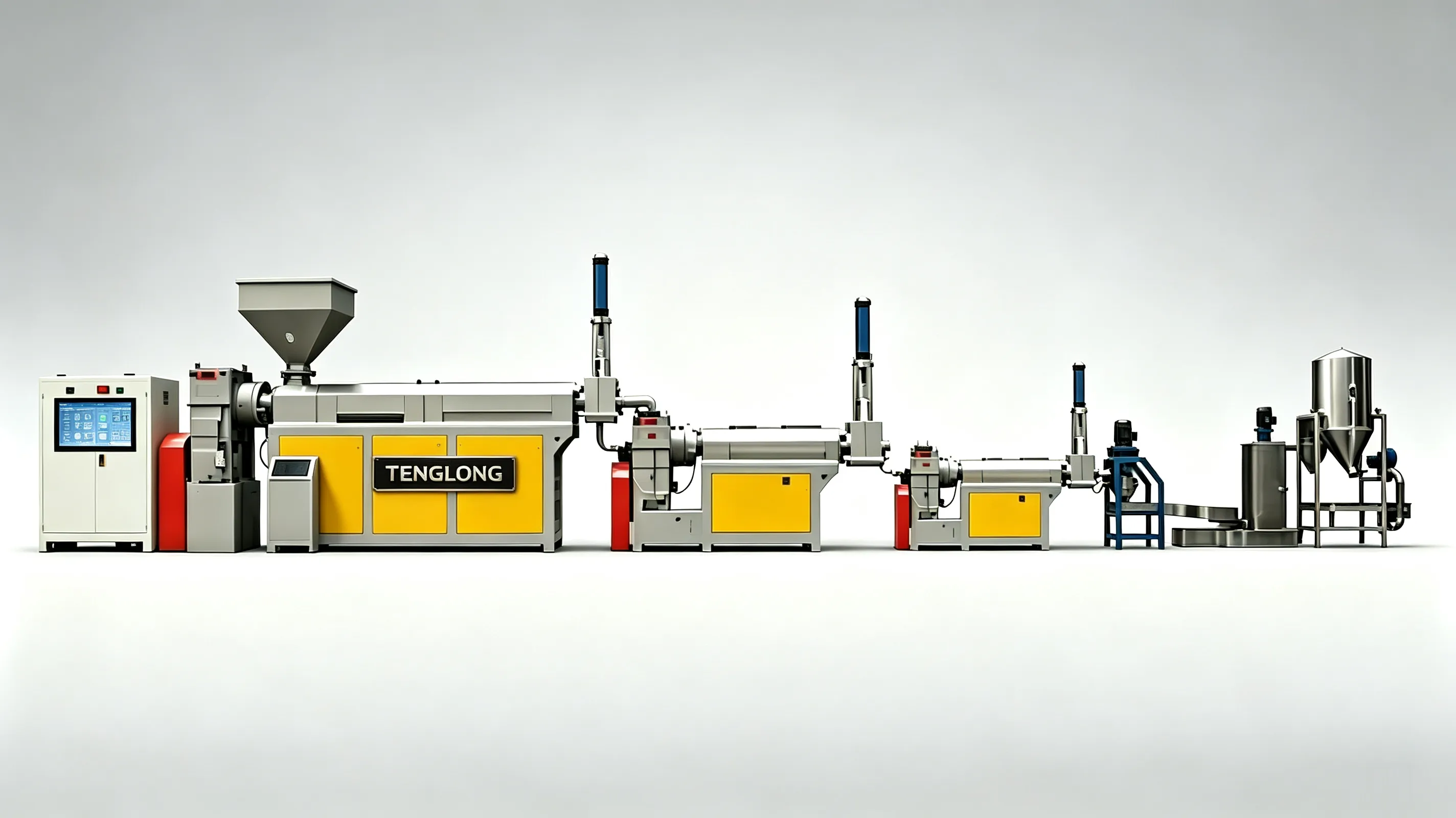 TL-2S
Recycling lines
Two Stage Granulating Line
First stage melts and filters heavy contamination, second stage pelletizes — 300 to 1,200 kg/h of dirty waste plastic.
- Output
- 300–1,200 kg/h
- Indicative price
- US$46,000 – 135,000
Need a line sized to your material?
Plastic Granules Production Line
Send the polymer, contamination level and target output. You get a model recommendation, power estimate and price range within one working day.
- Reply within 1 working day
- Sample test before you commit
- Factory visits and live video trials by appointment.
Tell us what you need to granulate
Six fields is enough for a first recommendation. Drawings, layout and a firm price follow after the material sample is tested.