Size a mixing tank from the line it serves, not from the vessel. The published output basis is finished bagged pellets averaged over four hours, the product range spans 100–3,000 kg/h across 12 machine platforms, and the tank has to hold the recipe at the rate the line actually consumes.
The money sits mostly in the feeder: a volumetric unit costs US$2,000-8,000 and a gravimetric one US$8,000-25,000. Published mixers run from 5 litres to 2,000 litres, while blenders span 260 kg/h with a 3 kg batch up to 4,850 kg/h with a 90 kg batch, and freight and installation are quoted separately.
Size first, price second
- Start from the line’s real output and work backwards to batch turnover and vessel litres.
- Published mixers run from 5 litres to 2,000 litres, including hot and cold two stage designs.
- A volumetric feeder costs US$2,000-8,000; a gravimetric one costs US$8,000-25,000.
- Freight, foundations, water treatment and installation are quoted apart from the machine price.
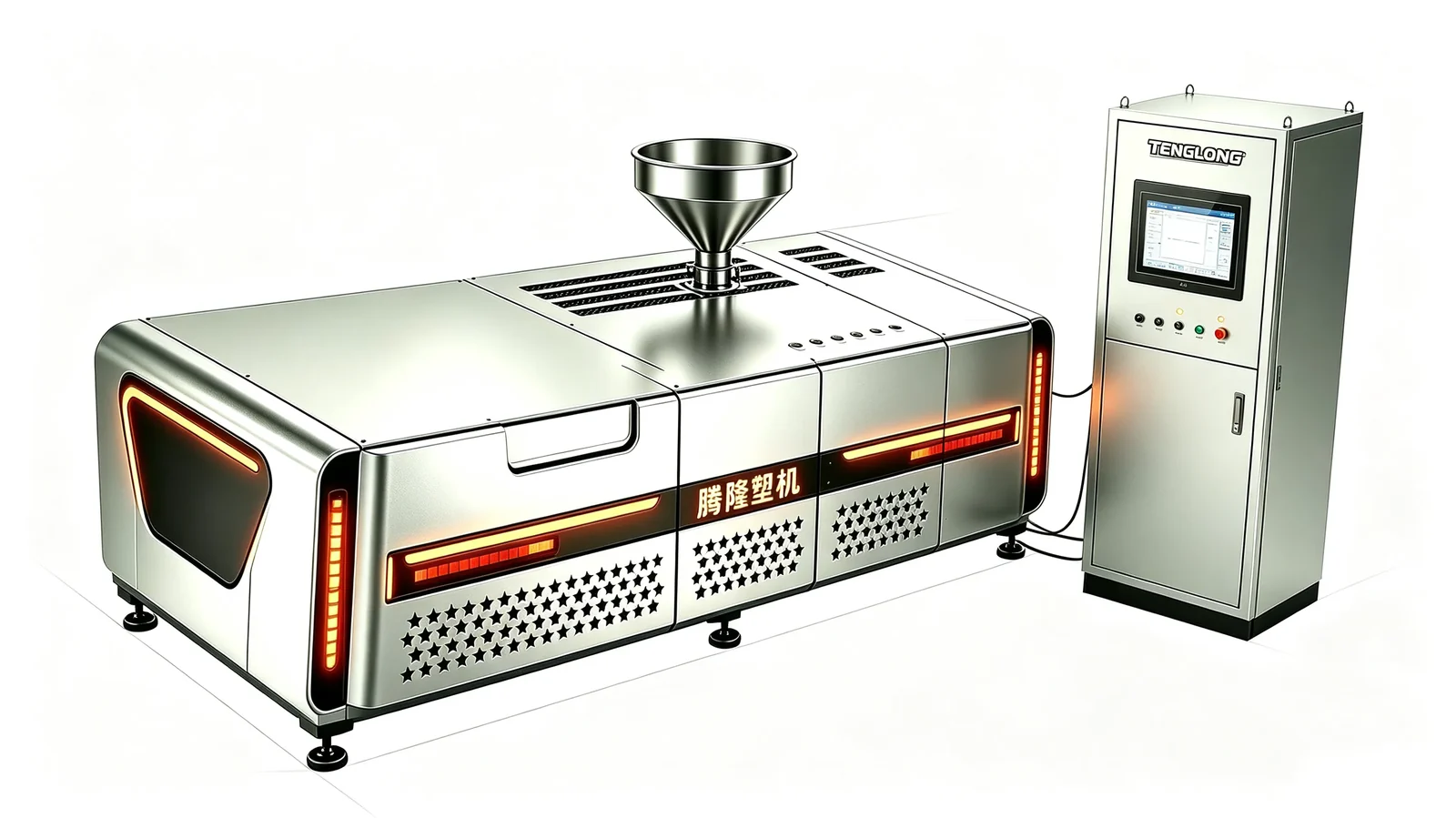
Size from the line, not from the vessel
A mixing tank is sized from the throughput of the line it serves, because the vessel is a buffer in a continuous process and not a machine with an output of its own. Start from the published output basis, which is finished bagged pellets averaged over four hours. The product range spans 100–3,000 kg/h across 12 machine platforms, and the tank has to cover the recipe at the rate the line actually runs.
Take the published batch figures first. At the small end a gravimetric blender manages 260 kg/h maximum throughput with a 3 kg batch and a 0.15 kW stirring motor. At the large end it reaches 4,850 kg/h with a 90 kg batch and a 2.2 kW motor. Both run on 4-6 bar compressed air with four hoppers and one screw rod per hopper, and the 12-platform comparison on the site then tells you which line the tank must keep up with.
Published mixer sizes run from 5 litres to 2,000 litres, with hot and cold two stage designs offered for plants that make compounds in batches. A small vessel on a fast line means the batch is drawn down before the next one is ready; an oversized vessel holds material longer than the recipe requires. Size for the average rate with room for a change of recipe. The choice is made on the batch the line will actually draw, not on a maximum.
The price lines on the order
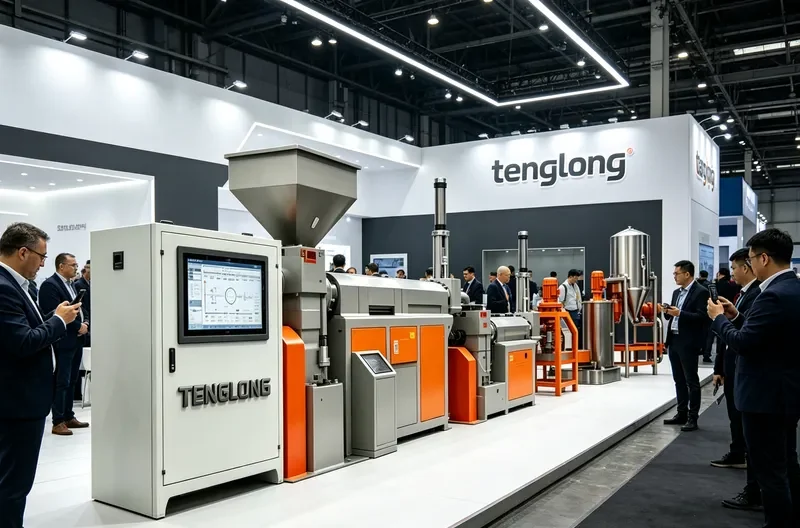
The feeder attached to the tank is a separate line on the order and often the larger one. On the price list a volumetric feeder sits at US$2,000-8,000 and holds plus or minus 1 to 2%, while the gravimetric alternative is US$8,000-25,000 and holds plus or minus 0.25 to 0.5% while compensating for density changes. It is worth paying when the recipe contains light film flake. For rigid flake alone the cheaper device is adequate and the money goes further elsewhere.
For context, the platforms the tank feeds are priced separately. The film granulating line is listed at US$42,000, the flakes pelletizing machine at US$28,000 and the plastic granules production line at US$85,000, while the smallest plastic pellet mill starts at US$6,800. A tank and its feeder are a modest addition to those figures, which is why they are sometimes specified in a hurry. That haste is a mistake, because the tank decides whether the rest of the money is well spent.
Commercial terms follow the same pattern as the rest of the range. Deposits are 30% T/T with 70% before shipment, and L/C at sight above US$50,000. Lead time is 25–35 days for a standard line and 45–60 days for a custom line or washing plant. Published prices for 2026 are indicative starting points and configuration-dependent, so ask for a quotation that names the batch size, the feeder type and the scope. A written scope is the only way to compare two offers.
Running costs that are easy to miss
Running cost begins with power. The standard supply is 380 V / 50 Hz three-phase, with IE3 motors and IP54 panels, and a mixing tank draws a small fraction of what the extruder uses. A 1,000 kg/h bottle line averages 50-80 kW of electricity per ton across the whole process, so the agitator is not where the money goes. The place to spend attention is on consistency rather than on motor size.
Compressed air is the other utility, and the blender table quotes 4-6 bar with four hoppers and one screw rod per hopper. Across the process a 1,000 kg/h line uses 0.5-1 m³ of compressed air per ton, and dry air at the quoted pressure is what keeps the dosing repeatable. A plant that has no such supply will find the feeder behaving erratically, and the fault will be blamed on the recipe before anyone checks the air.
The real running cost is the cost of a blend that drifts. The range carries a published specific energy of 0.26–0.50 kWh/kg; a feed at one bulk density holds the better end of that band and a drifting one does not. Wear parts are stocked for three years, so a paddle or a seal is not a long delay. What is expensive is the hour of output lost while a feeder is being recalibrated against a recipe that never changed.
The scope a quotation has to state
A tank is easy to leave out of the written scope because it looks like a small item. Freight, foundations, water treatment, spare-parts stock and installation are quoted separately from the machine price, and the same applies to the package around the mixer. An order that names only the vessel will arrive without the hoppers, the screw rods or the control that makes the recipe repeatable. Name the number of hoppers and the feeder accuracy on the same page.
The price policy is explicit about this. Published prices are indicative starting prices for 2026 and are configuration-dependent, and a formal quote states filtration mesh, drying method, motor power, control system and the exact scope of supply. For a mixing tank, add the batch volume, the number of inlet ports and whether the feeder is volumetric or gravimetric, since those three decide both the price and the result. A turnkey supplier should be able to draw the tank into the line layout.
The delivery terms are worth reading as well. Sea freight to Europe adds 30–40 days, to Southeast Asia 7–12 days, and an auxiliary item ordered late can hold a complete line on the quay. A turnkey project is the safer route when the tank has to be integrated with the dryer and the feeder, because one party then owns the interfaces. The saving on a separately bought vessel disappears quickly if the line waits.
What the right size looks like
The right tank is the one whose batch turns over at the rate the line consumes and whose feeder accuracy matches the stability the recipe needs. A 4,850 kg/h blender with a 90 kg batch is not automatically better than a 260 kg/h unit with a 3 kg batch; it is only better if the line can use the throughput. Buying headroom in a mixer is cheap, but headroom that never gets used is still money on the floor.
I size a tank backwards from the discharge, starting with the mass the extruder must see and only then choosing litres and a batch weight. A vessel chosen first tends to be judged by how impressive it looks on the drawing rather than by whether it can hold a recipe steady, and the line ends up with a large machine doing a small job badly. Work out the bulk density of the blend before the litres are fixed.
The final check is whether the tank can be made to repeat. A machine whose settings live on a dial and in an operator’s memory will drift, while one whose batch weight, feeder accuracy and inlet order are written into the handover report will not. That is the measure I would apply to a quotation before I compare the price, because a cheap tank that cannot repeat its recipe is the most expensive item in the room.
Published blender and platform figures used in sizing
The table sets out published blender and platform figures used in sizing. Size the vessel from the recipe before you read the price.
| Item | Published figure | Used for |
|---|---|---|
| Blender throughput | 260-4,850 kg/h | Matching batch turnover to the line’s real consumption |
| Batch weight | 3-90 kg | Setting how often a recipe is repeated |
| Stirring motor | 0.15-2.2 kW | Power at the small and large ends of the range |
| Compressed air | 4-6 bar | Supply to four hoppers with one screw rod each |
| Mixer volume | 5-2,000 litres | Choosing a vessel that is neither starved nor idle |
| Platform capacity | 100-3,000 kg/h | The range the tank has to keep up with |
Questions buyers ask about this machine
Q1: How do I size a mixing tank for a line?
Start from the line’s real output, published as finished bagged pellets averaged over four hours, and work backwards to batch turnover. Published mixers run from 5 litres to 2,000 litres and blenders from 260 kg/h with a 3 kg batch to 4,850 kg/h with a 90 kg batch.
Q2: How much does a mixing tank and its feeder cost?
A volumetric feeder costs US$2,000-8,000 and a gravimetric feeder US$8,000-25,000. The platforms they serve are priced separately, from US$6,800 for the smallest pellet mill to US$85,000 for the plastic granules production line, and freight and installation are quoted apart from the machine price.
Q3: What utilities does a mixing tank need?
Standard three-phase power at 380 V / 50 Hz with IE3 motors and IP54 panels, plus dry compressed air at 4-6 bar for the hoppers and screw rods. A 1,000 kg/h line averages 50-80 kW of electricity and 0.5-1 m³ of compressed air per ton.
Q4: Should I buy the largest tank the budget allows?
No. A 4,850 kg/h blender is only better than a 260 kg/h one if the line can use the throughput. Size for the average rate with room for a recipe change, because headroom that never gets used is money spent on a machine doing a small job badly.
The companion write-ups for this machine family are: Mixing Tank: What It Contains and Why Feed Must Be Uniform, Bulk Density: The Specification That Decides the Blend, Mixing Tank Acceptance, Commissioning and First-Week Faults and Why Uniform Feed Decides Batch Accuracy in Pelletizing.
About the author
Zhou Gong (周工) builds recycling lines at TENGLONG Plastic Machinery, a factory in Linyi, Shandong, with 18,000 m² of floor area, 30-plus staff and 820-plus lines delivered to 46 export markets. My first question on a tank quotation is what mass per hour the extruder must see, because litres on their own tell me almost nothing. The numbers in this article come from test runs and from dated published sources, not from a sales sheet.
If you want a recommendation rather than a catalogue, send the material form, the contamination level and the target output. We return a model and a price range within one working day, and the test run on 10-20 kg of your own material is free before the balance is paid.