A melt filter is sized on the melt the line actually carries, so start from the output basis rather than from a machine plate. Published output is finished bagged pellets averaged over four hours, and the published screen series then maps that flow onto a screen size: 30–180 kg/h at 28×2 mm, rising to 800–1,800 kg/h at 254×2 mm.
The money follows the sizing. Continuous melt filters and screen changers are listed at US$4,000-40,000 per set, and a mismatched screen changer is reported to raise the scrap rate by 15–30%, which is the figure that decides the argument.
Size first, then the money
- Size against the line’s real output, not against a peak rate from the first minutes after startup.
- Published continuous screens cover 30–180 kg/h at 28×2 mm up to 800–1,800 kg/h at 254×2 mm.
- Continuous melt filters and screen changers are listed at US$4,000-40,000 per set.
- A mismatched screen changer is reported to raise the scrap rate by 15–30%.
Start from the output the line actually makes
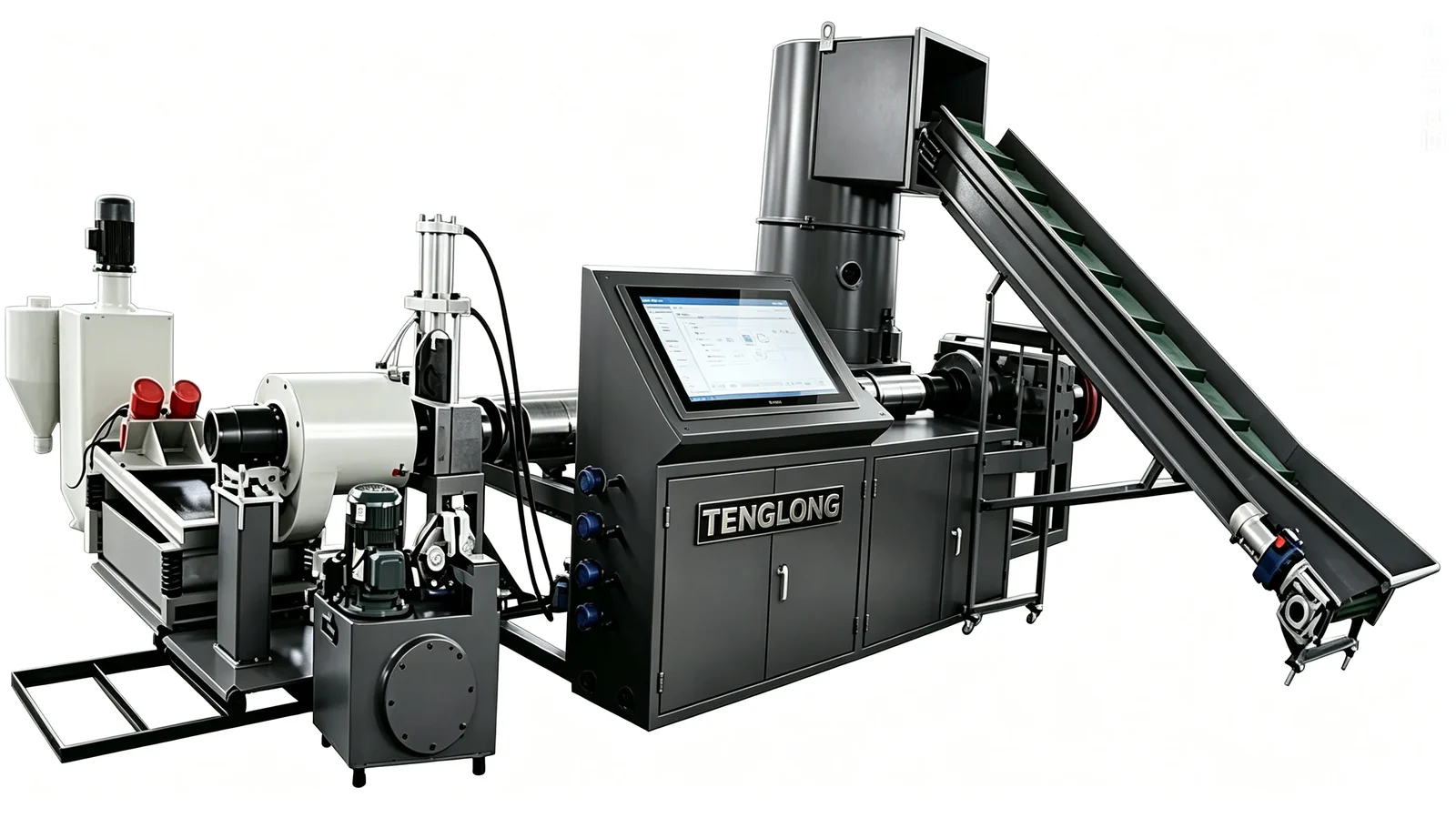
A melt filter is sized on the melt the line actually carries, which is not the same as the number on the machine plate. Our published output basis is finished bagged pellets averaged over four hours, so that is the figure to filter against, not a peak melt rate taken in the first minutes after startup.
The platforms bracket the range a filter has to cover. The 12-platform comparison on the site lists the two-stage granulating line at 300–1,200 kg/h and 60–100 mesh, the flakes pelletizing machine at 300–1,000 kg/h and 80–100 mesh, the twin screw extruder line at 300–1,500 kg/h and the film granulating line at 200–800 kg/h. The plastic granules production line runs from 500–3,000 kg/h, and the whole product range covers 100–3,000 kg/h.
Filter sizing follows the line, not the other way round. Choosing a filter first and then a line to suit it produces a machine whose filtration is either oversized or fighting for its life, and both mistakes are paid for on every shift rather than once at handover.
Match the flow to a published screen series
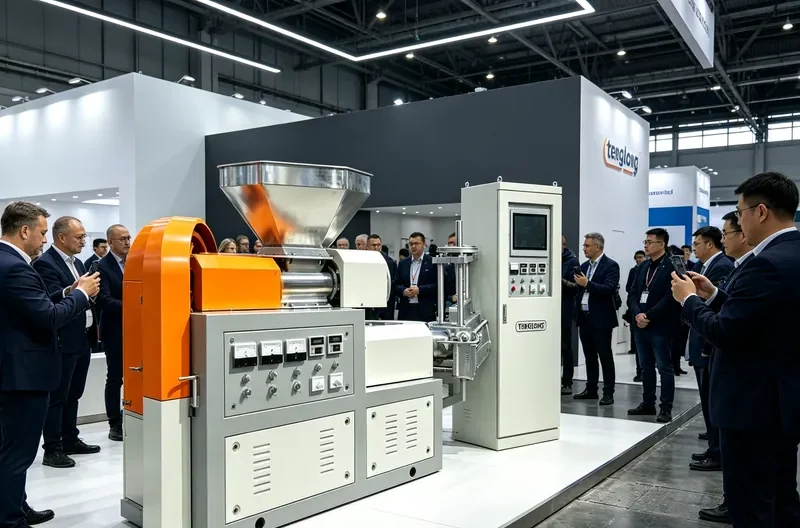
Published continuous filter series are set out against flow bands, and the bands are wide enough to be useful: 30–180 kg/h at a 28×2 mm screen, 80–280 kg/h at 50×2, 220–480 kg/h at 78×2, 300–700 kg/h at 113×2, 400–1,100 kg/h at 165×2, 650–1,500 kg/h at 214×2 and 800–1,800 kg/h at 254×2, all rated to 35 MPa.
Take the band the line sits in, not the band you hope for on a good day. The published guidance puts a single column below 300 kg/h and a double column above 500 kg/h, so a 700 kg/h line and a 1,500 kg/h line are not the same filter order, even where the mesh on the element is identical.
The 35 MPa rating carried through that series is the general extrusion floor. High-viscosity and reinforced compounds want at least 50 MPa, and a line running filled or reinforced material should treat the published series as the start of a conversation with the supplier rather than the end of the specification.
The money on the order
Continuous melt filters and screen changers are listed at US$4,000–40,000 per set. Export listings for hydraulic units run US$500–2,000, and continuous systems are listed at CNY 50,000–200,000. That spread is not one product with three labels; it is three product levels, and the gap between the bottom and the top of it is the difference between a filter that gets changed and one that does not.
For comparison, a nitrided single screw and barrel set for recycling extrusion is listed at US$2,700 per set, a nitrided recycling screw and barrel at US$6,000 per set, and a bimetallic granulation screw and barrel at US$2,550 per set. A melt filter at the top of its range costs several times the screw set, which is a fair comparison to make before anyone assumes the filter is the expensive part of the machine.
The commercial terms around it are ordinary. A deposit is 30% T/T with 70% before shipment, and L/C at sight above US$50,000. Lead time for a standard line is 25–35 days. Prices published for 2026 are indicative starting points and they move with the configuration, so a formal quote has to state filtration mesh, drying method, motor power, control system and the exact scope of supply before it can be compared with another one.
What the filter costs to run
The running cost is where the purchase price stops being the interesting number. Continuous filtration is reported to cut energy use by about 8–12%, and a mismatched screen changer is reported to raise the scrap rate by 15–30%. Those two figures decide whether a filter pays for itself, and they are why the sizing argument is worth having in writing.
The screen change is the other line on the invoice. On clean material the screen changes every 24 to 48 hours and on recycled material every 8 to 12 hours, and the published routine on our lines is a 20-minute screen change every 3–4 hours on continuous duty. Every one of those is production time, and across a year they add up to days of output.
Spares decide how badly a screen change hurts. One spare screw, one die plate and two screen packs keep unplanned stops under 2%, and wear parts are stocked for three years. A plant that holds two screen packs and a seal set on the shelf is not waiting on a courier when the pressure gauge starts climbing.
The cost of getting the match wrong
A filter that is too small for the flow is not a cheaper filter. It is a filter that will be changed constantly and will still not hold its pressure, and the scrap rate goes up with every hour it runs that way. A filter that is too large is less bad but not free either: it costs more on the order, and it can carry a screen so coarse that contamination passes through and shows up as rejected pellets.
The measure of a correctly sized filter is a differential pressure gauge that returns to where it started, and a screen that comes out on the interval the material sets rather than on the interval the filter sets. Neither of those is visible in a price list, which is why the screen series and the mesh belong in the written scope rather than in a conversation.
Before accepting a price, check what sits inside it. Freight, foundations, water treatment, spare-parts stock and installation are quoted separately from the machine price, so a filter figure on an order confirmation is rarely the figure the plant will actually pay for the filtration package. Ask for a quotation that names the mesh, the screen series and the scope of supply.
Published continuous filter sizes and the flow bands they cover
The table sets out published continuous filter sizes and the flow bands they cover. Use it to price the running cost as well as the order.
| Screen size | Flow band | Rating |
|---|---|---|
| 28×2 mm | 30–180 kg/h | 35 MPa |
| 50×2 mm | 80–280 kg/h | 35 MPa |
| 78×2 mm | 220–480 kg/h | 35 MPa |
| 113×2 mm | 300–700 kg/h | 35 MPa |
| 165×2 mm | 400–1,100 kg/h | 35 MPa |
| 214×2 mm | 650–1,500 kg/h | 35 MPa |
| 254×2 mm | 800–1,800 kg/h | 35 MPa |
Frequently asked questions
Q1: How do I size a melt filter for a line?
Take the melt flow in kg/h from the line output, apply the working rule of filter area in cm² = melt flow divided by (filter factor 0.2–0.6 × material density), then match the result against the published screen series bands. Below about 300 kg/h one column is enough; past roughly 500 kg/h the second column earns its cost by avoiding a stop.
Q2: How much does a melt filter cost?
Published list prices span three levels: entry hydraulic units, mid-range screen changers and continuous systems, with the top of the range many times the bottom. Decide which of those three levels the job needs before comparing quotes, and treat freight, foundations and installation as separate lines in the budget.
Q3: Is the most expensive filter the cheapest one to run?
Not automatically. A filter too small for the flow reads high pressure permanently, shortens the screen interval and raises the scrap rate, which is reported at 15–30% for a mismatched screen changer. Continuous filtration is reported to cut energy use by about 8–12%.
Q4: What does the machine price leave out?
Freight, foundations, water treatment, spare-parts stock and installation are quoted separately from the machine price. A formal quote states filtration mesh, drying method, motor power, control system and the exact scope of supply, and that document is the place to check the filtration package.
The companion write-ups for this machine family are: Melt Filter: What It Contains and How It Holds Back Dirt, Melt Filter Area and Mesh: The One Setting That Counts, Melt Filter Acceptance and First-Week Faults and Melt Filter Cost: Screen Changes, Scrap and Energy.
About the author
Zhou Gong (周工) commissions recycling machinery at TENGLONG Plastic Machinery in Linyi, Shandong, a factory of 18,000 m² and 30-plus staff that has delivered 820-plus lines across 46 export markets. I would rather argue about filter area on the drawing than about the price afterwards. The figures here come from test-floor readings and from published sources dated 2026, and the ones we could not verify have been left out.
The material form is the whole conversation: send it and you get a model, a price range and a test plan back within a working day. The run on 10-20 kg of your material is free, and if it comes up more than 5% short of the agreed output, the deposit is refundable.