A melt filter is accepted on a test run with the buyer’s own material, not on a photograph. The published test offer is free on 10–20 kg of it, with video, measured output, specific energy and pellet photos sent before the balance is paid, and if the run misses the agreed output by more than 5% the deposit is refundable.
After handover, two readings settle whether the filter is right: the differential pressure at a clean screen, and how it moves over a shift. Keep the differential below twice its starting value, and check that a screen swap holds the pressure change within 5%.
What acceptance should cover
- Test on 10–20 kg of the buyer’s own material before the balance is paid.
- Keep the differential pressure below twice its starting value; a screen swap should hold within 5%.
- About 90% of melt leaks come from damaged seals, 7% from installation error and 3% from overpressure.
- One spare screw, one die plate and two screen packs keep unplanned stops under 2%.
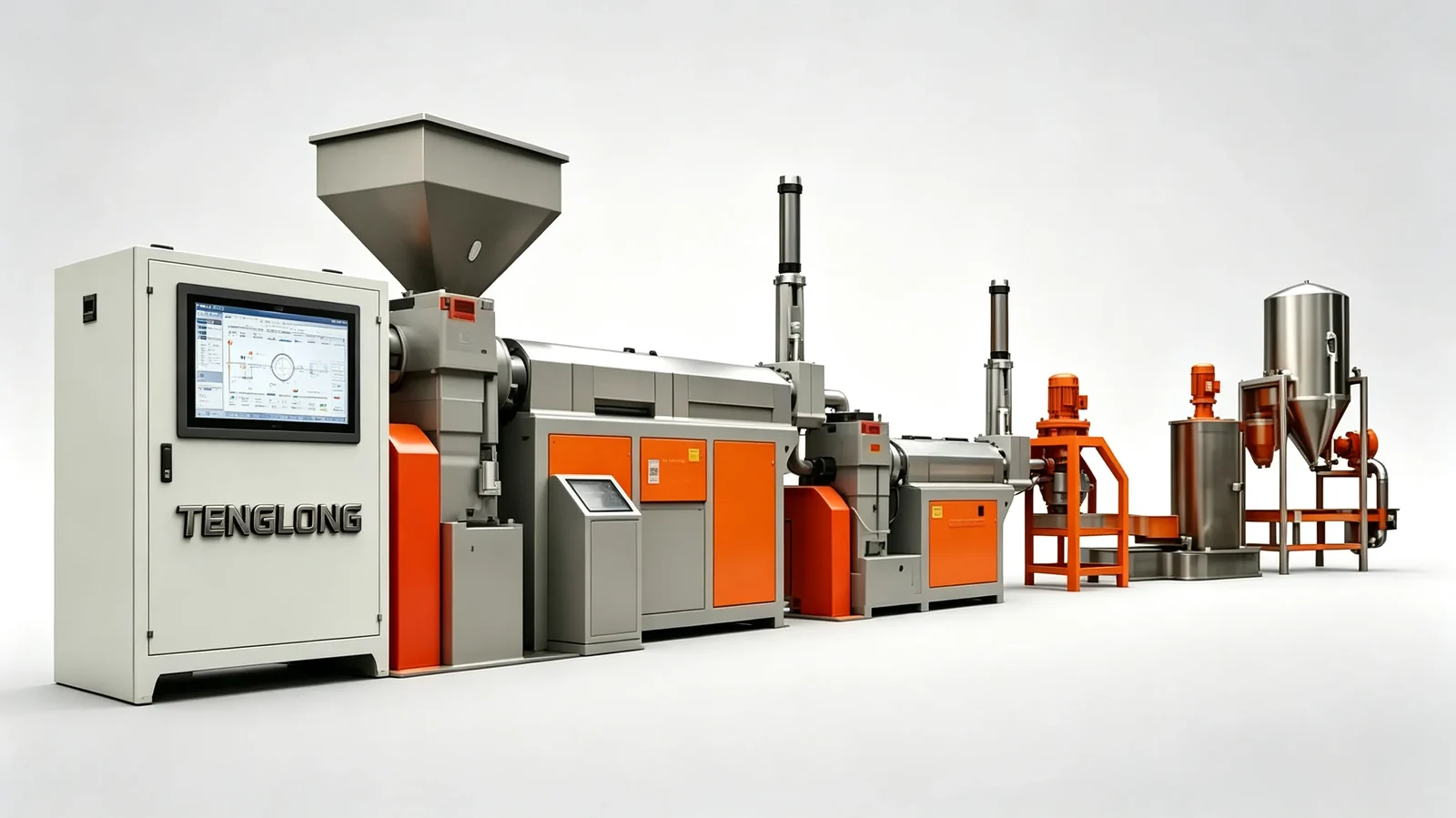
What a proper handover includes
A melt filter is accepted with a test run on the buyer’s own material, not with a photograph. The quality control that matters sits around that run: the published test offer is free on 10–20 kg of the buyer’s material, with video, measured output, specific energy and pellet photos sent before the balance is paid. If the test run misses the agreed output by more than 5%, the deposit is refundable.
Installation is 7–10 days on site for a line and 3–5 days for a single machine, including commissioning, two days of operator training and a signed handover report. That report is the document to ask for on the first day, because it is the only record of what the filter was actually set up to do. On a turnkey project the sequence is longer and the report matters even more.
The warranty runs 18 months from commissioning or 24 months from shipment, whichever comes first, and the commissioning date is worth recording carefully because the two clocks start in different places and the shorter one governs. Wear parts are excluded from it, and stocked for three years.
The readings that prove it works
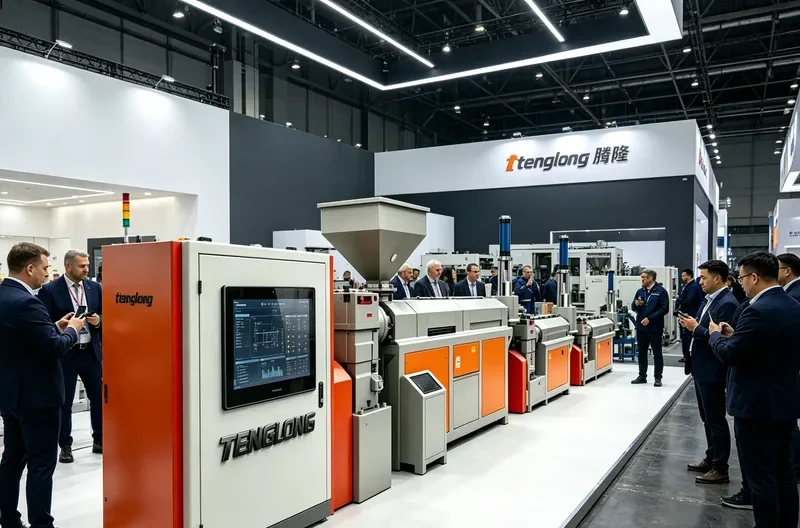
Two readings settle acceptance. First, the differential pressure across the filter at the start of a clean screen, and second, how that value moves over a shift. The rule is to keep the differential below twice its starting value, which is the trigger for a screen change rather than a reason for concern.
A screen swap should hold the pressure change within 5% on a good unit, and if it does not, the fault is nearly always in the sealing rather than in the screen. Note as well that a filter too small for the flow reads high pressure permanently, so a high starting number is not automatically a dirty filter and should not be accepted as one.
Pressure rating is part of acceptance too. The reference floor is 35 MPa for general extrusion and at least 50 MPa for high-viscosity and reinforced compounds, and the housing on the machine should be rated for the material that will actually run through it rather than for the material in the original quotation.
The faults that show up in the first week
Melt leaks dominate the first-week fault list, and the distribution is well documented: about 90% of melt leaks come from damaged seals, 7% from installation error and 3% from overpressure. So the first thing to check on a weeping filter is the seal set and the seating face, not the screen.
The second fault is a screen that is too fine or too coarse for the material. Too fine and the pressure climbs early and the screen interval collapses; too coarse and contamination carries through to the pellet, where 0.5% fines is normal and 2% is a maintenance signal. The pellets tell you which way it went, and so does the gauge.
The third fault is temperature. A cold start takes 25–40 minutes from cold and 10 minutes from a 120 °C standby, and a filter that has not reached process temperature will foul on solidified polymer rather than on contamination. It looks like the same fault, it is not, and I have chased that one more than once.
What to keep on the shelf
The published spares for the range are one spare screw, one die plate and two screen packs, and that set is what keeps unplanned stops under 2%. For a filter specifically, add a seal set and a spare screen of the mesh you actually run. Buying them later costs more and takes longer than most plants expect.
The routine around them is already published: a 20-minute screen change every 3–4 hours on continuous duty and an 8-hourly blade check. What a plant needs on top of that is a written log of differential pressure at every change, because the log is what tells you whether the filter is correctly matched or quietly running short of area.
Wear parts are stocked for three years, which matters more than it sounds. A filter specified for a material nobody else runs will not be in the general parts catalogue, and the lead time on a non-standard screen is the part of the purchase that people forget to ask about until the line is already stopped.
The handover report and the first week of records
Ask for the handover report to carry settings rather than names: the mesh, the filter factor used for the area calculation, the starting differential pressure, the pressure rating, and the screen interval measured on the buyer’s own material. Those five lines are what the first month of running gets compared against.
The test hall on the site has material storage, water and a 500 kVA supply, and three simultaneous material runs, which is enough to run the buyer’s material alongside reference material and compare the two. For buyers who would rather see it before they commit, Linyi is 2.5 hours by high-speed train from Jinan and 1.5 hours by air from Shanghai, and a typical visit takes half a day.
A week of records settles most arguments. Log the differential pressure, the screen changes, the output and the fines every shift, and set them beside the handover report. The customer cases on this site show what a working handover looks like, and the FAQ carries the figures the plant will be held to. If the numbers drift from the report, the filter is being asked to do something the report did not describe, and that is far cheaper to find in week one than in month six.
The melt filter acceptance sheet and its pass readings
The table sets out the melt filter acceptance sheet and its pass readings. The last column is where most first-week faults actually begin.
| Check | What is measured | Passing value |
|---|---|---|
| Test on buyer material | Measured output against the agreed figure | Within 5%, or the deposit is refundable |
| Differential pressure | Filter gauge against the clean-screen starting value | Kept below twice its starting value |
| Screen swap | Pressure change across the change | Within 5% on a good unit |
| Screen interval | Hours between changes on the real material | 24–48 hours clean; 8–12 hours recycled |
| Melt leaks | Where the leak comes from | 90% damaged seals, 7% installation, 3% overpressure |
| Pressure rating | Housing rating against the material run | 35 MPa general; at least 50 MPa reinforced |
Questions buyers ask about this machine
Q1: What should the melt filter handover test include?
A free test on 10–20 kg of the buyer’s material, with video, measured output, specific energy and pellet photos sent before the balance is paid. If the test run misses the agreed output by more than 5%, the deposit is refundable, and installation includes commissioning, two days of operator training and a signed handover report.
Q2: What differential pressure should I accept at handover?
Record the clean-screen starting value and keep the differential below twice that value during normal running. If it sits high from the first hour, the filter is too small for the flow rather than dirty, and it will not be brought down by changing screens.
Q3: Why is the melt filter leaking melt?
Damaged seals cause the great majority of melt leaks, with installation error a distant second and overpressure rarer still. Check the seal set and the seating face first, and check that the housing is rated for the pressure the line actually runs at rather than for a lower figure.
Q4: Which spare parts should be on site after handover?
One spare screw, one die plate and two screen packs, which keep unplanned stops under 2%, plus a seal set and a spare screen of the mesh in use. Wear parts are stocked for three years, and a non-standard screen can take longer to arrive than the standard ones.
Read next, if the same model is going on your line: Melt Filter: What It Contains and How It Holds Back Dirt, Melt Filter Area and Mesh: The One Setting That Counts, Sizing a Melt Filter and What It Costs and Melt Filter Cost: Screen Changes, Scrap and Energy.
About the author
Zhou Gong (周工) is a machinery engineer at TENGLONG Plastic Machinery, a 30-plus staff factory in Linyi, Shandong with 18,000 m² of floor space, 12 machine platforms and 820-plus installed lines. The first week after handover is when I look hardest, because every fault that shows up then was set up during commissioning. Where a number appears in this article it was taken from a test run or from a source with a date on it, and a figure we could not check has been left out entirely.
Ask for a recommendation rather than a quotation and we will work from your material, your contamination level and your target output. A model and a price range follow within one working day, the test on 10-20 kg of your material is free, and a result more than 5% below the agreed output leaves the deposit refundable.