A melt filter is sold as a piece of hardware and paid for as an operating cost. The purchase price covers a housing and a screen mechanism; the years that follow are governed by how often the screen is changed, how much scrap passes through and how much power the line draws against a dirty filter.
Read the running figures before the price and a different unit often wins. Screen interval, pressure differential and the cost of a screen-change stop turn a wide quotation range into a straightforward decision about what the line can afford not to lose.
What to price before you buy
- Screen changes run every 24-48 hours on clean feed and every 8-12 hours on recycled feed.
- A mismatched changer is reported to raise scrap by 15-30% and continuous filtration to cut energy by 8-12%.
- Two columns pay for themselves above roughly 500 kg/h by removing the screen-change stop.
- Size area from melt flow and filter factor before comparing the purchase prices of two units.
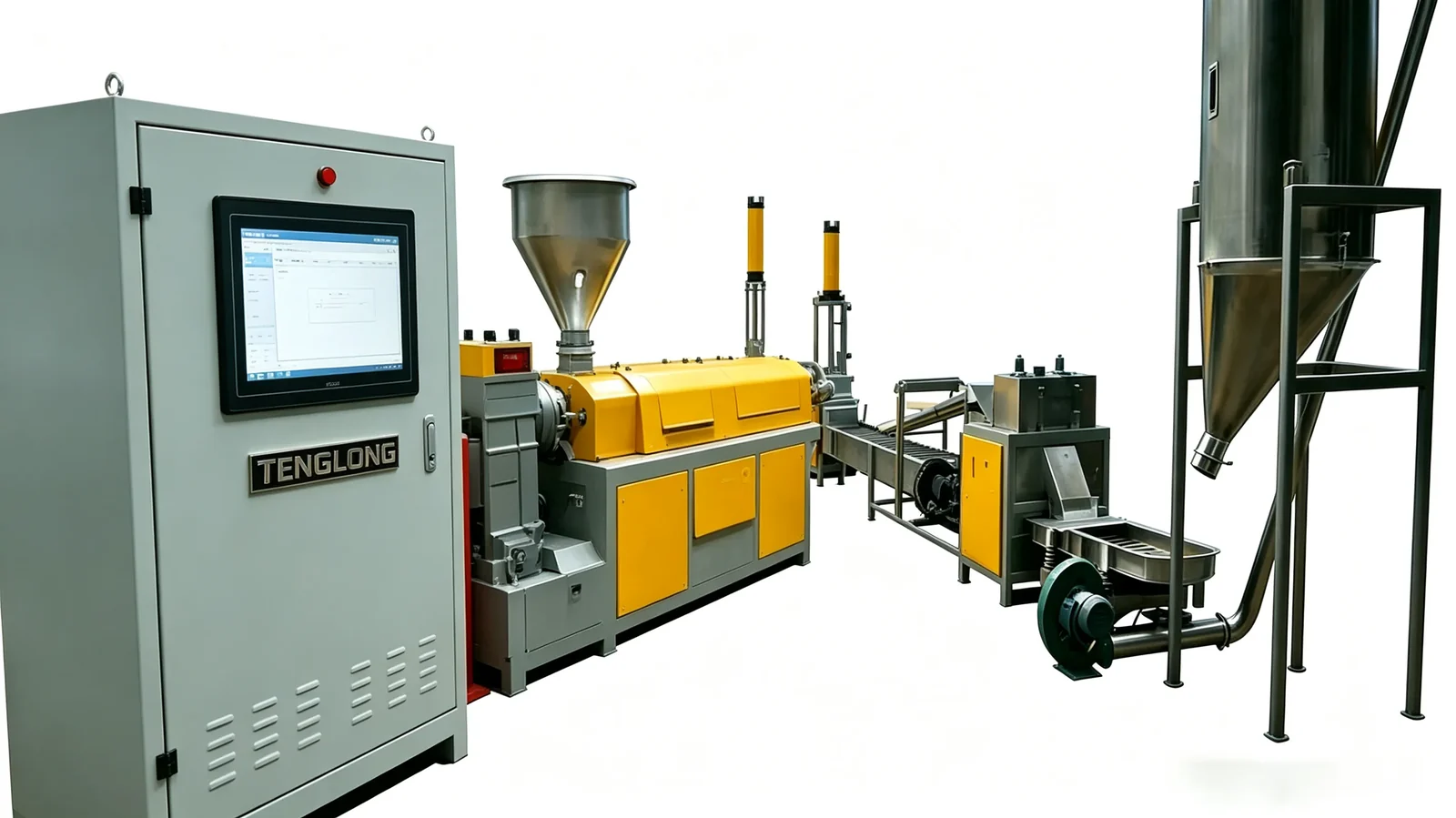
The cheaper filter is not always the cheaper filtration
Continuous melt filters and screen changers are listed at US$4,000-40,000 per set, export listings for hydraulic units run US$500-2,000, and continuous systems are listed at CNY 50,000-200,000. That is a wide spread for units that appear to do the same job, and it tempts buyers to compare only the first number.
The first number buys a housing, a screen and a mechanism. It does not buy the screen changes, the lost production while a screen is changed, or the scrap made when contamination gets through. Those three running costs can exceed the difference between two quotes within a single season on a dirty feed.
The right way to read the range is as three product levels rather than one product with three labels. An entry hydraulic unit suits a line that can stop for a change. A continuous system earns its price on a line where a stop costs more than the mechanism.
Screen life is the number that sets the operating cost
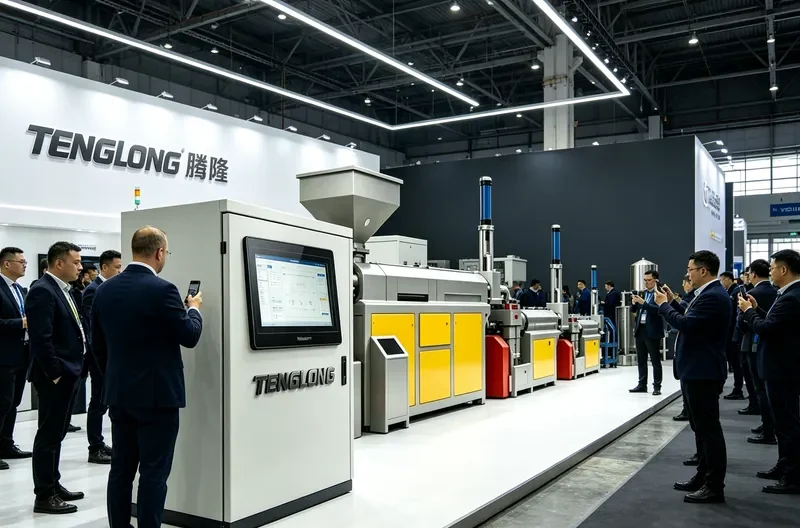
On clean material the screen changes every 24 to 48 hours and on recycled material every 8 to 12 hours, with the pressure differential kept below twice its starting value. That interval is the most useful single figure in filtration, because it converts directly into screen consumption and change-over labour.
A screen that loads in 8 hours instead of 12 is either too fine for the feed or too small for the flow. The filter reads high pressure permanently and the differential never returns to its starting value, and the operator ends up changing screens on a schedule set by the contamination rather than by the machine.
Mesh choice moves the same lever. On film lines 80 mesh is typical, 100-120 mesh is used for ordinary products, 150-200 mesh for high-requirement film, and recycled material can start with a 60 mesh coarse filter before refining. Each step finer buys cleanliness and pays for it in pressure and shorter intervals.
What a mismatched filter costs on the floor
A mismatched screen changer is reported to raise the scrap rate by 15-30%, while continuous filtration is reported to cut energy use by about 8-12%. Those two figures point in the same direction: the cost of filtration is paid mostly in the product and the power, not in the purchase order.
Scrap is the larger of the two on a dirty line. Contamination that passes the filter ends up inside the pellet rather than in the bin, and the customer rejects a batch that looked finished. In a granulation line 0.5% fines is normal and 2% is a maintenance signal, so a rising scrap figure is also a sign that something upstream has changed.
Energy is quieter but continuous. A filter fighting pressure all shift draws more power at the screw, and the effect compounds across every tonne produced. The 8-12% reported saving from continuous filtration is not a rebate on the filter; it is the power bill responding to a lower pressure drop.
The cost of stopping is part of the decision
Continuous filtration exists to remove the screen-change stop. A double-column unit moves a fresh screen into the melt path while the other column is still full, which turns a screen change into a changeover rather than a stoppage, and that is the feature being paid for in the upper part of the price range.
A single column covers modest throughput, while beyond the mid-range the second one pays for itself in avoided stops. The calculation is simple: multiply the number of changes a shift by the minutes lost and by the value of the output that is not made during those minutes.
Reliability belongs in the same calculation. About 90% of melt leaks come from damaged seals, 7% from installation error and 3% from overpressure, and a good unit holds the pressure change during a screen swap within 5%. A seal set is a consumable, not a fit-and-forget part, and it should be costed as one.
Writing the specification around total cost
State the melt flow, the contamination level, the screen mesh you intend to run and the number of hours the line operates per day. Those four details let a supplier size the area, choose the number of columns and quote a realistic screen interval, instead of offering the smallest unit that physically bolts to the extruder.
Then ask for the running figures alongside the price: expected screen life, the pressure differential at change-over, and what the unit does while a screen is swapped. A supplier who can answer those three questions has built the filter for continuous service rather than for a catalogue photograph.
Working rule and price belong in the same document. Filter area in cm² equals melt flow in kg/h divided by the filter factor between 0.2 and 0.6 times material density, and a 500 kg/h HDPE melt needs roughly 250 cm². An area below that estimate is a promise of short intervals and high pressure, whatever the purchase price says.
Where the cost of a melt filter actually goes
The table sets out where the cost of a melt filter actually goes. This is the table to put next to a quotation, not in a brochure.
| Cost line | Figure or rule | How it changes the choice |
|---|---|---|
| Purchase price | US$4,000-40,000 per set for continuous units | Compare three product levels, not one product |
| Screen interval | 24-48 h clean, 8-12 h recycled | Shorter intervals raise labour and consumable cost |
| Scrap | 15-30% higher with a mismatched changer | Often larger than the saving on the machine |
| Energy | 8-12% lower with continuous filtration | A lower pressure drop reduces screw power every shift |
| Stop time | One column below about 300 kg/h, two above 500 kg/h | The second column is paid for by avoided stops |
Common questions, with short answers
Q1: Is a more expensive melt filter cheaper to run?
Sometimes. A unit sized for the flow holds a steady differential and a long screen interval, while an undersized one raises scrap by 15-30% and shortens screen life. Judge the quote on screen interval, scrap and stop time as well as on price.
Q2: How often will the screen need changing?
On clean material every 24 to 48 hours; on recycled material every 8 to 12 hours. Keep the differential below twice its starting value. A faster rise means the mesh is too fine or the area is too small for the flow.
Q3: What does continuous filtration save?
It is reported to cut energy use by about 8-12% by holding a lower pressure drop, and it removes the stop for a screen change. On a line running around the clock the avoided stops are usually worth more than the energy.
Q4: Why does the line need the right filter area?
Too little area gives permanently high pressure, short screen intervals and more scrap. Filter area in cm² equals melt flow in kg/h divided by a filter factor of 0.2-0.6 times material density; a 500 kg/h HDPE melt needs roughly 250 cm².
Also worth reading: auxiliary equipment, flakes pelletizing machine, the FAQ and two-stage granulating line.
Three more notes from the same test floor: Melt Filter: What It Contains and How It Holds Back Dirt, Melt Filter Area and Mesh: The One Setting That Counts, Sizing a Melt Filter and What It Costs and Melt Filter Acceptance and First-Week Faults.
About the author
Zhou Gong (周工) has spent his working life on recycling machinery at TENGLONG Plastic Machinery in Linyi, Shandong, where 820-plus lines have been delivered across 46 export markets since 2016. I price a filter from the fouled screens it will produce in a month, because that is where the real cost of a cheap housing shows up. Each figure quoted here is either measured on a machine or published with a date attached; nothing has been estimated to fill a gap.
Give our engineers the material form, the contamination level and the throughput, and the answer comes back within a working day as a model and a price range. Running 10-20 kg of your own material is free, and a measured output more than 5% under the agreed figure puts the deposit back in your hands.