Mesh count is the one setting that decides a melt filter, because area, pressure and screen life all follow from it. The mesh sets the filter factor, the factor sets the filter area needed for a given melt flow, and the area sets the differential pressure you have to hold.
The working rule is filter area in cm2 = melt flow in kg/h divided by (filter factor 0.2–0.6 × material density), and a 500 kg/h HDPE melt needs roughly 250 cm² at the clean-feed end. The factor is not a constant, so calculate at the pessimistic end and confirm against the real material.
Choose the mesh, then the area follows
- The mesh sets the filter factor, the factor sets the area, and the area sets the pressure.
- A 60 mesh coarse filter takes heavy contamination cheaply; 150-200 mesh is for high-requirement film.
- A single column suits output below 300 kg/h; a double column is advised above 500 kg/h.
- A filter too small for the flow reads high pressure permanently, and screen changes will not lower it.
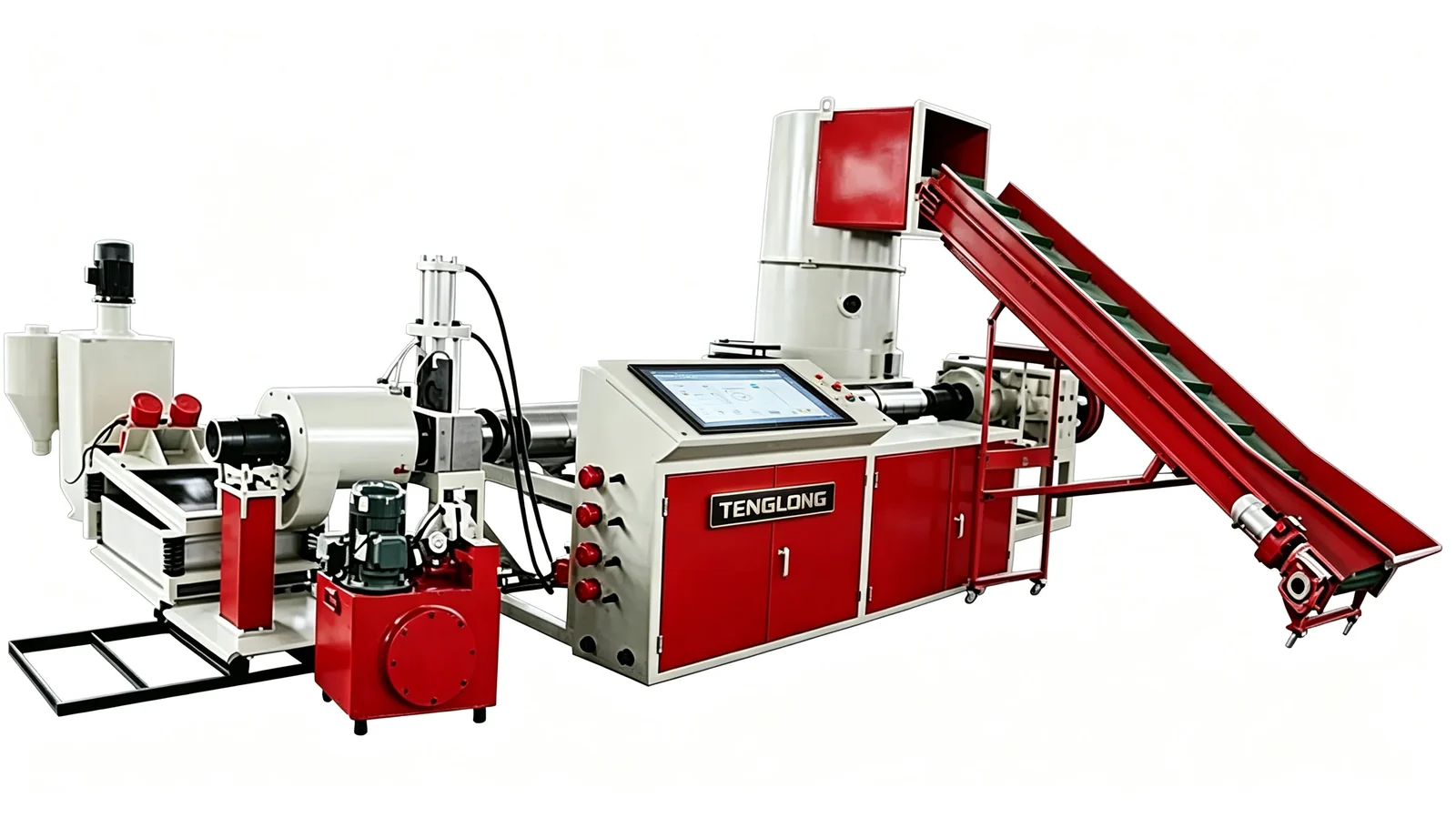
The setting that decides everything else
Mesh count is the one setting that decides a melt filter, because area, pressure and screen life all follow from it. The mesh sets the filter factor, the filter factor sets the filter area needed for a given melt flow, and the area sets the differential pressure you have to hold. Choose the mesh first and the rest of the specification writes itself.
The working rule is filter area in cm² = melt flow in kg/h divided by (filter factor 0.2–0.6 × material density). The factor is the part people get wrong, because it is not a constant: it rises as the material gets dirtier and as the mesh gets finer, since a fouled fine weave passes less and pushes harder.
For scale, a 500 kg/h HDPE melt needs roughly 250 cm² of filter area. That figure sits at the clean-feed end of the range, and I would not design a line for dirty regrind on it, but it is a useful check on whether a number in a quotation sits in the right order of magnitude.
The mesh ladder, and what each step costs
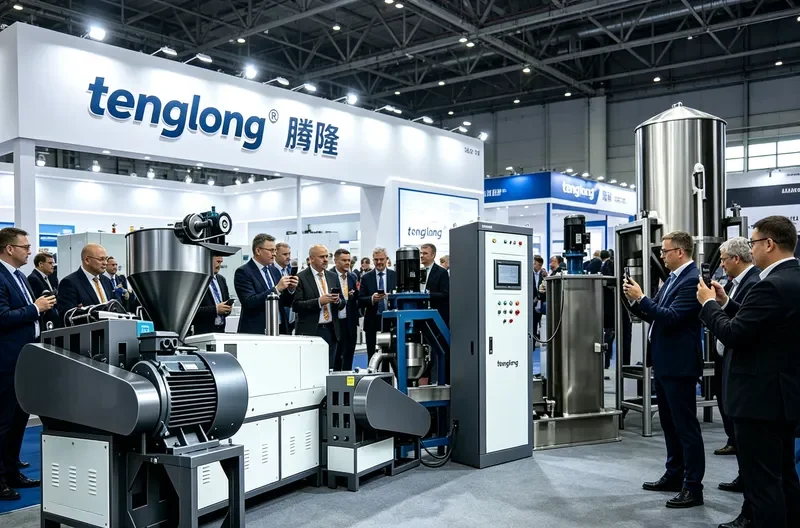
The published choices run from coarse to fine, and every step up is bought with pressure. A 60 mesh coarse filter is the sensible start for recycled material before refining. On a film granulating line 80 mesh is typical. 100–120 mesh is used for ordinary products, and 150–200 mesh for high-requirement film.
The two-stage granulating line shows the ladder working across two stages. Two-stage recycling lines use 60–100 mesh across two stages: the coarse stage takes the heavy contamination cheaply, and the polishing stage cleans the melt without fighting an already fouled face. The flakes pelletizing machine, for washed HDPE and PP flake, is published at 80–100 mesh for the same reason: one stage to take the coarse work and one to finish.
Going finer is not free. Each step up the ladder reduces the opening size and raises the pressure the filter must hold, and the screen interval shortens with it. On clean material the screen changes every 24 to 48 hours; on recycled material every 8 to 12 hours, and a fine mesh on dirty feed pushes that interval towards the short end.
Where the area comes from, and how to check it
The filter factor between 0.2 and 0.6 is the honest part of the calculation. A coarse screen on clean PE sits near the bottom of the range; a fine mesh on contaminated regrind sits near the top. So the formula gives a starting point, and the correct procedure is to calculate at the pessimistic end for the duty and then confirm with the supplier using the actual material and the actual melt temperature.
The check that catches most errors is simple. If the filter area quoted for the line is much smaller than the formula gives, ask which factor was used. A filter that is too small for the flow reads high pressure permanently, and no amount of screen changing will fix that, because the problem is the size of the screen rather than the dirt on it.
Density belongs in the calculation too, and it is why a PET line and an HDPE line at the same mass flow do not need the same area. The denser melt covers less mass flow through the same opening. The second shortcut people take is to sort the decision by material before doing any arithmetic. Where the particles land decides how early you see the problem: on an underwater pelletizer the die face sits in the water, so a blocked hole shows up inside the pellet rather than as an uneven strand.
Columns and the pressure rating
A single column suits output below 300 kg/h and a double column is advised above 500 kg/h. The reason is continuous service: a double-column filter can move a fresh screen into the melt path while the other column is still full, which is what turns a screen change into a changeover rather than a stoppage.
The pressure rating is a separate line in the specification and it is not settled by preference. The reference floor is 35 MPa for general extrusion and at least 50 MPa for high-viscosity and reinforced compounds. A reinforced compound running at a higher melt pressure than its housing rating is a leak waiting for a shift when nobody is watching the gauge.
Reinforcement is also why the filter factor moves. Talc, glass fibre and filled regrind are abrasives that load a screen faster than unfilled polymer does, so the area has to carry that loading or the pressure will not stay where you set it. A reinforced line specified on the unfilled figure will spend its life one screen change ahead of the plan.
What a badly matched filter costs
The figure that reaches a manager is the scrap rate. A mismatched screen changer is reported to raise the scrap rate by 15–30%, and continuous filtration is reported to cut energy use by about 8–12%. Both come from the same place, and they point in opposite directions: filtration you cannot keep clean raises scrap, while filtration you can keep clean pays for itself in energy.
There is a quieter cost as well. A filter that is slightly too small reads high pressure permanently, so the differential never returns to its starting value and the 24 to 48 hour interval on clean material never appears. The screen comes out every few hours instead, and on our published routine each of those changes is 20 minutes of line time.
None of this argues for buying the largest filter the budget will carry. It argues for the mesh, the factor and the flow agreeing with each other on the same page. When they agree, the filter is boring, the pressure sits where you put it, and the operator stops thinking about it, which is the highest praise I have for this piece of equipment.
Mesh choices and what each one costs you
The table sets out mesh choices and what each one costs you. The area figure in the middle of it decides how often screens are changed.
| Mesh | Typical use | Consequence of choosing it |
|---|---|---|
| 60 mesh | Coarse first stage on recycled material | Takes heavy contamination cheaply and leaves the fines behind |
| 80 mesh | Typical on a film granulating line | Balanced filtration at a moderate differential pressure |
| 100–120 mesh | Ordinary products | Finer melt, higher pressure, shorter screen interval |
| 150–200 mesh | High-requirement film | Shortest screen life and the highest pressure demand |
| 60–100 mesh over two stages | Two-stage recycling lines | The coarse stage protects the polishing stage from loading up |
What buyers ask us before they order
Q1: What mesh count should a melt filter use?
It depends on the material and the target product. Fine filtration around 120 mesh suits ordinary work, the finest screens are reserved for high-requirement film, and recycled feed often starts with a coarse screen before a second refining pass. On film lines 80 mesh is typical.
Q2: Why does the filter area depend on the mesh?
Because the mesh sets the filter factor in the working rule, and that factor runs between 0.2 and 0.6. Fine mesh and dirty material push the factor up, which means more area for the same melt flow and a higher pressure to hold.
Q3: What happens if the filter area is too small for the flow?
The filter reads high pressure permanently and the differential never returns to its starting value. Screen changes then come far more often than the 24 to 48 hour interval a correctly sized filter holds on clean material.
Q4: When is a double-column filter worth having?
Choose one when the line cannot stop for a screen change. Two columns let a fresh screen slide into the melt path while the other side keeps feeding the die, which is the whole reason to pay for the second column on a continuous line.
The rest of this series covers the same equipment from different angles: Melt Filter: What It Contains and How It Holds Back Dirt, Sizing a Melt Filter and What It Costs, Melt Filter Acceptance and First-Week Faults and Melt Filter Cost: Screen Changes, Scrap and Energy.
About the author
Zhou Gong (周工) works on the screw and barrel line at TENGLONG Plastic Machinery, which began in 2016 as a workshop serving recycling plants around Linyi and now ships 820-plus lines to 46 export markets. When a quotation gives mesh but no area, I treat it as a filter nobody has sized yet. Nothing in this article is rounded up from a brochure: every figure was read off a machine or carries the date on which it was published.
Describe the material, the contamination and the output you need, and our engineering team will answer with a model and a price range inside one working day. The trial on 10-20 kg of your own material is free, and a measured output more than 5% under the agreed figure leaves the deposit refundable.