Size a die head from the output the line has to hold and the grades it has to run, and the published plate envelope does the rest: 120–500 mm diameter, 10–100 holes and an aperture of 0.7–3.5 mm. The die is a flow device, and the screw decides the flow.
Cost follows material and duty rather than size. Standard tool steel plates run US$4,000–12,000, mid-tier stainless and nitrided versions US$12,000–25,000 and premium plates US$25,000–60,000 or more, with the recurring cost of owning a die head sitting in the spare plate at roughly 20 to 30% of the die.
Size by output, price by material
- Output first, plate envelope second: 120–500 mm, 10–100 holes, 0.7–3.5 mm aperture.
- Match the body to the pressure: twin screws reach 200–300 bar and some exceed 400 bar.
- Material sets the price band, from US$4,000–12,000 for tool steel to US$25,000–60,000.
- The spare plate, at 20 to 30% of the die, is the real recurring cost of changing grade.
Start From Output, Not From Die Diameter
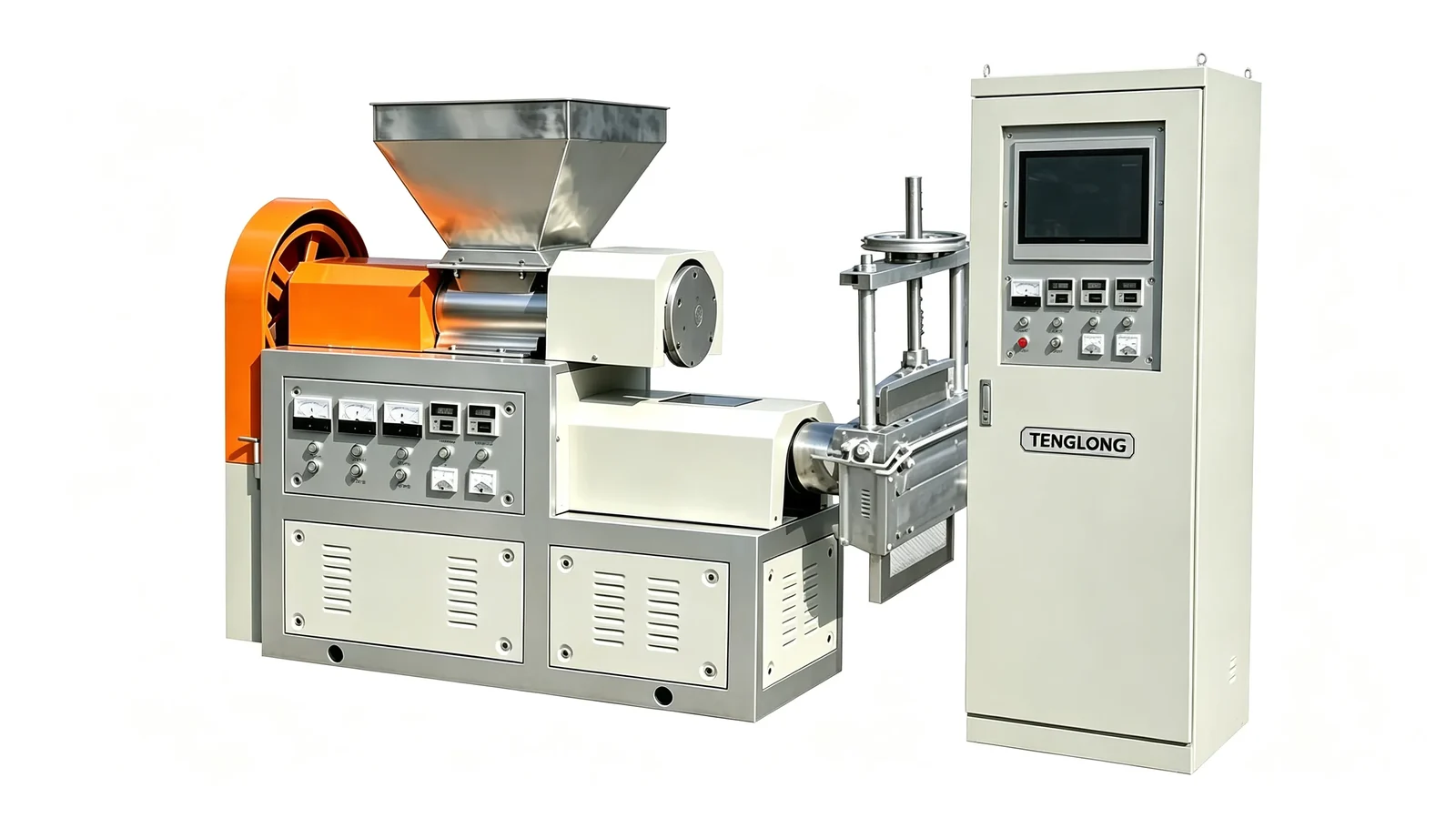
Size a die head from the output the line has to hold and the grades it has to run. A die is a flow device: plate diameter, hole count and hole diameter have to pass the melt the screw delivers, and the hole pattern has to be one the manifold can feed evenly. Nothing in the die specification tells you the output; the screw and the line do that.
The published plate envelope is 120–500 mm diameter, 10–100 holes and an aperture of 0.7–3.5 mm. A 100–1,000 kg/h water ring pelletizer and a 300–2,000 kg/h underwater pelletizer both need die heads inside that envelope, and they arrive at opposite ends of it. Output is the first question and plate size is the answer.
A strand pelletizing line running 150–800 kg/h is a different case again, because the strand has to be cooled in a trough and cut by a separate 12-blade assembly. The die head on that layout is judged on strand quality and heat stability rather than on how many holes it carries.
Match the Die to the Pressure the Screw Makes
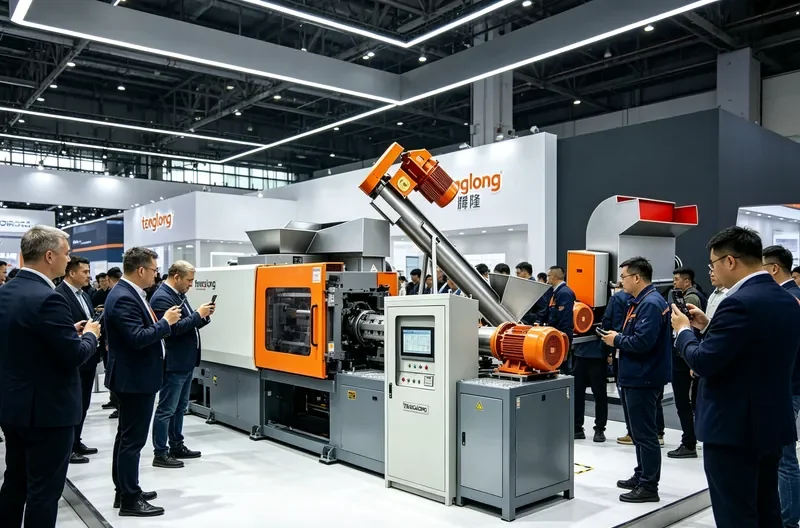
A twin screw extruder can develop 200–300 bar and some high-torque lines exceed 400 bar, so an under-rated die bulges and loses dimensional accuracy. This is where a die head gets matched to a machine: the 300–1,500 kg/h twin screw extruder line runs at 40:1 L/D, and its die head is not interchangeable with the one on a single screw line.
Bulging is quiet. A plate that flexes under pressure does not announce itself; it produces strands that change diameter along their length, and that shows up as a wider size spread and more fines in the bag. It is usually diagnosed as a cutter problem, because the cutter is where the operator is standing when the complaint arrives.
The body has to hold its temperature as well. A basic die runs 2 heating zones and a high-precision film die 10 or more, each with independent PID control, and the die face should hold plus or minus 1 °C across the face under full operating load. Zone count is a cost decision and a control decision at the same time.
What a Die Costs
The market bands are published and they are wide. Standard tool steel (H13, D2) die plates for general-purpose extrusion are priced at US$4,000–12,000, mid-tier stainless steel and nitrided versions at US$12,000–25,000 and premium specification plates at US$25,000–60,000 or more; a standard 150 mm strand die for masterbatch runs US$5,000–15,000 and a complex 300 mm underwater die with automatic screen changer can exceed US$50,000.
Those figures are for the die, not for the line. A water ring pelletizer starts at US$18,500 and a strand pelletizing line at US$16,800, so the die head is often the smaller line item on the quotation and the part that gets changed most often. A masterbatch granulator at US$26,000 is the case where the die matters most, because pigment carrier and colour change demand clean flow and a repeatable hole pattern.
Material follows duty. Standard tool steel (P20, H13) suits most polyolefins; powder metallurgy steels cost 2–3 times more but last 5–10 times longer on abrasive compounds; nitriding raises surface hardness for abrasive filled materials and hard chrome plating suits sticky polymers such as PVC. Filled and reinforced grades are where the money is worth spending, and they also run the widest holes at 3.0–4.5 mm.
The Cost of Owning It, Not Just Buying It
The recurring cost is a spare plate that changes hole configuration without replacing the die body, and it is quoted at roughly 20 to 30% of the die cost. For a plant that changes grade or changes colour, that plate belongs in the operating budget rather than in the purchase order.
Lead time is the other number. Published delivery on a die plate is 25 days after the deposit is received, and nitrided screw and barrel lead times run 40–50 days for Φ20–Φ90, 50–60 days for Φ90–Φ180, 60–70 days for Φ180–Φ250 and over 70 days at the largest sizes. A plate ordered after a breakdown waits longer than most buyers expect.
Service life figures for wear parts in this duty run 1–5 years for a barrel in high-filler PVC extrusion conditions, and wear-resistant alloy builds are documented at 3,000–5,000 hours on ordinary plastics. A die plate on abrasive duty lives inside that order of magnitude, and the spare plate is what keeps the line running when it does not.
Turning the Die Specification Into a Quotation
A formal quote states filtration mesh, drying method, motor power, control system and the exact scope of supply, and the die belongs inside that scope. If the quote does not say whether the die body, the plate, the heaters, the thermocouples and the tooling for a plate change are included, the number on it cannot be compared with another number.
Freight, foundations, water treatment, spare-parts stock and installation are quoted separately from the machine price, and a die head is no exception to that. So ask for a quotation that states the hole diameter, the land ratio, the plate diameter, the hole count, the material and the die body pressure rating, all on one page.
The comparison of 12 models is the quickest way to see which platform a die head belongs to, and the product catalogue lists what each platform includes. Then check the die against the grade rather than against the price, because the die is the part that decides whether the grade can be made at all.
The published die figures, and what they cost
The table sets out the published die figures, and what they cost. Work down the table before you compare two die quotations.
| Published figure | Value | Applies to |
|---|---|---|
| Die plate specification range | 120–500 mm diameter, 10–100 holes, 0.7–3.5 mm aperture | Any die plate order |
| Standard tool steel (H13, D2) plate | US$4,000–12,000 | General-purpose extrusion |
| Mid-tier stainless or nitrided plate | US$12,000–25,000 | Abrasive and filled duties |
| Premium specification plate | US$25,000–60,000 or more | High-specification dies |
| 150 mm strand die for masterbatch | US$5,000–15,000 | Standard strand layout |
| 300 mm underwater die with screen changer | Can exceed US$50,000 | Complex underwater geometry |
| Spare die plate | Roughly 20 to 30% of the die cost | Grade changes without a new body |
| Published plate delivery | 25 days after the deposit is received | Lead time on the plate alone |
What buyers ask us before they order
Q1: How do I size a die head for my line?
Start from the output the line has to hold and the grades it has to run, then work inside the published plate envelope of 120–500 mm diameter, 10–100 holes and a 0.7–3.5 mm aperture. The die has to pass the melt the screw delivers and suit the pressure the screw makes.
Q2: How much does a die head cost?
Standard tool steel (H13, D2) plates are priced at US$4,000–12,000, mid-tier stainless and nitrided versions at US$12,000–25,000 and premium plates at US$25,000–60,000 or more. A standard 150 mm strand die for masterbatch runs US$5,000–15,000, and a complex 300 mm underwater die with screen changer can exceed US$50,000.
Q3: Does a more expensive die material last longer?
On abrasive compounds it does. Standard tool steel (P20, H13) suits most polyolefins, powder metallurgy steels cost 2–3 times more but last 5–10 times longer, and nitriding raises surface hardness for abrasive filled materials. Hard chrome plating is the option for sticky polymers such as PVC.
Q4: What does a die head cost to own?
The recurring cost is the spare plate, quoted at roughly 20 to 30% of the die cost, and the waiting. Published plate delivery is 25 days after the deposit is received, and wear parts in this duty are documented at 1–5 years of service for a barrel in high-filler PVC conditions.
The companion write-ups for this machine family are: Die Head: What It Contains and How It Shapes the Melt, Die Head Hole Size and Land Length: What Sets the Pellet, Die Head Acceptance and First-Week Faults and Choose a Die Head by Starting With the Pellet You Need.
About the author
Zhou Gong (周工) signs off the test runs at TENGLONG Plastic Machinery, 18,000 m² of plant in Linyi, Shandong, with 30-plus staff and 820-plus lines delivered to 46 export markets. My rule is that a plant which changes grade every month should buy the spare plate with the machine, because the alternative is buying a die at three weeks’ notice with the line already stopped. Every number in this piece is traceable: measured on our own machines, or published with the date it was checked.
Send us the material form and the target output and we will come back inside one working day with the machine that fits and what it costs. The free test on 10-20 kg of your own material comes before the balance is paid, and a measured output more than 5% below the agreed figure leaves the deposit refundable.