A screen change is not one job. On a continuous line it is a screen change plus a melt-temperature check plus a bolt and drive inspection, and a plant that treats it as a single task ends up doing it properly every fourth time. Two routines rather than one is the arrangement that works: a short check at every change and a full inspection at a fixed interval.
The spares list is short on purpose. A screen pack, the screen change tooling, a set of heater cartridges and a thermocouple cover almost every screen-related stop we see. Machines are usually delayed by one of those four items arriving late, not by a missing spare.
What belongs in the routine
- Split the routine: a quick check at every screen change, a full inspection on a fixed interval.
- Record differential pressure before and after every change; the trend is worth more than the reading.
- Stock screens, tooling, heater cartridges and thermocouples — four items, and they cover most stops.
- Wear parts are outside the warranty; the warranty runs 18 months from commissioning or 24 months from shipment.
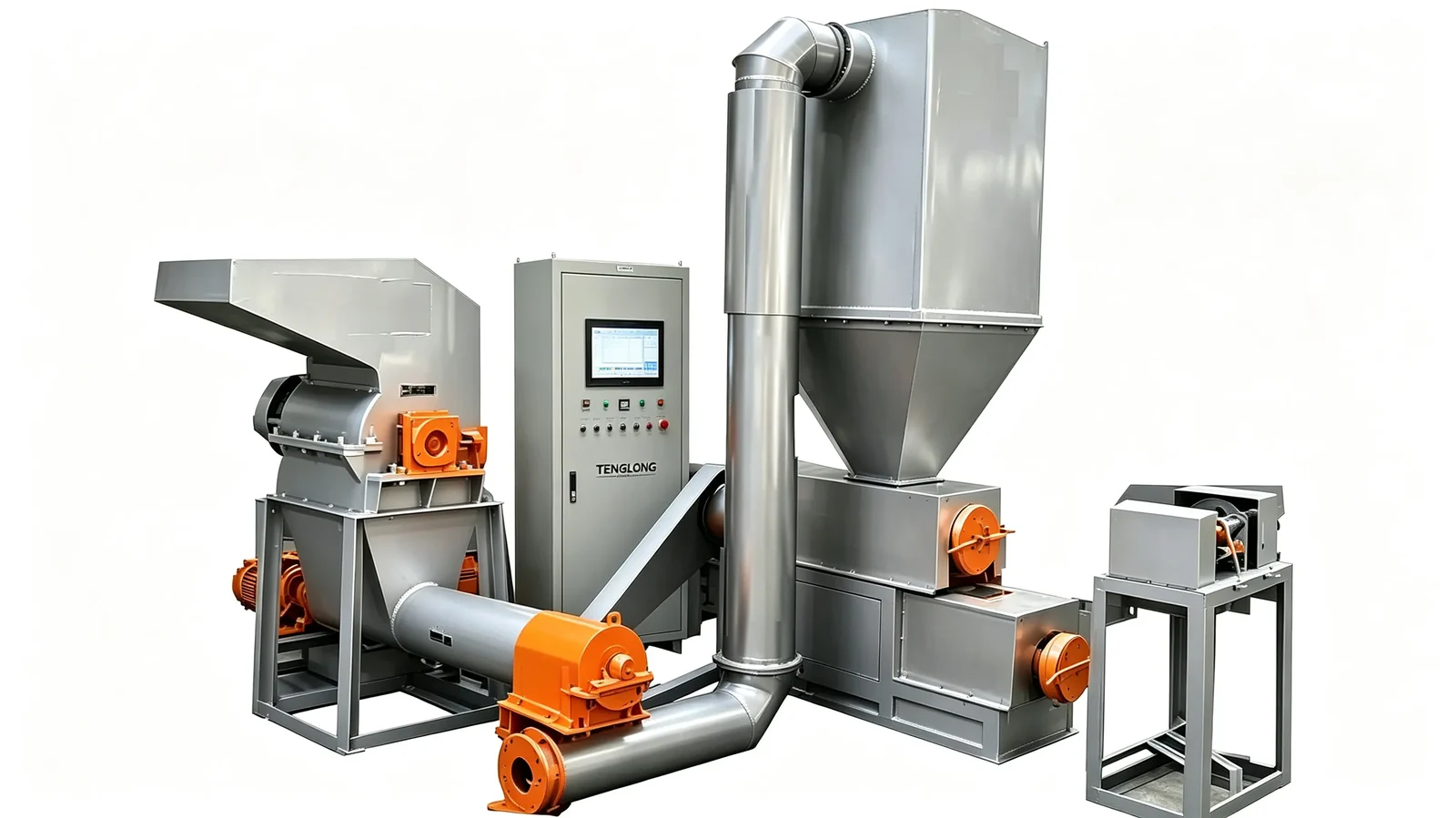
Two routines, not one
A plastic extruder that runs continuously has two distinct maintenance rhythms, and conflating them is what produces a plant that either changes screens too often or waits too long.
The first is the frequent check. Every eight running hours, the operator opens the feed throat and looks at the blades, the feed screw and the screen area. It takes minutes, it catches the problem that matters — a blade edge rolling over — before it becomes a production failure, and it does not require a shutdown.
The second is the screen change. On our lines it takes about 20 minutes and happens every three to four hours during continuous running. It is not maintenance in the sense of repair; it is a consumable change, and it should be scheduled and staffed rather than treated as an unplanned event.
What the screen change should actually include
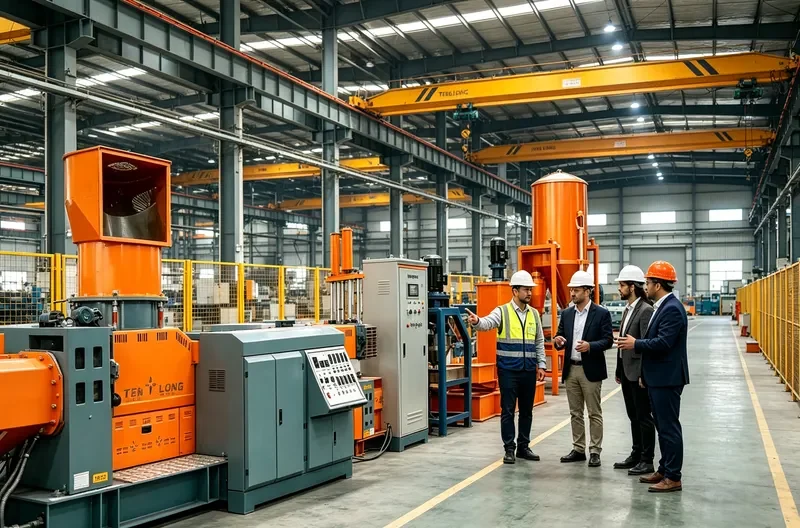
A 20-minute screen change that only swaps the filter is a missed opportunity. The window is small and the machine is already stopped, so the routine should cover the neighbouring items while the temperature is down.
Replace the screen. The obvious one. Inspect the old screen before you throw it away — a screen that failed early tells you something about the material that no gauge will.
Check the blades and the bed knife clearance. This is where the 20-minute window is best spent. The clearance setting that produces clean chunks has a tolerance, and knives that have been reg ground twice will not hold the original setting.
Look at the die plate. A partly blocked die hole raises pressure and is often blamed on the filter. While the head is open, check it.
Clean the melt path and the vent. Carbonised deposits in the vent are the main cause of the yellowing and black specks that customers reject, and they are visible while the machine is apart.
Record it. Screen life, the material batch and the melt pressure at changeover. Six weeks of that log turns maintenance from a guess into a schedule.
The spares list, and why it is short
The single most effective thing a plant can do to keep unplanned stops under 2% is keep the consumables on site. Our standard across the range is one spare screw, one die plate and two screen packs.
A screw is the item everyone underestimates. A nitrided screw is good for a long time, but when one fails the lead time is long enough to stop a plant for weeks. We nitride in-house with a 0.5–0.7 mm case at HV 900–1000, and machine screws up to 4 m and 220 mm diameter, so a spare can be produced rather than sourced.
The die plate and the screen packs are cheap next to the downtime they prevent. The screen pack in particular should be sized for the change interval, not for one change — two packs means a weekend does not depend on a courier.
Wear parts are excluded from the warranty, as they are across the whole range, but we stock them for three years. That is the part of the after-sales promise that a running plant actually depends on.
What to log, and what the log tells you
Six fields per changeover, written down: date and shift, machine and screw size, material batch and its contamination level, screen mesh, melt pressure at changeover, and the running hours since the last change.
That log answers questions no amount of theory can. Why does the filter last four hours on Monday and ninety minutes on Thursday? Because Thursday’s batch carried something. Why does the same mesh last longer on one machine than another? Because the melt temperature differs. Why does the yellowing start every second week? Because the vent cleaning has slipped.
It also converts the screen change from a task into a planned operation, which is what makes it possible to schedule a third shift without adding people.
The maintenance calendar on a continuous-duty line
A continuous line needs two routines rather than one, and the calendar below is the one we hand over with every machine.
| Interval | Task | Duration | Catches |
|---|---|---|---|
| Every 8 running hours | Blade, feed screw and screen area check | Minutes | Rolled blade edge, build-up in the feed throat |
| Every 3–4 hours | Screen change, die plate check, vent clean | About 20 minutes | Fouling, blocked die holes, carbonised deposits |
| Weekly | Full clearance inspection and regrind if needed | Scheduled downtime | Worn knife clearance |
| Monthly | Screw and barrel inspection, spares stock check | Scheduled downtime | Barrel wear, missing spares |
| Quarterly | Trend review of the changeover log | Office time | Recurring contamination, drifting recipes |
Frequently asked questions
Q1: How often should the screen be changed on a continuous line?
Every three to four hours on a continuous-duty machine, with the change taking about 20 minutes. On heavily contaminated feed the interval shortens and should be set from the differential pressure reading rather than the clock.
Q2: What should I check besides the screen itself?
The blades and bed knife clearance, the die plate for partly blocked holes, the melt path and the vent for carbonised deposits, and the melt pressure at changeover. All of these are visible while the head is open, and all of them are missed if the screen change is treated as a filter swap only.
Q3: Which spare parts should a plant keep on site?
One spare screw, one die plate and two screen packs is our standard across the range, and it is what keeps unplanned stops under 2%. The screw is the one people forget: it is the longest lead-time item, and a nitrided spare can be made in-house rather than bought.
Q4: Does the warranty cover wear parts?
No. The 18-month warranty from commissioning, or 24 months from shipment, covers parts and labour for manufacturing defects. Wear parts — knives, screens, heater bands, seals — are excluded, but we stock them for three years so a plant can order against a known availability window.
Where this fits in the wider range: auxiliary equipment index, the 12-platform comparison, factory and company facts and FAQ on 24-hour running.
Read next, if the same model is going on your line: Screen Changer for Plastic Extrusion: What It Does, Manual, Hydraulic or Continuous Screen Changer: Which?, Screen Changer Filter Area: Calculation and Pressure and Screen Changer Cost: What It Costs and What It Saves.
About the author
Zhou Gong (周工) is the recycling machinery engineer at TENGLONG Plastic Machinery in Linyi, Shandong — a plant of 18,000 m² with 30-plus staff, 12 platforms and 820-plus installations across 46 export markets. The log I ask for has one column most plants do not keep: how long the line stood. Once that column exists, the right replacement usually becomes obvious. Where a figure is quoted here it has been measured or published with a date attached; nothing in this article is an estimate.
The quickest way to a real answer is to send the feed form, the contamination level and the throughput you need. A model and a price range come back within one working day, the trial on 10–20 kg of your material is free, and a result that misses the agreed output by more than 5% leaves the deposit refundable.