A cold wash line at 1,000-2,000 kg/h is quoted at US$150,000-300,000; with hot wash, sink-float and drying it is US$200,000-400,000; a food-grade line with optical sorting and closed-loop water treatment runs US$350,000-600,000 before a further 15-25% for water treatment and commissioning.
The running difference per ton of flake is heat and water: 18-30 kWh and 0.3-1.5 m3, against consumables of US$4-9 and cleaning labour of US$2-5 that both lines pay. The extra capital has to earn back the food-grade premium of roughly US$600-1,200 per ton.
The money follows the grade
- Cold wash line sits at US$150,000-300,000; with hot wash, US$200,000-400,000.
- Food grade with optical sorting and closed-loop water runs US$350,000-600,000.
- Running cost: 18-30 kWh and 0.3-1.5 m3 per ton of flake.
- The premium to earn back is roughly US$600-1,200 per ton of food-grade output.
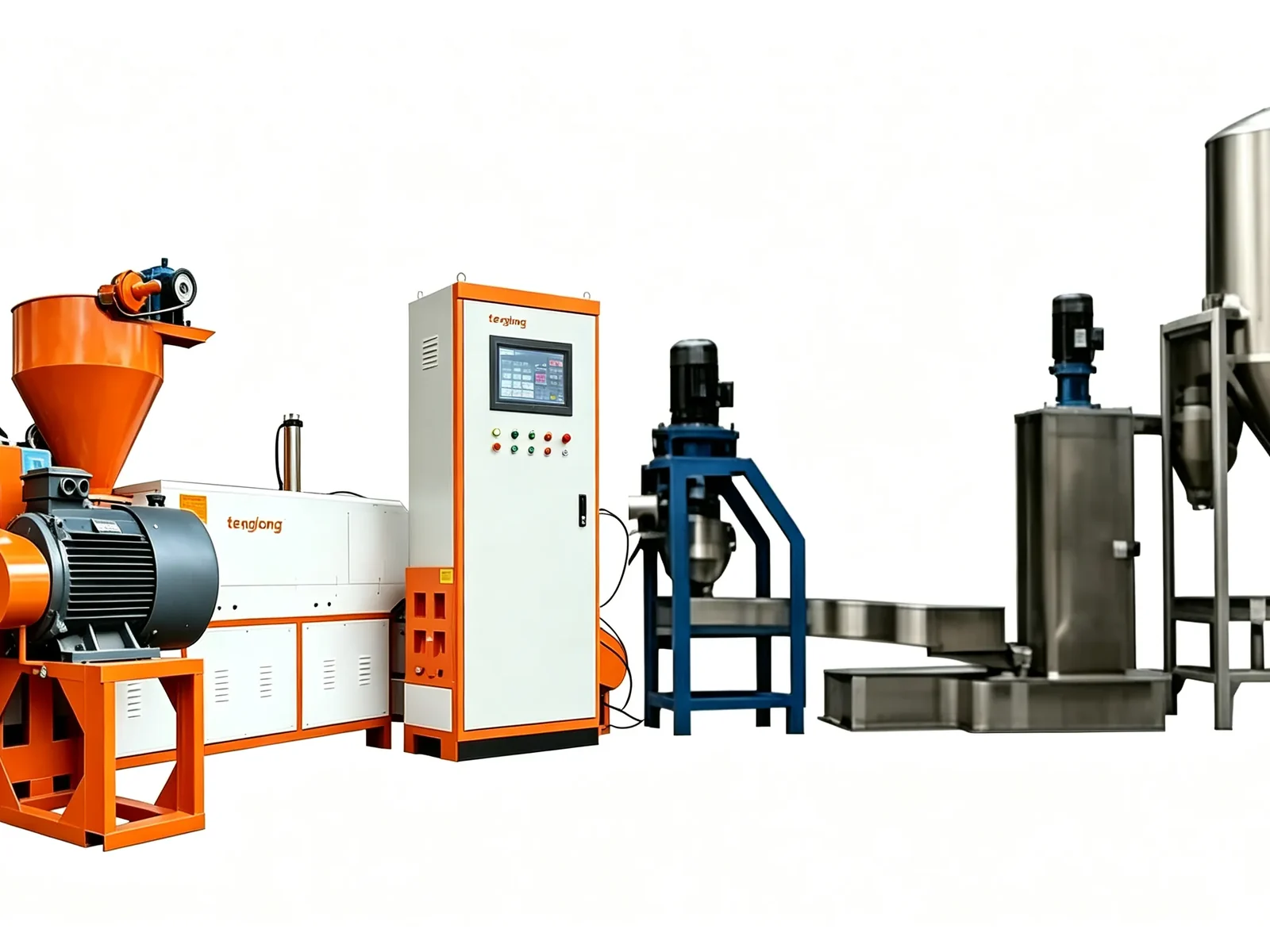
The Capital Difference Between the Two Lines
A cold wash line at 1,000–2,000 kg/h is quoted at US$150,000–300,000. The same line with hot wash, sink-float and drying is quoted at US$200,000–400,000. The gap is the price of the chemistry stage, and it is why the hot wash has to earn its place rather than simply being the more modern choice on the list.
Inside that gap the hot caustic wash vessel with heating and dosing is listed at US$58,000–125,000, the float sink tank with surface skimmer at US$28,000–62,000, the wet grinder with screen and water injection at US$34,000–72,000, the dry label remover with tooth drum at US$38,000–78,000, and the pre-wash drum and dosing skid at US$24,000–52,000. A buyer who prices only the wash vessel has priced a fraction of the difference.
Then the two figures usually kept out of the machine line. Water treatment and commissioning add a further 15–25% on top, and a food-grade configuration with optical sorting and closed-loop water treatment runs the whole line at US$350,000–600,000. The premium configuration is not a bigger hot wash. It is a hot wash with sorting and a closed water loop standing around it.
The Running Cost, Per Tonne of Flake
The running difference is heat and water, and it shows up per ton of flake. Published energy use for a washing line is 18–30 kWh per ton of flake, with water at 0.3–1.5 m³ per ton and recirculation. A hot wash puts the whole tank into that budget at once, because the tank is held at temperature whether or not a batch is in it.
Water is the second per-tonne line. A hot wash carries more of its own water out with the flake than a cold wash does, so a hot line sits nearer the upper end of the published range and needs a make-up system and a recycle skid to stay there. The wastewater treatment and water recycle skid is listed at US$55,000–135,000, which is capital spent purely to keep a per-tonne number down.
Some costs are identical on both lines and should not be used to argue for either. Wear teeth, filters, bearings and belts add US$4–9 per ton, and inspection and cleaning labour adds US$2–5 per ton. Those are mechanical costs of the crushing and flotation equipment, paid on every ton whether the water is hot or cold, and they belong in the comparison of two lines rather than in the argument for one of them.
What the Hot Wash Is Supposed to Earn Back
The case for hot washing is the price band on the other side of the plant. Food-grade rPET output commands a market premium of roughly US$600–1,200/t over non-food-grade rPET, and the extra washing and documentation stages are quoted as adding 15–25% to the capital cost of a commodity line. Those two numbers are the whole argument, and they only balance if the plant sells into the band it was built for.
The market gives the reference points. The April 2026 price series put fibre-grade clear rPET at US$1,130/t with IV 0.72 and food-grade pellets at US$1,300/t with IV 0.88, and the wider reporting ranged from US$800–1,200/t for non-food-grade clear or mixed-colour material up to US$1,500–2,500/t for super-clean food-grade rPET. The hot wash is what moves a plant from the middle band into the top one, but only if the sorting and the water treatment are there as well.
Which is the arithmetic I would put in front of a buyer. The extra capital on the wash stage, plus the further 15–25% for water treatment and commissioning, has to be recovered out of the difference between a commodity flake and a food-grade flake. If the plant’s customers will not pay the premium, the hot wash is a cost centre rather than an investment, and no engineering argument changes that.
When Cold Wash Is the Right Answer
My own preference, on plants I have seen, is cold wash on clean flake and hot wash on dirty flake, and never the other way round. Flake that is already colour-sorted, de-bagged and free of oil does not need 85–95 °C of caustic. It needs a rinse, a flotation and a dryer. Spending the hot wash budget on material that was never dirty is how plants end up with an expensive tank and a pellet that looks the same.
There is a limit to how dirty the feed can get before washing stops being the answer. A single screw granulator tolerates about 2% non-melting contamination at 60–80 mesh, a two stage granulating line handles 5–8% at 100 mesh, and above 8% washing is cheaper than filtering. That figure is about what happens downstream of the wash, but it is still the honest boundary for how much work the wash can be asked to absorb.
The other boundary is the recipe. A plant running one grade, one colour and one customer can often justify cold washing and spend the money on optical sorting instead, because sorting changes the value of the output more per dollar than heating the water does. A plant mixing food-grade and commodity streams has the opposite problem, since the two cannot share a tank without each spoiling the other’s specification.
The Costs That Sit Outside the Machine Price
Freight, foundations, water treatment, spare-parts stock and installation are quoted separately from the machine price, and on a washing plant that is a large part of the project. Published stage prices assume delivery to the plant and sit before foundations, piping, cabling and commissioning. A comparison of two quotations that stops at the machine line is not a comparison of two projects.
Colour sorting changes the project again. A line that has to produce separately sorted clear, blue and green flake needs extra optical sorters and separate bagging silos, adding US$120,000–320,000 to the project, and the optical bottle sorter on its own is listed at US$90,000–240,000. Sorting by colour is a second capital decision stacked on top of the hot wash decision, and the two are constantly confused in early planning. The case studies on this site show how much the sorting decision moves a project.
Finally, published prices are indicative starting prices for 2026 and are configuration-dependent, so a formal quote has to state filtration mesh, drying method, motor power, control system and the exact scope of supply. The product range on this site shows what the rest of the plant involves, and a turnkey arrangement fixes the split of responsibility between the machine and everything around it. The vessel is the cheapest line on the invoice and the most expensive line on the meter.
Cost lines for hot wash and cold wash, capital and per ton
Hot wash costs money twice: once for the machine and once for the chemistry and the heat. The table compares the two routes a tonne of flake can take.
| Item | Published figure | Where it sits in the decision |
|---|---|---|
| Cold wash line at 1,000–2,000 kg/h | US$150,000–300,000 | The capital baseline |
| Line with hot wash, sink-float and drying | US$200,000–400,000 | The hot wash configuration |
| Hot caustic wash vessel with heating and dosing | US$58,000–125,000 | The single stage inside that range |
| Food-grade line with optical sorting and closed-loop water | US$350,000–600,000 | The premium configuration |
| Water treatment and commissioning | A further 15–25% | Quoted on top of the line |
| Washing-line energy | 18–30 kWh per ton of flake | Heating dominates in hot wash |
| Wash water | 0.3–1.5 m³ per ton of flake | Hot wash sits nearer the upper end |
| Consumables and cleaning labour | US$4–9 and US$2–5 per ton | Identical on both lines |
| Food-grade premium on the pellet | Roughly US$600–1,200/t | What the extra capital must earn |
Common questions, with short answers
Q1: How much more does a hot wash line cost than a cold wash line?
A cold wash line at 1,000–2,000 kg/h is quoted at US$150,000–300,000, while the same line with hot wash, sink-float and drying is quoted at US$200,000–400,000. The hot caustic wash vessel with heating and dosing alone is listed at US$58,000–125,000 inside that gap.
Q2: What does hot washing add to the running cost per ton?
Heat and water. Published energy use for a washing line is 18–30 kWh per ton of flake with water at 0.3–1.5 m³ per ton and recirculation. Consumables of US$4–9 per ton and inspection labour of US$2–5 per ton are the same on both lines and are not part of the difference.
Q3: When is cold wash the better commercial choice?
When the flake is already colour-sorted, de-bagged and free of oil, so there is no adhesive for the caustic to dissolve. Cold wash plus a rinse, a flotation and a dryer will handle that stream, and the money saved can go into optical sorting, which moves the value of the output more per dollar.
Q4: How does the food-grade premium decide the question?
Food-grade rPET output commands roughly US$600–1,200/t over non-food-grade, and the extra washing and documentation stages add 15–25% to the capital cost of a commodity line. If the plant cannot sell into the food-grade band, the extra capital has nothing to earn it back.
Read next, if the same model is going on your line: Hot Washing Machine for PET: What It Actually Removes, Hot Washing Machine: Caustic Dosing and Temperature, Sizing a Hot Washing Machine: Tank Volume and Turnover and Hot Washing Machine Acceptance and First-Week Faults.
About the author
Zhou Gong (周工) is the recycling machinery engineer at TENGLONG Plastic Machinery in Linyi, Shandong — a plant of 18,000 m² with 30-plus staff, 12 platforms and 820-plus installations across 46 export markets. I would rather sell a plant that washes cold on clean flake than one that washes hot on dirty flake and hopes the customer notices the difference. Where a figure is quoted here it has been measured or published with a date attached; nothing in this article is an estimate.
The quickest way to a real answer is to send the feed form, the contamination level and the throughput you need. A model and a price range come back within one working day, the trial on 10-20 kg of your material is free, and a result that misses the agreed output by more than 5% leaves the deposit refundable.