A hot washing machine for PET removes two things well: the adhesive that glues labels, sleeves and caps to the flake, and the oil and organic soil underneath it. Colour, PVC, metal, sand and fines are not on that list, and no hot caustic bath will take them out.
That narrow list is why the tank is a chemistry stage rather than a cleaning stage. The vessel holds 85-95 degrees C and 1-2% caustic for 30-45 minutes a batch; the heater holds the bath; the agitation keeps the flake in suspension; the dosing skid feeds the loop. Everything else the buyer wants comes from the stages downstream.
A short list of jobs
- It dissolves adhesive and lifts oil. That is the job, and it is the whole job.
- Colour and PVC are never washed out; they are sorted on the line downstream.
- The heater, the agitation and the dosing skid each serve one of the three numbers.
- A rinse and a dryer finish the work the tank started.
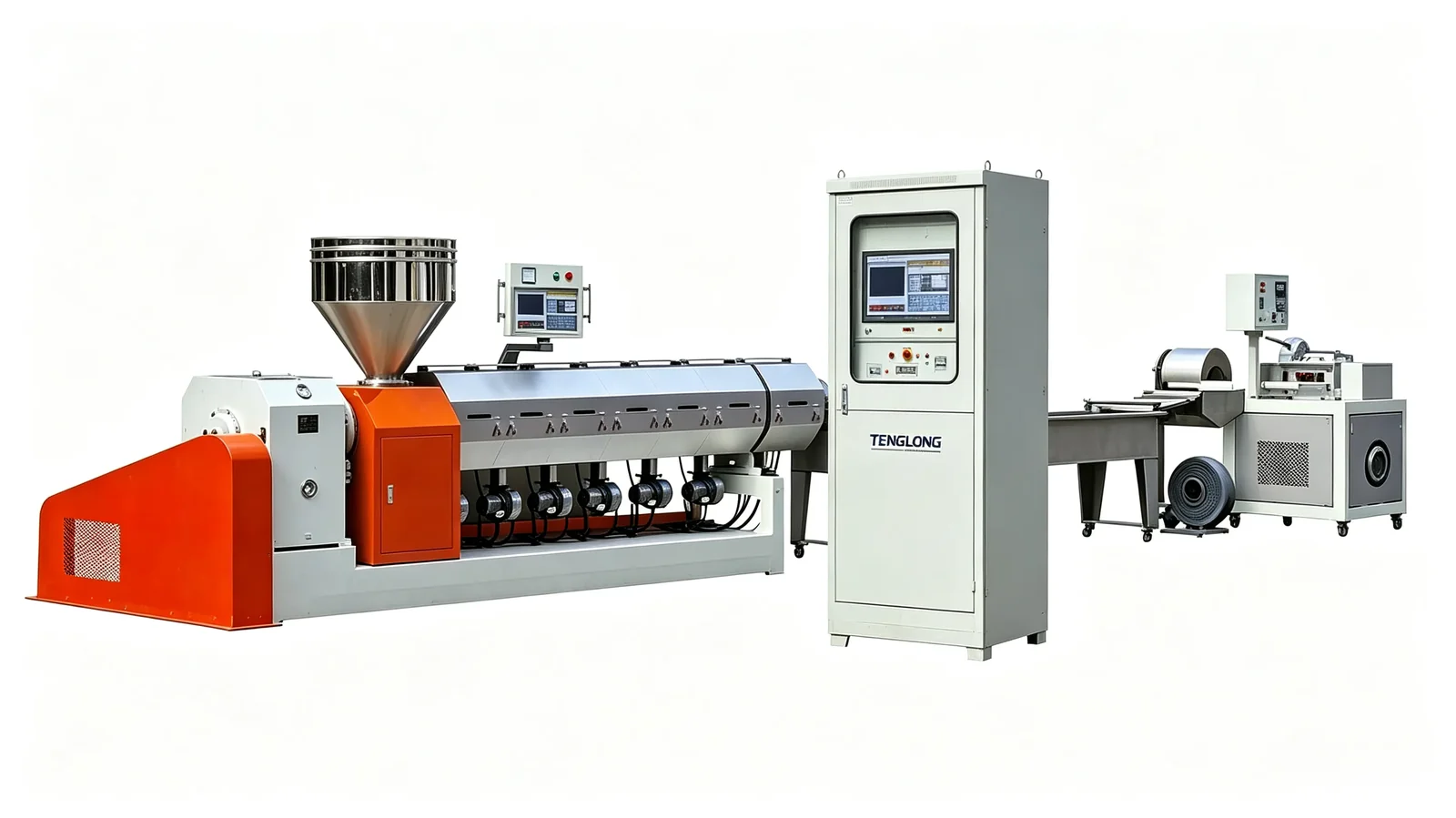
A Short List, Not a General Clean
A hot caustic wash for PET does two jobs properly: it dissolves the adhesive that glues labels, sleeves and caps to the flake, and it lifts the oil and organic soil that sit under that adhesive. Everything else it is asked to do, it does not do. Colour stays in the flake. PVC stays in the flake. Sand, metal and fines stay where they are. The stage has a short and specific list, and that list is worth reading before the quotation arrives.
That boundary is why the hot wash gets described as a chemistry stage rather than a cleaning stage. The rest of a washing line separates by physical means: flotation lifts the floating fraction, sieving takes out the fines, optical sorting picks out the colour. The caustic tank is the one vessel where contamination is destroyed rather than separated, which is also why it is the one stage that cannot be sized by capacity alone.
The consequences run in both directions. A plant whose bottles arrive already de-labelled and de-capped needs far less hot wash capacity than one handling dirty, oily, glued flake, and under-washing does not announce itself as a slow line. It surfaces months later as a complaint about specks in the pellet. Over-washing is quieter still: it turns up in the energy bill, and in PET attacked by alkali it never needed to meet. Size reduction upstream decides how much of the adhesive the chemistry can even reach.
The Vessel, the Heat and the Agitation
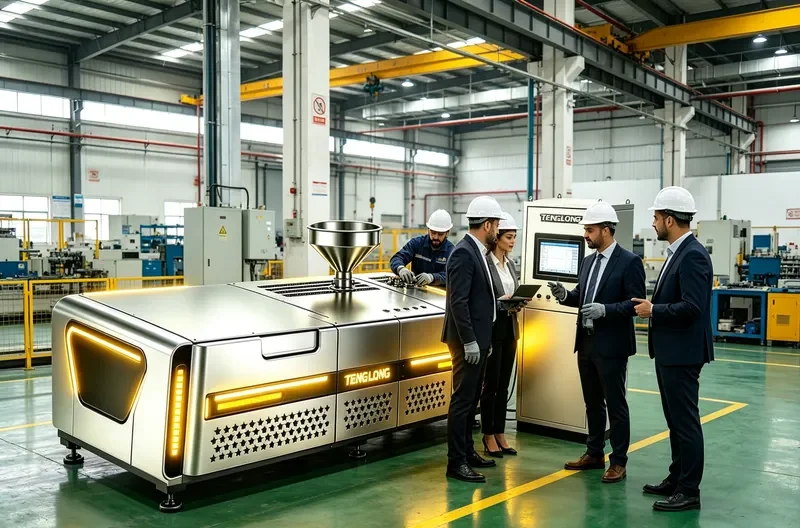
Hot caustic washing runs at 85–95 °C with 1–2% caustic soda and a surfactant, and a batch stays in the tank 30–45 minutes. The vessel exists to hold that bath at that temperature for that long, and everything attached to it is there to serve one of those three numbers. The heater keeps the water hot, the agitation keeps the flake moving, and the shell holds the water where the heater can find it.
Heater capacity is the item quoted most loosely, because it is a function of working volume, start temperature and how often the tank is emptied and refilled. A heater that can hold a full tank at temperature but cannot bring a cold tank back up in a reasonable time will throttle the whole line, and the symptom gets reported as a throughput problem rather than a heating problem.
Agitation is the part that looks like plumbing and does the most work. Flake has to stay in suspension and in motion, not settle into a bed on the tank floor, because a settled bed is a cold bed, and a cold bed is not washed at the temperature the gauge reads in the well. That is also why the tank needs freeboard above the working volume, and why an agitator sized for the shell rather than for the working volume will not do the job.
The Dosing Skid and the Concentrated Tank
Caustic does not arrive at the tank as a sack to be tipped in by hand. It is drawn from a concentrated tank and dosed into the heated water loop, and the delivery point has to be where the water is both hot and actually moving. A dose injected into a cold return, or into a leg of the circuit where nothing circulates, is a dose that sits somewhere until somebody eventually finds it.
The skid also carries the small decisions that decide whether the tank runs or drifts: concentration measurement, temperature control, and the valves that sort filling, washing and discharging. A hot wash vessel listed with heating and dosing is a different object from one listed with heating alone, and the difference shows up as a tank that holds its settings against a tank that drifts through the shift.
One detail worth asking about is whether the pump takes suction from the concentrated tank or from a day tank. It sounds like nothing. It decides what the line does after a power cut at three in the morning: whether the person on shift comes back to a tank that is still dosing, or to a line that has stopped and can be restarted cleanly. The dosing skid and its pump are auxiliary equipment, and they are where several of the first-week faults start.
What Leaves the Other Side
Washed flake leaves the tank wet and alkaline, and the stages that follow deal with both. Float-sink separation comes next: PET has a density of about 1.38 g/cm³ and sinks, while PP and PE below 1.0 g/cm³ float and are skimmed, which removes 95–99% of the floating fraction. That is density work, and it was never the tank’s job to begin with.
Then the rinse, then the dryer, then the moisture figure: flake moisture after drying falls below 1–2%. Getting there takes more than the wash, because the wash leaves water on the flake and inside it, and the dryer is what removes what is inside. Skipping the wash does not move the drying duty anywhere. It only leaves the dryer doing work it was never built for.
Alkalinity travels as well. Residual caustic on the flake reappears at the extruder as foam in the melt and yellowing in the pellet, which is why a flake pH below 8.0 is worth verifying before the flake goes near a PET pelletizing line. The wash and the extruder are separated by a rinse and a drying step, and the rinse is where the alkalinity is actually taken out.
Where the Hot Wash Ends and the Food Grade Begins
The hot wash is the stage that separates a commodity flake from a food-grade flake, but the separation is done by everything downstream of it, not by the tank. PVC below 50 ppm for food grade is the specification that decides the market, and the caustic bath contributes nothing to it directly. A final purity of 99.5%+ arrives with optical sorting, and the optical sorter is a different machine with a different price.
So the honest picture of a hot washing machine is narrow. It dissolves the glue and lifts the oil, at a known temperature, a known caustic concentration and a known dwell time. Everything else a buyer wants from it, colour removal, PVC removal, dryness and purity, is bought with the stages that follow, and paid for in the quotation that follows.
That is also the argument for putting the wash in the right place in the sequence. A full PET bottle line runs pre-wash and label removal first, then wet grinding, a first friction wash, the hot caustic tank, a neutralising rinse with a second friction wash, and only then flotation and drying. A turnkey plastic granules production line packages the same idea as crush, wash, dewater, dry and pelletize, and the wash is one step inside it rather than the whole of it.
What the hot caustic wash handles, and what it hands downstream
Different contaminants need different stages, and the order is not optional. The table follows a bottle through the wash and says which stage takes what off it.
| Contaminant | Effect of the hot wash | Where it is dealt with instead |
|---|---|---|
| Label adhesive and glue | Softened and dissolved by heat and caustic | Removed inside the hot tank |
| Oil and food residue | Lifted by the surfactant and carried off in the water | Removed inside the hot tank |
| Loose dirt, sand, paper fibre | Washed off, but not this stage’s job | Pre-wash drum and first friction wash |
| PP and PE caps and sleeves | Unaffected; the flake stays dirty | Float-sink tank skims them off |
| Colour | Not affected at all | Optical sorter on the downstream line |
| PVC contamination | Not affected; the bath is not selective | Sorting, with below 50 ppm for food grade |
| Water inside the flake | Not removed; a wash is not a dryer | Drying stage, below 1–2% moisture |
| Residual alkalinity | Left on the flake by the dissolving stage | Neutralising rinse, then pH below 8.0 |
What buyers ask us before they order
Q1: What does a hot washing machine actually remove from PET flake?
It removes the adhesive that glues labels and caps to the flake, and the oil and organic soil underneath it, working at 85–95 °C with 1–2% caustic soda and a surfactant for 30–45 minutes per batch. Colour, PVC, metal and sand are not removed by this stage.
Q2: Is the hot wash the same thing as the float-sink tank?
No. The hot wash is a chemistry stage that dissolves adhesive and lifts oil. Float-sink separation is a density stage: PET at about 1.38 g/cm³ sinks while PP and PE below 1.0 g/cm³ float and are skimmed, taking out 95–99% of the floating fraction.
Q3: Why does the detergent come from a concentrated tank?
Caustic is drawn from a concentrated tank and dosed into the heated water loop, so the dose enters where it mixes into hot, moving water. A dose injected into a cold return or a dead leg of the circuit simply sits in the tank until somebody finds it.
Q4: Does a hot wash make the flake food grade?
Not by itself. Food grade is decided by the stages that follow, with PVC below 50 ppm and a final purity of 99.5%+ with optical sorting. The caustic bath removes glue and oil; it does not remove colour or PVC, and it is not the stage that signs off the grade.
If you are working through the same machine family, these are the other Hot Washing Machine: Caustic Dosing and Temperature, Sizing a Hot Washing Machine: Tank Volume and Turnover, Hot Washing Machine vs Cold Wash: Cost per Tonne and Hot Washing Machine Acceptance and First-Week Faults.
About the author
Zhou Gong (周工) signs off the test runs at TENGLONG Plastic Machinery, 18,000 m² of plant in Linyi, Shandong, with 30-plus staff and 820-plus lines delivered to 46 export markets. I keep a short list of what my tanks do not do, because most of the disappointing commissioning days started with somebody expecting the tank to do all of it. Every number in this piece is traceable: measured on our own machines, or published with the date it was checked.
Send us the material form and the target output and we will come back inside one working day with the machine that fits and what it costs. The free test on 10-20 kg of your own material comes before the balance is paid, and a measured output more than 5% below the agreed figure leaves the deposit refundable.