Acceptance has three parts: a free test on 10-20 kg of your own material with video, measured output, specific energy and pellet photos before the balance is paid; 7-10 days on site for commissioning, two days of operator training and a signed handover report; and a first month of logged readings.
The values to agree in writing are published ones: 85-95 degrees C, 1-2% caustic, 30-45 minutes per batch, flake pH below 8.0, moisture below 1-2%, PVC below 50 ppm for food grade, and 60-80% of nameplate on real throughput.
Agree the numbers first
- A free test on your own material happens before the balance is paid.
- A measured output more than 5% under the agreed figure leaves the deposit refundable.
- Seven to ten days on site, two days of training, a signed handover report.
- The first-week faults: caustic carry-over, heater recovery, dosing and fouling.

Acceptance Is a Protocol, Not a Visit
Acceptance of a hot washing machine is a protocol, not a visit. The test comes first, on the buyer’s own material, with the readings recorded before the balance is paid. The commissioning comes second, on site, ending in a signed handover report. The faults that follow are the third part of the same protocol, and a supplier who expects to be judged on them has nothing to hide.
The protocol has to be written down because a hot wash has several settings that can each be wrong while the line still runs and still produces flake. Temperature, caustic concentration, dwell time, rinse pH and moisture all produce output. The only way to tell a working wash from a broken one is to agree the readings before the machine runs, then check the same readings afterwards.
So the acceptance document should list the values the plant will be judged against, the way the pelletizing side lists output and specific energy. Nothing about that is unusual. It is simply the part of a purchase that tends to be left to goodwill, and goodwill is worth less than a line on a sheet at three in the morning.
The Test Run Before the Balance Is Paid
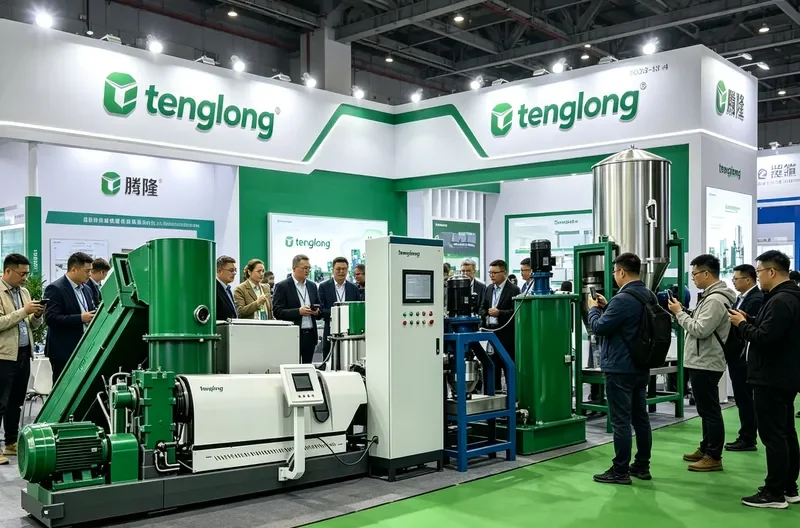
The published test arrangement is a free test on 10–20 kg of the buyer’s material, with video, measured output, specific energy and pellet photos sent before the balance is paid. On a washing line the same arrangement becomes a flake test: a measured flake output, a measured energy figure per ton of flake, and photographs of the flake before and after the tank.
A consequence is attached to that test. A measured output more than 5% below the agreed figure leaves the deposit refundable. The agreement on output therefore has to be settled in advance, in writing, and the honest version of that agreement names the material, the batch cycle and the readings. A vague agreed output is not much of a reference point for anybody.
The test hall exists to make this a fair comparison between suppliers: material storage, water and a 500 kVA supply, with three simultaneous material runs. Linyi is 2.5 hours by high-speed train from Jinan and 1.5 hours by air from Shanghai, and a typical visit takes half a day. Sending your own material is the step buyers skip, and it is the step that decides the outcome.
Commissioning, Training and the Signed Handover
A line is commissioned on site in 7–10 days, which covers commissioning, two days of operator training and a handover report signed on both sides. A single machine takes 3–5 days. The signed report is the document that carries the acceptance, and it should carry the readings taken during the run rather than a summary of them, because the summary is what the plant rebuilds from memory a year later.
What the plant should have in front of it on the last day: a 380 V / 50 Hz three-phase standard supply with IE3 motors and IP54 panels, wear parts stocked for three years, and a warranty running 18 months from commissioning or 24 months from shipment, whichever comes first. Those are the commercial terms that decide what happens in month seven when a heater element fails on a Sunday.
The payment terms sit on the same page as the acceptance terms: 30% T/T deposit, 70% before shipment, with L/C at sight above US$50,000. A buyer who has run the test, seen the readings and holds a signed report has a different conversation at that point from one holding a photograph of a finished machine and a polite letter. If you want a request a quotation that carries the readings in it, that has to be said when the quotation is drafted, not when the plant is already running.
What Breaks in the First Week of Production
The first fault is carry-over. A tank that runs hot and caustic but rinses badly leaves alkaline flake, and the symptom appears a week later as foam in the melt and yellowing in the pellet, which is the exact trace I have had to walk back to a rinse stage before. The cure is not in the tank. It is in the rinse water and in the pH target of below 8.0.
The second fault is heat. A heater that holds temperature on a full tank but cannot recover between batches will quietly stretch the cycle, and the plant meets the shortfall as a capacity problem rather than a heating problem. The third is dosing: a pump with air in it, or a concentrated tank that has run dry, delivers a batch with no caustic in it and no visible sign that anything is wrong.
The fourth is mechanical and the least glamorous: screens blind, floats carry over, and the water circuit fouls. Wear teeth, filters, bearings and belts are replaced at a published US$4–9 per ton, and inspection and cleaning labour adds US$2–5 per ton, which tells you the fouling is a standing cost of the line rather than an occasional event.
What to Log Through the First Month
For the first month, log the values the window is defined by: batch temperature, caustic concentration, dwell time, flake pH after the rinse and flake moisture after drying. The published targets are 85–95 °C, 1–2% caustic, 30–45 minutes per batch, pH below 8.0 and moisture below 1–2%. Five numbers on a sheet, once per batch, will find a drifting valve inside a week.
Log the plant figures too: real throughput against the 60–80% of nameplate that published washing-line performance assumes, and energy against the 18–30 kWh per ton of flake figure. If throughput is short and energy is high, the tank is being run hot and long for less material than it was sized for, and that is a scheduling problem before it is a machine problem. Check both against what the downstream machine absorbs, because an underwater pelletizer or a two stage granulating line fed beyond its rating will blame the wash line.
Then keep the test material. The acceptance test used 10–20 kg of the buyer’s material, and keeping a sealed sample of the same feed through the first weeks means any later complaint can be tested against a known reference instead of argued about. The questions that follow are collected in the FAQ, and the specific readings to settle first are the ones listed in the table below.
The acceptance readings and the published targets behind them
The faults that show up in the first week are mostly commissioning faults. The table is the handover checklist and the symptom list behind it.
| Reading | Published target | Where a drift shows up |
|---|---|---|
| Wash temperature | 85–95 °C | Residue on the flake, longer cycle |
| Caustic concentration | 1–2% of water volume | Adhesive left, or alkali in the melt |
| Batch dwell time | 30–45 minutes | Under-washed flake reaching the dryer |
| Flake pH after the rinse | Below 8.0 | Foaming and yellowing in the pellet |
| Flake moisture after drying | Below 1–2% | Hydrolysis and brittle pellets |
| Real throughput | 60–80% of nameplate | Short capacity against the plan |
| Energy per ton of flake | 18–30 kWh | Heat loss, or a dosing fault |
| PVC in food-grade flake | Below 50 ppm | Sorted flake outside the specification |
What buyers ask us before they order
Q1: What does acceptance of a hot washing machine involve?
A free test on 10–20 kg of the buyer’s material, with video, measured output, specific energy and pellet photos sent before the balance is paid, then 7–10 days on site for commissioning, two days of operator training and a signed handover report.
Q2: What happens if the test run misses the agreed output?
A result more than 5% short of the agreed output puts the deposit back on the table. That is why the agreed output has to be written down properly before the test, naming the material and the batch cycle, since a vague agreed output is not much of a reference point.
Q3: Which faults appear most often in the first week?
Caustic carry-over from a weak rinse, which shows up later as foam and yellowing in the pellet; a heater that cannot recover between batches; and dosing faults where a pump runs dry or loses suction. Screens blinding and floats carrying over follow soon after.
Q4: What should be recorded on the handover report?
The readings taken during the run rather than a summary of them: wash temperature, caustic concentration, dwell time, flake pH after the rinse, flake moisture after drying, real throughput against nameplate, and energy per ton of flake against the published figures.
Three more notes from the same test floor: Hot Washing Machine for PET: What It Actually Removes, Hot Washing Machine: Caustic Dosing and Temperature, Sizing a Hot Washing Machine: Tank Volume and Turnover and Hot Washing Machine vs Cold Wash: Cost per Tonne.
About the author
Zhou Gong (周工) works on the screw and barrel line at TENGLONG Plastic Machinery, which began in 2016 as a workshop serving recycling plants around Linyi and now ships 820-plus lines to 46 export markets. I sign the handover report on the last day of the visit, with the readings on the page, because that document is what a plant argues from two years later. Nothing in this article is rounded up from a brochure: every figure was read off a machine or carries the date on which it was published.
Describe the material, the contamination and the output you need, and our engineering team will answer with a model and a price range inside one working day. The trial on 10-20 kg of your own material is free, and a measured output more than 5% under the agreed figure leaves the deposit refundable.