The auto loader is a small machine with an outsized effect on the floor, because it removes the person who used to decide when the hopper was full enough. The feed throat stops being a variable that changes with every bag, and the output follows the screw instead of the operator.
What replaces that person is a vacuum conveyor with a filter, a cyclone and a set of consumption figures. Size it from the maximum the line can eat rather than the average, keep the filter clean, and the hopper stays at one level through the shift.
What changes with an auto loader
- Capacity should be 1.5 to 2 times maximum consumption, less 5 to 10% per 10 m of conveying distance.
- A single-machine vacuum loader runs 3 to 15 kW and 2 to 5 kWh per 1,000 kg conveyed.
- A loaded filter cuts suction and starves the hopper, so cleaning it is part of the operating routine.
- Conveying to the throat is not forced feeding; low-density film still needs a crammer at the screw.
The job nobody sees until it stops being done
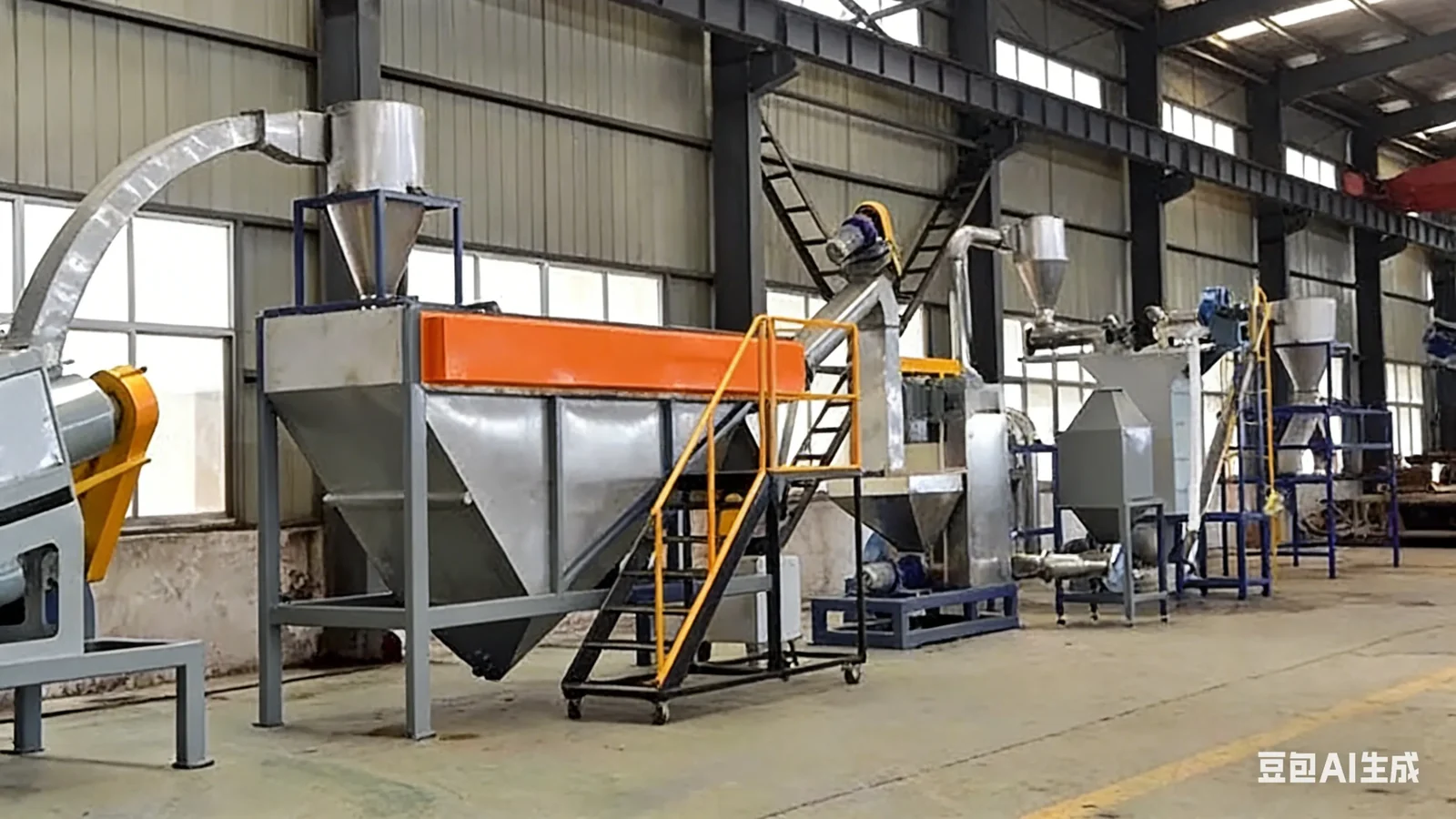
An auto loader is a vacuum conveyor that refills the hopper automatically from a bag or silo, keeping the feed throat at a constant level. On a line that is fed by hand, that level is whatever the last operator left it at, and the output follows the hopper rather than the screw.
The loader is what removes the operator from the loop. A hopper topped up by hand runs at whatever level the last operator left, so the machine is fed in bursts: full after a bag is emptied in, low before the next one. The screw sees a changing head of material and the pellet size and output move with it.
Once the loader is running, the person who used to carry bags can do something else, and the feed throat stops being a variable. That is the whole point of the machine, and it is a bigger change on the floor than the modest size of the unit suggests.
Sizing it so the hopper never runs low
Loader capacity should be 1.5 to 2 times the maximum consumption rate, and conveying distance reduces capacity by roughly 5 to 10% per 10 m. A unit matched only to the average consumption will fall behind exactly when the line is running hardest.
The published price bands show where that sizing lands in the budget. Small vacuum loaders of 500-1,000 kg/h cost US$3,000-6,000, medium units of 1,000-3,000 kg/h cost US$6,000-12,000, and large units of 3,000-5,000 kg/h cost US$10,000-15,000, with installation adding 10-25%.
Price depends on scope. A single-machine vacuum loader sits in the low thousands, a central station with several hoppers and piping costs several times as much once installed, and metered dosing adds a further band on top. The choice is usually made on how many machines need feeding, not on their individual rates.
What it draws from the plant
Vacuum loader power is typically 3 to 15 kW depending on capacity and distance, energy consumption is typically 2 to 5 kWh per 1,000 kg conveyed, and variable speed drives with high-efficiency pumps reduce energy use by 20 to 40%. Those figures are small compared with the extruder but continuous across every shift.
A vacuum loader needs its filter and its cyclone cleaned on a schedule, because a loaded filter cuts the suction and the loader starts starving the hopper. The machine that was bought to remove variation becomes a new source of it if the filter is treated as a fit-and-forget part.
Compressed air is the other utility to plan for. A self contained screw or piston air compressor is priced between US$2,000 and US$7,000, with piston models covering 8 to 40 bar to supply clean air for filter pulses and pneumatic valves. Put the air demand in the enquiry or the loader will arrive with no way to clean itself.
Where it fits with the feeder and the silo
An auto loader refills from a bag or a silo, which means the storage decision comes before the loader decision. A silo is a buffer vessel for finished pellets before bagging, letting the pelletizer keep running while bags are changed downstream, while the smaller hopper above the feeder feeds the machine directly.
A loader can refill either one, but it cannot compensate for a silo that has run empty or a hopper that bridges. Dry polymer in a steel vessel can charge to 10 to 20 kV, and grounding to under 10 ohms plus a conductive internal coating is what keeps dust and streamers out of the product.
On low-density film flake the hopper is usually paired with a crammer or force feeder, because a vacuum loader can deliver the material to the throat but cannot push it into the screw. The two units do different jobs and both belong in the specification.
Writing the enquiry around the real job
State the material, the bulk density, the horizontal and vertical conveying distance, and the maximum hourly consumption. Those four details let a supplier size the loader at the right multiple of consumption and account for the loss over distance instead of quoting from a catalogue band.
Ask what the filter cleaning cycle is and whether the quoted machine includes the compressor, the piping and the receiving hopper. A central system priced at US$8,000-25,000 before installation is a different purchase from a single-machine loader, even when both are described as vacuum conveyors.
Finally, ask what happens when the loader stops. A manual line has an operator who notices a low hopper; an automatic line needs an alarm or a level sensor, otherwise the fault is discovered in the pellet rather than at the hopper. That small addition is what makes the automation genuinely unattended.
Sizing an auto loader from the line it serves
The table sets out sizing an auto loader from the line it serves. It is the clearest way to see what automation changes on the floor.
| Line condition | Rule or published figure | What it means on the floor |
|---|---|---|
| Maximum consumption | Loader capacity 1.5 to 2 times that rate | No shortfall when the line runs flat out |
| Conveying distance | Capacity falls 5 to 10% per 10 m | Add distance before choosing the model |
| Small loader, 500-1,000 kg/h | US$3,000-6,000 | Single machine, bag or small hopper feed |
| Medium loader, 1,000-3,000 kg/h | US$6,000-12,000 | Typical granulating line |
| Central vacuum system | US$8,000-25,000 before installation | Several pickup points, shared pump and piping |
Frequently asked questions
Q1: What does an auto loader actually do?
It is a vacuum conveyor that refills the hopper automatically from a bag or silo, keeping the feed throat at a constant level. That takes the operator off the hopper and stops the output following whoever last filled it.
Q2: How do I size an auto loader?
Size capacity at 1.5 to 2 times the maximum consumption rate, then allow for the loss over distance, roughly 5 to 10% per 10 m. A unit matched to average consumption falls behind exactly when the line is working hardest.
Q3: Does an auto loader push film flake into the screw?
No. It delivers material to the hopper or feed throat, but low-density film flake still needs a crammer or force feeder at the throat. Conveying and forced feeding are two separate jobs with two separate machines.
Q4: What maintenance does a vacuum loader need?
Clean the filter and the cyclone on a schedule. A loaded filter cuts suction and the loader starts starving the hopper, so the machine bought to remove variation becomes a source of it if the filter is neglected.
Also worth reading: pellet storage silo, recycling equipment and insights.
Three more notes from the same test floor: Auto Loader: What It Contains and How It Refills the Hopper, Auto Loader Hopper Level: The Setting That Decides Loading, Sizing an Auto Loader and What It Costs and Auto Loader Acceptance, Commissioning and First-Week Faults.
About the author
Zhou Gong (周工) is a recycling machinery engineer at TENGLONG Plastic Machinery in Linyi, Shandong, where 30-plus staff work across 18,000 m² and 12 machine platforms covering 100 to 3,000 kg/h. I watch the hopper level rather than the conveyor when I commission a loader, because a steady throat is the only proof that the machine is doing its job. Every figure used here has been measured on a machine or taken from a dated published source, not from a brochure.
Send the material form, the contamination level and your target output to our engineering team and you get a model and a price range within one working day. A test run on 10-20 kg of your own material is free, and if the measured output misses the agreed figure by more than 5%, the deposit is refundable.