The specification that decides the loading is the level the loader holds in the feed hopper, not the capacity on its nameplate. An auto loader is a vacuum conveyor that keeps the feed throat at a constant level, and that is the number to write into the enquiry.
A hand-topped hopper lets output follow the last operator’s level rather than the screw. Loader capacity should be 1.5 to 2 times the maximum consumption rate, and conveying distance reduces capacity by roughly 5 to 10% per 10 m, so the level requirement has to be stated with the route.
The level the loader must hold
- Hold a constant hopper level; capacity alone does not decide the loading.
- Rate the loader at 1.5 to 2 times the machine’s maximum consumption rate.
- A loaded filter cuts suction and starves the hopper, so clean it on a schedule.
- Dry polymer in a steel silo can charge to 10 to 20 kV without a proper ground.
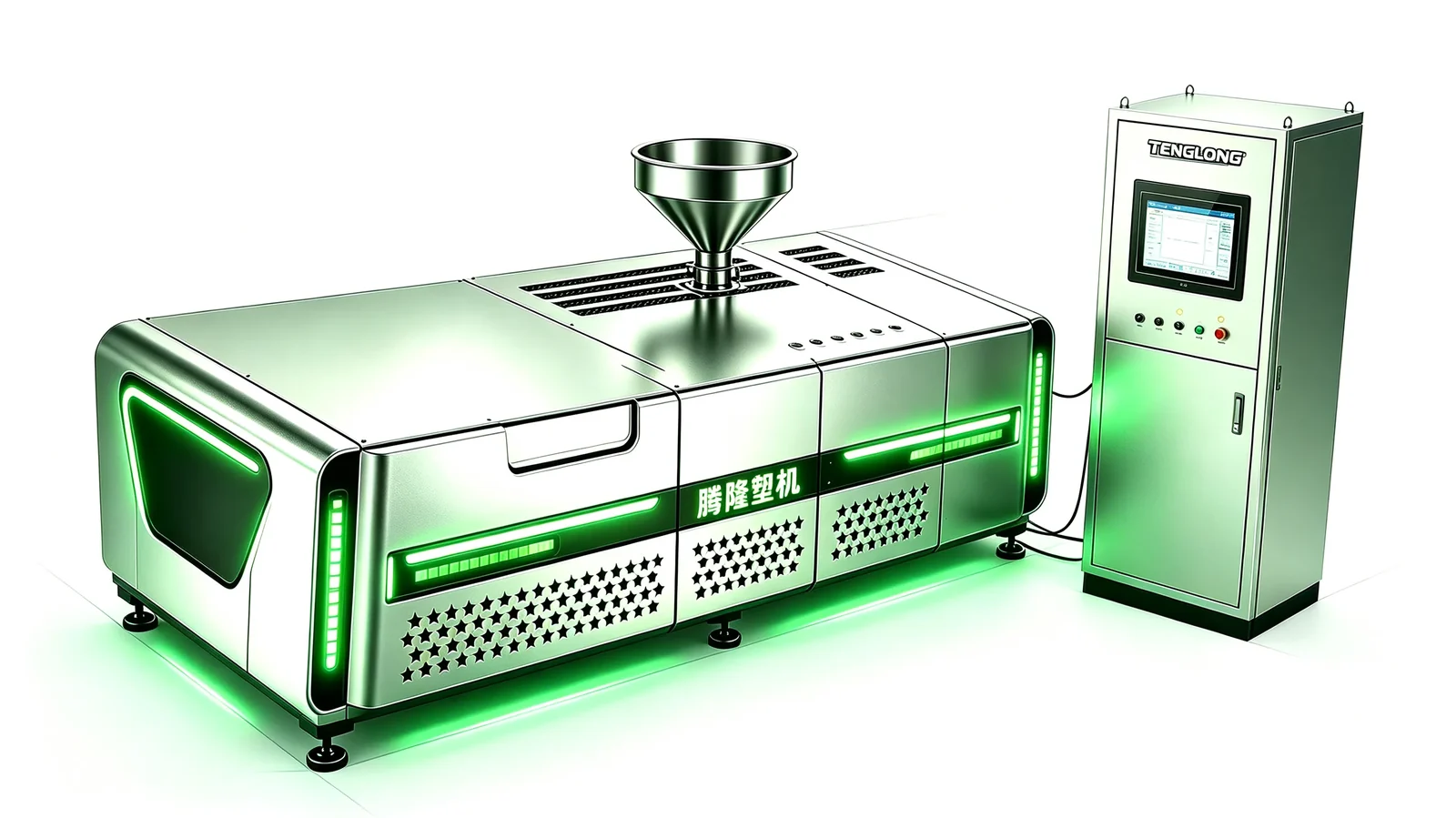
The Specification That Decides the Loading Is a Constant Hopper Level
The specification that decides the loading is the ability to hold a constant level in the feed hopper, not the rated capacity on the loader’s nameplate. An auto loader is a vacuum conveyor that refills the hopper automatically from a bag or silo, keeping the feed throat at a constant level, and that last clause is the whole specification. Capacity matters, but a machine that cannot hold the level steady will starve the screw however many kilograms an hour it can theoretically move.
Buyers arrive with a tonnage and leave with a pump size, and the level requirement gets lost between the two. The loader removes the operator from the loop, and that is the sentence to hold on to. A hopper filled by hand reflects whatever level the previous operator chose, and the output follows that choice instead of the screw’s setting. Specify the loader by the level it must hold, and the capacity follows from the consumption rate of the machine behind it.
The consequence of getting this wrong shows up as unstable output rather than as a breakdown. The screw sees a full throat at the start of a shift and a half-empty one two hours later, and the operator spends the day correcting a problem that was decided at the specification stage. A properly specified loader makes the hopper invisible: it is simply always full, and the machine downstream runs at the rate it was set for. By the time the quality log records the drift, the cause is long gone.
Why a Hand-Topped Hopper Sets the Output
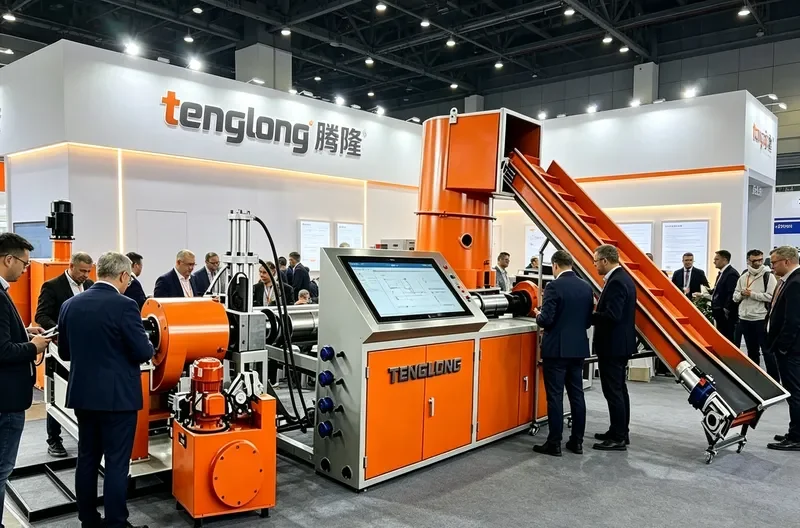
The comparison that settles most arguments is the hopper with nobody watching it. Without a loader, the feed throat level is a decision someone makes several times a shift, and between those decisions it drifts. The melt pressure moves with it, the strand or the pellet changes, and the quality log records the result without recording the cause. A hand-fed hopper is a control system with a human in the loop, and humans have shift patterns.
That is why the first question in a loading specification is not how much the loader can move but what happens when it stops. A receiving hopper holds a finite buffer, and the screw will consume it at the line’s consumption rate. Loader capacity should be 1.5 to 2 times the maximum consumption rate, which gives the pump time to refill before the buffer is exhausted. Below that ratio the loader is technically fitted but functionally late on every cycle.
The published energy figures make the trade plain. Vacuum loader power is typically 3 to 15 kW depending on capacity and distance, energy consumption is typically 2 to 5 kWh per 1,000 kg conveyed, and variable speed drives with high-efficiency pumps reduce energy use by 20 to 40%. A loader sized at the bottom of the 1.5 to 2 times band runs more of the time and uses more of that energy, which is the price of a hopper that never runs dry.
The Sensor and the Cycle That Hold the Level
The level sensor is the part that turns a pump into a loader. It calls the pump when the hopper falls to a set point and stops it when the hopper is full, and where it sits decides what the screw actually sees. Mount it too high and the loader cycles constantly on a nearly full hopper; mount it too low and the material runs out before the pump is called. Neither mistake produces a fault code, and both are decided at installation.
The controller also decides how gently the level is held. A simple on-off cycle gives a hopper that swings between full and low, and on a free-flowing pellet that swing is harmless. On a cohesive regrind it can bridge. A gravimetric feeder costs US$8,000-25,000 with accuracy typically plus or minus 0.25 to 0.5% and compensates automatically for density changes, and a loader feeding one has to keep the buffer steady enough for that accuracy to mean anything.
Level control is also where the loader meets the silo above it. Silo flow design needs hopper wall angles of 60-70° from horizontal, and mass flow needs a cone half-angle of at least 60 degrees and 65-70 degrees for regrind blends. A silo that funnels rather than flows will feed the loader in surges, and no level sensor downstream can turn a surge into a steady stream. The loader can only hold the level that its source can supply.
The Filter and Cyclone That Keep the Suction Up
Keeping suction up is a maintenance job: the filter and the cyclone are cleaned on a schedule, and a loaded filter is the fastest way to starve the hopper. That one habit explains more lost production than any pump failure. As the filter loads, the time taken to refill the hopper lengthens, the cycles get closer together, and eventually the level sensor is calling for material the pump can no longer deliver. The hopper falls and the line follows it.
The cyclone upstream of the filter takes the coarse material out of the air stream, and its condition matters just as much. A cyclone that is passing fines into the filter element loads that element faster than the cleaning schedule assumes, and the published benchmark is that 0.5% fines is normal while 2% is a maintenance signal. Watch the fines rate at the hopper and you will see a filter problem coming before the level starts to fall.
Compressed air is part of this specification whether or not it appears on the loader quotation. The compressor is a real line on the budget even when the quotation omits it: a self contained unit runs US$2,000-7,000, and piston models cover 8 to 40 bar for the filter pulses and pneumatic valves. The pulses are what keep the filter breathing. A plant that budgets the loader without the compressor has specified only half of a cleaning system. Ask whether the air is dried and filtered before it reaches those pulses.
Putting the Level Requirement in Writing
Put the loading requirement in writing as a level to be held, a consumption rate to be served and a distance to be covered, rather than as a pump power. Conveying distance reduces capacity by roughly 5 to 10% per 10 m, so the drawing of the route belongs in the quotation. Published prices are indicative starting prices for 2026 and are configuration-dependent, and a formal quote states the control system and the exact scope of supply.
Ask for the filter and cyclone cleaning interval in the handover documents, and for the sensor set point. That interval depends on the material being conveyed, and the by material guide is worth reading before it is fixed. On a single machine, installation is 3-5 days on site including commissioning, two days of operator training and a signed handover report, and the level set point belongs in that report alongside the other settings. A sensor left at the factory default is the fault nobody thinks to look for.
The quality control team should own the level record, because it is a quality variable disguised as a handling one. A hopper that runs low changes the bulk density at the feeder and the recipe downstream, and the result appears as a drifting pellet rather than as a loader fault. The FAQ on this site carries the commercial terms in short form, and the case studies show what a stable feed looks like when the level specification was written properly.
The settings that hold a constant hopper level
The table sets out the settings that hold a constant hopper level. The filter row is the one that decides whether the hopper stays full.
| Setting | Published reference | What a miss costs |
|---|---|---|
| Loader capacity | 1.5 to 2 times the maximum consumption rate | The pump is late every cycle and the hopper runs low |
| Conveying distance | 5 to 10% capacity lost per 10 m | A route change quietly shrinks the machine |
| Level sensor position | Set point agreed before commissioning | A dry throat or a loader cycling on a full hopper |
| Filter and cyclone | Cleaned on a written schedule | Loaded filter cuts suction and starves the hopper |
| Compressed air | 8 to 40 bar for filter pulses | A blocked element with a normal compressor gauge |
| Fines at the hopper | 0.5% normal, 2% a maintenance signal | The filter is being loaded faster than scheduled |
Questions buyers ask about this machine
Q1: What is the one specification that decides the loading?
It is the ability to hold a constant level in the feed hopper. An auto loader is a vacuum conveyor that keeps the feed throat at a constant level, and capacity only matters insofar as it lets the pump refill the buffer before the screw empties it.
Q2: How big should the loader be?
Size it at between 1.5 and 2 times the machine’s maximum consumption rate. Below that ratio the pump is technically fitted but late on every cycle, and the hopper level falls even though the loader never stops running.
Q3: Why does my loader keep losing suction?
The filter and cyclone need cleaning on a schedule. As the filter loads, suction falls and the loader begins to starve the hopper, while a cyclone passing fines into the element shortens the interval further.
Q4: Does conveying distance change the loading?
Yes. Conveying distance reduces capacity by roughly 5 to 10% per 10 m, so the route drawing belongs in the specification with the tonnage. A hopper moved after the loader is ordered effectively turns the machine into a smaller one.
The rest of this series covers the same equipment from different angles: Auto Loader: What It Contains and How It Refills the Hopper, Sizing an Auto Loader and What It Costs, Auto Loader Acceptance, Commissioning and First-Week Faults and Auto Loader: What Changes When Filling Stops Being Manual.
About the author
Zhou Gong (周工) is a machinery engineer at TENGLONG Plastic Machinery, a 30-plus staff factory in Linyi, Shandong with 18,000 m² of floor space, 12 machine platforms and 820-plus installed lines. When a buyer gives me a tonnage but no hopper level, I ask for the level first, because that is the number the machine will actually be judged on. Where a number appears in this article it was taken from a test run or from a source with a date on it, and a figure we could not check has been left out entirely.
Ask for a recommendation rather than a quotation and we will work from your material, your contamination level and your target output. A model and a price range follow within one working day, the test on 10-20 kg of your material is free, and a result more than 5% below the agreed output leaves the deposit refundable.