An auto loader is accepted on a test with your own material, not on a photograph. The published arrangement is a free test on 10-20 kg of it, with video, measured output, specific energy and pellet photos before the balance is paid, and a refundable deposit if the agreed output is missed by more than 5%.
The first-week faults are rarely dramatic: a hopper that starves because the filter was never cleaned on a schedule, a silo that bridges and feeds in surges, or a level sensor set for a different material. Each is cheap to prevent and expensive to diagnose.
Acceptance and the first week
- Accept on a free 10-20 kg test before the balance is paid.
- Check pump power and the level sensor set point on arrival.
- Warranty is 18 months from commissioning or 24 months from shipment.
- Ground silos under 10 ohms to keep dust and streamers out.
Acceptance Is a Test on Your Own Material
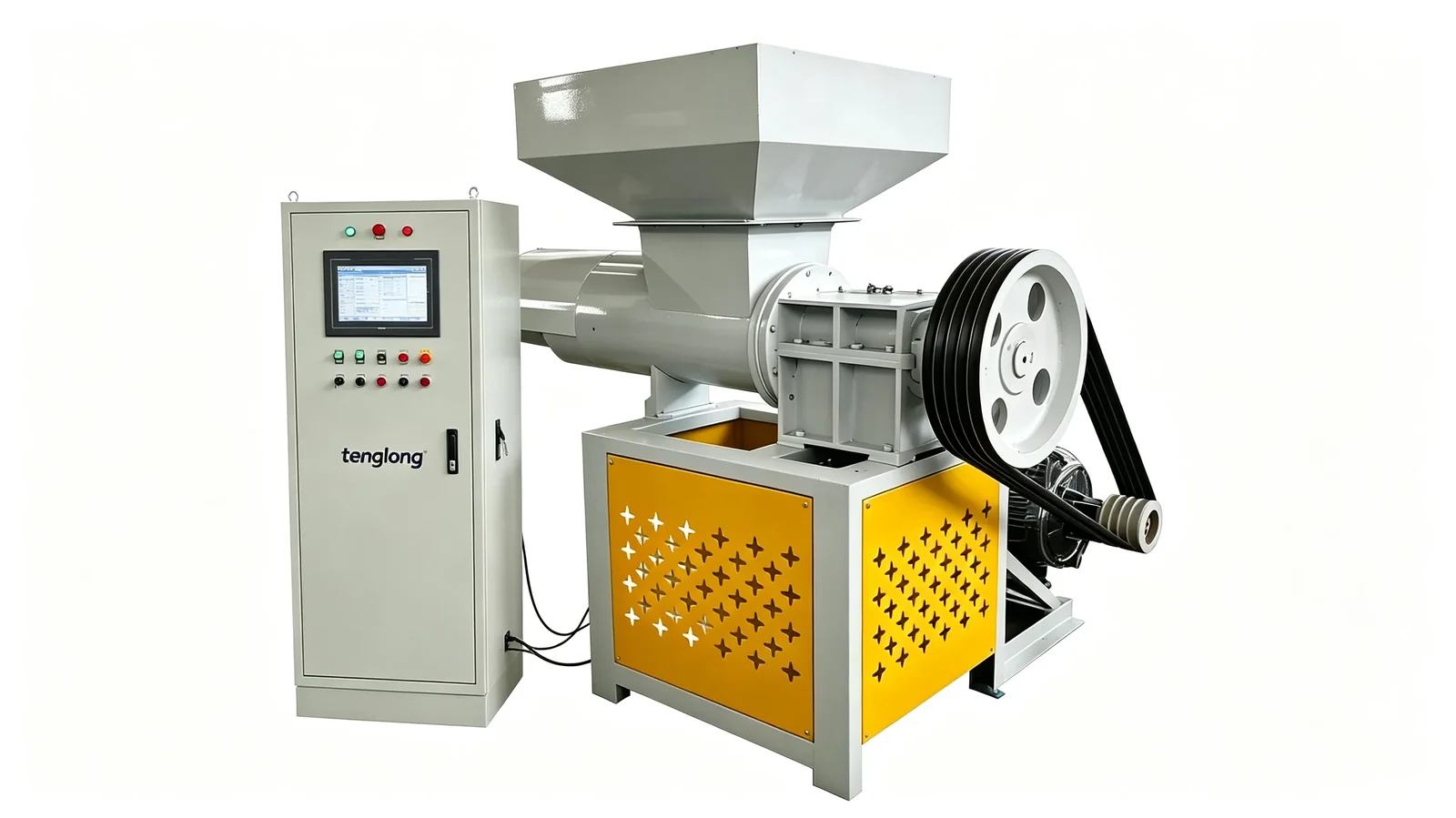
Acceptance of an auto loader is a test on your own material, not a look at the machine. The published arrangement is a free test on 10-20 kg of the buyer’s material, with video, measured output, specific energy and pellet photos sent before the balance is paid, and a deposit that is refundable if the trial misses the agreed output by more than 5%. For a loader the agreed output is the hopper level held under a real consumption rate, so write that figure down before the test, not after.
A loader is accepted on behaviour rather than on appearance. The useful record is how long it takes to refill the hopper from empty at the machine’s maximum consumption rate, and whether the level sensor calls the pump at the set point agreed in the quotation. Ask for both observations on the test report. A report giving only a capacity figure tells you nothing about how the machine behaves when the hopper is nearly empty.
The test hall has material storage, water and a 500 kVA supply, with three simultaneous material runs, so the loader can be tried on the same material the line will actually see. That matters more here than on most machines, because a loader that moves clean pellets easily may struggle with dusty regrind. Running the material before the order is placed is the only way to see how quickly the filter loads. Ask for the filter condition after the run, not just the output figure at the end.
What to Check on the Day the Loader Arrives
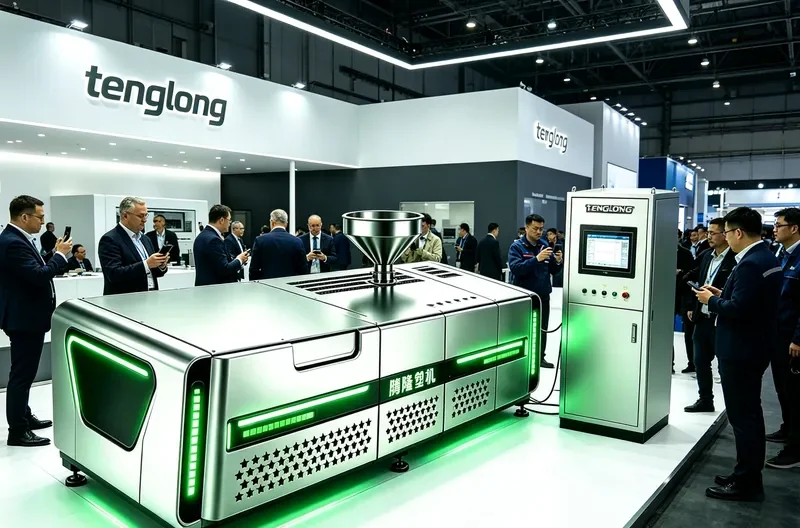
Check the machine against the order and the product range before it is started. Confirm the pump power, which for a vacuum loader is typically 3 to 15 kW depending on capacity and distance, and the supply, which is 380 V / 50 Hz three-phase as standard with IE3 motors and IP54 panels. A loader delivered with a smaller pump than the quotation specified will still fill a hopper when the line is new and the material is clean.
Check the receiving hopper and the level sensor together. The sensor set point is the number that decides whether the feed throat actually sees a constant level, and it is the one most often left at the factory default. Put the agreed set point on the commissioning sheet on the day the machine arrives. A sensor mounted too high produces a loader that cycles all shift; one mounted too low produces a screw that runs dry before the pump is called.
Then the paperwork. A single machine takes 3-5 days on site and a line 7-10 days, with commissioning, two days of operator training and a signed handover report inside that scope. Keep that signed report somewhere both the operator and the office can reach it. The warranty runs 18 months from commissioning or 24 months from shipment, whichever comes first, and the commissioning date is worth recording because the two clocks start in different places and the shorter one governs.
The First-Week Faults: Starving, Bridging and a Loaded Filter
The most common first-week fault is a hopper that starves for no obvious reason. A hopper like that is usually telling you the filter was loaded: suction falls as the element blocks, the pump no longer pulls material through the line, and a new machine often arrives with an operator who does not know a cleaning schedule exists. The symptom is a line that runs well at the start of the shift and slowly falls behind.
The second fault is bridging. Silo flow design needs hopper wall angles of 60-70° from horizontal, and mass flow needs a cone half-angle of at least 60 degrees and 65-70 degrees for regrind blends, and a vessel that funnels instead will feed the loader in surges. The level sensor cannot turn a surge into a steady stream. An inverter on the belt speed keeps the downstream feed matched, but only if the silo above is flowing properly.
The third fault is a sensor that was set for a different material. Film flake and rigid flake do not mix by density: washed PE film sits at 30-80 kg/m³ while rigid flake sits at 250-400 kg/m³, and a set point that works for one can leave the other half-fed. The quality control log will record a drifting pellet while the operator blames the extruder. Written set points at handover are what separate those two stories.
Dust, Static and the Grounding Check
Dust is the part of a loader installation that gets the least attention at handover and the most attention in week three. Charge builds to 10 to 20 kV on dry polymer in a steel silo, so the vessel is grounded to under 10 ohms and given a conductive internal coating that keeps dust and streamers out of the product. A loader pulling from a silo with a poor ground inherits that dust into its filter, and the filter becomes the place where the fault is finally visible.
The fines benchmark gives you something to measure. Published figures put 0.5% fines as normal and 2% as a maintenance signal, and a loader handling material above the second figure will be cleaning its filter far more often than the schedule allows. Record the fines rate at the hopper during the first week. If it is climbing, the problem is upstream of the loader and no amount of filter changing will put it right.
Compressed air has to be clean as well as available. A self contained compressor is priced between US$2,000 and US$7,000, with piston models covering 8 to 40 bar for the pulses that clean the filter and the valves that run the loader. Wet or oily air at the pulses blinds the filter element from the inside, and the loader starves while the compressor gauge reads perfectly normal. Check the air quality at commissioning, not after the first blockage.
Records, Spares and the First Month
The handover report should carry settings rather than names: the pump power, the level set point, the filter and cyclone cleaning interval, the air pressure and the fines rate on the buyer’s material. Those five lines are what the first month gets compared against. Insist that each is written as a number rather than as a description of the setup. Without them there is no baseline, and a week of records is simply a collection of numbers with nothing to argue from when output drifts.
Wear parts are stocked for three years, and the consumables for a loader are simple items: a filter element, a set of seals and the parts that touch the material. They are the items most often bought late, because they seem minor until the line is stopped and the spare is on a boat. Sea freight to Europe adds 30-40 days, and to Southeast Asia 7-12 days, which is a long wait for a filter element.
A week of records settles most arguments. Log the refill time, the level set point, the filter condition and the output every shift and set them beside the handover report. The customer cases on this site show what a clean handover record looks like, and the FAQ carries the figures a plant gets held to. If the numbers drift from the report, Contact us with the handover figures in front of you, which is far cheaper in week one than in month six.
The auto loader acceptance sheet and its pass readings
The table sets out the auto loader acceptance sheet and its pass readings. Most of these checks take minutes and prevent a shift of lost output.
| Check | What is measured | Passing condition |
|---|---|---|
| Test on buyer material | Hopper level held against the agreed output | Within 5%, or the deposit is refundable |
| Pump and supply | 3 to 15 kW on 380 V three-phase | Matches the order and the product range |
| Level sensor set point | Point at which the pump is called | A full throat without constant short cycling |
| Filter and cyclone | Cleaning interval on the real material | Cleaned on a written schedule |
| Grounding | Resistance of the silo ground | Under 10 ohms to keep dust out |
| Fines at the hopper | Share of fines in the conveyed material | 0.5% normal, 2% a maintenance signal |
| Compressed air | Quality of the air at the filter pulses | Clean and dry at 8 to 40 bar |
What buyers ask us before they order
Q1: How is an auto loader accepted before payment?
On a free test using 10-20 kg of the buyer’s own material, with video, measured output, specific energy and pellet photos sent before the balance is paid. If the run misses the agreed output by more than 5% the deposit is refundable, so the hopper level to be held should be written down before the test.
Q2: What should be checked when the loader arrives?
Confirm the pump power, typically 3 to 15 kW, and the 380 V / 50 Hz three-phase supply. Check the receiving hopper and the level sensor set point together, record the agreed setting in the handover report, and note the commissioning date because the warranty runs 18 months from commissioning or 24 months from shipment.
Q3: Why does the loader starve in the first week?
Because the filter and cyclone were not cleaned on a schedule. As the filter loads, suction drops and the loader starts to starve the hopper, so a new machine can run clean at the start of a shift and struggle by its end.
Q4: What spare parts should be on site?
A filter element, a set of seals and the parts that touch the material. Wear parts are stocked for three years, but sea freight to Europe adds 30-40 days and to Southeast Asia 7-12 days, which is a long time to wait for something as small as a filter element.
Read next, if the same model is going on your line: Auto Loader: What It Contains and How It Refills the Hopper, Auto Loader Hopper Level: The Setting That Decides Loading, Sizing an Auto Loader and What It Costs and Auto Loader: What Changes When Filling Stops Being Manual.
About the author
Zhou Gong (周工) signs off the test runs at TENGLONG Plastic Machinery, 18,000 m² of plant in Linyi, Shandong, with 30-plus staff and 820-plus lines delivered to 46 export markets. On the first morning after handover I read the level log before I look at the machine, because the numbers already tell me what happened overnight. Every number in this piece is traceable: measured on our own machines, or published with the date it was checked.
Send us the material form and the target output and we will come back inside one working day with the machine that fits and what it costs. The free test on 10-20 kg of your own material comes before the balance is paid, and a measured output more than 5% below the agreed figure leaves the deposit refundable.