The 0.8 to 1.2 cubic metres per tonne of flake published for a TL-GPL is make-up water, not circulating volume. The line filters and recirculates process water, so this is the amount that must be added to replace losses from the loop.
Losses come from water carried with the flake, the rinse stage, evaporation from the 90 degree wash tank and blowdown to control dissolved solids. Filtration and settling determine how much blowdown is needed, and local discharge limits shape the whole design.
Managing the water loop
- Make-up is 0.8 to 1.2 m3 per tonne, not the circulating flow.
- A screw press returns most entrained water to the loop.
- Filtration controls blowdown and protects wash quality.
- Wastewater treatment is an option sized to local discharge limits.
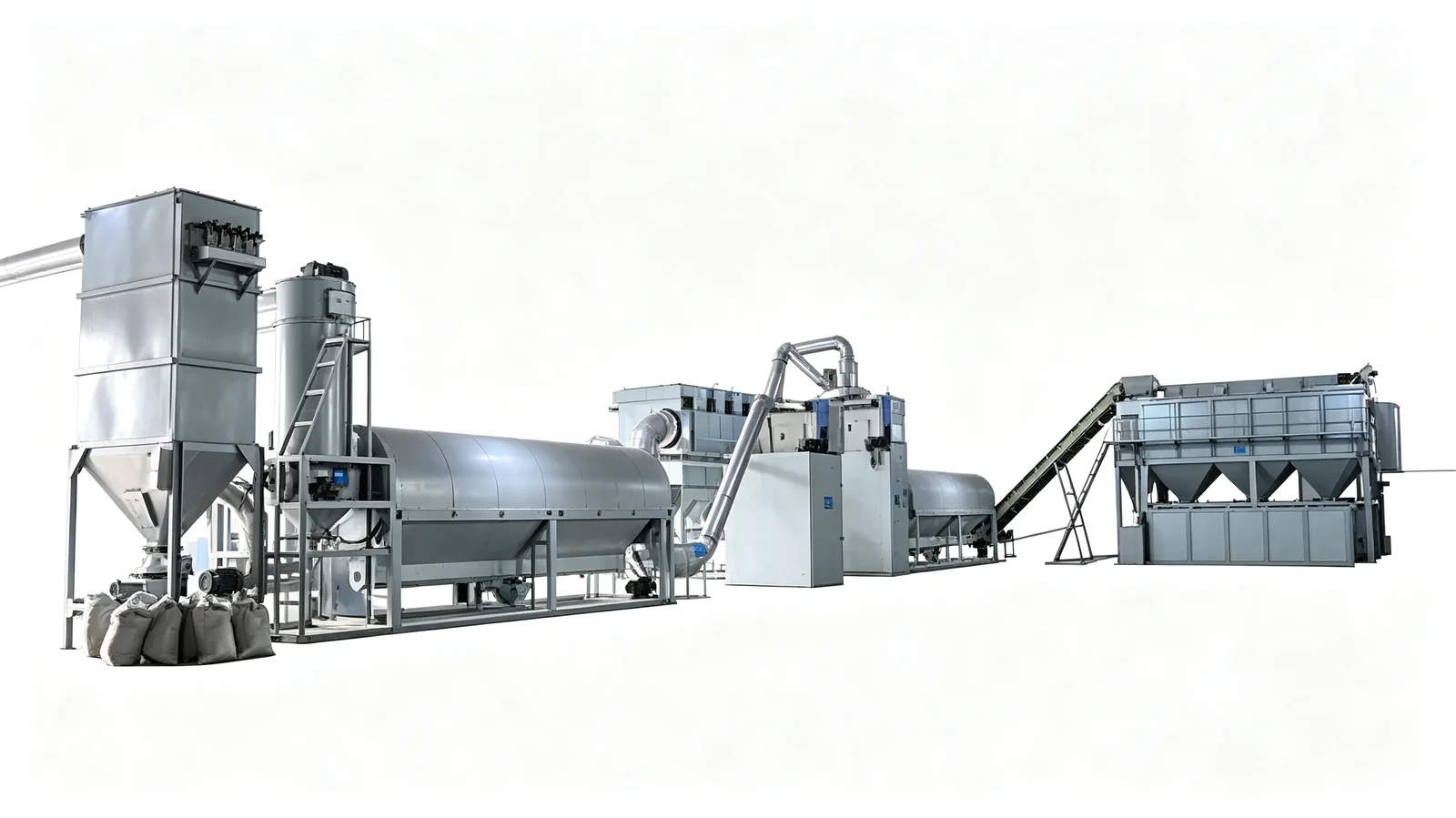
Make-up, not throughput
The published water figure for a TL-GPL line is 0.8 to 1.2 cubic metres per tonne of flake. That is make-up water, not the volume circulating through the tanks. The line filters and recirculates process water, so the amount entering the system is far smaller than the amount moving through it.
The distinction matters for permits and for cost. A buyer who reads the figure as total consumption will oversize the water supply; a buyer who ignores it will be surprised by the make-up demand during a dry season or when the filtration system is poorly maintained.
Local discharge limits are part of the design brief. The line is built to operate below them with filtration and recirculation, and wastewater treatment is offered as an option where the local standard is strict.
Where the water goes
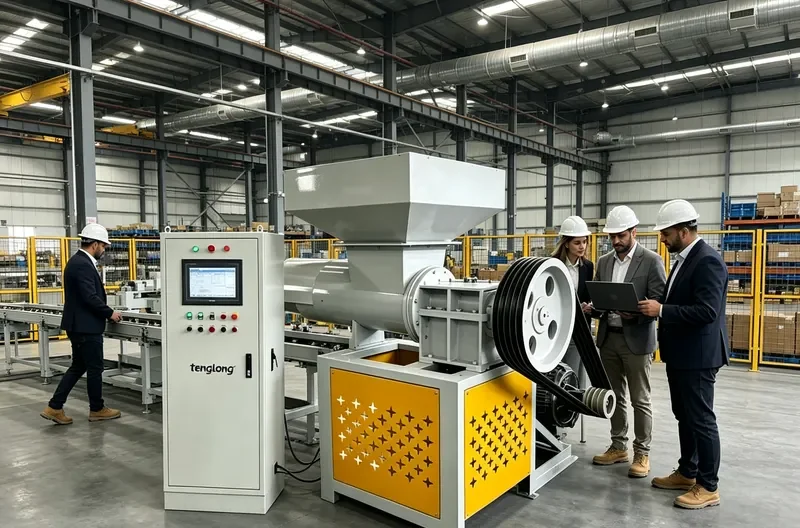
The first loss is entrained water leaving with the flake. A screw press removes most of it and returns the water to the loop, but a small amount is lost with the wet cake and the finished pellets.
The second is the rinse stage, which uses clean water to displace caustic and surfactant residues. That water joins the circuit and returns through the filtration system. Its quality determines whether the pre-wash stage can reuse it.
The third is evaporation from a 90 degree wash tank, and the fourth is the blowdown needed to control dissolved solids. Blowdown is the controllable loss: better filtration and settling reduce how much water must be discarded.
Filtration keeps the loop working
A recirculated loop accumulates labels, sand and fine polymer. Without filtration the water gets dirty, the wash stops removing contamination, and the flake leaves the line with a film that blinds the screen changer.
The loop needs screen or filter stages sized for the dirt load, plus a settling path for sand. A plant that cleans the filters on a schedule keeps the water quality stable; a plant that waits for a visible problem has already produced a batch of dirty flake.
The caustic dosing option includes pH control. Monitoring pH is part of water management as well as wash quality, because a drifting pH affects both the flake and the discharge quality.
Planning the site
Plan for the circulating volume as well as the make-up rate. The tanks hold a working volume that has to be filled at commissioning and may need to be drained for maintenance. A site with restricted drainage needs a plan for that volume.
Water temperature control matters at the wash stage. The 90 degree friction wash loses heat to the surroundings and to incoming material, and the energy balance depends on the plant’s ambient conditions.
Our turnkey line includes water treatment as part of the system when specified, and the auxiliary equipment page covers the supporting components. Confirmed discharge limits should be sent with the enquiry so the loop is designed to the right standard.
Comparing with other platforms
A standalone water ring pelletizer uses 0.3 to 0.6 cubic metres per hour of make-up in a closed loop, and an underwater pelletizer about 0.5 cubic metres per hour. Those figures describe cooling water around the cutter, not a washing circuit.
A granules line carries the much larger washing demand because it starts from baled or film feedstock. Comparing the two sets of numbers without that context leads to an incorrect site design.
The right question for any line is what water enters, what leaves with the product and what must be discharged. A supplier who can answer those three questions has designed the loop; one who quotes only a total figure has not.
Where water is lost and recovered
Water is recirculated, not consumed once. The table shows where the make-up figure is actually spent.
| Path | What happens | Management |
|---|---|---|
| With the flake | Entrained to press | Press returns most to loop |
| Rinse stage | Clean water displaces chemicals | Rejoins filtered circuit |
| Evaporation | From 90 C wash tank | Make-up covers loss |
| Blowdown | Dissolved solids control | Reduced by good filtration |
| Total make-up | 0.8-1.2 m3 per tonne | Site supply and permit basis |
Common questions, with short answers
Q1: Does a granules line use 1 cubic metre of water per tonne?
That is make-up water, not circulating volume. The line filters and recirculates process water, so 0.8 to 1.2 cubic metres per tonne of flake is what must be added to replace losses.
Q2: What are the main water losses?
Water carried out with the flake, the rinse stage, evaporation from the 90 degree wash tank and blowdown to control dissolved solids. A screw press returns most entrained water to the loop.
Q3: Why is filtration important in the water loop?
Recirculated water accumulates labels, sand and fine polymer. Without filtration the wash stops removing contamination from the flake and the melt filter blinds prematurely.
Q4: Is wastewater treatment included?
It is offered as an option and should be specified against local discharge limits. Send confirmed limits with the enquiry so the loop is designed to the correct standard.
The pages that come up most often alongside this one: plastic granules production line.
The companion write-ups for this machine family are: What a Turnkey Granules Line Actually Includes, 90 C Friction Washing: What Each Stage Removes, 280 to 900 kW: Power Planning for a Turnkey Line and A Granules Line That Grows from 500 to 3,000 kg/h.
About the author
Zhou Gong (周工) builds recycling lines at TENGLONG Plastic Machinery, a factory in Linyi, Shandong, with 18,000 m² of floor area, 30-plus staff and 820-plus lines delivered to 46 export markets. Ask what enters, what leaves with the product and what must be discharged. That defines the loop. The numbers in this article come from test runs and from dated published sources, not from a sales sheet.
If you want a recommendation rather than a catalogue, send the material form, the contamination level and the target output. We return a model and a price range within one working day, and the test run on 10–20 kg of your own material is free before the balance is paid.