Before a machine leaves the factory it should have run your material, and the record of that run should be in your hands before the balance is paid. Measured output in kg/h, specific energy in kWh/kg, pellet size with its tolerance, and photographs of the pellets are the four things worth having in writing.
On arrival the checks are mechanical and electrical before they are anything else: shaft alignment and the clearance on the cutter, insulation resistance and the earth continuity on the heater circuits, the alignment of the cutter drive, and the water circuit pressure test. The test run then confirms what the factory run claimed, on your material, at your rate.
What to check, in order
- Before shipment: a witnessed factory trial with measured output, specific energy and pellet photographs.
- On arrival: shaft alignment, cutter clearance, heater insulation, earth continuity and a water circuit pressure test.
- During the test run: pellet size distribution, output stability, and the specific energy against the quoted 0.26–0.50 kWh/kg.
- After acceptance: installation takes 3–5 days for a single machine and 7–10 days for a line, including two days of operator training and a signed handover report.

Before the machine leaves the factory
The cheapest acceptance testing happens before shipping, and it is worth insisting on it explicitly.
We run every machine on real material for four hours before it ships, with the customer’s own feedstock where we have it, and send the video, the PLC trend, the measured output and the sample photographs. The test itself is free and the buyer pays the freight; customers are also welcome to attend in person or by video call.
The condition attached to that is the one to hold onto: if the result misses the agreed output by more than 5%, the deposit is refundable. That clause is what turns a performance figure in a quotation into a commitment, and any supplier who declines to write it is telling you the figure is not one they stand behind.
Before shipment, three things should be documented: the electrical configuration matched to your actual supply voltage, the schematic for that voltage, and the foundation drawing checked against your site photographs. Standard is 380 V / 50 Hz three-phase, and we also build 415 V / 50 Hz, 440 V / 60 Hz and 220 V single-phase. IE3 motors and IP54 panels throughout.
On arrival: mechanical and electrical checks
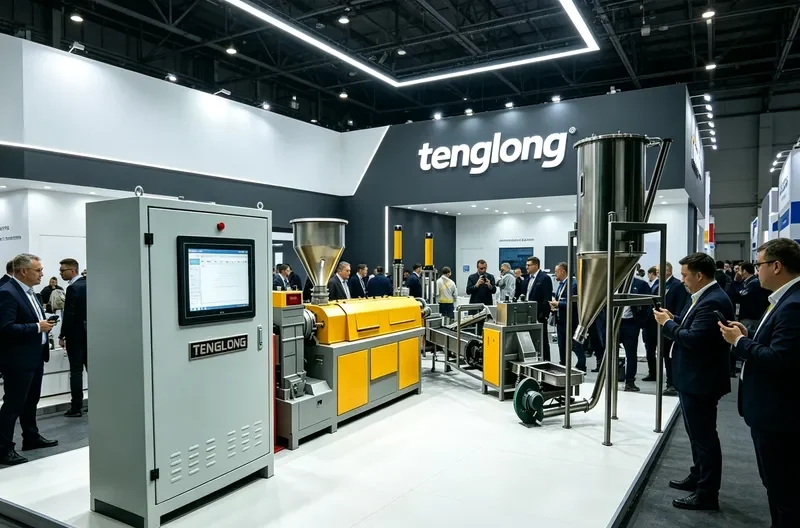
The machine arrives with a signed handover report after three to five days on site for a single machine, or seven to ten days for a full line, including commissioning and two days of operator training.
Before power is applied, walk the machine against the drawing. Check that the frame is level and that the foundation meets what was specified. Check the cutter chamber and the die area for damage in transit. Check the water loop connections and the filtration stage, because an underwater system cannot run without them and a leak found now is cheaper than a leak found during the first run.
On the electrical side, verify the supply voltage and frequency against the order, check the panel and its protection, and confirm the inverter and motor ratings. Our standard is IE3 motors and IP54 panels with a schematic matched to the ordered voltage.
Then check the spares against the list: one spare screw, one die plate and two screen packs should be on site before the first production run, not ordered after the first breakdown.
The test run, and what to measure
The acceptance run is the point of the whole exercise, and it should be run with your material, not with a clean virgin resin bought for the occasion.
Five measurements settle whether the machine is right. Finished output in kg/h, averaged over at least four hours and weighed, not read off the panel. Specific energy in kWh/kg — our published range across the range is 0.26–0.50 kWh/kg depending on polymer and moisture. Pellet quality: sieve analysis for oversize, on-size and fines; bulk density; moisture by Karl Fischer or a halogen meter; and a 200 g visual check for black specks. Screen life under your material, which tells you the filtration duty is right. Machine condition: motor current, melt pressure and melt temperature logged throughout.
Run it long enough to see the pressure curve settle. A machine that looks good in the first hour and drifts over the fourth is a machine with a filtration or feed problem, and the curve is where you will see it.
Acceptance, and what happens next
Write the acceptance criteria into the contract before the machine ships, not afterwards: the material, the finished output figure, the specific energy, the pellet specification and the screen change interval. Then the test run is not a matter of opinion.
The warranty runs 18 months from commissioning or 24 months from shipment, whichever comes first, covering parts and labour for manufacturing defects. Wear parts — knives, screens, heater bands, seals — are excluded but stocked for three years.
Commissioning is also where the operator training belongs. Two days of training on the machine that is actually running, with the actual material, is worth more than a manual. Our experience is that the plants with the best uptime are the ones where an operator can change a screen and reset a recipe without calling anyone.
Acceptance checklist for a new underwater pelletizer
Work through this list during the acceptance visit, and the signature at the end of it is worth more than the checklist.
| Stage | Check | Acceptance criterion |
|---|---|---|
| Before shipment | Four-hour test run on real material | Finished output within 5% of the agreed figure |
| Before shipment | Video, PLC trend, measured output, sample photos | Delivered and reviewed before the balance is paid |
| On arrival | Frame level, foundation, cutter chamber, water loop | Matches the foundation drawing; no transit damage |
| On arrival | Voltage, frequency, motor, inverter, panel | 380 V / 50 Hz as ordered; IE3 motors, IP54 panels |
| On arrival | Spares on site | One screw, one die plate, two screen packs |
| Test run | Finished output, averaged over four hours, weighed | Within the agreed output band |
| Test run | Specific energy | 0.26–0.50 kWh/kg band |
| Test run | Pellet quality | Sieve analysis, bulk density, moisture, 200 g visual check |
| Test run | Screen life under your material | Consistent with the quoted filtration duty |
Questions buyers ask about this machine
Q1: What should be included in the acceptance test?
Five measured items: finished output in kg/h weighed over four hours, specific energy in kWh/kg, pellet quality by sieve analysis, bulk density and moisture, screen life under your material, and the machine condition logged throughout. Run it with your own feedstock, and run it long enough to see the pressure curve settle.
Q2: Can I attend the factory test before the machine ships?
Yes, in person or by video call, and we encourage it. Send 10–20 kg of your material and it is run on a comparable machine. The test is free; you pay the freight. You receive a video of the four-hour run, the PLC trend, the measured output, the specific energy and photographs of the sample.
Q3: What is the warranty on the machine?
18 months from commissioning or 24 months from shipment, whichever comes first, covering parts and labour for manufacturing defects. Wear parts — knives, screens, heater bands, seals — are excluded, but we stock them for three years, which is the part that matters to a running plant.
Q4: How long does installation and training take?
Three to five days on site for a single machine and seven to ten days for a full line, including commissioning, two days of operator training and a signed handover report. Travel and accommodation are covered by the buyer.
Where this fits in the wider range: factory and company facts and FAQ on testing before ordering.
Read next, if the same model is going on your line: Underwater Pelletizer vs Strand and Water Ring Cutting, Underwater Pelletizer: Pellet Quality and Oxidation Control, Underwater Pelletizer Sizing: Throughput and Floor Space and When an Underwater Pelletizer Is the Wrong Choice.
About the author
Zhou Gong (周工) builds recycling lines at TENGLONG Plastic Machinery, a factory in Linyi, Shandong, with 18,000 m² of floor area, 30-plus staff and 820-plus lines delivered to 46 export markets. The signed handover report matters more than people think: it is the document that settles who owns the difference between the quoted output and the measured one. The numbers in this article come from test runs and from dated published sources, not from a sales sheet.
If you want a recommendation rather than a catalogue, send the material form, the contamination level and the target output. We return a model and a price range within one working day, and the test run on 10–20 kg of your own material is free before the balance is paid.