Published 2026 listings put a nitrided single screw and barrel set for recycling extrusion at US$2,700, a nitrided recycling set at US$6,000, and a bimetallic granulation set at US$2,550. Against a single screw granulator at US$12,500 and a two stage line at US$46,000, the wear pair looks like a rounding error. That is why it gets left off orders.
The real cost is the hour the line stands idle. A 20-minute screen change every 3-4 hours and an 8-hourly blade check keep unplanned stops under 2% when a spare screw, a die plate and two screen packs are on the shelf. Without the spare, the stop lasts as long as the published delivery time for the part.
Where the money actually goes
- Set prices run US$2,550 to US$6,000 per set, a fraction of the machine price.
- Duty sets the replacement cycle, and contamination above tolerance shortens it.
- Stock the spares; wear parts are held for three years and the outage is dearer.
- Bimetallic costs about 25% more up front and about 50% less over three years.
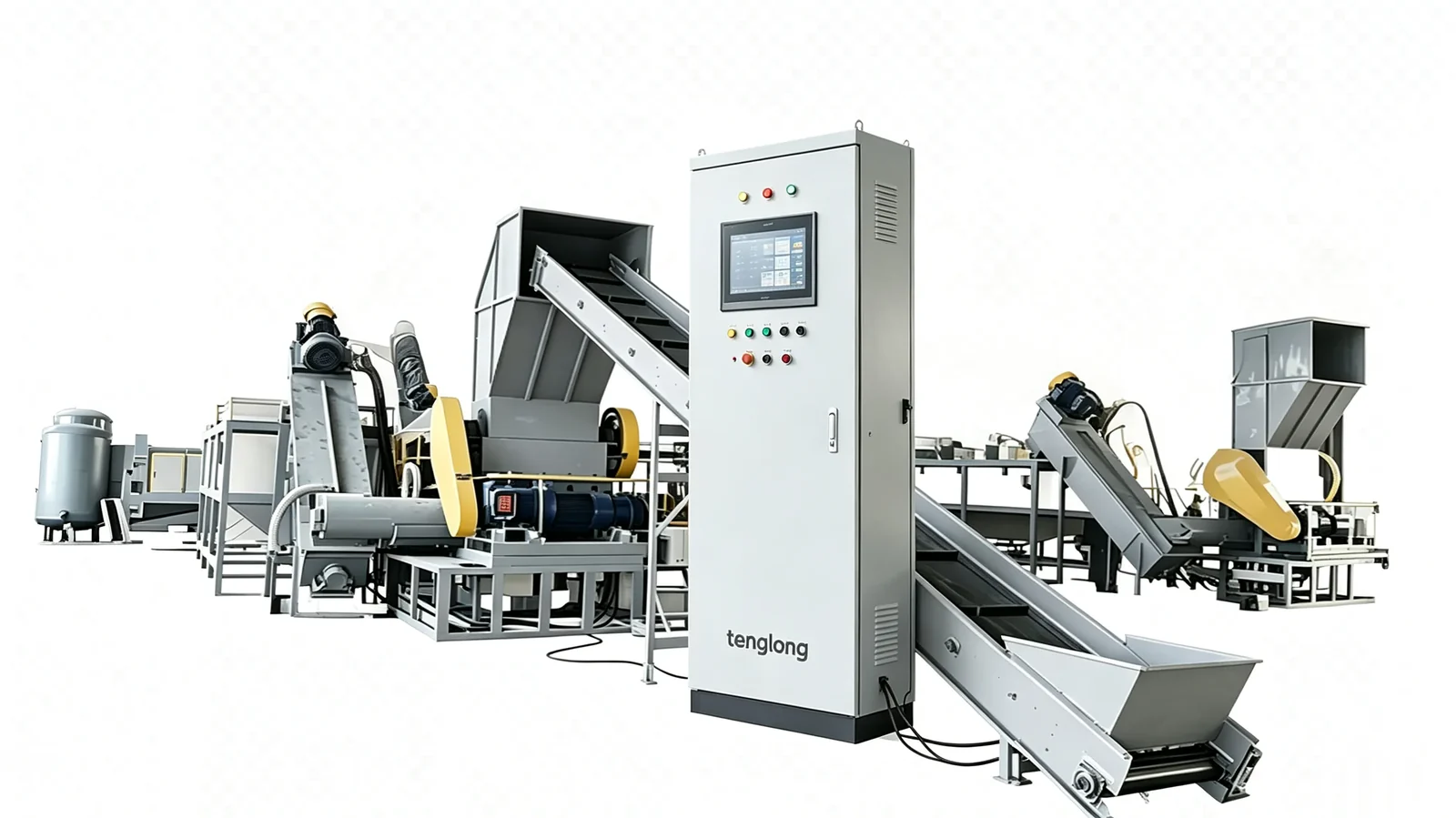
The set price is the easy part
Published market listings for 2026 put a nitrided single screw and barrel set for recycling extrusion at US$2,700 per set, a nitrided recycling screw and barrel at US$6,000 per set, and a bimetallic granulation screw and barrel at US$2,550 per set. Those three numbers come from three different suppliers, and comparing them directly tells you very little about your own machine.
What they do tell you is the scale. A screw and barrel set is a low four-figure purchase next to a single screw granulator listed at US$12,500 and a two stage granulating line at US$46,000. The wear pair is not where the capital sits, and treating it as a rounding error is how a plant ends up with one spare and no plan.
Remember too what a published price excludes. Published prices are indicative starting prices for 2026 and are configuration-dependent, and a formal quote states filtration mesh, drying method, motor power, control system and the exact scope of supply. Freight, foundations, water treatment, spare-parts stock and installation are quoted separately from the machine price.
What sets the replacement cycle

The replacement cycle is set by duty, not by the calendar. Published service life for a barrel in high-filler PVC extrusion is 1-5 years, and the width of that band is the honest width of the answer. On the crushing side, wear-resistant alloy builds are documented at 3,000-5,000 hours of crushing life on ordinary plastics, with blades reusable for three to five regrinds. That is blade data rather than screw data, but it shows the same pattern, the alloy is bought for the hours rather than for the year.
The mechanism is contamination. A single screw tolerates about 2% non-melting contamination at 60-80 mesh, and a two stage line handles 5-8% at 100 mesh. Every point of contamination above the screw’s tolerance is abrasive that the wear pair absorbs, and the wear pair absorbs it as diameter and clearance, which is exactly what a replacement exists to undo.
The other driver is time. Fines tell you when the melt is being over-sheared, with 0.5% normal and 2% a maintenance signal. Once fines sit at 2% the operator has usually already raised the throughput or the temperature to hold the rate, and every extra increment of throughput is charged straight to the flight and the bore. More output on a tired screw shortens the life of the screw.
The downtime that never appears on an invoice
Here is the part of the cost that is not a price. The published screening routine is a 20-minute screen change every 3-4 hours, plus an 8-hourly blade check, and with one spare screw, one die plate and two screen packs unplanned stops stay under 2%. Each of those stops is short, planned and cheap, because the part was already on the shelf. The screen packs and the die plate are auxiliary equipment, and they are the cheapest insurance on the whole line.
Without the spare, the same stop lasts as long as the shipment. That is the real argument for stocking wear parts, and the company holds them for three years. A plant that buys wear parts while the line runs is buying insurance at a price that looks like nothing beside the machine, while a plant that waits for a failure is paying the outage instead.
There is an argument here for keeping the screening routine tight instead of stretching the interval to save twenty minutes. Every extra hour between screen changes pushes more contamination past the filter and into the melt, and contamination is what wears the wear pair. The screen is cheaper than the screw, and it is also the thing that keeps the screw alive.
Three years of ownership
The published comparison puts a bimetallic barrel at roughly 25% more initial cost than a nitrided one, 2-3 times longer life in harsh duty, a wear rate cut of more than 60% and extrusion consistency about 15% higher. Over three years the total cost of ownership is quoted about 50% lower for the bimetallic build, and the saving comes from fewer replacements rather than from a cheaper part.
Do not accept the 50% without asking what duty it was measured on, because it assumes harsh service. Run clean, unfilled, well-sorted regrind and a nitrided screw will comfortably outlast the payback you imagined, and the premium buys nothing. Run high-filler compounds or contaminated flake and the same arithmetic reverses inside a single replacement cycle.
The second half of three-year ownership is what the wear parts cost to carry. One spare screw ships with the line, and wear parts are stocked for three years, and that stock is what turns the 25% premium into a rounding error. The expensive day is not the day you order the part; it is the day the line stands idle waiting for it.
What to put in the order
Write the wear parts into the quotation instead of negotiating them after handover. Name the build, the case depth or alloy layer, the length and diameter against the machine, the number of spare screws you want on the shelf in the first year, and the date you need them in. All of that is cheaper to agree before the balance is paid.
Ask what is on the shelf and for how long, because wear parts stocked for three years means the parts list is a decision the factory has already taken rather than a negotiation. The granulator by material pages on the site are a reasonable place to start the feed conversation, since the material decides the duty that decides the wear part. If your material changes, the screening interval changes with it, and the wear parts that suit the new feed should be ordered in the same conversation rather than after the first failure.
And check the machine against the wear pair before you sign anything. The single screw granulator is listed with a 90-150 mm nitrided screw and the twin screw extruder line at 40:1 L/D, so the wear specification should match the machine you actually bought. Every quotation for plastic recycling equipment is read against the same question of whether the wear part was specified or left to the end, and on a turnkey pelletizing solutions project it is the line most often left to the end.
What a screw and barrel costs, and what it costs over time
A screw set is a consumable, so the relevant figure is the cost per tonne over its life, not the invoice. The table shows both, and the difference between them.
| Item | Figure | What it means |
|---|---|---|
| Nitrided screw and barrel set | US$2,700 per set | Listed price, recycling extrusion |
| Nitrided recycling set | US$6,000 per set | Listed price, recycling duty |
| Bimetallic set | US$2,550 per set | Listed price, granulation duty |
| Bimetallic premium | About 25% | Against a nitrided barrel |
| Wear rate, bimetallic build | More than 60% lower | In harsh duty |
| Three-year ownership | About 50% lower | Through fewer replacements |
Frequently asked questions
Q1: How much should I budget for a replacement screw and barrel?
Published listings for 2026 put a nitrided set at US$2,700 and a nitrided recycling set at US$6,000, with a bimetallic set at US$2,550. Treat those as market reference points rather than as quotations, and add the delivery time on top, because these parts are made to order.
Q2: How often should a screw and barrel be replaced?
It follows the duty. Published barrel life in high-filler PVC extrusion is 1-5 years, while contamination above the roughly 2% a single screw tolerates at 60-80 mesh is what shortens it. Watch the fines figure as well, because 2% is a maintenance signal rather than a normal reading.
Q3: Is the bimetallic upgrade worth 25% more?
In harsh duty it is. The published case is 2-3 times the wear life, a wear rate more than 60% lower and total ownership about 50% lower over three years. On clean unfilled regrind the nitrided build is the sensible purchase and the premium is money spent early for no return.
Q4: What does a screen change cost in downtime?
About 20 minutes, on the published routine of a screen change every 3-4 hours and an 8-hourly blade check. It is a scheduled interruption with a spare die plate and screen packs on the shelf, and it is the cheapest way to keep contamination away from the screw and the barrel.
Read next, if the same model is going on your line: Extruder Screw and Barrel: What the Part Does, Nitrided vs Bimetallic Extruder Screw: Which to Buy, Extruder Screw Diameter and Length: How to Match It and Screw Inspection and Commissioning: A Working Routine.
About the author
Zhou Gong (周工) is a recycling machinery engineer at TENGLONG Plastic Machinery in Linyi, Shandong, where 30-plus staff work across 18,000 m² and 12 machine platforms covering 100 to 3,000 kg/h. I have stopped arguing about set prices with customers, because the hour a line stands waiting for a screw costs more than any of them. Every figure used here has been measured on a machine or taken from a dated published source, not from a brochure.
Send the material form, the contamination level and your target output to our engineering team and you get a model and a price range within one working day. A test run on 10-20 kg of your own material is free, and if the measured output misses the agreed figure by more than 5%, the deposit is refundable.