The specification that matters on a dehumidifying dryer is short enough to memorise. Dew point below −40 °C and up to −45 °C, hopper capacity from 12 to 500 kg, regenerative heat from 2.5 to 7.2 kW, drying heat from 4 to 18 kW, and insulated bins. Everything else on the data sheet is either a different number for the same machine or a feature that every manufacturer fits.
Compare two quotations on cost per kilogram dried rather than on price, and the comparison becomes straightforward: published prices run from US$4,490–4,980 for a 50 kg hopper unit to US$8,891 for a 100 kg hopper. Multiply by the kilograms you actually dry in a year and the capital cost is usually a small share of the total, which means the dew point and the insulation decide the outcome.
What to pay for and what to ignore
- Pay for: dew point below −40 °C, hopper capacity matched to the refill interval, insulated bins, and stainless contact surfaces for food work.
- Ignore: microprocessor control and a transparent filter window — both are fitted as standard by every supplier.
- Compare on cost per kilogram dried, not on purchase price.
- Ask for the dew point to be measured at the hopper under load, not quoted at the inlet.
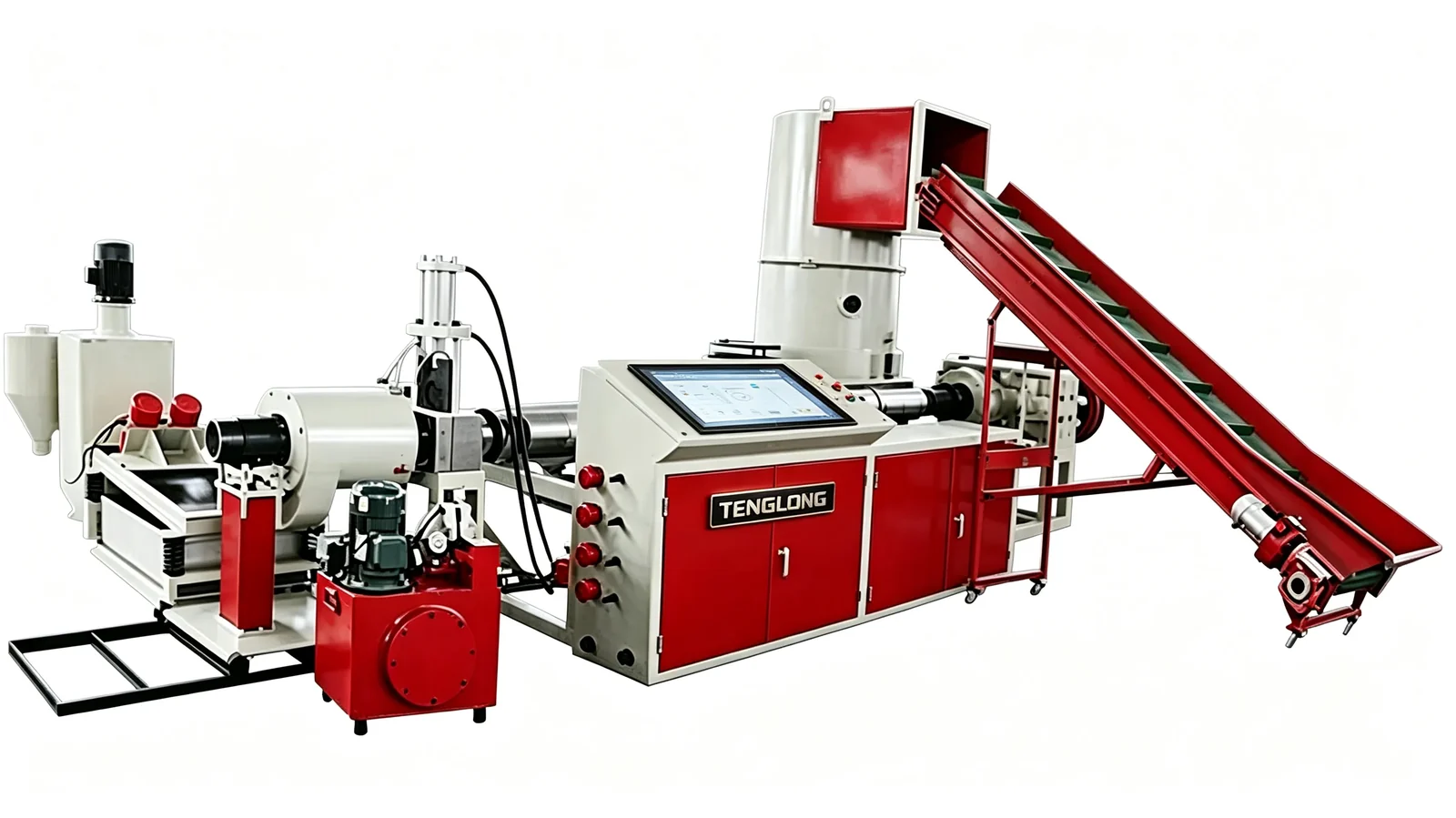
The specification that matters
Published machine listings are long, and most of the length is not load-bearing. Here is the part that is.
Dew point. Below −40 °C under ideal conditions, up to −45 °C on the better units. This is the number the whole machine exists to produce, and it is the one to hold the supplier to.
Hopper capacity and the refill interval it implies. The published series runs 12 kg to 500 kg with 40 to 400 m³/h of dehumidifying air and 4 to 18 kW of drying heat.
The regeneration system. The published series uses 2.5 kW regeneration heat at the small end and 7.2 kW at 400–500 kg, with 0.2 to 0.75 kW of regenerative blower power. This is what determines whether the rotor can hold its dew point through a full shift.
Insulation and the hopper surface. Fully insulated drying bins, and hopper surfaces in dust-free mirror-finish stainless for optical or food-standard production. The insulation is what makes the dew point meaningful at the bottom of the hopper; the surface finish is what makes the material suitable for food-contact work.
Certification. CE, ISO and SGS appear on the published units, and for a machine handling food-grade material that is a starting point rather than a differentiator — every credible supplier has them.
The features that are mostly marketing
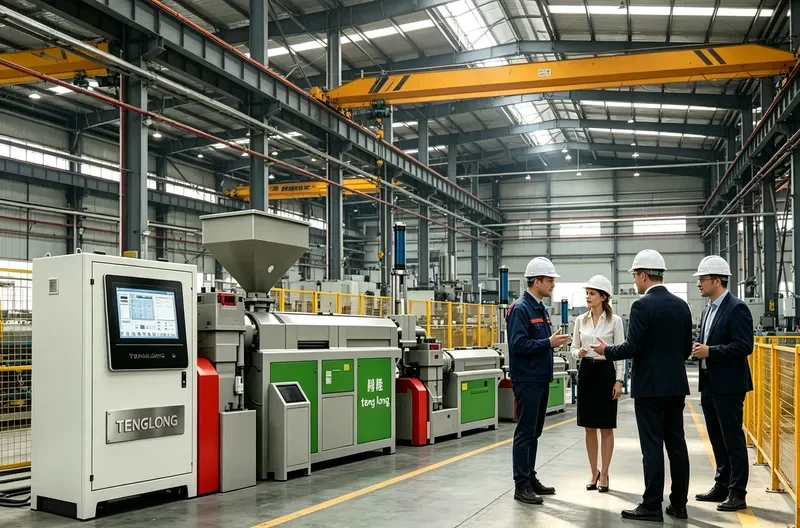
Several items appear in almost every listing and add little in practice.
The microprocessor controller is listed as standard equipment and is, in fairness, useful — but it is a convenience feature, not a performance one. Every modern machine has one.
The transparent filter window is a small detail that happens to be genuinely useful, because it is the only way to see the filter loading without opening the machine. Worth having, not worth paying extra for.
“Energy saving” claims in listings usually refer to the combination of the dehumidifying and drying functions in one machine, which does save floor space and installation time. It is not a claim about kWh/kg, and it should not be read as one.
Multiple bin configurations are useful on a line with several polymers and mostly wasted on one. Up to four fully insulated drying bins are available; if you run one polymer, one bin is one bin.
The features worth paying for are the dew point, the regeneration capacity, the insulation and the contact-surface finish. Everything else in the listing is either standard or optional.
Cost per kilogram dried, and the calculation to do before buying
The relevant measure is not the machine price but the cost per kilogram dried, and the calculation takes three inputs.
Energy. Published figures for this class of machine give 4 to 18 kW of drying heat and 2.5 to 7.2 kW of regeneration heat, with blower power of 0.4 to 3.75 kW for drying, 0.2 to 0.75 kW for regeneration and 0.75 to 2.2 kW for feeding. At your local tariff, multiply by your annual hours.
Desiccant. The rotor is a consumable and it scales with the moisture load, which means it scales with your material and your throughput rather than with the machine.
The value at risk. For PET this is the number that justifies the machine. 0.01 dl/g of intrinsic viscosity per 100 ppm of moisture, on every batch, on material whose value depends on that number being right.
The comparison that settles the purchase is between a dehumidifying dryer and the alternative of not drying properly and losing intrinsic viscosity on every batch. At a 300 kg/h line running 6,000 hours a year, that is 1,800 tonnes a year of material whose value depends on a dryer.
The supplier questions worth asking
Five questions, asked before the purchase order rather than after delivery.
“What dew point does the machine hold on my material, measured, not specified?” A number from a commissioning report beats a number from a brochure.
“What is the regeneration cycle time and how many cycles before the desiccant is replaced?” This determines whether the machine can hold its dew point through a full shift, and it is the question that most often gets a vague answer.
“Is the return air filter visible and is a spare included?” A loaded filter is the most common failure, and it is trivial to monitor if the machine is designed for it.
“Can the machine be supplied with four insulated bins, and what does that change in the price?” It changes the refill decoupling more than it changes the price.
“What happens if the dew point drifts — what is the warranty position and the desiccant availability period?” Wear parts are excluded from our warranty, as they are across the whole range, but we stock them for three years. A supplier who cannot state an availability period has not thought about the part.
Dehumidifying dryer: what matters against what is standard
What is worth paying for and what every supplier fits as standard. The distinction is the whole purchase decision.
| Item | Published figure | Worth paying for? |
|---|---|---|
| Dew point | Below −40 °C, up to −45 °C | Yes — this is the machine |
| Hopper capacity | 12–500 kg | Yes — set by the refill interval |
| Regeneration heat | 2.5–7.2 kW | Yes — determines dew point holding |
| Drying heat | 4–18 kW | Yes — determines drying rate |
| Insulated bins | Up to four, fully insulated | Yes — it is what makes the dew point hold |
| Stainless contact surface | Dust-free mirror finish | Yes for optical and food-standard work |
| Microprocessor control | Standard equipment | No — everyone has one |
| Transparent filter window | Fitted as standard | Marginally — it saves time |
| Multiple bin options | Configurable | Only if you run several polymers |
Frequently asked questions
Q1: What dew point should I insist on in a quotation?
Below −40 °C under ideal conditions, and up to −45 °C on the better units. But ask for the figure the machine holds on your material, measured at commissioning, rather than the best-ever figure in the specification sheet. The commissioning number is the one that matters.
Q2: How do I compare two dehumidifying dryers on price?
On cost per kilogram dried, not on the machine price. Take the energy figure from the specification, add the desiccant consumption and the service time, and compare that against the value of the material. For PET the value side is easy to state: 0.01 dl/g of intrinsic viscosity per 100 ppm of moisture, on every batch.
Q3: Is the microprocessor controller worth anything?
It is standard equipment on essentially every modern machine, so it is not a differentiator. The features that are worth paying for on this machine are the dew point, the regeneration capacity, the insulation of the drying bins and the finish of the contact surfaces.
Q4: How long does a dehumidifying dryer take to commission?
Three to five days on site for a single machine, including commissioning and two days of operator training, with a signed handover report. Travel and accommodation are covered by the buyer. Record the dew point baseline at commissioning, because it is the reference your maintenance routine runs against.
Also worth reading: PET pelletizing line, quality and factory testing, contact and quotation and FAQ on drying PET and PA.
Three more notes from the same test floor: Dehumidifying Dryer vs Hot Air Hopper for Plastic Granules, Dehumidifying Dryer Sizing: Hopper Volume and Airflow, PET Crystalliser and Dehumidifying Dryer: Why Both and Dehumidifying Dryer Maintenance: Desiccant and Filters.
About the author
Zhou Gong (周工) is a recycling machinery engineer at TENGLONG Plastic Machinery in Linyi, Shandong, where 30-plus staff work across 18,000 m² and 12 machine platforms covering 100 to 3,000 kg/h. The single question that separates a serious supplier from a reseller is simple: what is the dew point at the hopper, under load, with hot material in it. If the answer has a number, you can deal with them. Every figure used here has been measured on a machine or taken from a dated published source, not from a brochure.
Send the material form, the contamination level and your target output to our engineering team and you get a model and a price range within one working day. A test run on 10–20 kg of your own material is free, and if the measured output misses the agreed figure by more than 5%, the deposit is refundable.