A full dark-to-light colour change on the TL-MB takes 40 to 60 minutes including screw extraction, purging with carrier and re-stabilising temperature. That time is the sum of physical steps, which is why a hydraulic barrel that lifts and a screw that pulls in fifteen minutes matter more than the cutter specification.
The flow path is polished and free of dead corners, so pigment does not hide and reappear in the next colour. Running colours from light to dark in sequence cuts changeover roughly in half, because a light residue is invisible in a dark batch while the reverse needs a long purge.
Where the changeover time goes
- Empty the feeders and recall the recipe from the PLC’s twenty-recipe memory.
- Lift the barrel and pull the screw in fifteen minutes.
- Purge with carrier until the melt runs clear.
- Re-stabilise temperature and re-strand, then verify against a standard.
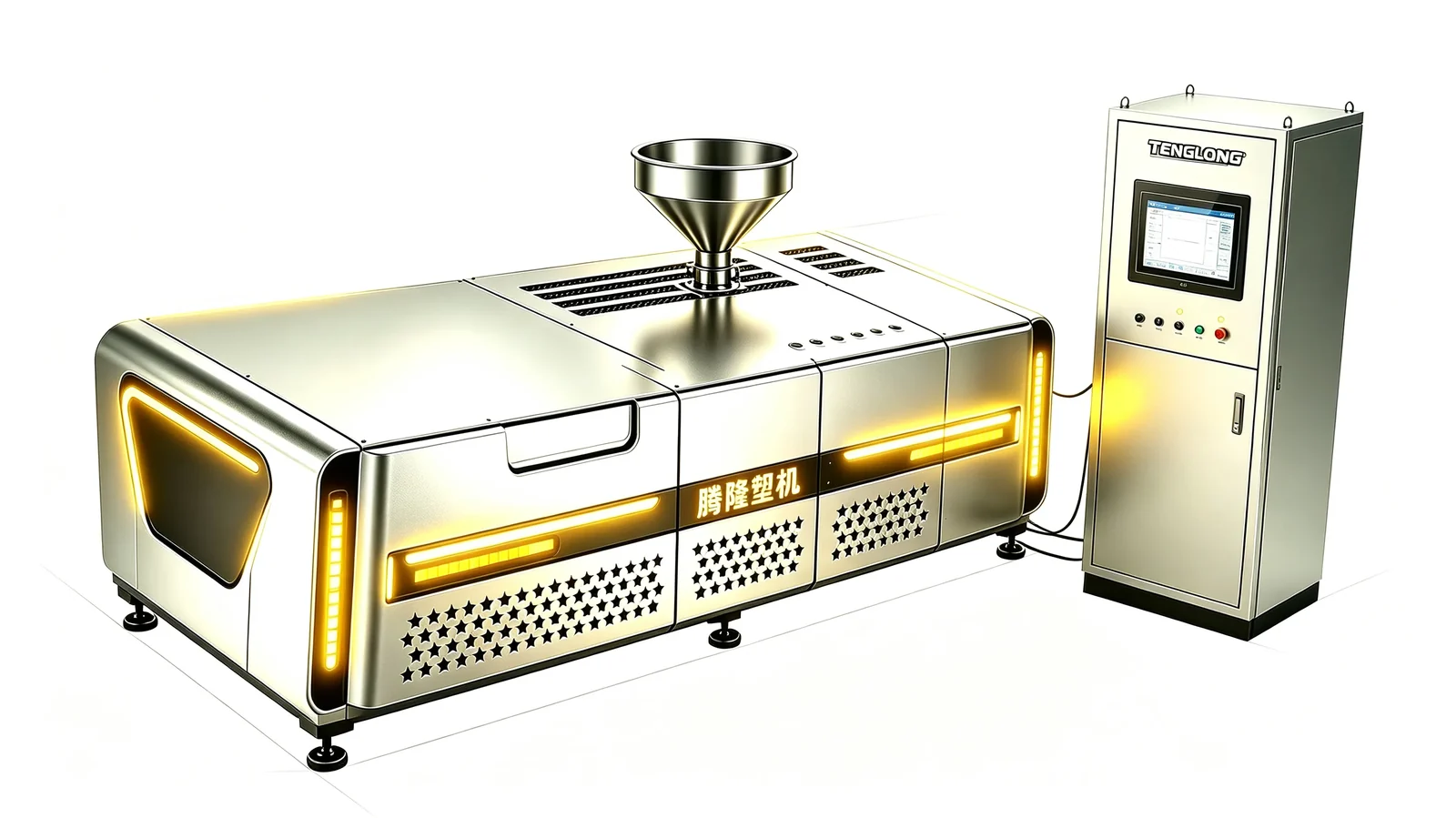
Changeover speed is what makes the machine pay
A masterbatch line is rarely judged on its best hour. It is judged on how many colours it can run in a day and how much of each batch is lost between them. A 200 kg/h line that changes colour eight times a day only pays for itself if each change is short and repeatable.
The published figure for a full dark-to-light change on the TL-MB is 40 to 60 minutes, including screw extraction, purging with carrier and re-stabilising temperature. That number is not a marketing claim about the cutter. It is the sum of specific physical steps, and each step can be examined.
The hardware that makes it possible is a hydraulically lifting barrel and a screw that can be pulled in fifteen minutes. The flow path is polished and free of dead corners, so pigment does not hide in a pocket and reappear in the next colour. Without those three features the same change takes hours.
Where the forty minutes go
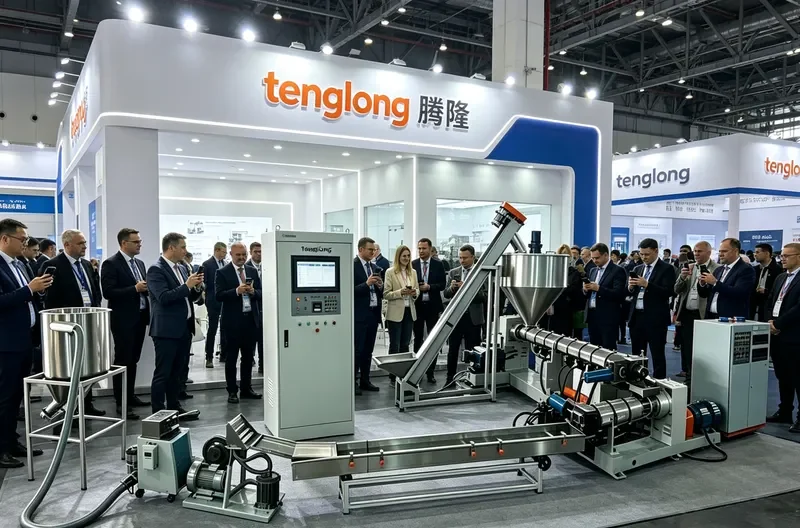
The first step is finishing the current batch and clearing the feeders. Loss-in-weight hoppers are emptied and the formulation is switched in the recipe memory, which recalls temperatures and screw speeds automatically on the TL-MB’s Siemens PLC with twenty-recipe storage.
The second step is the barrel lift and screw pull, quoted at fifteen minutes. This is the only part of the change that involves opening the machine, and it is where pigment trapped in the screw flights is removed. A screw that cannot be pulled quickly turns a colour change into a maintenance job.
The third step is purging with carrier until the melt runs clear, then re-stabilising temperature and re-establishing the strand. The purge material is a real cost, which is why the polished flow path matters: a clean path needs less carrier and fewer minutes to reach a stable colour.
Sequence colour rather than fighting it
Running colours from light to dark in sequence cuts changeover roughly in half. A dark pigment needs a long purge to clear from a light one, while a small amount of light residue is invisible in a dark batch.Planning the day’s run in that order is free and has a larger effect than most hardware upgrades.
The practical version is a simple rule: group the schedule by pigment family and move from pale to deep within each family. White after black is the worst case and should be avoided entirely if a separate run can be scheduled. If it cannot, budget the full sixty minutes and a generous purge allowance.
Additive masterbatches behave differently from colour. Anti-block, UV and flame retardant grades may be run back to back if the active packages are compatible, but the recipe memory should still recall the correct temperature profile. Guessing a profile from the previous job is how degradation starts.
Verifying that the change is finished
The strand shows the change before the pellets do. Watch the extrudate as the purge runs and take a sample when the colour looks close, then compare it against a standard under the same light. A colour that matches under the plant’s lamps can be wrong in daylight, so keep a standard under neutral light.
For critical work, check a drawn film sample rather than the pellet. A pellet can look clean while a few remaining agglomerates show up at 20 microns. The speck count is the real measure of whether the purge removed the previous pigment.
Record the actual change time against the recipe. After a few weeks the records show which colours are expensive to follow and the schedule can be rearranged. The data is more useful than the nominal forty-to-sixty-minute figure because it reflects your pigments and your operators.
Designing a line around changeovers
If the plant runs eight colours a day, specify the hydraulic barrel, the fifteen-minute screw extraction and a purging Compound that matches the carrier family. Those three decisions determine the changeover time more than screw diameter does.
If the plant runs one black grade all week, the same hardware is unnecessary capital. A simpler line with a fixed barrel and a single recipe will do the job. The masterbatch granulator platform is sold on changeover, so buyers who do not change colour should question whether they need it.
Our quality page describes how a line is tested before shipment, including a changeover trial where the customer’s colours are run in sequence. Ask for that trial to be part of the acceptance test, because it is the only way to confirm the number on a machine you have not yet installed.
A dark-to-light change, step by step
Changeover time is mostly sequence, not hardware. The table shows where the 40 to 60 minutes actually go.
| Step | Action | Typical share |
|---|---|---|
| 1 | Empty feeders, load new recipe | 5-10 minutes |
| 2 | Hydraulic barrel lift and screw pull | 15 minutes |
| 3 | Purge with carrier to clear colour | 15-25 minutes |
| 4 | Re-stabilise temperature, re-strand | 5-10 minutes |
| Light to dark sequence | Same steps, less purge | Roughly half the time |
Common questions, with short answers
Q1: How long does a masterbatch colour change take?
Forty to sixty minutes from dark to light, including screw extraction, purging with carrier and re-stabilising temperature. Running colours from light to dark in sequence cuts that roughly in half.
Q2: Why does the barrel lift hydraulically?
So the screw can be pulled in fifteen minutes. Pigment trapped in the screw flights is the main source of carry-over into the next colour, and a screw that cannot be removed quickly turns a colour change into a long maintenance job.
Q3: What is a recipe memory used for?
The Siemens PLC on the TL-MB stores twenty recipes and recalls temperatures, speeds and dosing ratios automatically. That removes setup variation between colours and shortens the re-stabilisation step.
Q4: How do I know the purge is finished?
Watch the strand, then check a drawn film sample against a standard under neutral light. A pellet can look clean while a few remaining agglomerates are visible at 20 microns. A speck count is the decisive test.
Further reading on this site: factory testing and technical notes.
The rest of this series covers the same equipment from different angles: Masterbatch Dispersion: Why 20 Microns Decides Quality, Loss-in-Weight Dosing for Masterbatch: Hitting 0.3%, How Much TiO2 Can a Masterbatch Granulator Carry and Minimum Masterbatch Batch Size: 25 kg on the MB-35.
About the author
Zhou Gong (周工) is a recycling machinery engineer at TENGLONG Plastic Machinery in Linyi, Shandong, where 30-plus staff work across 18,000 m² and 12 machine platforms covering 100 to 3,000 kg/h. Plan the day’s colours light to dark. It costs nothing and does more for output than most upgrades. Every figure used here has been measured on a machine or taken from a dated published source, not from a brochure.
Send the material form, the contamination level and your target output to our engineering team and you get a model and a price range within one working day. A test run on 10–20 kg of your own material is free, and if the measured output misses the agreed figure by more than 5%, the deposit is refundable.