The TL-FK is designed for 24/7 duty with a defined rhythm: a 20-minute screen change every 3 to 4 hours and a blade check every 8 hours. Continuous campaigns of 30 days on bottle flake are normal, but continuity comes from the maintenance schedule rather than from a rating on the machine.
The routine focuses on the two parts that actually stop a flake line: the screen pack and the water ring cutter. Vent filters, feeder torque and pellet moisture belong on the same round, and a weekly comparison against the first day’s baseline catches slow drift.
The continuous-duty rhythm
- Change the screen every 3 to 4 hours in a 20-minute window.
- Check blade, pellet sample and dewatering screen every eight hours.
- Keep vent filters and torque trace on the same round.
- Stock packs and blades before a 30-day campaign starts.
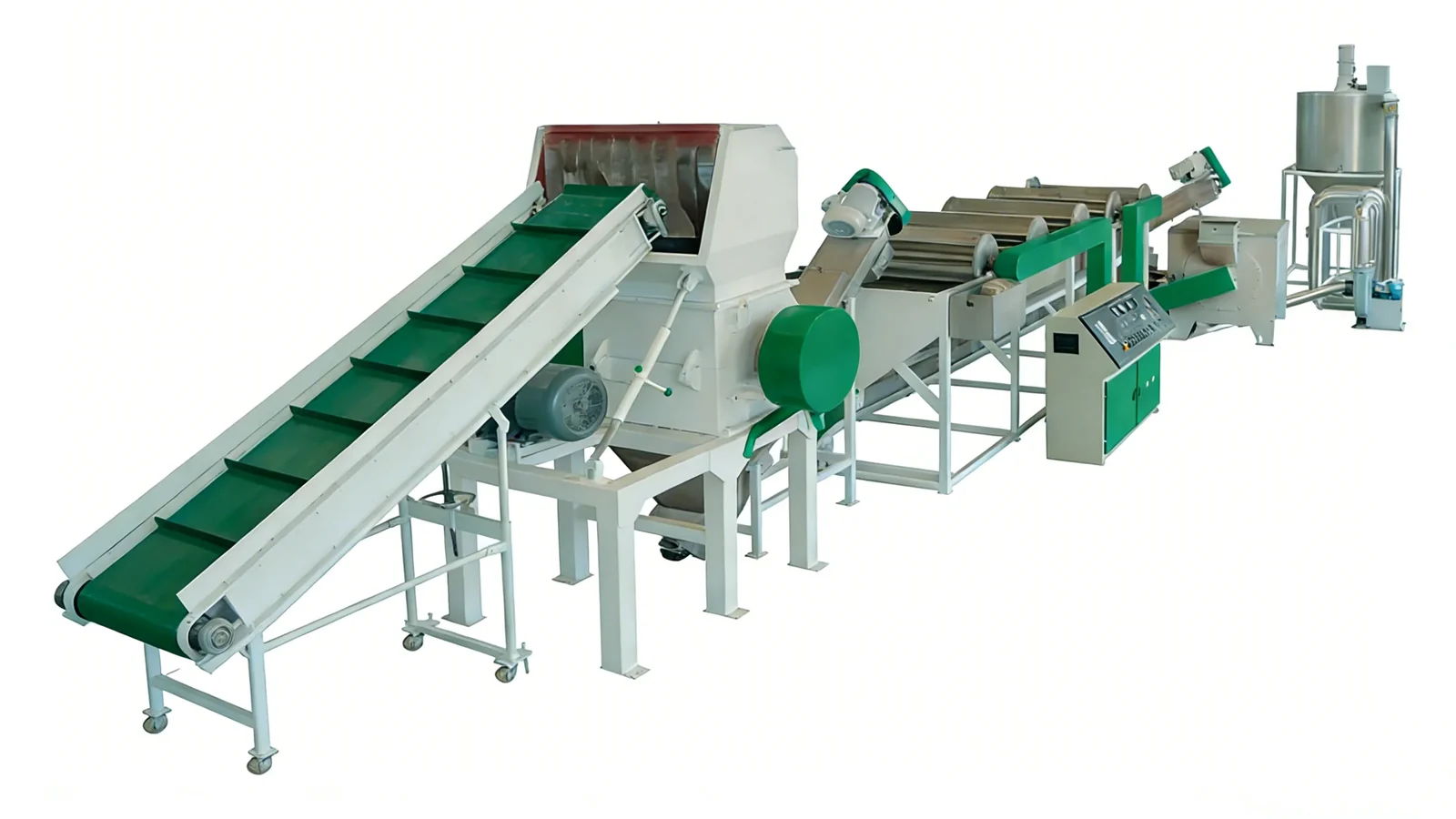
Continuous duty is a schedule, not a rating
A line described as suitable for 24/7 duty is only as continuous as its maintenance intervals. The TL-FK is designed for that duty with a defined rhythm: a 20-minute screen change every 3 to 4 hours and a blade check every 8 hours. Continuous campaigns of 30 days on bottle flake are normal.
The rhythm is built around the two wear points that actually stop a flake line: the screen pack and the water ring cutter. Everything else can wait. A routine that checks everything equally spends time on parts that never fail and misses the ones that do.
Planning the campaign means staffing those intervals. A screen change every four hours is six changes a day, and each one has a defined procedure. The operator who has done it fifty times changes the pack faster and produces less off-specification material.
The screen change window
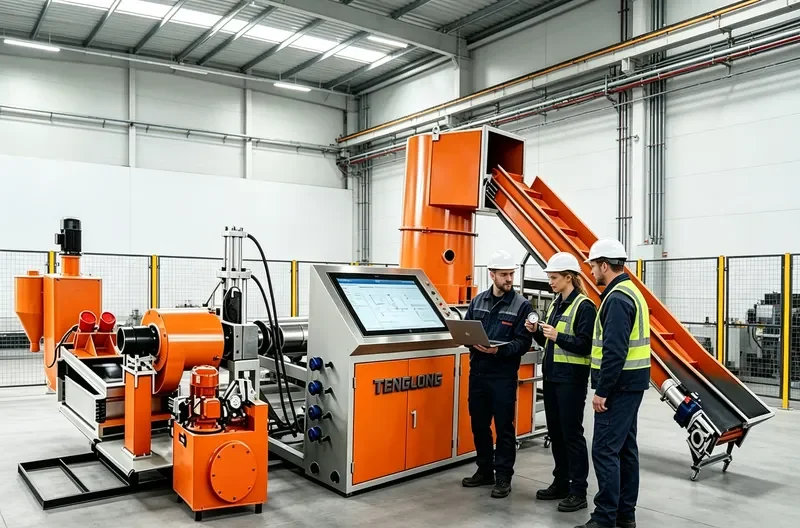
At three to four hours the pack has loaded enough to raise pressure but not enough to starve the die. Changing at that point is predictable. Waiting for a pressure alarm moves the change into a moment chosen by the process rather than by the operator.
The double-piston changer allows one station to be changed while the other stays online, which is why the window is twenty minutes rather than a full line stop. An automatic back-flush option is offered for 120 mesh where finer filtration is needed.
Record the pressure at each change. A rising trend across a campaign means the flake is getting dirtier or the pack is being changed too late. A falling trend means the interval can be extended and labour saved.
The eight hour blade check
The water ring cutter produces 2.5 to 4 mm pellets, and blade condition shows up first as fines. An eight-hour check looks at the blade, the pellet sample and the dewatering screen, then records the result. It takes minutes and prevents a gradual drift into rejected quality.
Pellet moisture should be below 0.3% after dewatering. A rising figure points to the dewatering screen or cyclone rather than the cutter, and the check should include it. Wet pellets clump in the bag and recreate the feeding problem downstream.
The force feeder and vacuum filters belong on the same round. A blocked vent filter produces foam, and a feeder that loses torque feedback starves the screw. Both are quicker to fix during a scheduled check than during a fault.
Planning the thirty day campaign
A 30-day campaign needs consumables on site: screen packs, cutter blades and the wear parts that the trial identified. Running out of packs on day twenty turns a planned change into a delay measured in days rather than minutes.
Two operators should know the screen change procedure. A campaign that depends on one person is fragile, and the twenty-minute window becomes much longer when the trained operator is absent.
Schedule a short inspection stop every week even if nothing has failed. Check the screw torque trace, the specific energy and the fines result against the first day’s baseline. Small drifts are easy to correct on day seven and expensive on day twenty-five.
When the rhythm needs to change
A dirtier flake source shortens the screen interval. If changes move from every four hours to every two, increase the screen area or move one mesh coarser before accepting the new routine. The same output is not being achieved with the same effort.
A finer pellet specification can shorten the blade interval. Below 2 mm, cutter output drops and fines increase on any line. The TL-FK default of 3 to 3.5 mm for injection and blow moulding is chosen partly because it holds a long campaign.
Our quality page describes the factory test that establishes the baseline intervals on your own material. Use those numbers as the starting point and adjust them with campaign data rather than copying a generic schedule.
The continuous-duty routine
Continuous flake campaigns run on a clock. The table is the shift rhythm the line is designed for.
| Interval | Task | Why it matters |
|---|---|---|
| Every 3-4 hours | 20-minute screen change | Holds pressure and output |
| Every 8 hours | Blade and pellet sample check | Catches fines drift early |
| Every 8 hours | Vent filter and torque trace | Prevents foam and starvation |
| Every week | Baseline comparison | Finds slow drift |
| Campaign start | Consumables on site | Avoids multi-day delays |
Common questions, with short answers
Q1: Can a flake line really run 24/7?
Yes. The TL-FK is designed for continuous duty, and 30-day campaigns on bottle flake are normal. Continuity comes from the maintenance rhythm, not from a rating on the machine.
Q2: How often does the screen need changing?
The published routine is a 20-minute change every 3 to 4 hours on bottle flake. The double-piston changer keeps one station online during the change. Record pressure at each change to see whether the interval is drifting.
Q3: What does the eight hour blade check cover?
Blade condition, a pellet sample for fines, the dewatering screen and pellet moisture. Moisture should stay below 0.3%. A rising figure points to dewatering rather than the cutter.
Q4: What consumables should be stocked for a 30 day campaign?
Screen packs, cutter blades and any wear parts identified in the factory trial. Running out of packs on day twenty turns a twenty-minute change into a delay measured in days.
Also worth reading: granulator types.
Three more notes from the same test floor: Why Flake Starves a Screw and How Force Feeding Fixes It, Running 4% Moisture Flake Without a Separate Dryer, 80 or 100 Mesh? Size the Screen by Dirt Load and Where the Energy Goes in Flakes Pelletizing.
About the author
Zhou Gong (周工) is the recycling machinery engineer at TENGLONG Plastic Machinery in Linyi, Shandong — a plant of 18,000 m² with 30-plus staff, 12 platforms and 820-plus installations across 46 export markets. A campaign is won in the routine, not in the first hour. The first hour is always easy. Where a figure is quoted here it has been measured or published with a date attached; nothing in this article is an estimate.
The quickest way to a real answer is to send the feed form, the contamination level and the throughput you need. A model and a price range come back within one working day, the trial on 10–20 kg of your material is free, and a result that misses the agreed output by more than 5% leaves the deposit refundable.