High-Frequency Q&A on 125 Type Granulator Selection, Use and Maintenance
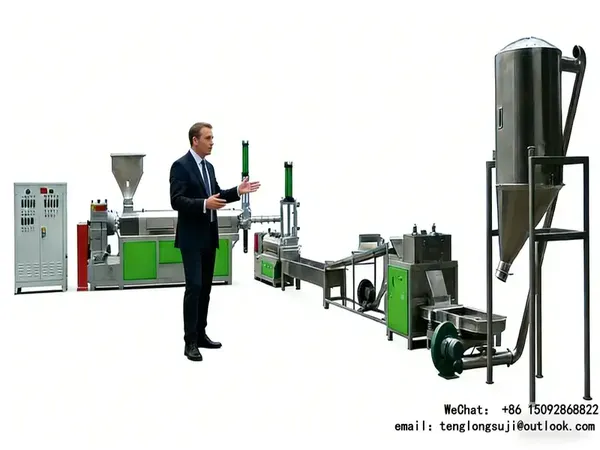
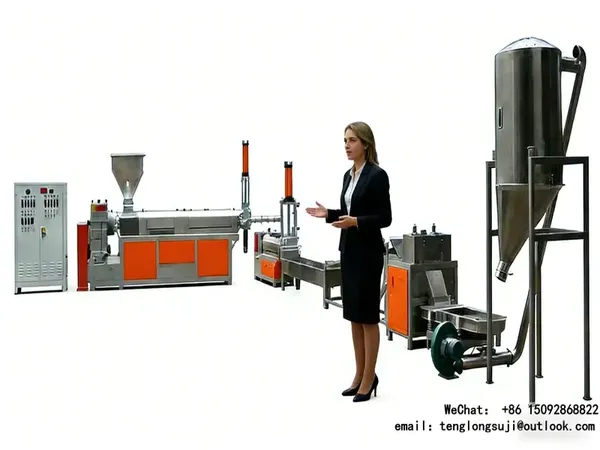
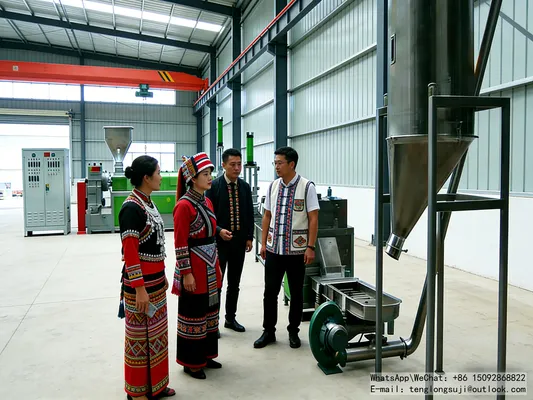
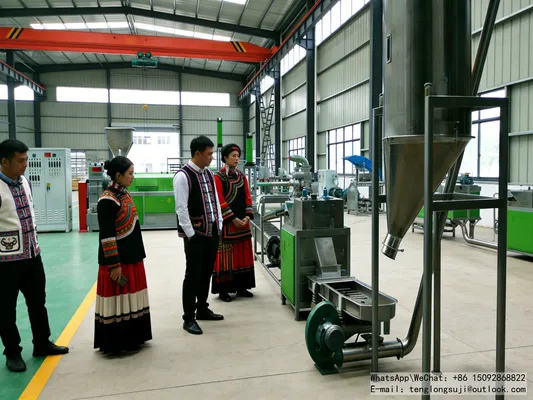
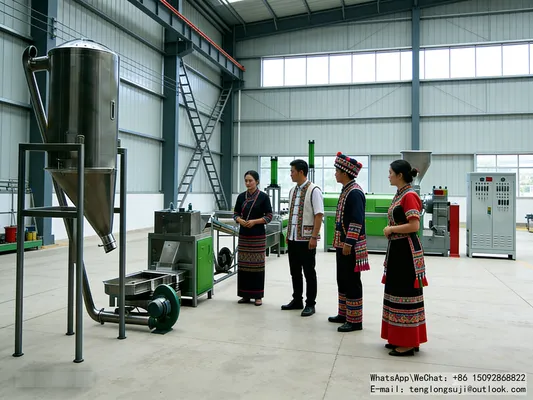
The 125 type granulator is the most popular main model in the fields of small-scale plastic recycling, material modification sample testing and scrap recycling. Many new and old users encounter various problems in equipment selection, commissioning and daily operation and maintenance, involving productivity, raw material adaptation, particle quality, energy consumption and maintenance. This FAQ summarizes the four core high-frequency questions of users, and provides professional and practical answers based on original equipment configuration and front-line production experience, helping users avoid selection misunderstandings, optimize production processes and reduce operating costs.
Q1: What scenarios is the 125 type granulator suitable for? Is it worth buying for novice entrepreneurship?
Answer: The 125 type granulator is featured by small stable mass production, low investment, low maintenance and high finished product quality, which is very suitable for four scenarios: first, novice plastic recycling entrepreneurship with low investment risk and fast learning speed; second, factory scrap, waste film and crushed flake recycling and regeneration; third, modified particle sample testing and small-batch customized production in new material laboratories; fourth, supporting self-use granulation production for small and medium-sized plastic factories. Compared with low-end simple models, this equipment is equipped with nitrided wear-resistant accessories, dual-group constant temperature heating and frequency conversion automatic configuration, with extremely low failure rate and better finished product quality, ensuring stable long-term profitability and being the first choice for novice entrepreneurship with high cost performance.
Q2: Why do the finished particle qualities vary greatly among different 125 type granulators? What is the core difference?
Answer: Ordinary low-end 125 type granulators adopt ordinary carbon steel screws, single heating, manual screen changing and ordinary cutting blades, which are prone to wear and carbon deposition, uneven temperature control, incomplete impurity filtration and disordered pelletizing. The core advantages of high-end models are concentrated in four points: first, the overall nitrided screw and barrel are wear-resistant and carbon-free; second, dual-group constant temperature of electromagnetic heating and heating coil ensures uniform plasticization without defects; third, non-stop electric screen changing and large-diameter filter screen realize thorough impurity filtration; fourth, the alloy variable frequency pelletizing system produces regular particles without broken materials, which is the core reason why the finished product quality of high-end models is far better than that of ordinary models.
Q3: Is daily maintenance of the 125 type granulator troublesome? Is it prone to failure?
Answer: The high-end 125 type granulator has a solid overall structure, durable wear-resistant accessories and perfect electric control protection, belonging to low-fault and easy-maintenance equipment. The hard-tooth reducer delivers stable transmission without easy damage; the nitrided screw and barrel avoid frequent polishing and maintenance; electric screen changing reduces disassembly frequency; the national standard variable frequency electric control provides multiple protections to effectively avoid motor overload and circuit faults. Daily maintenance only includes regular screen impurity cleaning, water tank cleaning and transmission lubrication inspection, with simple maintenance and cheap consumables, very suitable for long-term continuous production.
Q4: Can the equipment process wet/dry materials and mixed materials? Do supporting pretreatment equipment need to be equipped?
Answer: The 125 type granulator is compatible with conventional dry and wet scraps and recycled materials with slight impurities, and the built-in high-precision filtration system can intercept most impurities. If the raw materials have high sediment and oil stain content, it is recommended to equip with simple crushing and cleaning pretreatment equipment to further improve particle purity and appearance for better mass production effect.
Call To Action
If you have personalized questions about 125 type granulator selection, process commissioning, productivity matching and equipment transformation, feel free to consult us for free to obtain one-on-one professional technical solutions!
WhatsApp/WeChat: +86 15092868822 | Email: [email protected]