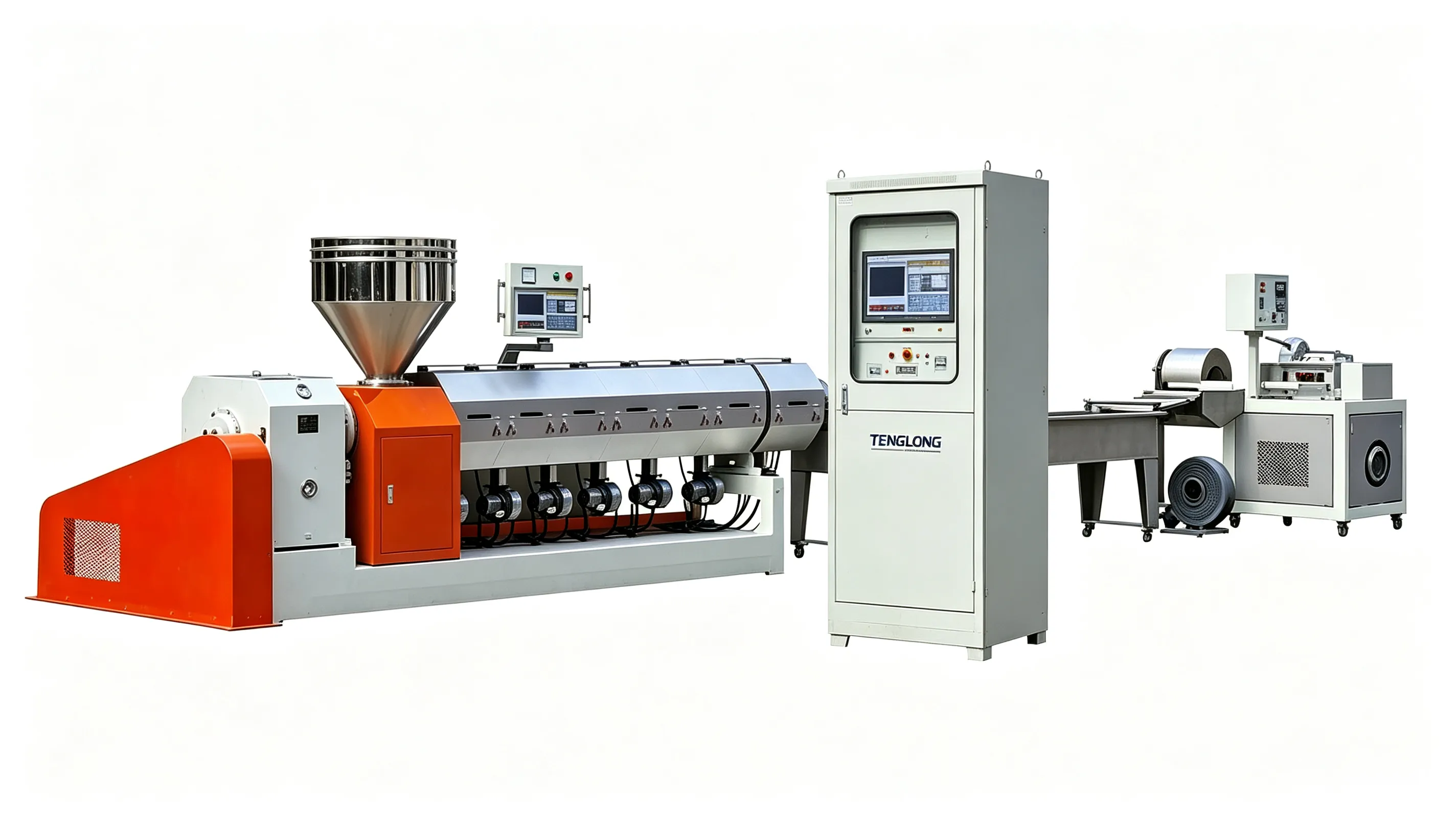
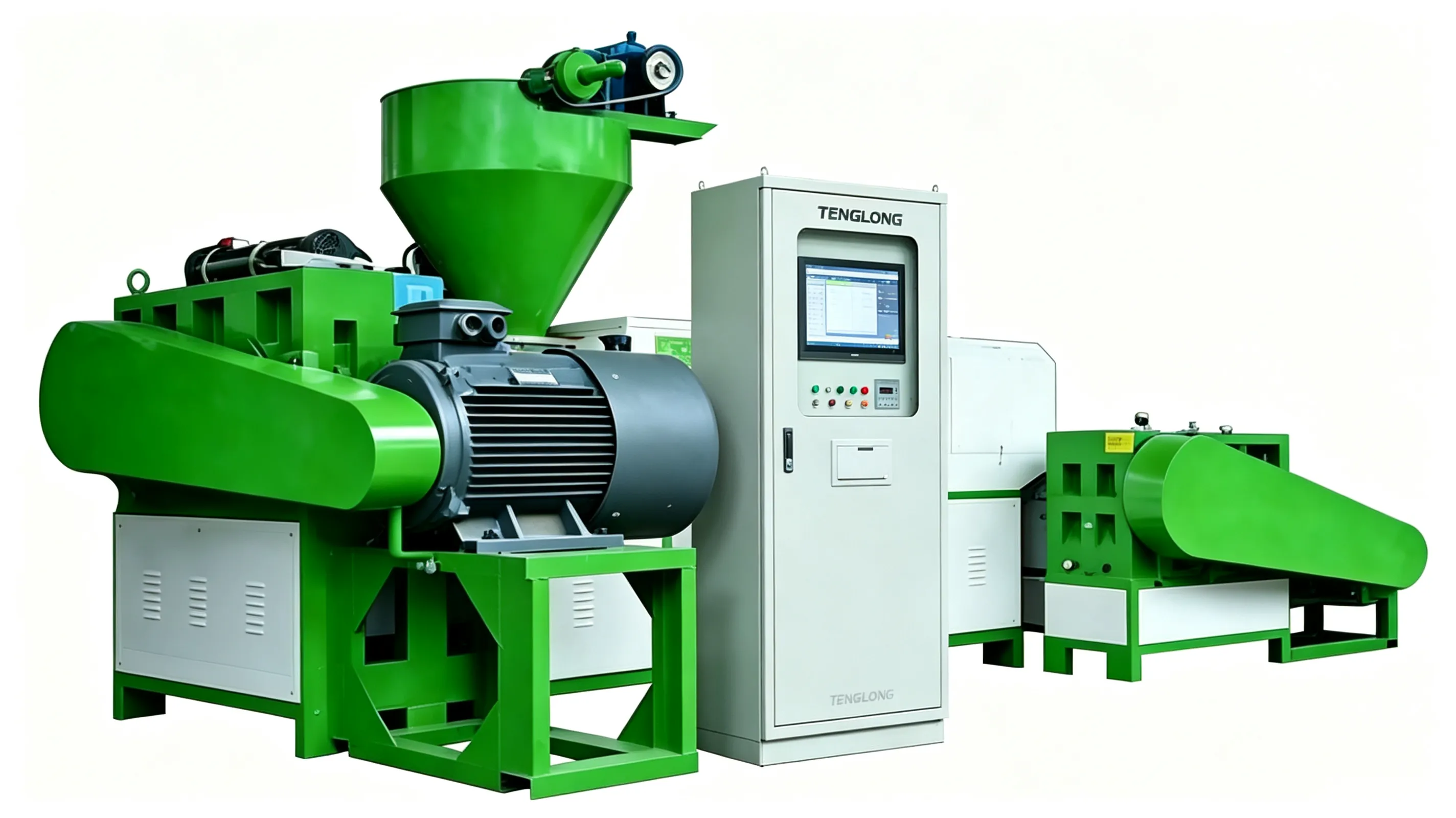
Technical notes · · 8 min read
What a plastic granulator really costs in 2026
Machine price, installation, power and wear parts over five years — with the FOB ranges we quote and the four options that move them most.
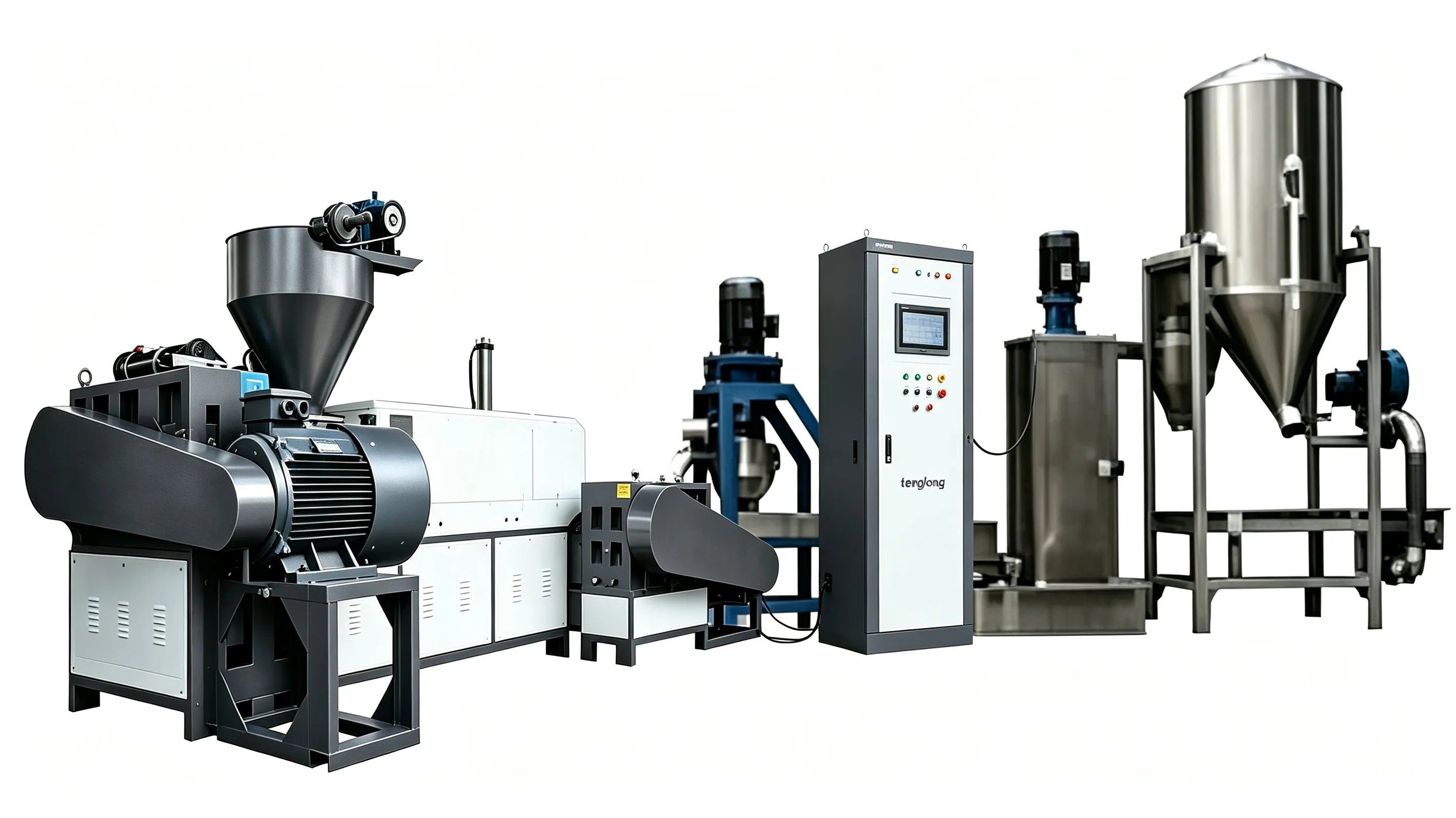
A plastic granulator costs US$6,800 to US$380,000 FOB Qingdao in 2026, depending on platform and output. The more useful question is cost per ton of pellet: on a 500 kg/h line running 6,000 hours a year, electricity and wear parts together usually exceed the machine price within 24 months.
Indicative 2026 FOB ranges
| Platform | Output | From (USD) | To (USD) |
|---|---|---|---|
| Compact pellet mill (TL-PM) | 100–500 kg/h | 6,800 | 22,000 |
| Single screw line (TL-SJ) | 150–700 kg/h | 12,500 | 46,000 |
| Film line (TL-FL) | 200–800 kg/h | 42,000 | 98,000 |
| Two stage line (TL-2S) | 300–1,200 kg/h | 46,000 | 135,000 |
| Twin screw line (TL-TS) | 300–1,500 kg/h | 38,000 | 128,000 |
| PET line (TL-PET) | 500–2,000 kg/h | 120,000 | 380,000 |
| Washing + pelletizing plant (TL-GPL) | 500–3,000 kg/h | 85,000 | 260,000 |
The four options that move the price most
- Screen changer: manual to automatic back-flush adds 8–15% of machine price.
- Screw metallurgy: bimetallic screw and barrel adds 12–20%, and pays back in 8–14 months on glass-filled regrind.
- Cutting method: underwater adds 25–35% over strand, plus a dryer.
- Automation: gravimetric dosing, melt pump and remote IoT add 10–18% together.
Five-year cost of ownership
Take a 500 kg/h line at 0.35 kWh/kg, 6,000 hours a year and US$0.10/kWh: electricity is US$105,000 a year. Add labour (two operators), wear parts (US$6,000–9,000 a year) and maintenance. Over five years, the machine is 15–25% of total cost. That is why a 10% cheaper machine with 0.05 kWh/kg worse specific energy is a bad deal.
Payment and what is not included
Quotes are FOB Qingdao unless stated otherwise: 30% deposit, 70% before shipment after the test-run video. Sea freight, insurance, import duty, installation travel and civil works are not included. Ask for a DAP quote if you want one number to your gate — it is usually 6–12% above FOB depending on destination.
Questions buyers ask
Why are quotes from different suppliers so far apart?
Usually three things: screw metallurgy (nitrided versus bimetallic), the brand of inverter, PLC and gearbox, and whether the quoted output is bagged pellets or screw throughput. Ask for the component list and the test report before comparing prices.
Is a used machine a better deal?
Sometimes, for a first line with a tight budget — but check screw wear (nitrided layer below 0.3 mm means replacement), gearbox backlash and whether the PLC still has spare parts. A worn screw plus a new gearbox often costs more than a new mid-range machine.