Technical notes · · 7 min read
Layout and energy of a film recycling line
Why the compactor position decides output, and where the 300–450 kWh per ton actually goes.

Film lines succeed or fail on the distance between the compactor and the extruder. Keep it under 1.5 m and the agglomerate arrives warm and dense; stretch it to 3 m with a conveyor and it cools, hardens and starves the screw. Everything else in the layout follows from this one dimension.
A layout that works
- Receiving and pre-sorting: 6 × 4 m, with a bale breaker and a metal detector.
- Crusher (optional for bales) directly above or beside the compactor feed conveyor.
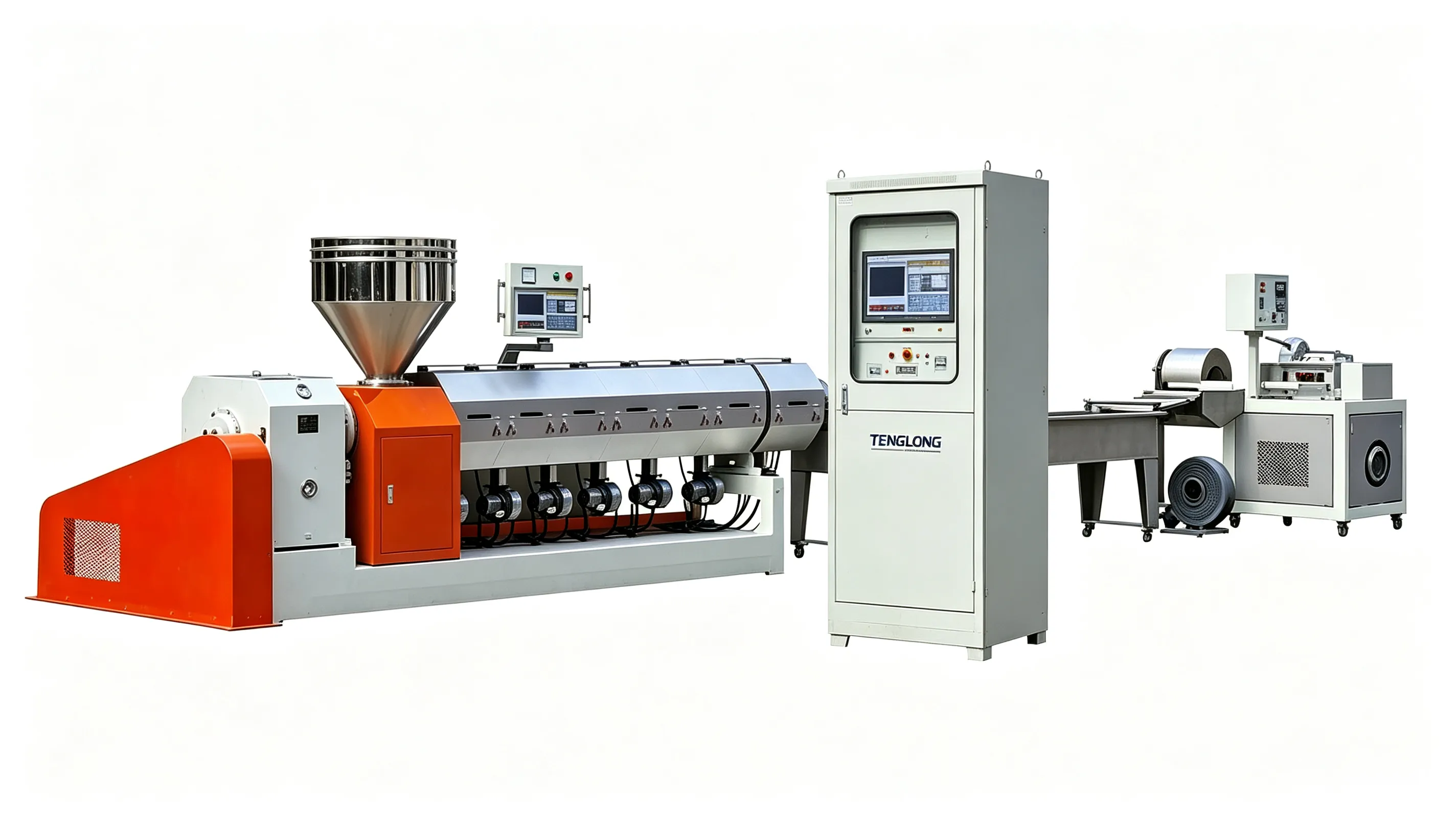
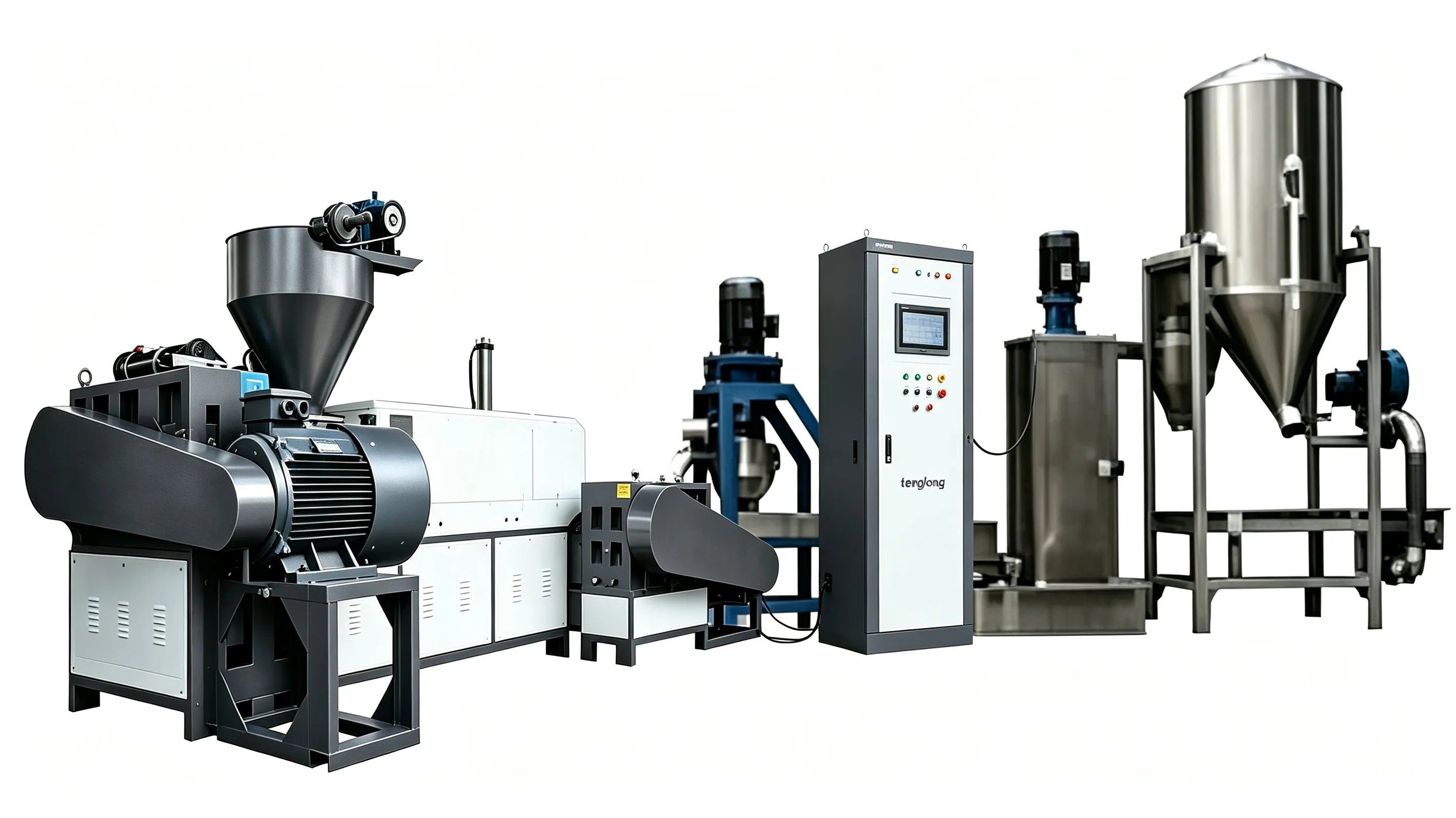
- Compactor + extruder on one frame, 1.5 m apart, with the screen changer facing the aisle.
- Water ring and dewatering screen at 90° to the extruder, so pellets do not travel back over the barrel.
- Silo or bagging station 3 m downstream, with a metal detector before the bag.
Where the energy goes
| Stage | Share of total | kWh per ton |
|---|---|---|
| Compactor | 18–22% | 60–80 |
| Extruder screw drive | 55–62% | 180–240 |
| Barrel heating | 12–16% | 40–60 |
| Cutter, pumps, blowers | 8–12% | 25–45 |
Three quick wins
First, insulate the barrel: bare barrels lose 15–20% of heating energy and heat the workshop at the same time. Second, put a VFD on the compactor, not just the screw — most lines run the compactor at fixed speed and throttle the screw instead. Third, recover cutter cooling water to pre-heat the wash tank if you have one.
Questions buyers ask
Do I need a crusher for film?
Usually not. The compactor accepts whole film, bags and wrap. A crusher is only useful for bales that are compressed so hard the compactor cannot pull them apart, or for very thick film above 200 µm.
How much does a film line cost per kg/h?
Around US$120–180 per kg/h of output for the pelletizing section, and US$230–320 per kg/h if washing and drying are included. Below US$100 per kg/h you are usually looking at a machine without a compactor, which will not run film.