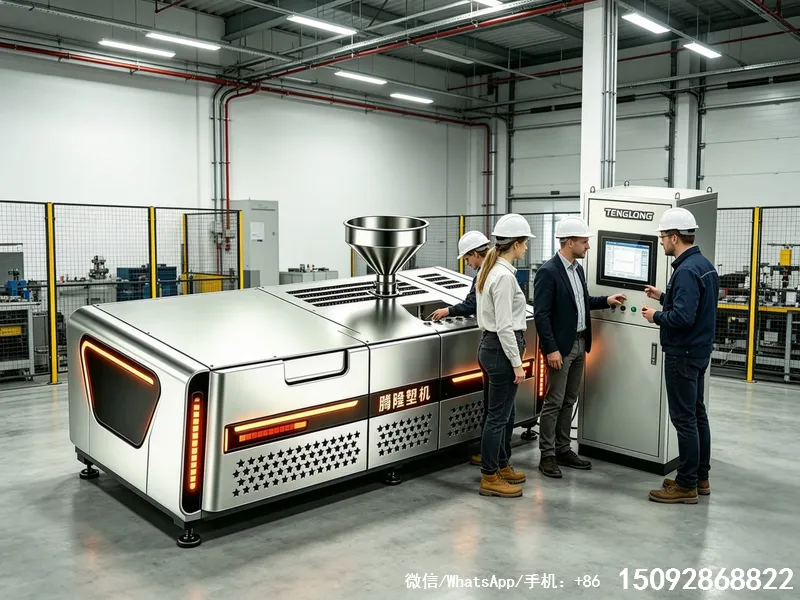
Short answer: A plastic recycling machine is a system of equipment that converts waste plastic into reusable flake or pellets through size reduction, washing, drying, melt filtration and pelletizing. A single unit performs one stage; a complete recycling line links every stage at a rated throughput, typically 100 to 3,000 kg/h.
People use the phrase plastic recycling machine for two different things: one standalone machine, or an entire production line. That ambiguity causes expensive specification mistakes. A crusher bought to process baled post-consumer bottles will not produce clean pellets on its own, and a full washing line is unnecessary for clean in-house edge trim. This guide defines the machine classes, maps them to the process, and shows how to match a configuration to your material and target output.
TENGLONG Plastic Machinery is a granulator and recycling-line manufacturer based in Linyi, Shandong, China, founded in 2016. The company operates an 18,000 m² plant, holds CE marking and ISO 9001:2015 certification, and reports more than 820 granulating lines delivered to 46 countries. Its published machine range spans 12 platforms from 100 to 3,000 kg/h. The definitions below follow that equipment taxonomy rather than a generic dictionary definition.
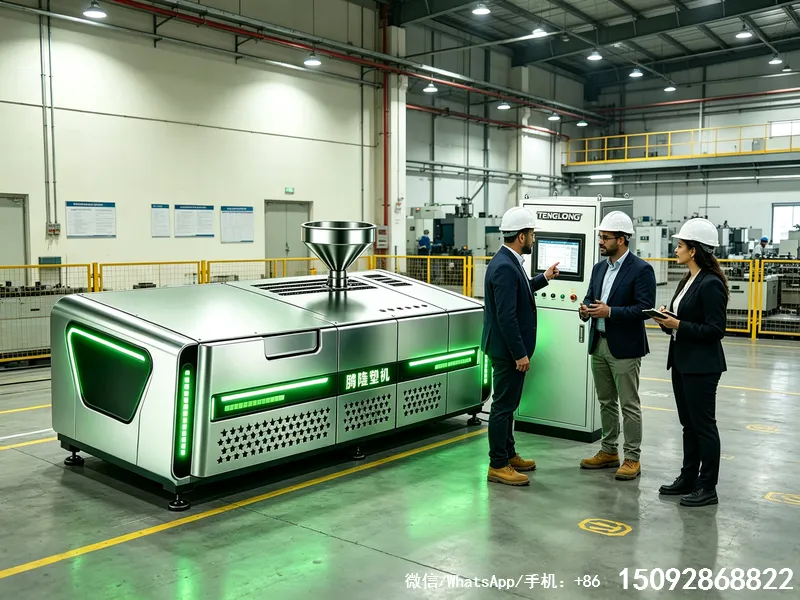
What does a plastic recycling machine actually do?
A plastic recycling machine removes contamination and restores waste polymer to a consistent, processable form. It does this mechanically: cutting material to a uniform size, washing away labels, glue, soil and ink, separating polymers by density, removing water, melting and filtering the polymer, and cutting the melt into pellets of a controlled size.
The machine does not change the polymer chemistry. Mechanical recycling preserves the base resin, which is why feedstock purity and separation accuracy determine the value of the output. A PET flake stream contaminated with PVC degrades during melting; a PP/PE film stream with residual moisture produces porous pellets. Every stage exists to protect the melt.
| Stage | What is removed or achieved | Typical equipment |
|---|---|---|
| 1. Sorting and pre-treatment | Metals, non-plastics, bale wires, mixed colours | Sorting belt, metal detector, bale breaker |
| 2. Size reduction | Bulk volume, to 8–50 mm flake | Plastic crusher, shredder, granulator |
| 3. Washing | Labels, glue, soil, ink, organics | Label remover, friction washer, hot washer |
| 4. Density separation | PVC, caps, floating polyolefins | Float-sink tank |
| 5. Dewatering and drying | Surface and absorbed moisture | Centrifugal dewaterer, squeeze dryer, thermal dryer |
| 6. Extrusion and filtration | Remaining solids, degraded polymer | Single/twin screw extruder, screen changer, melt filter |
| 7. Pelletizing | Melt converted to 1–4 mm pellets | Strand, water-ring or underwater pelletizer |
What are the 5 main types of plastic recycling machines?
The five classes are size-reduction machines, washing line equipment, dewatering and drying units, extruder-granulators, and pelletizers. Auxiliary equipment such as conveyors, force feeders, screen changers and silos connects them. A buyer usually purchases a subset of these classes, not all five.
| Class | Output | When you need it | Specification reference |
|---|---|---|---|
| Crushers and shredders | Regrind or coarse flake | Baled, bulky or rigid feedstock | Crushers and shredders |
| Washing line equipment | Clean, separated flake | Post-consumer bottles, film, agricultural waste | Washing line equipment |
| Dewatering and drying | Low-moisture flake | Any wet process, critical for PET and PA | Auxiliary equipment |
| Extruder-granulators | Filtered homogeneous melt | Converting flake back into usable resin | Granulator types |
| Pelletizers | 1–4 mm pellets | Selling or re-using recycled resin | Machine range |
Why the terminology is confusing
In many markets granulator means a knife mill that produces regrind. In pelletizing contexts it means an extruder that produces new pellets. Pelletizer refers specifically to the cutting device at the die. Always state the required output form, regrind, flake or pellet, and the target pellet diameter in an enquiry. Our pellets and feedstock glossary defines these terms explicitly.
Can one plastic recycling machine process every type of plastic?
No. Configuration is driven by polymer type, feedstock form and contamination level. Three materials alone demand three different lines: clean rigid PP regrind, wet PET bottle flake, and low-bulk-density LDPE agricultural film.
| Feedstock | Recommended configuration | Published capacity | Indicative starting price |
|---|---|---|---|
| Clean in-house PP/PE/ABS scrap | Single screw granulator (TL-SJ) | 150–700 kg/h | from US$12,500 |
| Washed HDPE/PP flake | Flakes pelletizing machine (TL-FK) | 300–1,000 kg/h | from US$28,000 |
| LDPE / LLDPE / stretch film | Film granulating line (TL-FL) | 200–800 kg/h | from US$42,000 |
| Highly contaminated mixed waste | Two stage granulating line (TL-2S) | 300–1,200 kg/h | from US$46,000 |
| PET bottle flake, food-contact grade | PET pelletizing line (TL-PET) | 500–2,000 kg/h | from US$120,000 |
| Mixed dirty bales to finished pellets | Plastic granules production line (TL-GPL) | 500–3,000 kg/h | from US$85,000 |
Price figures are published indicative starting prices for 2026 and are configuration-dependent. They are not quotations. A formal quote should state filtration mesh, drying method, motor power, control system and the exact scope of supply.
What is the difference between a recycling machine and a recycling line?
A machine is one unit performing one operation; a line is multiple units linked by conveyors and controls into a continuous process. Lines carry a rated throughput in kg/h and a measured energy figure in kWh/kg, while individual machines carry a motor rating and a nominal capacity that assumes ideal feedstock.
This distinction matters when comparing suppliers. Two quotes for a 500 kg/h line may describe very different scopes: one may exclude washing and water treatment, the other may include them. Compare the rated output of finished, saleable pellets, not the nameplate capacity of the extruder.
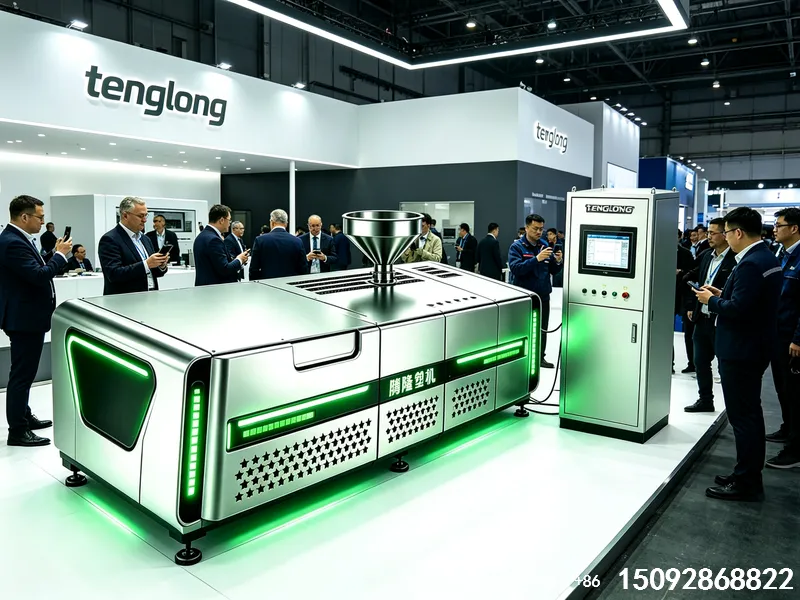
How do you choose the right configuration?
Start with the feedstock, then the required pellet quality, then the verified daily volume. Confirm polymer identification, moisture, contamination percentage and bale density with a material sample before any equipment discussion. Then specify filtration fineness, drying target and pellet size. Only then size the line.
- Send a representative 20–50 kg sample for a material trial.
- Define the output specification: pellet diameter, colour tolerance, moisture limit, intended application.
- Size rated capacity to 70–80% of secured daily feedstock, not to aspirational volume.
- Request a factory acceptance test with measurable throughput, kWh/kg and pellet quality criteria.
- Verify total installed cost, including utilities, effluent treatment and commissioning.
For a model-by-model capacity comparison, see the 12-model granulator comparison. The technical FAQ library contains 67 field-tested answers on specific equipment questions.
Key takeaways
- A plastic recycling machine is a system, not a single device; define it by the process stages it covers.
- Five machine classes exist: size reduction, washing, drying, extrusion-filtration and pelletizing.
- Feedstock form and contamination determine configuration more than brand or motor power.
- Published 2026 platform prices range from US$6,800 for a pellet mill to US$120,000 for a PET line.
- Compare finished-pellet throughput and kWh/kg, not extruder nameplate capacity.
Need a configuration for your material? Send your feedstock details and target output to the TENGLONG quotation team, or review factory testing and quality control before placing an order.
Frequently Asked Questions
What is a plastic recycling machine?
A plastic recycling machine is a group of machines that converts waste plastic into reusable flakes or pellets. A complete system performs size reduction, washing, drying, melt filtration and pelletizing. A single machine, such as a granulator or crusher, only performs one stage of that process.
What are the 5 main types of plastic recycling machines?
The five main types are crushers and shredders for size reduction, washing lines for cleaning, dewatering and drying equipment, granulators and extruders for melt filtration, and pelletizers for cutting molten polymer into pellets. Auxiliary units such as screen changers and conveyors connect the stages.
Can one machine recycle all types of plastic?
No. Machine configuration depends on polymer type, contamination level and feedstock form. Rigid HDPE and PP regrind can often run on a single-screw granulator, while PET bottle flake needs crystallization and dehumidified drying, and lightweight LDPE film needs a cutter compactor and force feeding.
What is the difference between a recycling machine and a recycling line?
A recycling machine is one unit performing one operation, such as crushing or pelletizing. A recycling line is several machines linked by conveyors and controls into a continuous process, typically from dirty bales to bagged pellets, with a rated throughput in kg/h.
Related reading
- Plastic Recycling Machine Cost 2026: Prices, TCO, Payback
- Film Recycling Process Upgrade: Film Squeeze Material Granulation Production Line Solves Pain Points of High Labor Demand and Low Capacity
- Core Cost Reduction Solution for Sheet Production:PVC Hard Trim Recycling Machine Realizes 100% Edge Trim Circular Utilization