In the PP and PE film plastic recycling industry, most small and medium-sized processing factories have long been plagued by high equipment investment, high energy consumption, cumbersome procedures and thin profits. Many enterprises blindly adopt two-stage pelletizing equipment, resulting in excess capacity and high costs that further squeeze profit margins. With streamlined and efficient integrated processes, soft material exclusive configuration and gradient accurate capacity, the single-stage PP PE film granulating line has become the most adaptable and cost-effective mainstream equipment in the current film recycling field, perfectly matching small and medium-scale mass production needs.
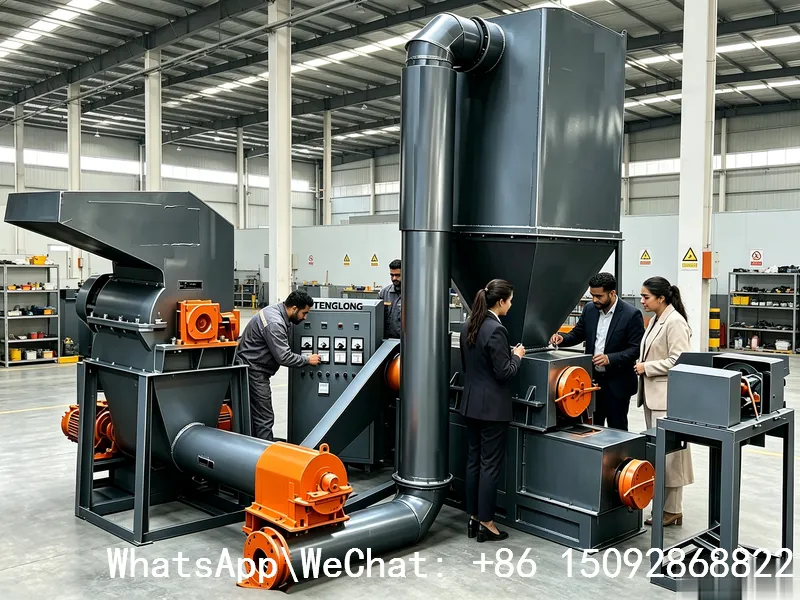
Many practitioners hold a misunderstanding that two-stage equipment always produces better quality pellets than single-stage models. In fact, for general soft PP and PE film materials, the secondary melting process of two-stage equipment is completely redundant. It not only fails to improve pellet quality, but also causes excessive material plasticization, energy waste, redundant capacity and doubled equipment investment. In contrast, the professional single-stage PP PE film granulating line develops an exclusive single-stage closed-loop process based on the fluffy, water-rich and easy-to-plasticize characteristics of film materials. One-time feeding, melting and pelletizing streamline redundant procedures, ensuring qualified pellet quality while minimizing equipment investment and production energy consumption, which highly conforms to the production logic of film recycling.
The core technical highlight of the single-stage PP PE film granulating line is the precise matching of length-diameter ratio and screw structure. Small and medium-capacity models (TL85/100/130) adopt a standard 33:1 length-diameter ratio with sufficient plasticization stroke to realize refined melting, thorough impurity removal and degassing of film materials, suitable for high-quality pellet production. Large-scale mass production models (TL160/180) adopt optimized 30:1 and 28:1 short length-diameter ratios to shorten plasticization stroke and improve discharging speed. It balances production efficiency and product quality, which is the core technical reason why PE capacity is higher than PP capacity in the same model.
The complete gradient parameter configuration enables the equipment to adapt to all investment scenarios. The small TL85 model is suitable for start-up workshops with small-scale trial production, featuring low investment, low energy consumption and flexible operation. The medium TL100 and TL130 models with balanced capacity are the mainstream choice for small and medium-sized recycling factories with optimal cost performance. The large TL160 and TL180 models achieve ton-level capacity, suitable for large-scale factories and centralized processing of large quantities of film waste, supporting stable 24-hour continuous production. All series models are equipped with core configurations of high-speed compaction, vacuum degassing and automatic screen changing, fundamentally solving common industry defects such as machine blockage, bubbling, excessive impurities and poor appearance in film pelletizing.
From the perspective of actual production, the single-stage PP PE film granulating line has prominent practical advantages. The front-end compaction and granulation process solves the problem of difficult feeding of fluffy films and eliminates bridging and blockage. The vacuum degassing system specially removes residual moisture and volatile impurities from films, completely solving pellet bubbling defects. Non-stop automatic screen changing improves effective production capacity, and full-line intelligent linkage only requires 1-2 workers for operation, minimizing labor costs. Compared with traditional equipment, the overall production energy consumption is reduced by more than 20%, operation and maintenance difficulty is greatly decreased, and the profit margin of long-term mass production is significantly improved.
Under the general trend of refined cost reduction and efficiency improvement in the industry, redundant and complex two-stage equipment is no longer suitable for conventional film recycling working conditions. The streamlined, efficient, low-consumption and high-cost-performance single-stage PP PE film granulating line has gradually become the mainstream industry choice, helping small and medium-sized recycling enterprises get rid of high-cost and low-profit dilemmas and realize stable production, quality improvement and income growth.
FAQ
Q1: Can pellets produced by the single-stage process meet downstream injection molding and extrusion standards?
A: Fully compliant. Thesingle-stage PP PE film granulating line adopts precise temperature control, vacuum degassing and precision filtration processes to ensure uniform material plasticization and thorough impurity removal. The finished pellets are dense, bubble-free and stable in appearance, fully meeting mainstream downstream processing standards such as conventional injection molding, pipe extrusion and film reproduction.
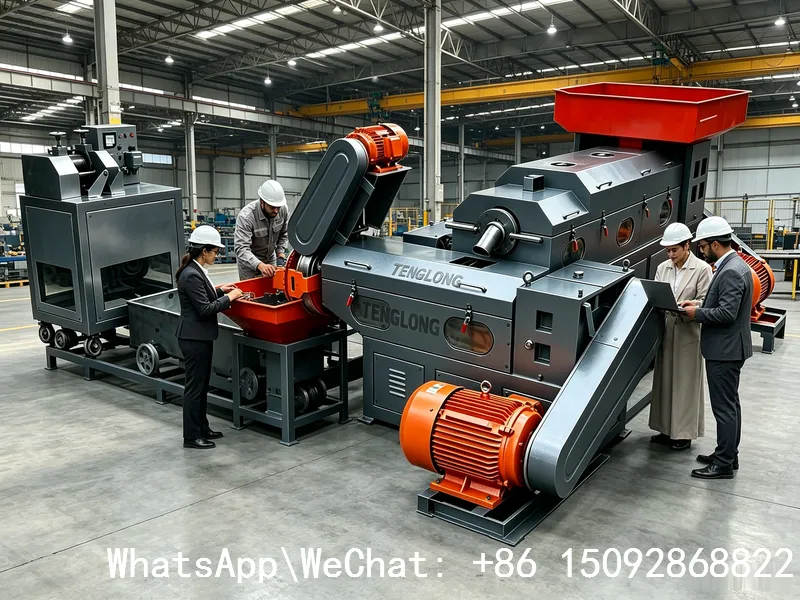
Q2: How to select models accurately for different working conditions to avoid capacity waste or shortage?
A: 3-5 tons daily output: TL85/TL100; 8-12 tons daily output: TL130; 15-20 tons daily output: TL160; More than 25 tons daily large-scale production: TL180. Accurate capacity matching avoids resource waste.
Call to Action
To learn accurate selection skills, working condition adaptation solutions and cost-saving mass production methods of the single-stage PP PE film granulating line, get your exclusive personalized investment solution for free!
WhatsApp/WeChat: +86 15092868822 | Email: [email protected]
Related reading
- What Is a Plastic Recycling Machine? A 2026 System Guide
- Film Recycling Process Upgrade: Film Squeeze Material Granulation Production Line Solves Pain Points of High Labor Demand and Low Capacity
- Core Cost Reduction Solution for Sheet Production:PVC Hard Trim Recycling Machine Realizes 100% Edge Trim Circular Utilization