In the EPS foam recycling industry, miscellaneous and diverse material forms are common pain points. Waste foam includes not only lightweight and loose packaging scraps, but also compact high-density hot melt blocks and cold press blocks. Traditional single-functional foam hot melt cold press granulator has poor adaptability, only processing a single type of material with low equipment utilization rate. Meanwhile, ordinary equipment features extensive temperature control, few extrusion stages and simple filtration, easily causing pellet blackening, bubbling, excessive impurities and unstable appearance during production. Frequent shutdown for screen changing leads to production capacity loss and material accumulation, leaving many recycling factories in a dilemma of idle equipment, uneven quality and meager profits. With the core advantages of multi-functional use, three-stage fine plasticization, dual-mode filtration and electromagnetic energy-saving constant temperature, the 320 foam hot melt cold press granulator completely solves industrial mass production problems and becomes the preferred model for large-scale upgrading of foam recycling industry.
Many foam recycling practitioners hold a misunderstanding that foam granulation process is simple and ordinary single-stage equipment can meet production needs. In fact, foam materials have special properties: lightweight and floating, prone to thermal carbonization and impurity residue, requiring extremely high standards for equipment feeding structure, temperature control precision, extrusion homogenization capacity and filtration system. Ordinary granulation equipment lacks forced feeding structure, leading to frequent material bridging and breakage of lightweight foam materials; single-stage extrusion cannot realize sufficient exhaust and mixing, resulting in loose and porous finished products; single-screen filtration has insufficient precision with serious residual impurities; frequent shutdown for screen changing severely restricts production capacity, failing to meet diversified and large-scale foam recycling production needs.
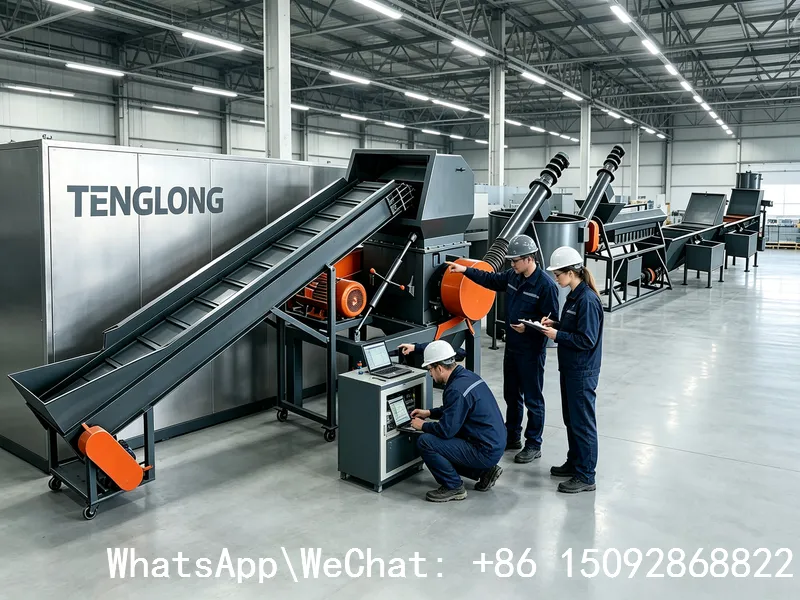
Starting from the material characteristics, the 320 foam hot melt cold press granulator optimizes the full production process to realize universal mass production of all types of foam materials. The front 6m wide conveyor matches the 800-type thickened crusher with 25mm reinforced box and multi-blade strong shearing, which can quickly crush various massive and agglomerated waste foam into uniform fine materials, laying a solid foundation for subsequent melting and granulation. The dual 219-type screw feeders realize double-layer conveying to ensure continuous and stable material supply. Matched with the 3KW forced feeder, it specifically solves the problems of floating, bridging and uneven feeding of lightweight foam materials, stabilizes host extrusion pressure and guarantees production continuity from the source.
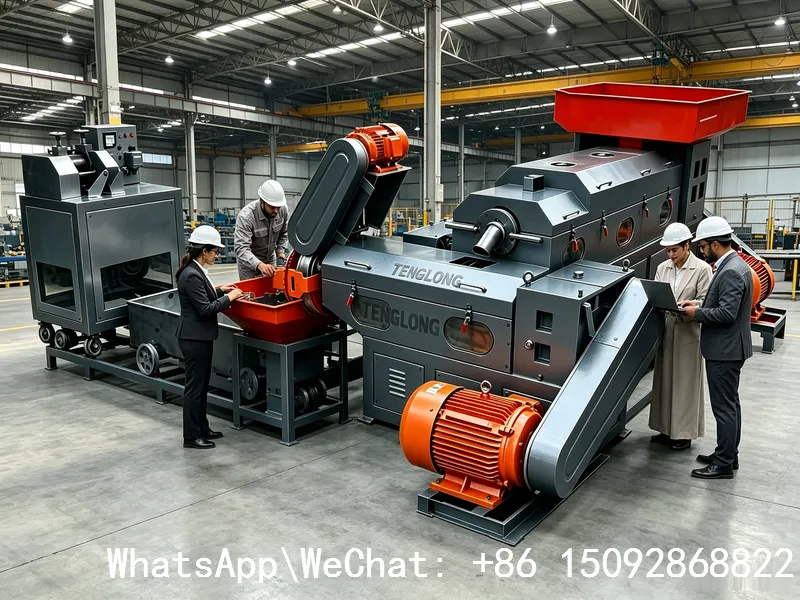
In the core melting and plasticization link, the equipment adopts a three-stage layered fine plasticization process combined with 60KW high-power electromagnetic constant temperature heating to achieve dual efficiency improvement of quality and stability. The thickened wear-resistant blades of the 320-type host adapt to mixed light and heavy foam materials. The 45KW six-stage motor provides sufficient power to quickly compact and melt materials for preliminary homogenization. Electromagnetic heating realizes precise temperature control, avoiding foam carbonization at high temperature and incomplete plasticization at low temperature, saving energy and greatly improving material purity. The 170-type secondary machine is equipped with a 400-type mesh-free head, eliminating frequent screen replacement and automatically filtering fine floating impurities and burnt materials, reducing consumable and labor costs. The 170-type tertiary machine is fitted with a 400-type hydraulic non-stop screen changing head for automatic alternating screen changing without material breakage, completely eliminating shutdown production capacity loss and greatly improving the effective operating rate of equipment. The three-stage screws refine and mix materials layer by layer to make the foam melt denser in texture and more transparent in color, with finished pellet appearance far superior to ordinary single and double-stage equipment.
The rear full-automatic supporting production line further optimizes finished product quality. The 5m extended water tank realizes gradient cooling and shaping for flat and regular strips without deformation; the 220-type precise pelletizer delivers uniform cutting without scraps; the 1.7m large-size vibrating sieve realizes graded impurity removal to unify finished product specifications; the 1-ton closed silo achieves dust-proof material storage to ensure clean, regular and consistent-quality finished pellets. The national standard intelligent electronic control system realizes full-link linkage regulation with simple operation and convenient maintenance, featuring strong stability for 24-hour continuous mass production.
According to industrial mass production measured data, after upgrading to the 320 foam hot melt cold press granulator, factories no longer need multiple sets of equipment for matching production. One machine adapts to all foam materials with greatly improved equipment utilization rate. Non-stop production reduces material loss, electromagnetic heating cuts power consumption, and the three-stage fine plasticization process increases pellet premium, realizing comprehensive quality improvement, production increase and cost reduction, perfectly meeting the large-scale and diversified production needs of small and medium-sized foam recycling factories.
FAQ
Q1: What are the advantages of the integrated foam hot melt and cold press granulation process compared with the single granulation process?
A: Single-process equipment can only process loose foam or compacted blocks with single material adaptability and high equipment idle rate. In contrast, the 320 foam hot melt cold press granulator supports mixed production of loose materials, hot melt blocks and cold press blocks, adapting to the miscellaneous material recycling status of factories. Equipped with three-stage fine plasticization and dual-mode filtration, it delivers far higher pellet purity and stability than single-process equipment, with larger production capacity, lower loss and greater profit margin.
Q2: Does the electromagnetic heating configuration play a key role in foam granulation quality improvement?
A: It plays a decisive role. Foam materials are temperature-sensitive. Ordinary resistance heating has large temperature differences and easily causes local high-temperature carbonization and blackening. The 60KW electromagnetic heating of this machine realizes full-range constant and uniform temperature with precise control, perfectly matching the EPS foam melting temperature range. It ensures thorough material melting while eliminating carbonization defects, saving more than 30% of energy, achieving remarkable effects of quality improvement and cost reduction.
Call to Action
To obtain detailed production capacity data, energy-saving parameters and exclusive multi-material debugging processes of the 320 foam hot melt cold press granulator, feel free to consult us for free at any time! WhatsApp/WeChat: +86 15092868822 | Email: [email protected]
Related reading
- What Is a Plastic Recycling Machine? A 2026 System Guide
- Film Recycling Process Upgrade: Film Squeeze Material Granulation Production Line Solves Pain Points of High Labor Demand and Low Capacity
- Core Cost Reduction Solution for Sheet Production:PVC Hard Trim Recycling Machine Realizes 100% Edge Trim Circular Utilization