In the plastic recycling industry, flake granulation is the most widely used processing mode with low entry barriers. However, most small and medium-sized processing factories are plagued by persistent problems such as pellet bubbling, frequent strip breakage, uneven pellet size and damp and mildewed finished pellets during production. Most of these defects stem from mismatched equipment configurations and imperfect processes rather than raw material issues.
The professional plastic flakes granulator thoroughly avoids common flake granulation defects from equipment structure, temperature control system and cooling & drying process, helping manufacturers stabilize production capacity, improve finished product quality and increase production profits.
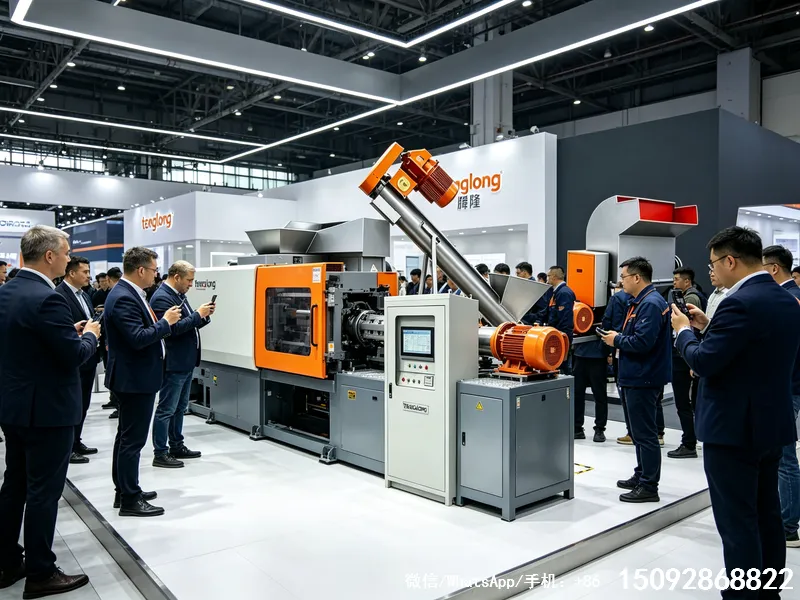
Crushed plastic flakes are vastly different from traditional granular raw materials. Flakes are fluffy in texture with large internal gaps, easily trapping moisture and impurities. Ordinary simple granulators are equipped with short screws without exhaust structure, uneven heating and short cooling strokes, which easily lead to incomplete material exhaust, plasticization fracture and cooling deformation. The final pellets have excessive bubbles, poor appearance and high moisture content, which can only be sold at low prices, severely squeezing profit margins. In addition, simple equipment has insufficient power and poor head pressure resistance, causing frequent strip breakage and machine blockage during mass production, resulting in production delays and high loss rates.
The professional plastic flakes granulator is optimized according to the physical characteristics of flake materials, solving industry pain points from core configurations. The Model 150 special host matched with a 280-type hard tooth surface reducer delivers stable and strong power output, and the 55KW high-power motor ensures sufficient melting and plasticization of fluffy flakes.
The 2.8-meter extended vented screw is the core advantage of flake processing. It gradually discharges internal moisture, waste gas and impurities during material melting, fundamentally solving pellet bubbling, hollowing and blackening problems. The 350 pressure-resistant hydraulic head provides uniform discharging pressure, effectively eliminating frequent strip breakage and uneven discharging in mass production.
The heating system adopts an 80KW electromagnetic induction heater. Compared with traditional resistance wire heating, it features higher temperature control accuracy and more uniform heating, which can precisely match the melting temperature of different flake materials and avoid incomplete plasticization at low temperature or material scorching and carbonization at high temperature.
The extended 5-meter stainless steel water tank prolongs the cooling stroke to fully and evenly shape extruded strips, eliminating deformation, softness and adhesion. The supporting special shaking and blowing integrated machine thoroughly dries surface moisture of materials, solving the problem of excessive finished product moisture content.
The terminal Model 200 precision pelletizer guarantees pellet regularity, and the 1-ton closed silo realizes dust-free and moisture-proof material storage. The complete national standard electric control system ensures safe and stable equipment operation. The closed-loop process and complete configurations of the plastic flakes granulator require no complex manual debugging, enabling new operators to quickly start mass production. With low failure rate, controllable energy consumption and stable finished product appearance, it is the core upgraded equipment for small and medium-sized flake recycling factories to improve quality, reduce costs and stabilize profits.
FAQ
Q1: What are the production advantages of electromagnetic heating compared with ordinary heating?
A1: The 80KW electromagnetic heating equipped on the plastic flakes granulator features fast heating, uniform temperature, power saving and precise temperature control. It avoids local overheating scorching and poor plasticization caused by insufficient temperature. It is compatible with the processing of various flakes such as PP, PE and PET, with far superior long-term stability and economy to traditional heating methods.
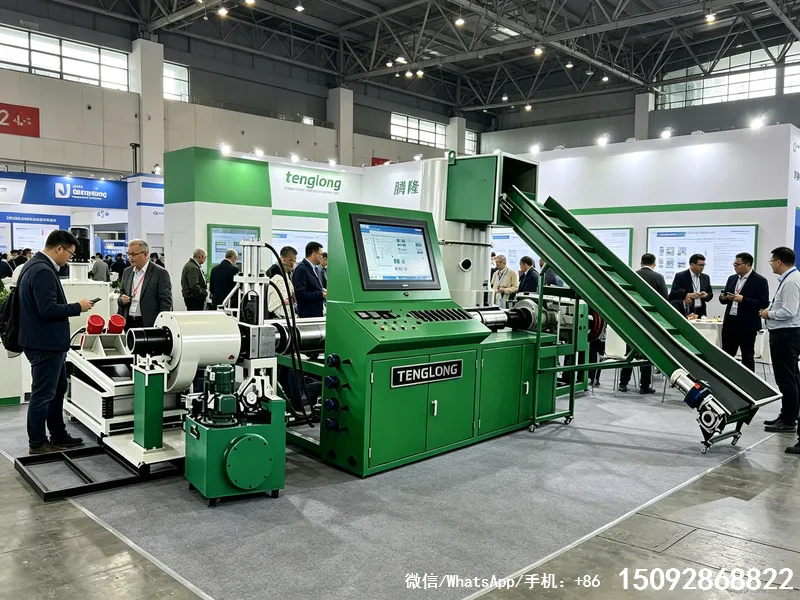
Q2: Why is the extended screw necessary for plastic flakes granulation?
A2: Plastic flakes are fluffy with high moisture content, and ordinary short screws cannot achieve sufficient exhaust and plasticization. The 2.8-meter extended vented screw prolongs the material melting stroke to realize sufficient exhaust, mixing and plasticization, which is the core configuration to solve bubbling and poor appearance of flake pellets.
Call to Action
Want to learn professional skills of temperature debugging, fault troubleshooting, quality improvement and efficiency enhancement for plastic flakes granulator? Get free flake mass production optimization solutions!
WhatsApp/WeChat: +86 15092868822 | Email: [email protected]
Related reading
- What Is a Plastic Recycling Machine? A 2026 System Guide
- Film Recycling Process Upgrade: Film Squeeze Material Granulation Production Line Solves Pain Points of High Labor Demand and Low Capacity
- Core Cost Reduction Solution for Sheet Production:PVC Hard Trim Recycling Machine Realizes 100% Edge Trim Circular Utilization