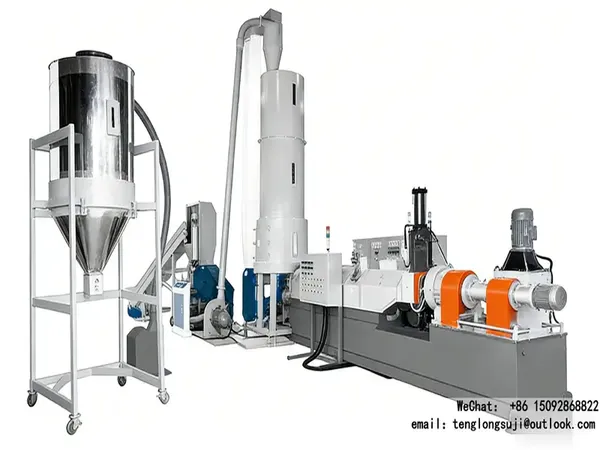
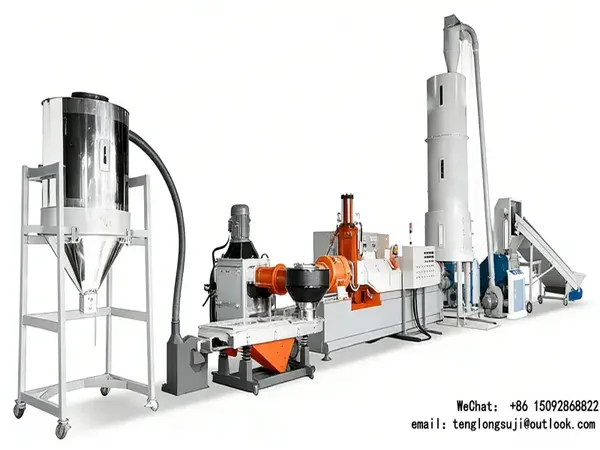
Ho Chi Minh City Textile Plastic Waste 320kg/hplastic pelletizing machine Success Case
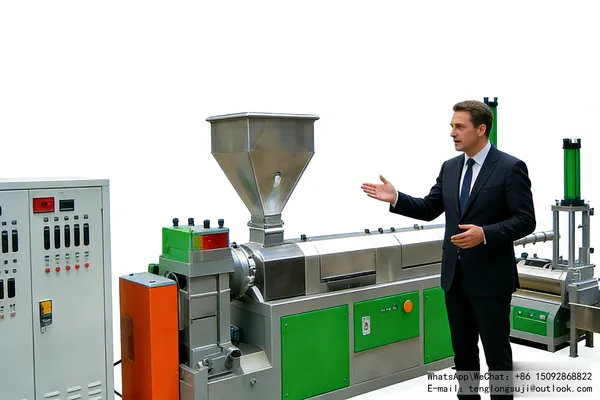
Background: Tran Thi Mai, a 45-year-old woman skilled in weaving and spinning, resides in District 10 of Ho Chi Minh City. With 20 years of experience in the weaving and spinning industry, she has mastered handling various textile materials. In recent years, as Ho Chi Minh City’s textile industry has developed, a large amount of textile plastic waste has been generated—including plastic yarn bobbins, plastic packaging for textiles, and plastic auxiliary materials. These plastic wastes are often discarded randomly, polluting the environment and wasting resources. Mai, who has a primary school education but is hardworking and intelligent, noticed that these textile plastic wastes can be recycled and granulated, with the resulting particles reusable in the textile industry. Drawing on her years of textile industry experience, she decided to launch a textile plastic waste recycling business, combining her weaving skills with plastic recycling.
The Challenge
Mai’s textile plastic waste recycling business faced humanistic and technical challenges. First, textile plastic waste is often mixed with textile fibers, which are difficult to separate—leading to poor-quality granulated products that cannot be reused in the textile industry. Second, Mai, unfamiliar with modern equipment operation, needed aplastic pelletizing machine that is simple to operate and maintain, matching her skill level. Third, local textile enterprises have high requirements for recycled plastic particle quality—they need particles with uniform fineness and no fiber impurities, which the standard plastic pelletizing machine she initially tried failed to produce. Compared to other suppliers, Mai needed aplastic pelletizing machine that can effectively separate textile fibers from plastic, is easy to operate, and can produce high-quality particles suitable for the textile industry. She also prioritized the textile plastic waste processing capacity andplastic pelletizing machine operability.
The Solution
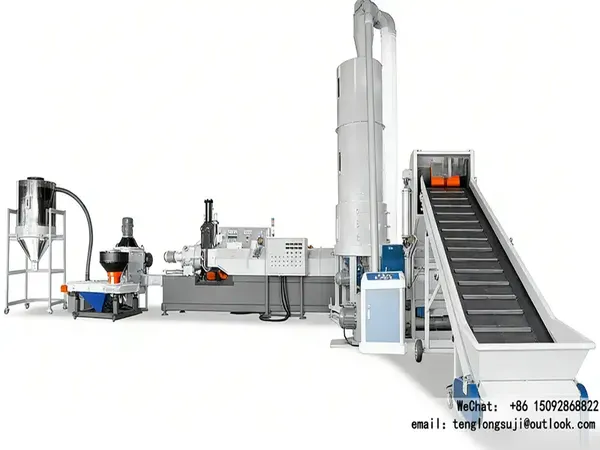
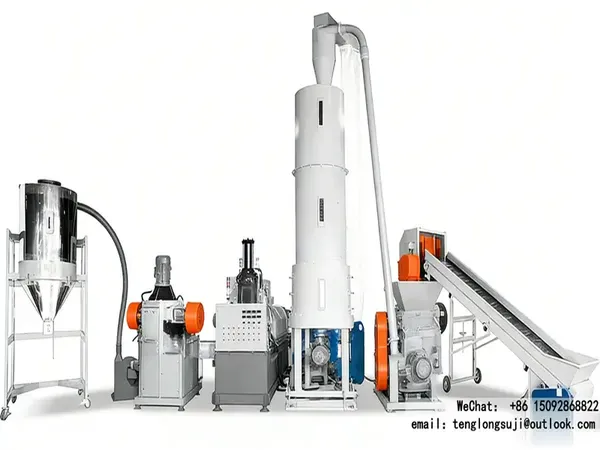
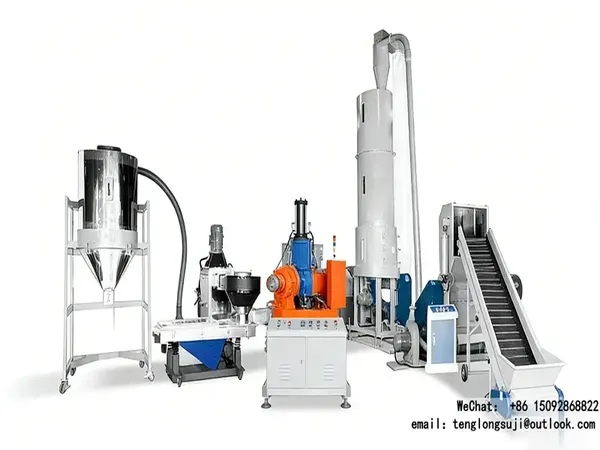
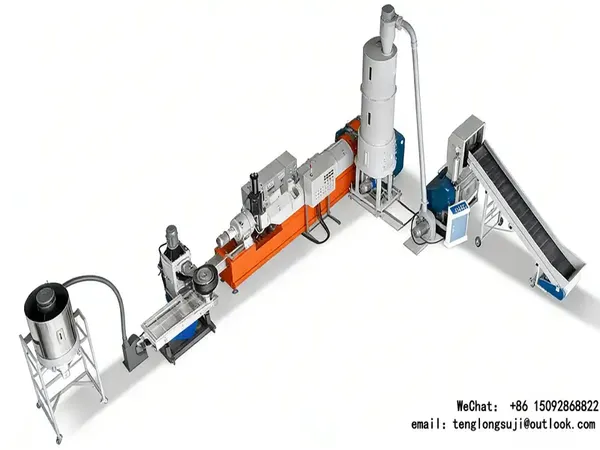
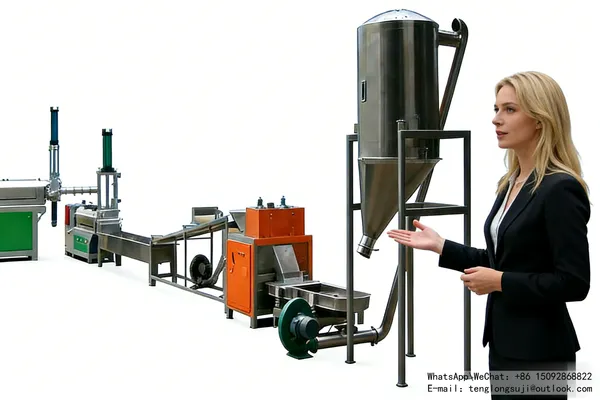
We provided Mai with a customized plastic pelletizing machine tailored for textile plastic waste recycling, designed to match her operational level and the textile industry’s needs, with the following professional configurations:
- Equipped with a TL-320 plastic crusher with a fiber separation function, which effectively separates textile fibers from plastic waste through high-speed rotation and screening, ensuring raw material purity; the crusher’s operation interface is simple and intuitive with clear icons, easy for Mai to master.
- Screw length-diameter ratio (L/D Ratio) of 1:34, paired with a precision fineness adjustment system that adjusts granulated product particle size according to textile enterprise requirements, ensuring uniform fineness and meeting textile auxiliary material standards.
- Dual-mode manual and automatic operation, switchable according to Mai’s operational habits; the equipment is equipped with an overload protection function for safe and reliable operation, reducing the risk of equipment damage from improper use.
- Patient on-site training: our technical team taught Mai equipment operation, maintenance, and fiber separation skills hands-on, and created a simple picture-and-text operation manual to ensure she could operate the equipment independently.
The Results
After 5 months of operation, Mai fully mastered the plastic pelletizing machine ’s operation skills, and her business developed steadily. The daily processing capacity of textile plastic waste reached 320kg/h, with a fiber separation rate of 99%, ensuring granulated products are free of fiber impurities. The produced plastic particles have uniform fineness and have been recognized by 3 local textile enterprises, which have signed long-term purchase agreements with her. Mai’s monthly income has reached 18 million VND, and she has hired 2 local women to assist her, boosting employment for nearby residents. She said: “I’ve been weaving all my life, and I never thought I could use my hands to turn textile plastic waste into treasure. Thisplastic pelletizing machine is very easy to operate and separates fibers from plastic perfectly. It not only brings me income but also helps my neighbors find jobs—it’s truly equipment that benefits people!”
FAQ
Q1: Can this plastic pelletizing machine effectively separate textile fibers from plastic waste? A1: Yes, it is equipped with a professional fiber separation function with a 99% fiber separation rate, ensuring raw material purity and granulated product quality.
Q2: Is it suitable for people unfamiliar with modern equipment operation? A2: Absolutely. It features dual-mode manual and automatic operation with a simple, intuitive interface, and we provide patient on-site training and picture-and-text operation manuals to ensure novices can operate independently.
If you’re a textile industry practitioner in Ho Chi Minh City looking to recycle textile plastic waste, have you encountered difficulties in separating fibers from plastic?