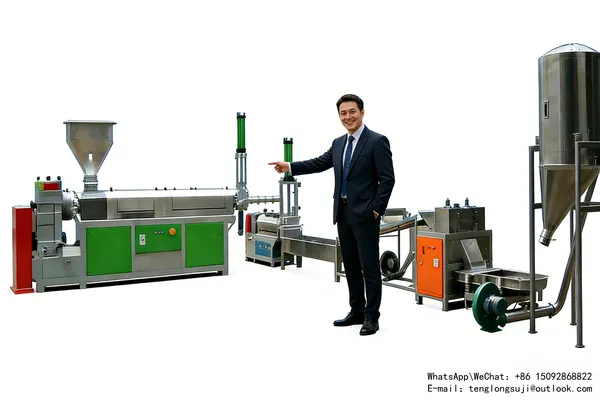
The “Gatekeepers” of the plastic pelletizing machine: How Choosing Filters and Hydraulic Screen Changers Determines Your Profitability
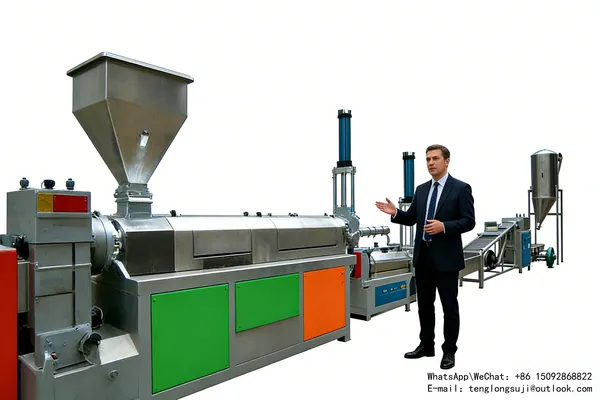
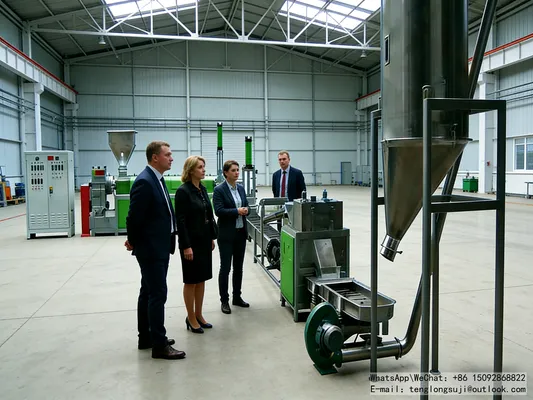
In the business of plastic recycling processing, equipment stability is paramount. It directly impacts the appearance of your granules and the volume you can produce daily. Among the entire production line, the filter screen and the hydraulic screen changer at the head of the plastic pelletizing machine might seem like minor components, but they are in fact mission-critical parts—one handles filtration, and the other ensures continuous operation. If either fails, the entire production line suffers.
Filter Screens: The “Quality Gatekeepers” for Granule Quality
You can think of the filter screen as a critical checkpoint that molten plastic must pass through. Recycled plastics are heterogeneous; they contain metal shavings, dust, un-melted fragments, and so much more. If these impurities are extruded directly, your finished granules will be riddled with black specks, lumps, and inconsistent sizes, immediately signaling low quality. Worse still, excessive impurities can clog the die head, wear down screws, and damage the barrel—a repair costing thousands of yuan, sometimes tens of thousands.
What makes a good filter screen? It depends on your specific plastic pelletizing machine model and raw material characteristics. Common options include stainless steel woven meshes, multi-layer sintered screens, and wear-resistant alloy meshes. Among these, the multi-layer sintered screen is generally more robust, offering superior wear resistance and high-temperature stability, often boasting a lifespan 3–5 times longer than standard woven meshes. If you are processing enhanced plastics containing fiberglass or mineral fillers, or recycled materials that have undergone multiple reprocessing cycles, using a sintered screen is far more economical in the long run.
You also cannot choose filter mesh size arbitrarily. A higher mesh count means finer filtration and cleaner-looking granules, but if it’s too dense, it risks clogging. Determining the optimal mesh count requires balancing “cleanliness” with “uninterrupted operation,” based on how dirty your raw material is and how high your finished product quality standards are.
Hydraulic Screen Changer: Keeping the plastic pelletizing machine Running Without Downtime
In the past, manual screen changing required stopping the machine, dismantling it, swapping screens, and then restarting—a process wasting half a day’s work and significantly lowering daily output. Today, most medium to large-scale units are equipped with hydraulic screen changers. These systems use hydraulic power to complete the swap in just 1–3 seconds while the plastic pelletizing machine continues to rotate, ensuring no downtime.
Equipping your plastic pelletizing machine with a high-quality hydraulic screen changer offers several distinct advantages: stable pressure, excellent sealing, resistance to high pressure, and tolerance for high temperatures. During the changing process, the molten polymer pressure fluctuation is minimal, preventing granule breakage or inconsistencies in size—ensuring batch-to-batch quality consistency. Furthermore, these changers are highly flexible; they can accommodate various screen specifications, allowing you to instantly adjust filtration precision whether you are producing PE, PP, or PVC granules.
How to Maintain Them: Remember two key points.
Monitor Die Head Pressure: If the pressure steadily rises, or if visible defects start appearing on the granule surface, it almost certainly means your filter screen is clogged. Change it immediately; do not force production.
Inspect Hydraulic Components Regularly: Check the sealing rings and drive mechanisms of the hydraulic changer for any oil leaks or sticking points. A sluggish changing action can lead to material leakage or, worse, a complete line shutdown. Do not wait for failure before servicing.
Ultimately, Choosing the Right Parts Saves Money
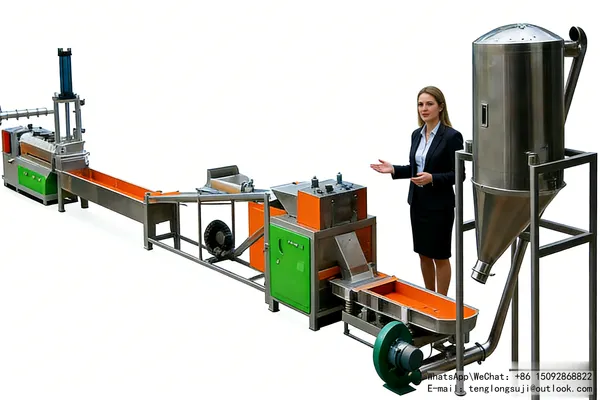
Filter screens and hydraulic screen changers are consumables, but they are crucial functional components. For any plastic recycling enterprise, you cannot afford to skimp on these parts. Investing in durable filter screens and screen changers that match your plastic pelletizing machine model and withstand harsh conditions—while costing more upfront—will result in fewer breakdowns, less downtime, better-looking granules, and ultimately prove to be the most cost-effective solution. The real money is made when the production line runs smoothly day after day.