Difficult Pelletizing for Fluffy Foam Materials? Technical Analysis of Quality Improvement of 377-150 EPE Pearl Cotton Pelletizer
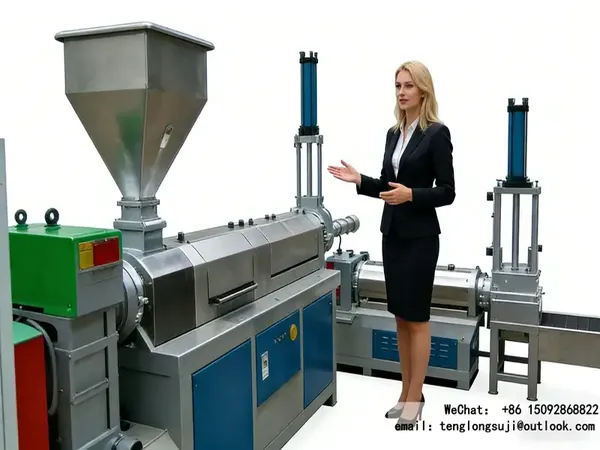
In the EPE pearl cotton recycling industry, most manufacturers face the same problem: foam materials such as pearl cotton and bubble films are extremely fluffy and lightweight. Ordinary pelletizing equipment suffers from feeding slipping, intermittent feeding, incomplete material compression, and easy air wrapping during melting, resulting in a large number of bubbled and hollow finished particles with poor appearance. It not only limits production capacity, but also makes it difficult to increase product selling prices. Targeted at the pain points of foam material pelletizing, the 377-150 EPE pearl cotton pelletizer has become the most adaptable and stable EPE pearl cotton pelletizer in the current industry with exclusive compressed feeding, forced feeding, two-stage refining and zoned constant temperature technology.
The core shortcoming of ordinary pelletizers for poor pearl cotton processing is mismatched structure. Conventional equipment has small feeding caliber and no forced compaction structure, resulting in uneven feeding and compaction of fluffy materials, short melting stroke and uneven heating, leading to reluctant pelletizing and high defective rate. Meanwhile, ordinary screws and barrels without reinforcement treatment are prone to wear and deformation when processing foam materials containing dust and impurities for a long time, with high equipment failure rate, short service life and extremely high long-term operation and maintenance costs, seriously compressing production profits.
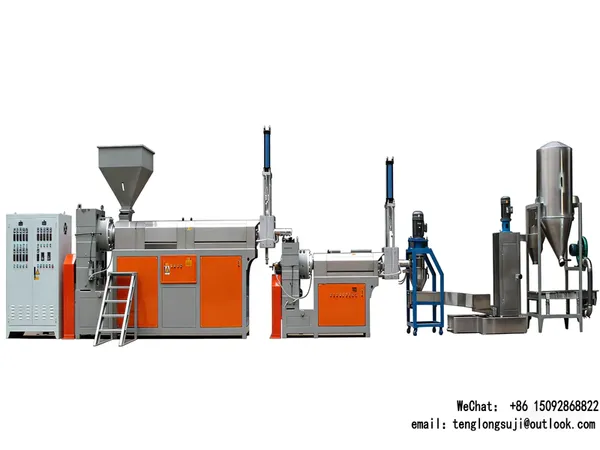
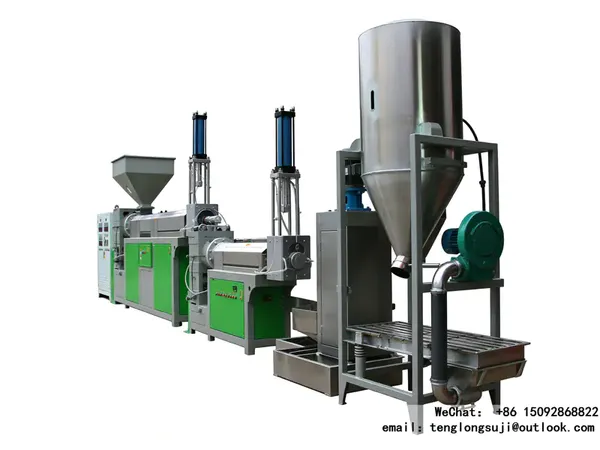
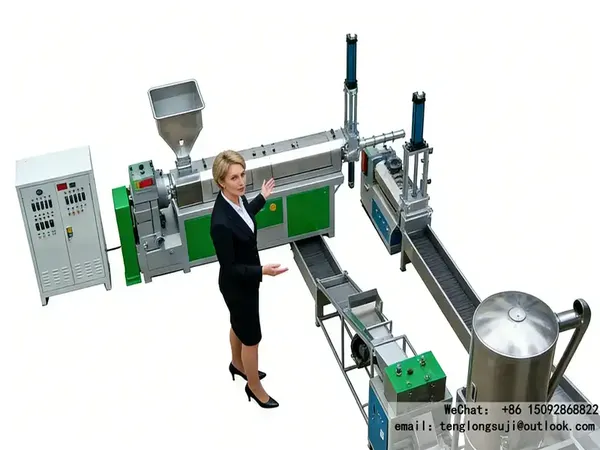
The 377-150 model comprehensively optimizes hardware configuration and production processes based on material characteristics. In the feeding link, a 5-meter extended and 800mm widened conveyor belt with thickened frame stably transports large-area fluffy materials to avoid material spilling and accumulation. The core 11KW forced feeder compacts and feeds materials through thickened occlusal teeth, completely solving the slipping and material breakage problems of lightweight materials and ensuring uniform and stable feeding. The main machine adopts a 377mm ultra-large compression feeding diameter to compact fluffy materials and discharge excess internal air from the source, laying a foundation for bubble-free pelletizing.
The core wear-resistant accessories of the equipment are fully upgraded: spiral blades adopt wear-resistant manganese steel high-frequency treatment, screws adopt 40CR high-frequency reinforcement, and barrels adopt No.45 steel quenching treatment, with hardness, wear resistance and high temperature resistance far exceeding ordinary accessories, resisting wear and deformation during long-term mass production. The two-stage extrusion process is the key to quality improvement: the main machine completes preliminary compression and melting, and the 150-type auxiliary machine performs secondary refining and purification. Matched with a 380mm large-specification mesh machine head to accurately filter impurities, the melt is purer and more uniform in density.
The heating system adopts 60KW high-power electromagnetic heating + 4 groups of independent zoned heating rings for segmented precise temperature control, adapting to the temperature requirements of pearl cotton compaction, melting and extrusion processes, avoiding local material scorching and incomplete plasticization. The whole machine is equipped with thickened square steel frame and stainless steel protection for stable operation, dust and rust prevention and easy cleaning. The 280-type low-noise reducer reduces production noise to meet environmental protection production standards. Overall optimized from feeding, compaction, melting, filtration to extrusion, this EPE pearl cotton pelletizer perfectly adapts to the mass production needs of foam materials and is the preferred model for upgrading old equipment.
FAQ
Q1: What are the advantages of four-group zoned heating over single-group heating?
A: Pearl cotton melting is extremely sensitive to temperature, and single-group heating is prone to large front and rear temperature differences and uneven plasticization. The four-group independent zoned heating of the EPE pearl cotton pelletizer realizes segmented precise temperature control to adapt to the temperature requirements of materials in different stages of feeding, melting, refining and extrusion, achieving more thorough plasticization and more stable particle appearance, and effectively eliminating defects such as bubbling and material scorching.
Q2: Is the service life of high-frequency heat-treated accessories significantly improved?
A: The improvement is very significant. Manganese steel blades, 40CR screws and No.45 steel barrels are strengthened by high-frequency quenching, with greatly improved hardness and wear resistance, strong erosion resistance to impurities and high temperature resistance, and no easy deformation. Compared with ordinary accessories, the service life is increased by 2-3 times, greatly reducing equipment maintenance and accessory replacement costs.
Call to Action
If you want to learn debugging skills, capacity improvement methods and particle appearance optimization schemes of the 377-150 EPE pearl cotton pelletizer, get free foam plastic recycling mass production upgrade solutions! WhatsApp/WeChat: +86 15092868822 | Email: [email protected]