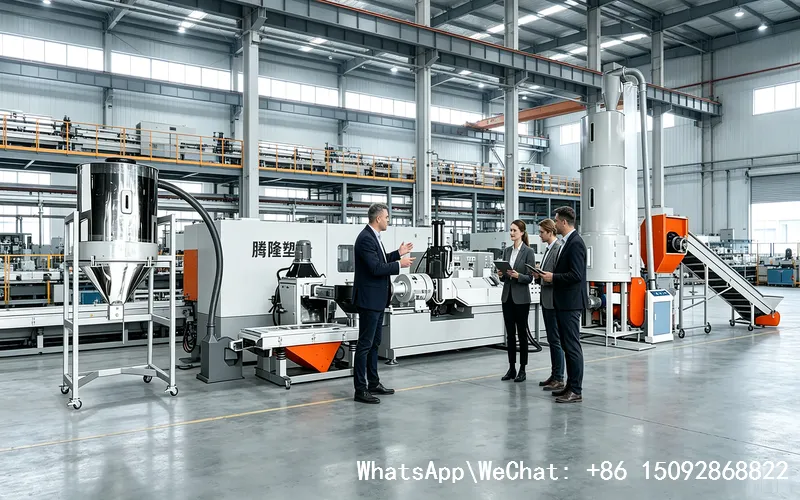
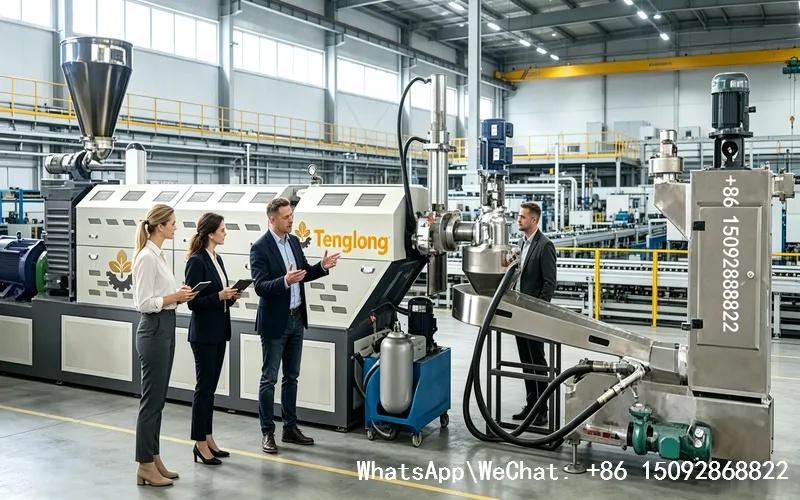
Agricultural Plastic Regeneration Quality Improvement Solution: 210 Type Drip Irrigation Belt Three-step Machine Solves Four Major Pain Points of Drip Irrigation Belt Granulation
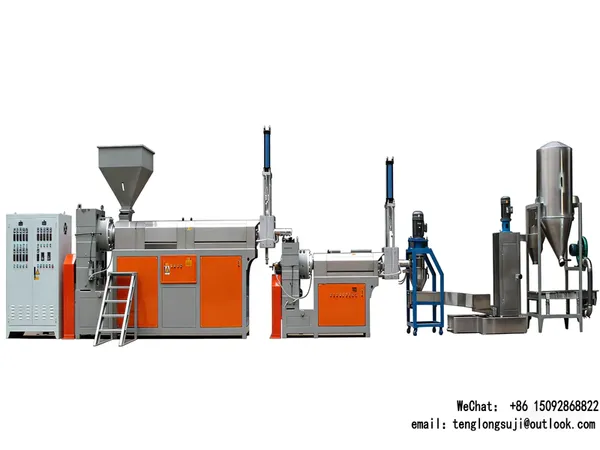
With the popularization of modern large-scale agricultural planting, millions of tons of waste drip irrigation belts, micro-spray belts and PE irrigation hoses are produced every year. These agricultural plastics are made of low-density PE with high recycling and regeneration value. However, long-term buried use makes drip irrigation belts attached with a large amount of sediment, salt-alkali and aging impurities. Featuring thin texture, easy aging and special melting characteristics, they are prone to four major problems when processed by ordinary granulation equipment: uneven plasticization, excessive bubbles and black spots, frequent strip breakage and excessive residual impurities, which seriously restrict the quality of recycled particles and corporate profits. With an exclusive three-stage graded process and complete purification configurations, the 210 type drip irrigation belt three-step machine specifically solves industry bottlenecks and has become the standard mainstream equipment for waste agricultural drip irrigation belt regeneration.
Many renewable processing practitioners choose general single-step and two-step granulators to process drip irrigation belts, and commonly encounter production bottlenecks in mass production: One-time high-temperature and high-pressure melting fails to completely discharge water vapor and air inside materials, resulting in severe bubbling and voids in finished particles. Simple filtration cannot remove sediment impurities thoroughly, leaving numerous black spots and impurities and leading to low particle prices. Frequent shutdowns for screen changing and cleaning cause large production capacity loss and discontinuous production. Traditional resistance heating has uneven temperature control and local overheating, causing material carbonization and reducing the finished product qualification rate significantly. The core reason for these problems is that the process of general equipment cannot match the special characteristics of drip irrigation belts with high impurities, easy aging and difficult plasticization.
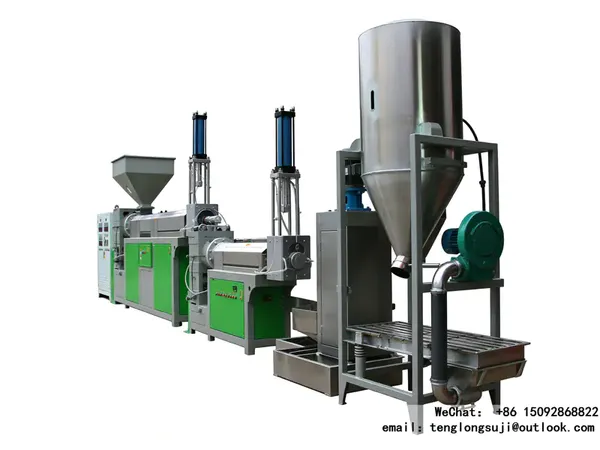
The 210 type drip irrigation belt three-step machine solves granulation problems fundamentally through a three-stage progressive plasticization system. The 210 type main machine is equipped with a 3.2-meter extended 40Cr high-frequency heat-treated screw and a 330 hard tooth surface reducer, completing low-speed gentle pre-melting, exhaust and material dispersion to release internal water vapor and residual air in advance and avoid later bubbling and void defects. The 1.8-meter secondary machine adopts a 280 hard tooth surface transmission system for secondary homogeneous kneading of materials to eliminate plasticization dead angles. Meanwhile, it is fitted with a 350*350 double-plate double-screen hydraulic non-stop screen changer to dynamically intercept fine sediment and aging carbonized substances throughout the process, realizing screen changing and impurity cleaning without shutdown and completely eliminating shutdown strip breakage and production capacity interruption.
As the terminal fine plasticization unit, the 1.5-meter tertiary machine is matched with a 450-type electric gear die head for pressure-stabilized and uniform-speed discharging, balancing melt pressure to produce flat and smooth strips and improving particle fullness and regularity from the source. All core screws of the complete equipment adopt 40Cr high-frequency quenching heat treatment technology with high hardness and wear resistance, resisting abrasion and rod gnawing during long-term processing of high-sediment dirty materials. The large channel steel reinforced bracket ensures stable and anti-vibration fuselage, adapting to 24-hour long-term heavy-duty mass production.
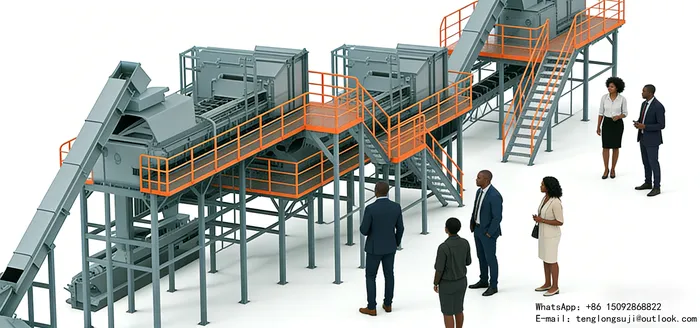
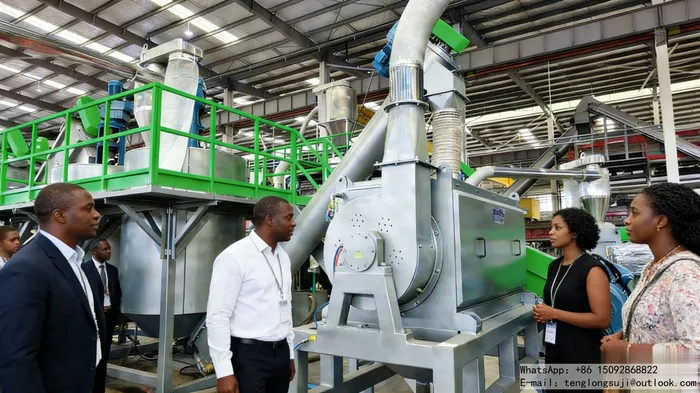
The supporting auxiliary system further improves the regeneration closed loop to achieve all-round quality improvement and efficiency increase. The front-end 4-meter high-speed friction cleaning machine and 630-type dehydrator complete deep cleaning and dehydration to remove most surface sediment impurities in advance and reduce the filtration pressure of rear-end granulation. The 80-type fully automatic 5-meter feeding machine realizes intelligent uniform feeding to avoid material blockage and stuffy machine. The 60kw high-power electromagnetic heating with thermal insulation system realizes zoned precise temperature control, which is more energy-saving and uniform than traditional heating and effectively prevents local high-temperature carbonization of materials. The rear-end 2500-type dual-motor stainless steel vibrating screen and 1-ton dust removal storage bin integrate screening impurity removal, air drying and storage to ensure clean, dry and uniformly specified finished particles.
According to industry measured data, processing waste drip irrigation belts with the 210 type drip irrigation belt three-step machine increases the product yield by more than 40% compared with ordinary equipment, greatly reduces the residual impurity rate, raises the effective equipment operating rate by 30% and achieves remarkable energy-saving effects. The produced recycled particles can be directly reused in agricultural material production with significantly improved product premium capability. For enterprises focusing on agricultural plastic regeneration, this equipment is the optimal upgrading solution for cost reduction, quality improvement and efficiency enhancement.
FAQ
Q1: How much does the electromagnetic heating configuration improve the quality of drip irrigation belt granulation?
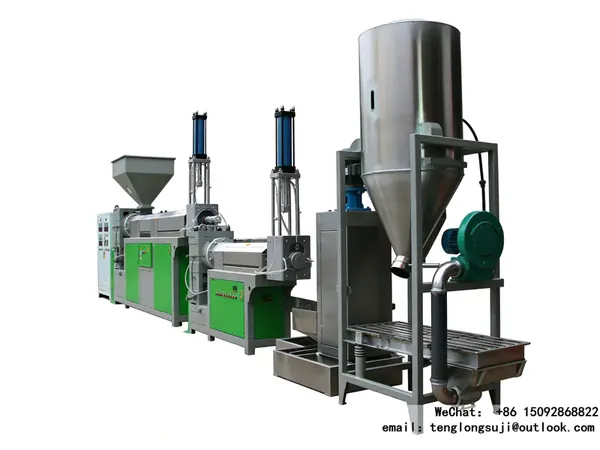
A: The improvement is crucial. PE materials for drip irrigation belts have low melting points and are prone to carbonization. Traditional resistance heating features slow temperature rise, large temperature difference and severe local overheating. The 210 type drip irrigation belt three-step machine adopts 60kw electromagnetic zoned heating with uniform stress and rapid temperature rise, matched with thermal insulation cotton for temperature locking. It precisely matches the PE melting temperature, completely eliminating carbonization and bubbling problems while saving electricity and reducing long-term mass production costs.
Q2: What is the core value of the hydraulic non-stop screen changing system?
A: Traditional equipment requires manual shutdown for screen changing, which causes strip breakage, shutdown cooling every time, resulting in production capacity loss, material waste and unstable discharging quality. The 350*350 double-plate double-screen hydraulic screen changer of this machine realizes full-process automatic non-stop screen changing with continuous production and stable filtration accuracy, which not only improves production capacity but also ensures consistent finished product quality.
Call to Action
Feel free to consult us for free to obtain exclusive technical solutions including drip irrigation belt three-step machine commissioning skills, production capacity optimization schemes and energy-saving maintenance methods!
WhatsApp/WeChat: +86 15092868822 | Email: [email protected]