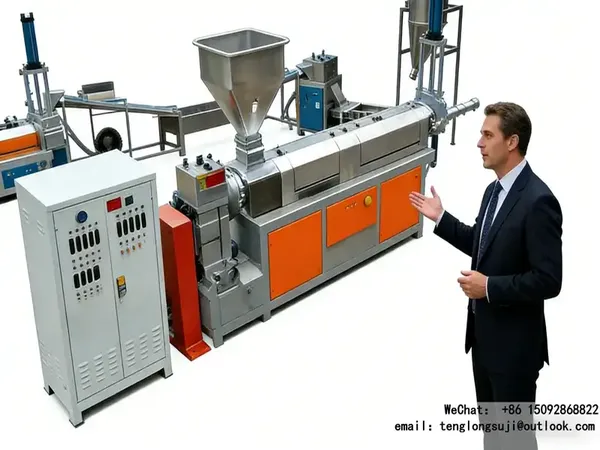
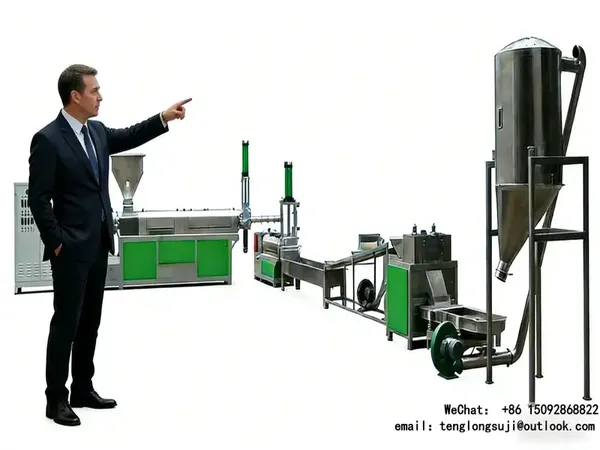
4/2026 PE Recycling Machine Trends: Smarter, Greener, and More Profitable
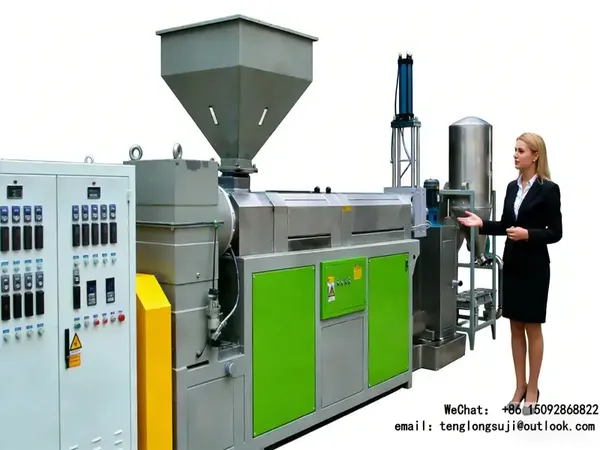
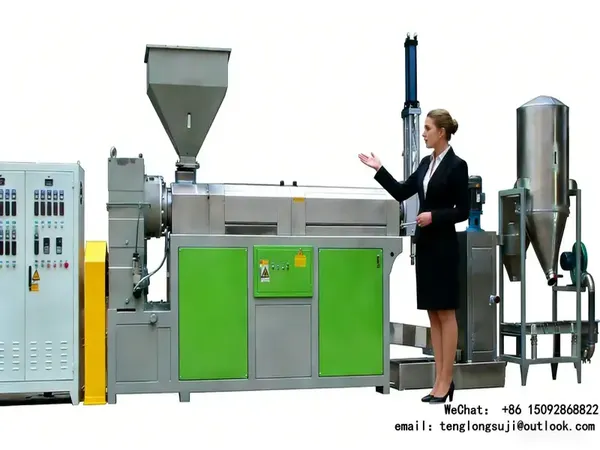
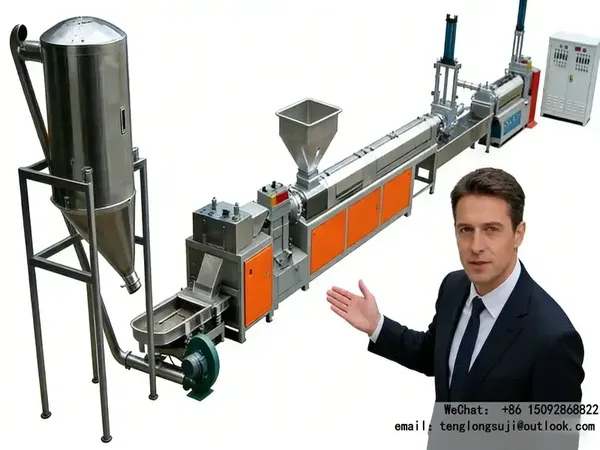
The global push for a circular economy isn’t just talk anymore. By 2026, plastic recycling has had to get serious. And at the heart of this shift is the PE recycling machine —the workhorse turning polyethylene waste into something valuable again.
With tighter environmental rules and buyers demanding lower carbon footprints, old-school recycling machines just don’t cut it anymore. The ones taking over? Intelligent and energy-saving models. They change the game on efficiency, cost, and whether you can even sell your recycled pellets overseas.
This article cuts through the hype and looks at what’s actually new in 2026—and what it means for your bottom line.
How Smarter PE Recycling Machines Actually Help You Produce More
By 2026, “smart” isn’t a marketing gimmick. It means real tech: IoT sensors, digital twins, and AI working inside your machine.
Old machines rely on an experienced operator’s gut feel. New ones give you live data on screw speed, melt temperature, melt flow index (MFI), and energy use. You’re not guessing anymore—you’re controlling.
Take AI-driven predictive maintenance. One major manufacturer launched a system in 2026 that studies your machine’s history and can tell you 72 hours in advance when something’s about to break. The result? 70% less unplanned downtime. Overall equipment efficiency (OEE) climbs past 94%. Fewer stoppages mean more output and less headache.
Then there’s digital twin technology. Instead of tweaking settings on your real machine—wasting material, power, and time—you run simulations in a virtual setup first. Once it’s dialed in, you push it to the actual line. Companies report cutting trial-and-error costs by 35%.
And don’t overlook the automatic sorting and feeding system. New PE recycling machines often include a near-infrared (NIR) sorting module that picks out PVC, PET, and metals from the waste stream. Accuracy hits 98.5% . Cleaner input means purer recycled pellets and 25% longer equipment life because your screw and barrel aren’t grinding against contaminants.
Energy Savings: Less Power, Lower Bills, Smaller Carbon Footprint
Under the global “dual carbon” goals, energy efficiency isn’t optional anymore. In 2026, it’s a must-have.
The latest PE recycling machines now hit 18%+ energy savings over older models. Two technologies make this happen: heat recovery and variable frequency drives (VFDs) .
Heat recovery captures the waste heat from extrusion and granulation. That heat gets sent back to preheat your raw material or warm your workshop. Overall thermal efficiency jumps to 88% , and you save 0.15 tons of standard coal for every ton of recycled PE pellets you produce.
Variable frequency drives let the motor use only the power it actually needs. No more idling and wasting electricity. Real-world results: unit energy consumption drops to 280–320 kWh per ton.
Now run the numbers. A mid-sized plant making 10 tons per day can save roughly 8,000 kWh per month—nearly $1,000 off the electric bill. And every ton of recycled PE cuts about 1.8 tons of CO₂ equivalent. That’s not just good for the planet; it’s what international buyers now expect.
Certifications: Getting GRS, ISCC, and REACH Done Right
By 2026, if you want to sell recycled PE into global markets, you need certifications like GRS (Global Recycling Standard) , ISCC (International Sustainability and Carbon Certification) , and REACH . No way around it.
Your PE recycling machine is either helping you get these or holding you back.
For GRS and ISCC, you need full traceability. Where did the raw material come from? What were the process parameters? What did quality inspection show? The newest 2026 machines come with a blockchain-based traceability module—every record is permanent and tamper-proof. Auditors love it.
Plus, with advanced decontamination technology , these machines produce high-purity recycled PE pellets with recycled content over 50% . That’s the threshold for GRS labeling. Without it, you can’t put the mark on your product. With it, you get access to premium markets.
FAQ: What Buyers Actually Ask About 2026 PE Recycling Machines
Q: How much energy does a 2026 intelligent PE recycling machine really save?
A: Compared to older models, expect ≥18% energy savings. Unit consumption runs 280–320 kWh per ton. That’s a real drop in operating costs.
Q: Can this machine help me get GRS certification?
A: Yes, if it has the blockchain traceability system and advanced decontamination tech. Those two features cover the full-chain traceability and recycled content requirements of GRS.
Q: How long will the machine last?
A: Design life is 8–10 years—about 25% longer than traditional models. The combination of wear-resistant materials and AI predictive maintenance cuts down on unexpected failures and extends service life.
Q: Does the recycled pellet quality match virgin material?
A: Very close. Real-time monitoring keeps melt index fluctuation within ±0.3g/10min. Performance is comparable to virgin PE, but at a much lower cost.