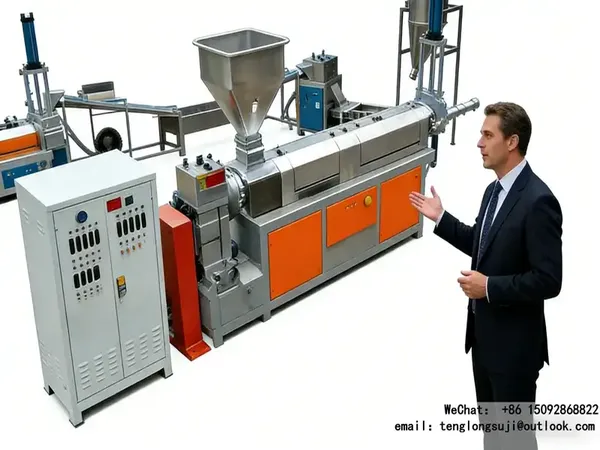
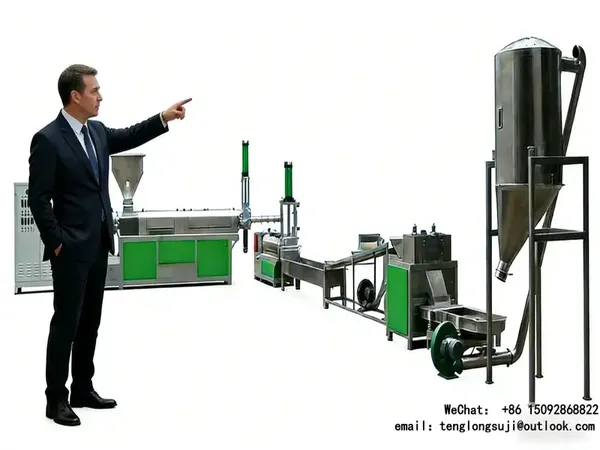
4/2026 Guide: Choosing a Cost-Effective PE Recycling Machine for SMEs
As the global circular economy gains momentum, small and medium-sized enterprises (SMEs) are increasingly entering the PE recycling market—driven by rising demand for recycled PE pellets and supportive government incentives. For SMEs, selecting the right PE Recycling Machine is critical to profitability, as upfront costs and operational efficiency directly impact return on investment (ROI). This guide, based on 2026 industry trends and SME feedback, outlines key factors for choosing a PE Recycling Machine and PE granulator that balance performance, cost, and scalability.
Key Factors for SMEs Selecting PE Recycling Machine in 2026
SMEs have unique needs compared to large-scale recycling facilities: lower upfront investment, simplified operation, and flexible scalability. When evaluating PE Recycling Machine models, focus on the following four factors to avoid over-investment and ensure long-term profitability:
- Output Alignment: Match PE Recycling Machine to Daily Waste Supply
The output of your PE Recycling Machine should align with your daily PE waste supply to avoid idle capacity or production bottlenecks. In 2026, the most popular PE Recycling Machine models for SMEs are categorized by output, with detailed specifications below:
| Machine Type | Output (kg/h) | Suitable Waste Supply | Upfront Cost ($) | Energy Consumption (kWh/ton) | Screw Diameter (mm) |
| Small-Scale PE Recycling Machine | 50-100 | Daily PE waste < 1 ton | 16,000-26,000 | 85-105 | 45-55 |
| Medium-Scale PE Recycling Machine | 100-300 | Daily PE waste 1-3 tons | 26,000-52,000 | 75-85 | 55-75 |
| Semi-Industrial PE Recycling Machine | 300-500 | Daily PE waste 3-5 tons | 52,000-85,000 | 65-75 | 75-85 |
For example, a startup with 600 kg of daily PE waste (HDPE bottles from local grocery stores) should choose a small-scale PE Recycling Machine (50-100 kg/h) to avoid over-investment. Oversizing can increase upfront costs by 35-55% and extend ROI by 6-12 months—critical for cash-strapped SMEs.
- Operational Simplicity: Reduce Labor and Maintenance Costs
SMEs often have limited labor resources, so a user-friendly PE Recycling Machine is essential. Look for models with PLC control systems, automatic feeding, and fault alarm functions—these features reduce the need for professional operators and lower labor costs by 22-32%. Additionally, choose PE granulator systems with detachable screens and accessible crushing chambers to minimize maintenance time; 2026 data shows that SMEs using easy-maintain PE Recycling Machine reduce downtime by 35%.
- Scalability: Prepare for Business Growth
A high-quality PE Recycling Machine should be scalable to accommodate growing waste supply. Choose models that allow module upgrades—such as adding a second extrusion unit or a more efficient PE granulator—without replacing the entire line. This saves 45-65% of the cost of purchasing new equipment. For example, a medium-scale PE Recycling Machine can be upgraded to 500-800 kg/h output by adding a larger screw and heat recovery unit, adapting to increased PE waste as your business expands.
- Cost-Efficiency: Balance Upfront and Long-Term Costs
While upfront cost is important, prioritize PE Recycling Machine models with energy-saving features (e.g., heat recovery units, VFD motors) to reduce long-term operational costs. A machine with 20% energy savings can cut annual energy costs by $3,000-$8,000, depending on output. Also, choose manufacturers with a global after-sales network to ensure timely delivery of spare parts—this extends the machine’s service life to 8-10 years, maximizing your investment.
2026 Recommended PE Recycling Machine Models for SMEs
- Model FE-100: Small-scale PE Recycling Machine, output 80-100 kg/h, screw diameter 50 mm, energy consumption 90 kWh/ton, upfront cost $22,000. Equipped with PLC control and automatic feeding, ideal for startups with daily PE waste < 1 ton. Compatible with HDPE/LDPE waste and easy to maintain—perfect for teams with minimal technical experience.
- Model GE-200: Medium-scale PE Recycling Machine, output 150-200 kg/h, screw diameter 65 mm, heat recovery unit, decontamination efficiency 99.5%, upfront cost $38,000. Meets GRS certification, suitable for SMEs with daily PE waste 1-2 tons looking to export pellets.
- Model HE-300: Semi-industrial PE Recycling Machine, output 250-300 kg/h, scalable design, energy consumption 70 kWh/ton, upfront cost $50,000. Features a high-efficiency PE granulatorand IoT remote monitoring, ideal for growing SMEs planning to expand within 1-2 years.
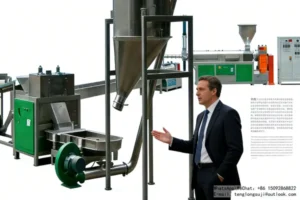
PE Recycling Machine
FAQ: PE Recycling Machine Selection for SMEs in 2026
- Q: What is the average ROI period for a small-scale PE Recycling Machine?A: For most SMEs, ROI is 12-18 months, depending on local recycled PE pellet prices ($1.20-$1.80 per kg) and waste supply. GRS-certified pellets command a 15-25% premium, shortening ROI to 10-12 months.
- Q: Do I need professional training to operate a PE Recycling Machine?A: No—2026 models come with user-friendly PLC controls and 1-2 days of on-site training from manufacturers. Basic training is sufficient to master daily operation and simple maintenance, reducing the need for specialized staff.
- Q: Can a PE Recycling Machine process mixed PE and PP waste?A: It is not recommended, as mixed plastics degrade pellet quality and lower market value. If you need to process mixed waste, invest in a pre-sorting module or separate sorting machine to isolate PE first—this ensures higher pellet purity and profitability.