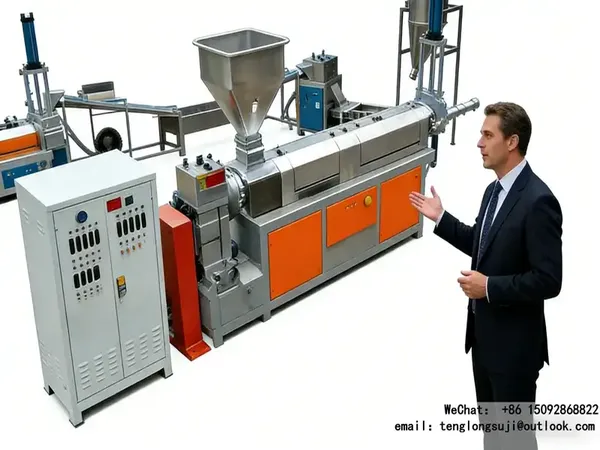
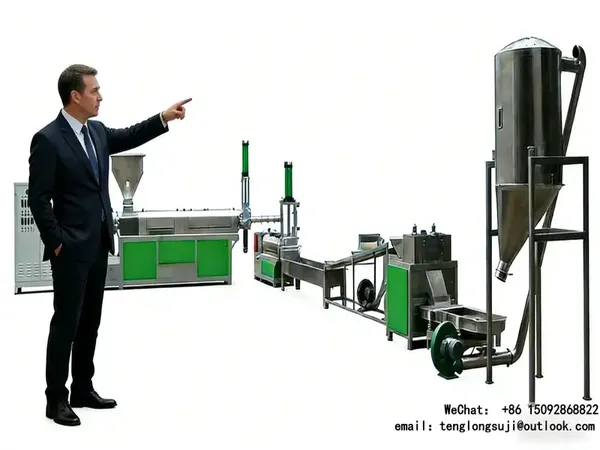
Woven Bag Recycling Machine: How to Ensure Consistent, High-Quality Recycled Granules for Manufacturing
For manufacturing owners seeking sustainable, cost-effective raw materials, recycled woven bag granules offer a viable alternative to virgin plastic—but only if they meet strict quality and stability standards. A Woven Bag Recycling Machine is the cornerstone of producing consistent, high-quality granules that can be used in applications ranging from new woven bags to injection-molded parts. With the global PP woven bag recycling granulator market projected to grow significantly through 2031, the availability of high-quality recycled granules is increasing—but so is the demand for consistency. This guide will show you how to select a Woven Bag Recycling Machine that delivers reliable, market-ready granules, and how to optimize the process to maintain quality standards that meet your manufacturing needs.
Key Quality Standards for Recycled Woven Bag Granules
Manufacturers rely on recycled granules to maintain the performance and integrity of their end products. The quality of recycled woven bag granules is determined by four critical factors: purity, mechanical properties, MFI consistency, and compliance with international standards. Below is a detailed breakdown of each factor and how a Woven Bag Recycling Machine influences them—tailored to manufacturing owners’ priorities:
- Purity: Contaminant Control
Contaminants (e.g., dirt, paper, metal, other plastics) are the biggest threat to granule quality. Even small amounts of contamination can reduce the strength, durability, and processability of the granules, leading to defective end products. A high-quality Woven Bag Recycling Machine must include a multi-stage washing and separation system to achieve ≥99.5% purity. The table below outlines the acceptable contaminant levels for different manufacturing applications, helping you align your machine’s output with your specific needs:
| Manufacturing Application | Maximum Contaminant Level (%) | Critical Contaminants to Avoid |
| New Woven Bags (Food/Grain Packaging) | ≤ 0.1 | Metal, chemicals, food residue (to meet food safety standards) |
| Industrial Woven Bags (Sand/Cement) | ≤ 0.5 | Metal, large dirt particles (to maintain structural integrity) |
| Injection-Molded Parts | ≤ 0.3 | All contaminants (affects moldability and part quality) |
| Extruded Products (Pipes, Sheets) | ≤ 0.4 | Metal, hard plastics (to ensure uniform extrusion) |
- Mechanical Properties: Tensile Strength and Durability
Recycled woven bag granules (primarily PP) must maintain sufficient tensile strength and impact resistance to meet manufacturing requirements. A high-quality Woven Bag Recycling Machine preserves these properties by minimizing material degradation during processing—critical for ensuring your end products perform as expected. Key mechanical properties to monitor include:
- Tensile Strength: ≥ 25 MPa (equivalent to 80-90% of virgin PP), ensuring structural integrity in end products
- Impact Resistance: ≥ 10 kJ/m² (prevents brittleness in end products, reducing defects)
- Elongation at Break: ≥ 300% (ensures flexibility, critical for applications like woven bags)
These properties are preserved by using a gentle granulation process (e.g., low-shear blades, controlled temperature) and avoiding over-processing. A machine with adjustable processing parameters allows you to fine-tune these settings to match your specific application needs, ensuring consistent performance.
- MFI Consistency: Critical for Processability
The Melt Flow Index (MFI) measures how easily molten plastic flows during processing—and consistency is key for manufacturers. A Woven Bag Recycling Machine must produce granules with a consistent MFI (±1 g/10min) to ensure compatibility with extruders, injection molding machines, and other manufacturing equipment. For example, if the MFI varies too much, it can cause uneven extrusion, poor part quality, and costly production downtime—issues that directly impact your bottom line.
To maintain MFI consistency, the machine should include a temperature-controlled granulation unit and a quality control system that tests MFI at regular intervals. This ensures that every batch of granules meets your exact specifications, reducing waste and ensuring smooth production.
- Compliance with International Standards
Manufacturers selling products in global markets must use recycled granules that meet international standards like GRS, ISCC, and FDA (for food contact). AWoven Bag Recycling Machine designed for compliance will include features such as:
- Traceable processing (to verify recycled content for GRS/ISCC, meeting global sustainability requirements)
- Food-grade washing systems (for FDA compliance, critical for food packaging applications)
- Quality control documentation (batch reports, test results) to support audits and customer requirements
Compliance not only ensures your end products meet market requirements but also allows you to market your products as sustainable—an increasingly important factor for consumers and retailers, giving you a competitive edge.
Selecting a Woven Bag Recycling Machine for Consistent Granule Quality
When choosing a Woven Bag Recycling Machine, manufacturers should focus on the following features to ensure consistent, high-quality granules that meet their production needs:
- Multi-Stage Washing System
Look for a machine with at least three washing stages: pre-wash (to remove loose dirt), main wash (hot water/chemical cleaning to remove oil and stubborn contaminants), and rinse (to remove cleaning agents). This ensures maximum purity and minimizes the risk of contamination, protecting your end product quality.
- Precision Granulation Unit
A twin-screw granulator with adjustable speed and temperature controls is ideal for maintaining MFI consistency and preserving mechanical properties. The screw design should minimize shear stress, which can degrade the plastic and reduce granule quality—ensuring your granules perform reliably in your production process.
- In-Line Quality Control
The machine should include in-line sensors to monitor granule size, purity, and MFI in real time. This allows for immediate adjustments if quality standards are not met, reducing waste and ensuring consistent output—critical for maintaining production efficiency.
- Reliable Supplier Support
Choose a supplier with a proven track record of producing high-quality Woven Bag Recycling Machine models and providing ongoing support. They should offer training, maintenance services, and technical assistance to help you optimize the machine for your specific needs, minimizing downtime and maximizing your investment.
FAQ: Woven Bag Recycling Machines for Manufacturing
Q1: Can recycled woven bag granules replace virgin PP in all manufacturing applications?
In most cases, yes—recycled granules with high purity and consistent MFI can replace 50-100% of virgin PP in applications like woven bags, injection-molded parts, and extruded products. For high-performance applications (e.g., automotive parts), a blend of 70% recycled and 30% virgin PP is often recommended to maintain optimal performance.
Q2: How much cost savings can I expect from using recycled woven bag granules?
Recycled PP granules typically cost 20-30% less than virgin PP. For a manufacturer using 100,000 kg of PP annually, this translates to $20,000-$30,000 in annual cost savings—while also reducing your environmental footprint and supporting sustainability goals.
Q3: How do I ensure batch-to-batch consistency with a Woven Bag Recycling Machine?
Batch-to-batch consistency is achieved through in-line quality control, standardized processing parameters, and regular maintenance. Choose a machine with programmable settings and real-time monitoring to ensure every batch meets your specifications, reducing waste and production delays.
Q4: What is the shelf life of recycled woven bag granules?
When stored in a dry, cool environment (≤25°C, ≤60% humidity), recycled granules have a shelf life of 12-18 months. Proper storage prevents moisture absorption and degradation, ensuring the granules maintain their quality over time and perform reliably in your production process.
Conclusion
A Woven Bag Recycling Machine is a valuable investment for manufacturers seeking sustainable, cost-effective raw materials—provided it delivers consistent, high-quality granules. By focusing on purity, mechanical properties, MFI consistency, and compliance with international standards, you can integrate recycled woven bag granules into your manufacturing process without compromising on end-product quality. The right machine will not only reduce your raw material costs but also help you achieve your sustainability goals and gain a competitive edge in the market.
Take Action Today
Ready to start using high-quality recycled woven bag granules in your manufacturing process?Download our free 《Recycled Woven Bag Granule Quality Standards Guide》 to learn how to test and verify granule quality for your specific application. For personalized advice, contact our team to schedule a free granule sample test and discuss your Woven Bag Recycling Machine needs—we’ll help you find the perfect solution to meet your quality and cost goals.