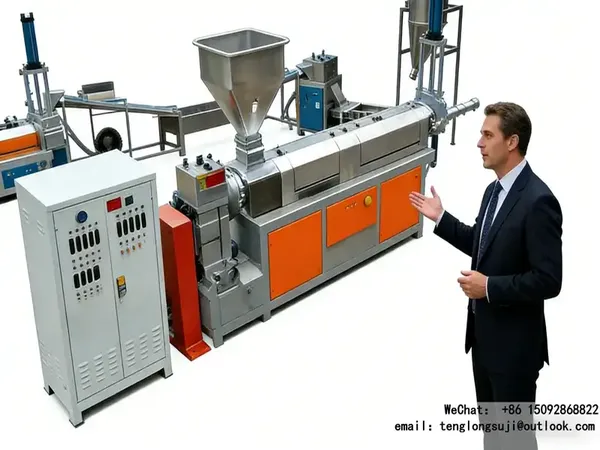
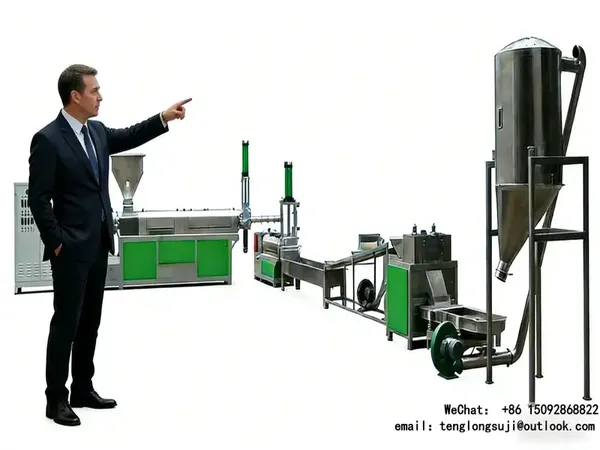
4/2026 PS Recycling Machine: Recycled Pellet Quality Standards & Stability Control
Manufacturing owners seeking recycled PS pellets as raw materials face a critical challenge: ensuring consistent quality that meets their production standards. In 2026, with GRS-certified recycled materials in high demand (projected 40% growth in demand for recycled PS pellets), the PS Recycling Machine is the key to producing stable, high-quality pellets. This article, focused on manufacturing owners, details core quality standards, stability control strategies, and how to select a PS Recycling Machine that delivers reliable results—while addressing the needs of engineers and small enterprise suppliers.
2026 Recycled PS Pellet Quality Standards (Manufacturer Focus)
Manufacturing owners require recycled PS pellets that match the performance of virgin PS, particularly for applications like packaging, automotive parts, and electronics. Below are the core 2026 quality standards, aligned with GRS and ISCC certifications, to ensure your pellets meet production requirements:
| Quality Metric | Standard Value (GRS-Certified) | Impact on Manufacturing |
| Purity | ≥99.5% | Impurities (e.g., paper, metal) cause defects in injection-molded products, increasing scrap rates and production costs. |
| IV Retention Rate | ≥93% | Low IV retention reduces pellet toughness, making them unsuitable for high-stress applications (e.g., automotive interior parts). |
| MFI (Melt Flow Index) | 1.5-3.0 g/10min (200℃, 5kg) | MFI outside this range affects molding efficiency—too high causes warping, while too low leads to filling defects in finished products. |
| Moisture Content | <0.5% | High moisture causes bubbles in pellets, leading to product defects (e.g., cracks, holes) and wasted materials. |
| Particle Size Uniformity | 2-4mm (±0.2mm) | Non-uniform particles cause inconsistent melting in molding machines, reducing product quality consistency and increasing production time. |
PS Recycling Machine: Stability Control Strategies for Consistent Pellet Quality
The PS Recycling Machine’s design and operation directly impact pellet quality stability. Below are engineer-vetted strategies to ensure consistent results—whether you own a PS Recycling Machine or source pellets from a supplier:
Equipment Configuration for Stability
- Dual-Stage Extrusion System: The first stage melts and filters PS waste, while the second stage refines the melt to ensure uniform viscosity—critical for maintaining consistent MFI and IV retention rates.
- Precision Temperature Control: Use segmented heating (feeding section: 160-180℃, compression section: 180-200℃, homogenization section: 200-220℃) to prevent overheating or underheating, which degrades pellet quality.
- Automated Sorting & Decontamination: Integrate optical sorting and ultrasonic cleaning modules to remove 99.8% of impurities, ensuring pellet purity meets the ≥99.5% GRS standard.
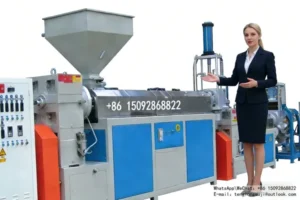
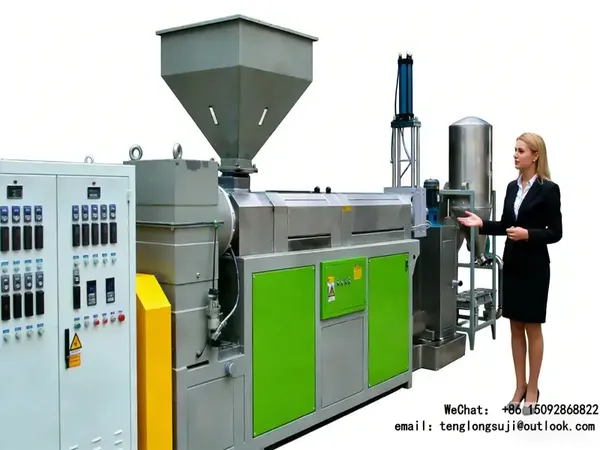
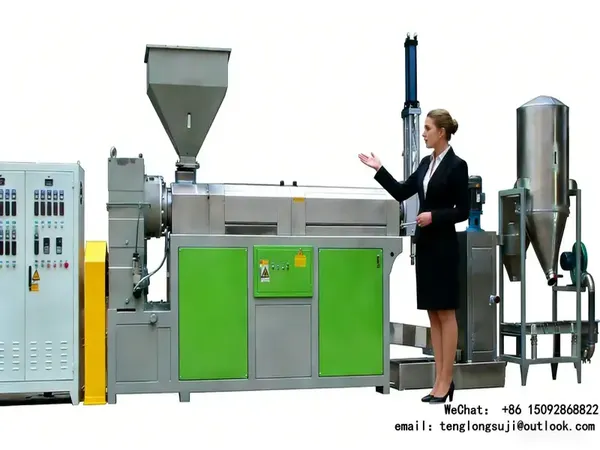
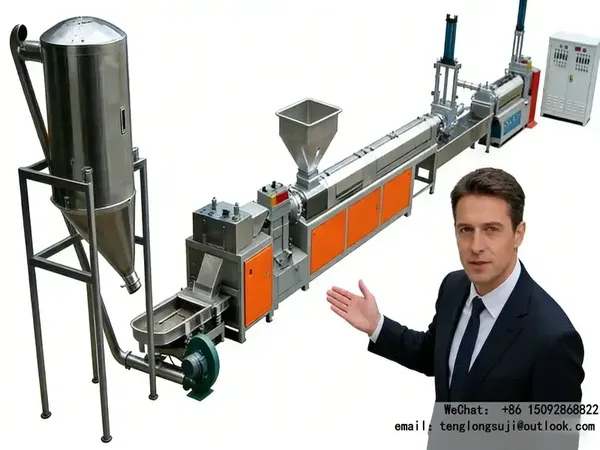
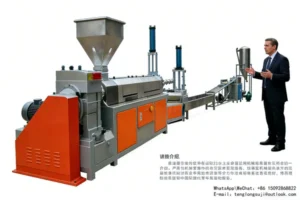
PS Recycling Machine
Operational Best Practices
- Raw Material Consistency: Source PS waste from consistent suppliers to avoid variations in contamination levels and PS type (e.g., avoid mixing EPS with high-impurity rigid PS). This ensures consistent processing and pellet quality.
- Parameter Optimization: Set the screw speed to 1,100-1,300 RPM and use a 3mm screen size for optimal particle uniformity. Test MFI and IV retention weekly to adjust parameters as needed, ensuring consistency.
- Regular Calibration: Calibrate the PS Recycling Machine’s temperature and pressure sensors monthly to ensure accurate readings—this prevents quality deviations and maintains compliance.
How to Select a PS Recycling Machine for Quality & Stability
For manufacturing owners who invest in their own PS Recycling Machine (to control costs and quality), prioritize these features in 2026 models:
Key Features to Prioritize
- Quality Monitoring System: Real-time tracking of MFI, IV retention, and moisture content, with alerts for deviations—ensuring consistent quality batch after batch.
- High-Quality Screw & Barrel: Choose dual-metal alloy screws (wear-resistant, corrosion-resistant) to maintain processing consistency over the equipment’s 8-10 year service life.
- Customizable Pellet Size: An adjustable die head to produce 2-4mm pellets, matching your specific manufacturing needs (e.g., 2mm for small injection-molded parts, 4mm for extrusion).
Supplier Vetting Tips (For Manufacturing Owners Sourcing Pellets)
If you source recycled PS pellets from suppliers, verify that their PS Recycling Machine meets these standards to ensure quality:
Request GRS/ISCC certification and monthly quality test reports (including MFI, IV retention, and purity).
Ask for a 100kg sample run of pellets to test in your molding equipment—ensure consistency across the entire batch.
Verify the supplier’s PS Recycling Machine configuration (dual-stage extrusion, precision temperature control) to confirm they can deliver stable, high-quality pellets.
FAQ: Recycled PS Pellet Quality & PS Recycling Machine Selection
- Q: Can recycled PS pellets match the quality of virgin PS?
A: Yes. With a high-quality PS Recycling Machine and proper process control, recycled PS pellets (IV ≥93%, purity ≥99.5%) perform identically to virgin PS for 80% of manufacturing applications (e.g., packaging, automotive interior parts). - Q: How often should I test the quality of recycled PS pellets?
A: For in-house PS Recycling Machine operations, test MFI and IV retention weekly; for suppliers, test each batch upon delivery. This ensures quality consistency and prevents production defects. - Q: What is the cost difference between recycled and virgin PS pellets?
A: Recycled PS pellets cost 30-40% less than virgin PS (2026 market: recycled ~1.2 EUR/kg, virgin ~2.0 EUR/kg), allowing you to reduce manufacturing costs without compromising product quality.
Conclusion
In 2026, recycled PS pellets are no longer a “low-quality alternative”—they are a cost-effective, sustainable raw material for manufacturing, provided they meet strict quality standards. The PS Recycling Machine is the foundation of this quality: with the right configuration, operational practices, and monitoring, manufacturing owners can ensure consistent, high-quality pellets that reduce costs and support sustainability goals. Whether you invest in your own equipment or source from suppliers, prioritizing quality and stability is key to long-term success.
Call to Action
- Low Threshold: Download our 《Recycled PS Pellet Quality Test Guide》to learn how to verify pellet quality and ensure it meets your manufacturing standards.
• High Intent: Contact our team for a free consultation on selecting a PS Recycling Machinetailored to your pellet quality needs, or to connect with trusted GRS-certified pellet suppliers.