4/2026 PS Recycling Equipment: Market Trends, Challenges & Future Outlook
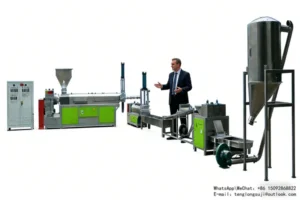
For all stakeholders—small recycling enterprise owners, manufacturing buyers, environmental engineers, and procurement personnel—understanding 2026 market trends, key challenges, and future outlook forPS Recycling Machine and PS Granulator is critical to making informed decisions. In 2026, the global PS recycling equipment market is shaped by three core drivers: EU regulatory pressure, growing demand for sustainable materials, and technological advancements. This article provides a comprehensive overview of the market, helping you navigate opportunities and mitigate risks.
2026 PS Recycling Equipment Market Trends
The 2026 market for PS Recycling Machine and PS Granulator is characterized by four key trends, driven by regulation, sustainability, and technology:
Trend 1: Energy Efficiency as a Core Selection Criterion
With the EU SUP Directive mandating a 15% reduction in energy use for plastic recycling by 2028, energy efficiency has moved from a “nice-to-have” to a “must-have” feature. Manufacturers are launching energy-efficient models (e.g., PSG-1200 PS Granulator, PS-2000 PS Recycling Machine) with energy efficiency ratios ≥0.85, and enterprises are prioritizing these models to avoid non-compliance penalties and reduce long-term operational costs. The market share of energy-efficient PS recycling equipment is projected to reach 75% by the end of 2026, up from 55% in 2025.
Trend 2: Integration of Smart Technology
2026 sees a surge in smart PS Recycling Machine and PS Granulator models, equipped with IoT sensors and real-time monitoring systems. These systems track key metrics (energy consumption, pellet quality, equipment performance) and send alerts for maintenance or parameter adjustments—reducing downtime by 20-25% and improving operational efficiency. For example, smart models can automatically adjust melting temperatures based on raw material quality, ensuring consistent pellet quality without manual intervention. Small enterprises are increasingly adopting these models to compensate for limited technical staff, while industrial operations use them to optimize large-scale recycling lines.
Trend 3: Growing Demand for Compact, Small-Scale Equipment
As small recycling enterprises enter the market (driven by EU incentives for circular economy businesses), demand for compact, user-friendly PS Recycling Machine models (e.g., PS-500) has grown by 30% in 2026. These models feature small footprints (≤50㎡), one-click operation, and low initial investment—addressing the core pain points of small enterprise owners. Manufacturers are also offering modular small-scale equipment, allowing enterprises to expand their processing capacity as their business grows, reducing upfront risk.
Trend 4: Rising Popularity of Turnkey Solutions
For enterprises new to PS recycling, turnkey solutions—including PS Recycling Machine/PS Granulator, installation, training, and after-sales support—have become increasingly popular. These solutions reduce the barrier to entry by providing end-to-end support, ensuring enterprises can start operations within 2-3 weeks of equipment delivery. In 2026, turnkey solutions account for 45% of PS recycling equipment sales, up from 30% in 2025, as small enterprises and manufacturing owners seek to minimize risk and accelerate time-to-profit.
Key Challenges Facing 2026 PS Recycling Equipment Market
Despite strong growth momentum, the 2026 PS recycling equipment market faces four critical challenges that all stakeholders must address to sustain success. These challenges vary by stakeholder type but collectively impact the industry’s ability to meet regulatory goals and market demand:
Challenge 1: High Initial Investment Barriers for Small Enterprises
While small-scale equipment is becoming more accessible, the initial investment for a basic PS Recycling Machine (e.g., PS-500 model, ~47,000 EUR) remains a significant barrier for small recycling enterprises—especially those in emerging markets or startups with limited capital. Many small enterprises struggle to secure financing, as traditional lenders view PS recycling as a high-risk sector due to fluctuating raw material prices and regulatory uncertainty. This gap limits market expansion and slows the adoption of sustainable recycling practices at the small-scale level.
Challenge 2: Raw Material Supply Instability
The quality and availability of PS waste—the core raw material for PS Recycling Machines and PS Granulators—remain inconsistent. Post-consumer PS waste (e.g., food packaging, disposable utensils) often contains high levels of contamination (e.g., food residue, mixed plastics), requiring additional decontamination steps that increase operational costs. For manufacturing owners sourcing recycled pellets, this inconsistency can lead to quality variations, while recycling enterprises face challenges in securing a steady supply of clean PS waste, impacting production efficiency and profitability.
Challenge 3: Technical Skill Gaps Among Operators
While 2026 models are more user-friendly, the integration of smart technology (e.g., IoT monitoring, automated parameter adjustment) requires basic technical skills that many small enterprise operators lack. This skill gap leads to underutilization of equipment features, reduced energy efficiency, and higher maintenance costs. For engineers, this means spending additional time on training and troubleshooting, diverting resources from core project goals. Manufacturers are addressing this with free online training, but adoption remains low among small teams.
Challenge 4: Evolving Regulatory Landscape
The EU SUP Directive and other regional regulations (e.g., U.S. EPA plastic recycling rules) are constantly evolving, creating uncertainty for enterprises investing in PS Recycling Machines and PS Granulators. For example, proposed amendments to the EU SUP Directive could mandate even stricter energy efficiency standards (18% reduction by 2029) and higher pellet quality requirements (purity ≥99.8%), forcing enterprises to upgrade equipment prematurely. This regulatory uncertainty deters long-term investment, particularly for small and medium enterprises with limited flexibility.
2027-2030 Future Outlook for PS Recycling Equipment
Looking ahead, the PS recycling equipment market is poised for steady growth, driven by ongoing regulatory pressure, technological innovation, and growing demand for sustainable materials. Below is the key outlook for the next 4 years, tailored to the needs of different stakeholders:
Outlook 1: Technological Innovation Will Drive Efficiency and Affordability
By 2028, manufacturers will launch next-generation PS Recycling Machines and PS Granulators with AI-powered optimization—capable of automatically adjusting processing parameters based on real-time raw material quality and energy consumption data. These smart models will reduce energy use by an additional 10-15% and lower maintenance costs by 20%, making them more accessible to small enterprises. Additionally, advancements in decontamination technology will enable processing of highly contaminated PS waste, expanding raw material supply and reducing operational costs.
Outlook 2: Regulatory Alignment Will Simplify Compliance
By 2029, regional regulations (EU, U.S., Asia-Pacific) will likely align on core standards for PS recycling equipment (energy efficiency, pellet quality, emissions), reducing regulatory uncertainty for enterprises operating globally. This alignment will encourage cross-border investment and simplify equipment selection, as manufacturers will design models that meet universal compliance requirements. EU green incentives will also expand, covering up to 15% of equipment investment for energy-efficient models, further lowering barriers for small enterprises.
Outlook 3: Circular Economy Partnerships Will Become Mainstream
Manufacturing owners will increasingly partner with recycling enterprises to secure a steady supply of high-quality recycled PS pellets, creating long-term, mutually beneficial relationships. These partnerships will drive demand for PS Recycling Machines and PS Granulators that can meet customized quality standards (e.g., specific MFI or IV retention rates) for manufacturing applications. For small recycling enterprises, this means more stable revenue streams and reduced market volatility.
Outlook 4: Small-Scale Equipment Will Dominate Market Growth
By 2030, small-scale PS Recycling Machines (1-2 tonnes/day output) will account for 60% of market sales, driven by EU incentives and the growing number of small recycling enterprises. Manufacturers will focus on modular, scalable small-scale models that allow enterprises to expand processing capacity as their business grows—eliminating the need for upfront investment in large equipment. This trend will make PS recycling accessible to even micro-enterprises, accelerating the transition to a circular economy.
Stakeholder-Specific Recommendations
To navigate the 2026 market and prepare for future growth, each stakeholder group should prioritize the following actions:
For Small Recycling Enterprise Owners
- Prioritize compact, user-friendly PS Recycling Machines (e.g., PS-500) with low initial investment and modular design to reduce risk and enable future expansion.
- Leverage EU green incentives and turnkey solutions to lower upfront costs and accelerate time-to-profit.
- Partner with local manufacturing businesses to secure long-term contracts for recycled pellets, ensuring steady revenue.
For Manufacturing Owners
- Invest in in-house PS Recycling Machines with quality monitoring systems to control pellet quality and reduce raw material costs.
- Vet suppliers thoroughly by verifying their PS Recycling Machine configurations and requesting regular quality test reports to ensure consistent pellet quality.
- Establish long-term partnerships with local recycling enterprises to secure a stable supply of GRS-certified recycled PS pellets, mitigating raw material supply risks.
- Explore the integration of recycled PS pellets into more product lines to capitalize on cost savings and meet consumer demand for sustainable products.
For Environmental Project Engineers
- Prioritize energy-efficient PS Granulator and PS Recycling Machine models (energy efficiency ratio ≥0.85) to meet EU SUP Directive requirements and reduce carbon footprints.
- Design recycling systems with heat recovery and VFD systems to optimize energy use, aligning with sustainability goals and reducing operational costs for enterprises.
- Provide on-site training for small enterprise operators to bridge technical skill gaps, ensuring equipment is used efficiently and safely.
- Stay updated on evolving regulations and technological advancements to recommend future-proof equipment that avoids premature obsolescence.
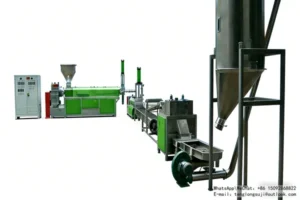
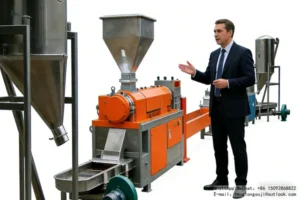
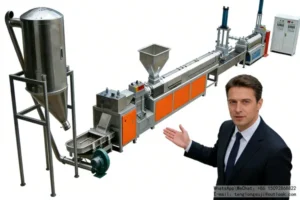
PS Recycling Machine
For Procurement Personnel
- Compare energy efficiency ratios, service life, and after-sales support when selecting PS Recycling Machines and PS Granulators to maximize long-term value.
- Negotiate turnkey solutions with manufacturers to reduce upfront costs and ensure seamless installation and training for enterprise teams.
- Prioritize suppliers that offer modular equipment, allowing enterprises to scale processing capacity as business needs grow.
- Leverage EU green incentives when procuring energy-efficient models to lower investment costs and support sustainability initiatives.
FAQ: 2026 PS Recycling Equipment Market & Future Trends
- Q: What is the projected growth rate of the 2026 global PS recycling equipment market?
A: The global PS recycling equipment market is projected to grow by 18-20% in 2026, driven by EU regulatory pressure, growing demand for sustainable materials, and the expansion of small-scale recycling enterprises. This growth is expected to accelerate to 22-25% annually between 2027-2030. - Q: Will small-scale PS Recycling Machines become more affordable in the next 3-4 years?
A: Yes. Technological advancements (e.g., simplified manufacturing, modular design) and increased market competition will reduce the initial investment for small-scale models by 15-20% by 2029. Additionally, expanded EU green incentives will further lower the financial barrier for small enterprises. - Q: How will AI technology impact PS Recycling Machines and PS Granulators by 2028?
A: AI-powered optimization will enable real-time adjustment of processing parameters (e.g., temperature, screw speed) based on raw material quality, reducing energy consumption by an additional 10-15% and improving pellet quality consistency. AI will also predict maintenance needs, reducing downtime by 25-30%. - Q: What steps can small enterprises take to overcome the initial investment barrier?
A: Small enterprises can leverage EU green incentives (up to 15% of equipment investment), apply for specialized financing for circular economy businesses, and choose modular equipment that allows for phased investment. Partnering with manufacturing businesses for long-term pellet contracts can also provide steady cash flow to offset upfront costs.
Conclusion
The 2026 PS recycling equipment market is at a critical inflection point, driven by regulation, sustainability, and technological innovation. While challenges like high initial investment, raw material instability, and skill gaps persist, the future outlook remains positive—with AI-powered equipment, regulatory alignment, and circular economy partnerships set to transform the industry by 2030. For all stakeholders—small enterprise owners, manufacturing buyers, engineers, and procurement personnel—success lies in adapting to market trends, prioritizing energy efficiency and quality, and leveraging turnkey solutions and incentives to reduce risk. By embracing these strategies, enterprises can not only comply with regulations but also capitalize on the growing demand for sustainable materials, turning PS waste into a profitable, long-term revenue stream.
Call to Action
- Low Threshold: Download our 《2026 PS Recycling Equipment Market Guide》to access detailed stakeholder-specific strategies, market data, and future trend analysis.
• High Intent: Contact our team for a free market consultation—we help you navigate 2026 market challenges, select the right PS Recycling Machine/PS Granulator, and leverage incentives to maximize ROI.