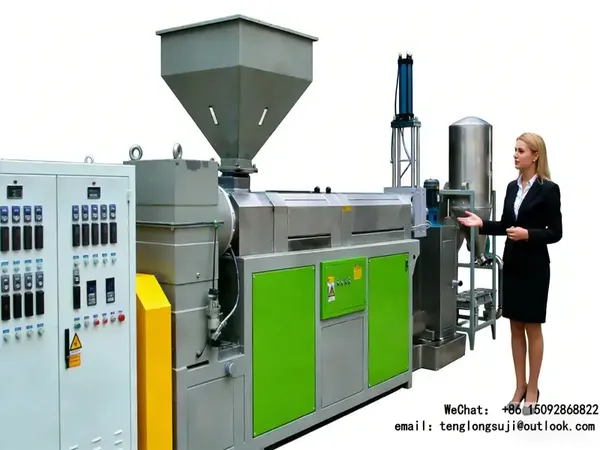
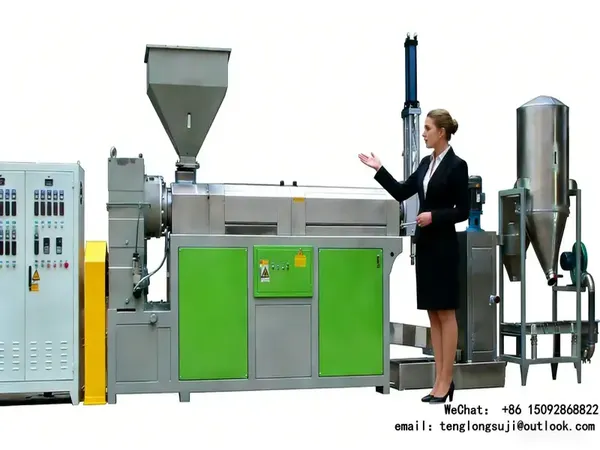
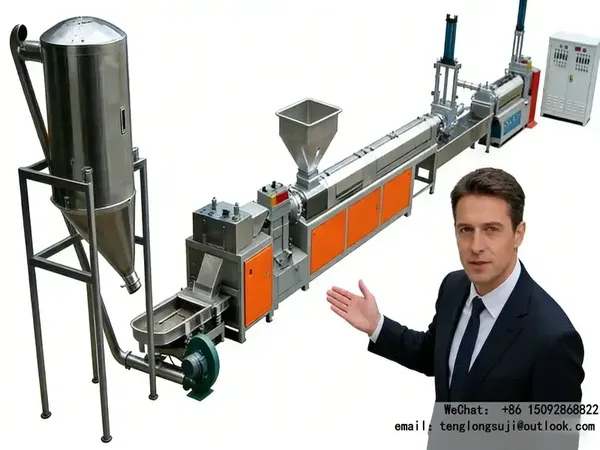
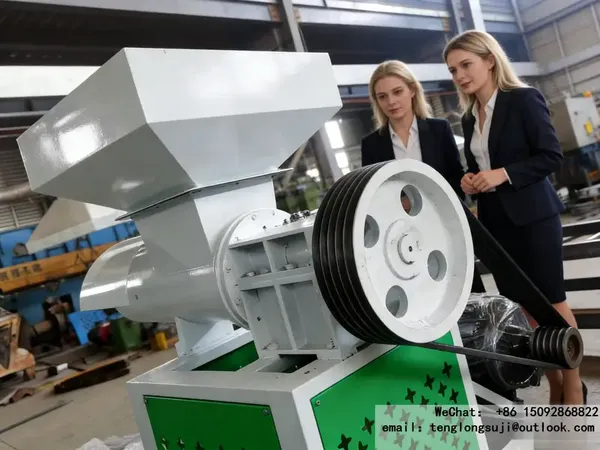
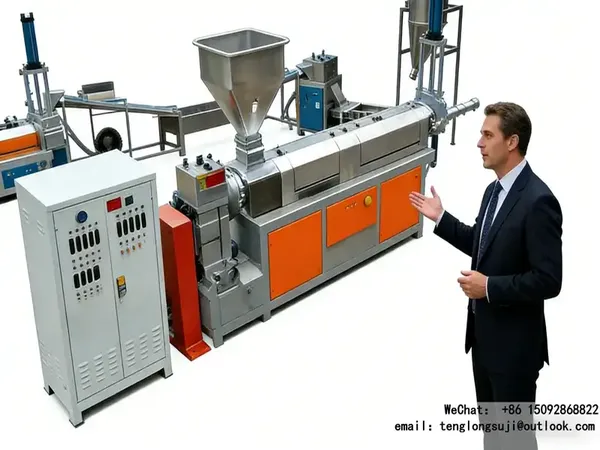
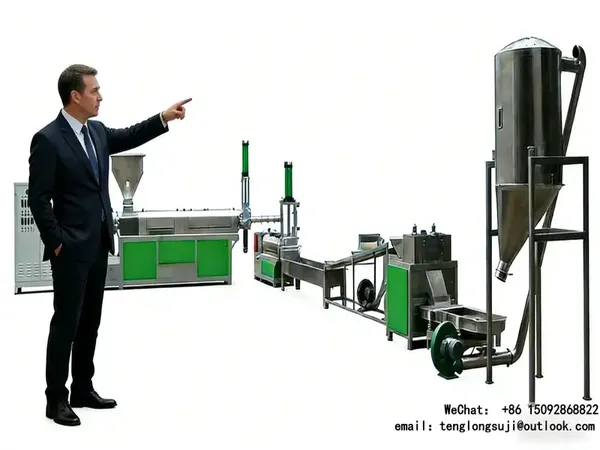
4/2026 PP Granulator Trends: Intelligence and Energy Efficiency Revolution in Plastic Recycling
By 2026, the push for a circular economy has fully reached the plastics industry. Polypropylene (PP) waste—think car bumpers, food containers, battery cases—is now a valuable resource. And the machine making that happen? The PP Granulator. But the old-school models are disappearing fast. In their place: intelligent, energy-smart granulators that actually help recyclers cut costs and meet tougher global standards.
So what’s really changing in 2026? Let’s walk through the trends that matter.
How Intelligent PP Granulators Boost Production Without Breaking a Sweat
Intelligence isn’t a buzzword anymore. In 2026, IoT, digital twins, and AI are built right into PP Granulator systems. Unlike the old days when operators had to guess and babysit every setting, today’s machines watch themselves.
Take real-time monitoring. The granulator tracks screw speed, melt temperature, melt flow rate (MFI), and energy use—constantly. That means stable output and fewer surprises.
Some of the newest PP Granulator models (from leading brands) now include AI-based predictive maintenance. The system learns from historical data and can flag a likely failure 72 hours before it happens. Result? Unplanned downtime drops by 70%, and overall equipment efficiency (OEE) goes above 94%.
Then there’s digital twin tech. You can simulate the whole granulating process in a virtual environment—tweak temperatures, speeds, and feed rates without wasting material. That cuts trial-and-error costs for new products by 35%.
Another real improvement: automatic sorting and feeding. A near-infrared (NIR) sorting module spots and removes contaminants like PVC, PET, and metal from PP waste. Sorting accuracy hits 98.5%. Cleaner pellets, less wear on the screw and barrel, and 25% longer equipment life.
Energy-Saving Tech That Lowers Bills and Carbon Footprint
With global “dual carbon” goals in play, energy efficiency is no longer a nice-to-have. It’s a must. The PP Granulator models rolling out in 2026 save at least 18% more energy than traditional machines, thanks to two key upgrades:
Heat recovery units – They capture waste heat from the extrusion and granulation process and reuse it to preheat feedstock or warm up the workshop. Overall thermal efficiency climbs to 88%. For every ton of recycled PP pellets, you save 0.15 tons of standard coal.
Variable frequency drives – The motor speeds up or slows down based on actual load. No more idling energy waste. Unit energy consumption drops to 280–320 kWh per ton.
Let’s put that into dollars. Take a medium-sized PP recycling plant making 10 tons a day. An energy-saving PP Granulator saves about 8,000 kWh per month. That’s roughly $1,000 back in your pocket every month. And on the carbon side? Each ton of recycled PP cuts CO₂ equivalent emissions by about 1.8 tons—exactly what international buyers are asking for.
Meeting Certifications: GRS and ISCC Are No Longer Optional
By 2026, you can’t sell recycled PP into Europe or North America without proper certification. GRS (Global Recycled Standard) and ISCC (International Sustainability and Carbon Certification) are the real gatekeepers. Your PP Granulator plays a huge role in getting them.
For GRS, you need full traceability—where the raw material came from, what parameters you ran, what quality checks passed. The latest PP Granulator models come with a blockchain-based traceability module. All production data is locked in, tamper-proof, and fully traceable. That satisfies GRS’s whole-chain requirement.
Also, GRS demands a minimum recycled content (often 50% or more). The high-purity pellets from a modern PP Granulator—thanks to advanced decontamination—easily meet that. So you get the label, and you get market access.
FAQ – 2026 PP Granulator Questions You’re Probably Asking
Q: How much energy does a 2026 intelligent PP Granulator really save?
A: Compared to traditional models, the energy saving is at least 18%. Unit energy consumption runs around 280–320 kWh per ton. That’s real savings every month.
Q: Will a new PP Granulator help me get GRS certification?
A: Yes. The blockchain traceability system and advanced decontamination built into these machines cover exactly what GRS requires—full traceability and recycled content proof.
Q: How long will a 2026 intelligent PP Granulator last?
A: With wear-resistant materials and predictive maintenance, expect 8–10 years of service life. That’s about 25% longer than older models.
Q: How does the intelligent PP Granulator improve pellet quality?
A: The real-time monitoring system keeps MFI and melt temperature tightly controlled. The melt index fluctuation stays within ±0.3 g/10min. That means recycled PP pellets perform close to virgin material.