4/2026 PE Recycling Business Guide: Start a ProfitablePE Recycling Machine Project
Starting a PE recycling business in 2026 is a viable and profitable venture, driven by global circular economy initiatives, rising demand for recycled PE, and supportive government incentives. However, success depends on careful planning—from choosing the right PE Recycling Machine and PE granulator to securing feedstock and marketing recycled pellets. This guide provides a step-by-step roadmap for entrepreneurs and SMEs looking to launch a profitable PE Recycling Machine project in 2026.
Step 1: Conduct Market Research and Feasibility Analysis
Before investing in PE Recycling Machine, conduct a thorough market analysis to assess demand, competition, and profitability. Key steps include:
- Identify Target Market: Determine the demand for recycled PE pellets in your region—focus on packaging, automotive, or construction industries, as these are the largest consumers.
- Assess Feedstock Availability: Secure a reliable supply of PE waste (HDPE bottles, LDPE film, PE containers). Partner with local waste management companies, grocery stores, and manufacturing facilities to ensure consistent feedstock (minimum 500 kg/day for small-scale projects).
- Analyze Competition: Research existing PE recycling businesses in your region—identify gaps (e.g., lack of GRS-certified pellets, high prices) that your project can fill.
- Calculate ROI: Estimate upfront costs (PE Recycling Machine, PE granulator, facility, labor) and ongoing costs (energy, maintenance, feedstock). Use 2026 market data: recycled PE pellets sell for $1.20-$1.80 per kg, with GRS-certified pellets commanding a 15-25% premium. The average ROI for small-scale projects is 12-18 months.
Step 2: Choose the RightPE Recycling Machine and PE granulator
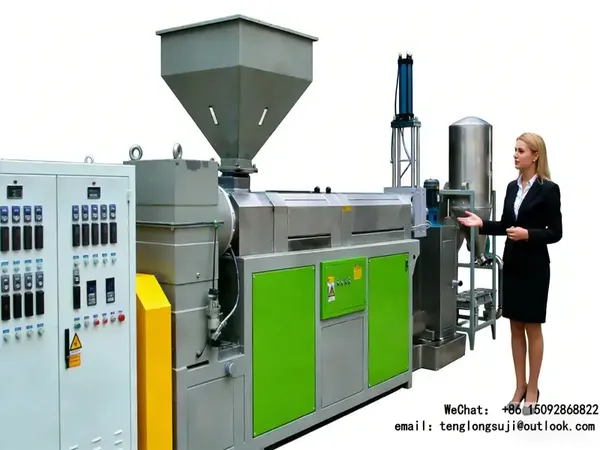
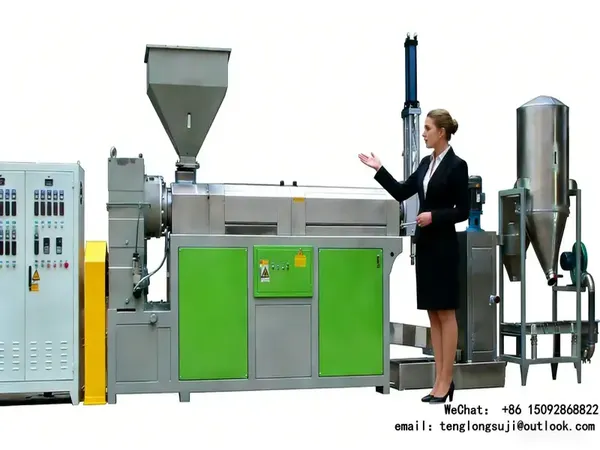
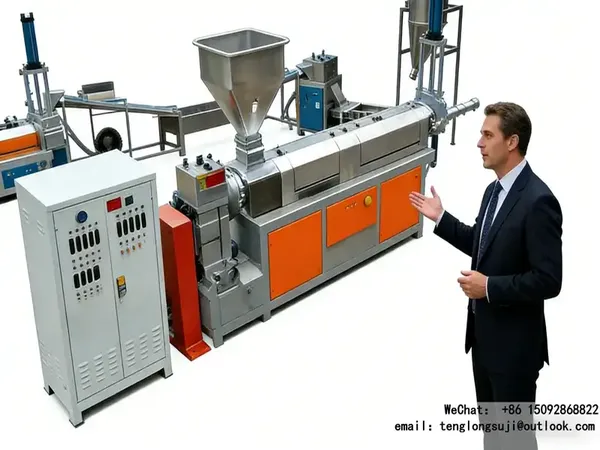
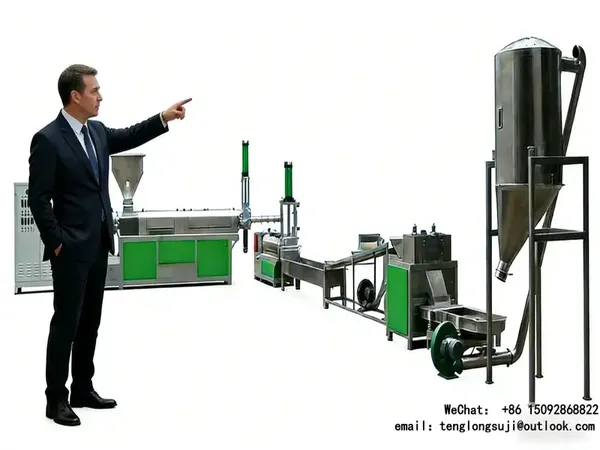
The PE Recycling Machine and PE granulator are the core of your business—choose models that align with your project scale, feedstock type, and quality goals. For small-scale startups (daily feedstock 500 kg-1 ton), we recommend:
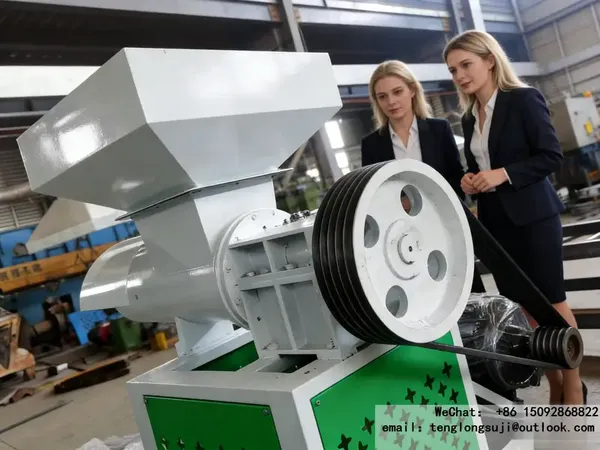
- PE Recycling Machine: Small-scale model (50-100 kg/h), equipped with automatic feeding, crushing, and cleaning modules. Ensure it meets local environmental standards and can be upgraded for future growth.
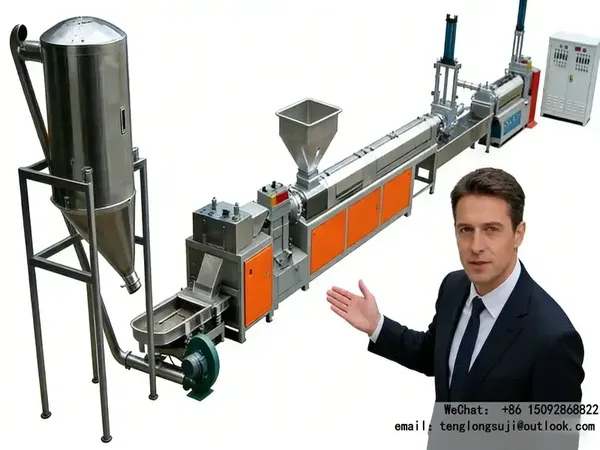
- PE granulator: Water ring pelletizer (cost-effective, easy to maintain), with die hole size 2-3 mm for standard pellets. If targeting food-grade or automotive markets, opt for an underwater PE granulatorfor higher quality.
Key considerations: energy efficiency (≥15% savings compared to traditional models), compliance with GRS/REACH standards (if exporting), and after-sales support from the manufacturer.
Step 3: Secure Permits and Compliance
Starting a PE recycling business requires securing the necessary permits and complying with local environmental regulations. In 2026, key requirements include:
- Environmental Permit: Obtain a permit from local environmental authorities, ensuring your PE Recycling Machinemeets emission and waste disposal standards.
- Certifications: If producing GRS-certified pellets, apply for GRS certification—this requires implementing traceability systems and meeting strict environmental and social standards.
- Safety Permits: Ensure your facility meets occupational safety standards, including fire safety and equipment safety for PE Recycling Machineand PE granulator
Step 4: Set Up Your Facility and Train Staff
Choose a facility with sufficient space for PE Recycling Machine, PE granulator, feedstock storage, and pellet storage. Key facility requirements:
- Space: Minimum 200 sq. meters for small-scale projects, with separate areas for feedstock sorting, processing, and storage.
- Utilities: Access to electricity (380V, 50Hz), water (for PE granulatorcooling), and waste disposal systems.
- Staff Training: Train 2-3 operators to use the PE Recycling MachineandPE granulator—manufacturers typically provide 1-2 days of on-site training. Ensure staff understand maintenance procedures and safety protocols.
Step 5: Implement Quality Control and Marketing
Quality control is critical to building a reputation and securing long-term customers. Implement a strict quality control process:
- Test Pellet Quality: Regularly test IV retention rate, purity, and pellet size using industry-standard equipment. Ensure pellets meet customer requirements (e.g., MFI 0.5-5 g/10min for packaging).
- Traceability: Use the PE Recycling Machine’s PLC system to track feedstock source and processing steps—this is required for GRS certification and builds customer trust.
Marketing strategies for 2026: Partner with local packaging and manufacturing companies, attend industry trade shows (e.g., K Show in Germany, Chinaplas in China), and leverage digital marketing to reach B2B buyers. Create a professional website highlighting your PE Recycling Machine capabilities, pellet quality certifications, and case studies—optimize the site with SEO keywords to attract organic traffic. Additionally, join industry associations (e.g., European Plastic Recyclers Association, China Plastics Processing Industry Association) to network with potential customers and stay updated on policy changes.
Step 6: Monitor Operations and Optimize for Growth
Once your PE Recycling Machine project is up and running, monitor operations closely to ensure efficiency and profitability. Key steps include:
- Track Key Metrics: Monitor daily output, pellet quality, energy consumption, and maintenance costs to identify inefficiencies. Use the PE Recycling Machine’s IoT monitoring system (if equipped) to generate real-time performance reports, allowing you to adjust parameters (e.g., feeding rate, extrusion temperature) for optimal efficiency.
- Optimize Feedstock Management: Continuously evaluate feedstock quality and source diversity to reduce costs. Negotiate long-term contracts with waste suppliers to secure stable, low-cost PE waste, and implement pre-sorting processes to improve feedstock purity—this reduces PE granulatorwear and pellet rejection rates.
- Expand Product Offerings: As your business grows, consider expanding into high-value pellet markets (e.g., food-grade, automotive-grade PE pellets). This may require upgrading your PE granulatorto an underwater model or adding advanced decontamination modules, but the premium pricing (15-25% higher than standard pellets) significantly boosts profitability.
- Leverage Government Incentives: Stay updated on local and global incentives for PE recycling—many governments offer tax credits, grants, or subsidies for enterprises using energy-efficient PE Recycling Machineor producing GRS-certified pellets. These incentives can reduce operational costs and shorten ROI.
Common Pitfalls to Avoid in 2026 PE Recycling Projects
Many entrepreneurs fail to launch successful PE recycling projects due to avoidable mistakes. Below are the most common pitfalls and how to steer clear of them:
- Underestimating Feedstock Costs: Don’t assume PE waste is free—many suppliers charge for high-quality PE waste, especially sorted HDPE/LDPE. Conduct a detailed cost analysis of feedstock acquisition and factor it into your pricing strategy to avoid profit margins being squeezed.
- Overlooking Maintenance: Neglecting PE Recycling Machineand PE granulator maintenance leads to downtime, reduced efficiency, and costly repairs. Follow a strict maintenance schedule (outlined earlier in this guide) to extend equipment lifespan and ensure consistent production.
- Ignoring Pellet Quality Standards: Cutting corners on pellet quality (e.g., skipping cleaning steps, using low-quality feedstock) will damage your reputation and limit market access. Invest in quality control measures and ensure your pellets meet industry standards (GRS, REACH) to secure long-term customers.
- Overinvesting in Equipment: For SMEs, oversized or overly advanced PE Recycling Machineleads to idle capacity and extended ROI. Choose equipment that aligns with your current feedstock supply and growth projections, and opt for scalable models that can be upgraded as your business expands.
FAQ: Starting a PE Recycling Business in 2026
- Q: What is the minimum investment required to start a small-scale PE recycling project?A: The minimum investment for a small-scale project (50-100 kg/h PE Recycling Machine, facility, permits, and initial feedstock) is $50,000-$80,000. This includes the PE granulator, sorting equipment, and basic quality control tools.
- Q: How to find buyers for recycled PE pellets?A: Target local packaging companies, plastic manufacturers, and automotive suppliers. Attend industry trade shows, join online B2B platforms (e.g., Alibaba, Thomasnet), and partner with recycling brokers to connect with buyers. GRS-certified pellets will attract more high-value buyers.
- Q: What is the expected daily output for a small-scale PE recycling project?A: A small-scale PE Recycling Machine(50-100 kg/h) can produce 400-800 kg of pellets per day (8-hour shift), depending on feedstock quality and machine efficiency. With two shifts, daily output can reach 800-1,600 kg.
- Q: How to handle waste generated during the recycling process?A: The main waste streams are non-PE impurities (metal, glass, PP) and low-quality pellets. Non-PE impurities can be sold to scrap metal/glass recyclers, while low-quality pellets can be reprocessed in small batches or sold to low-value markets (e.g., construction materials) to minimize waste and maximize revenue.