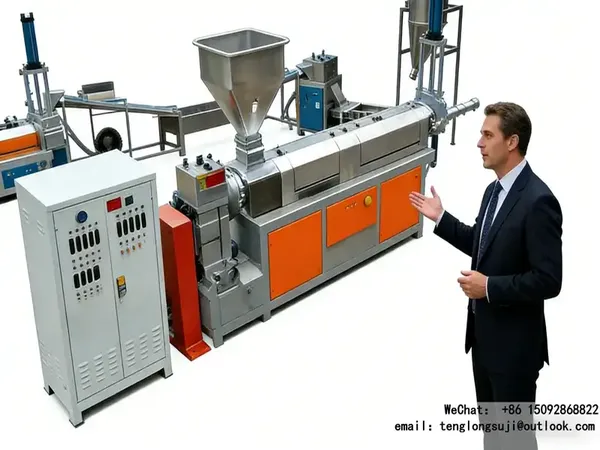
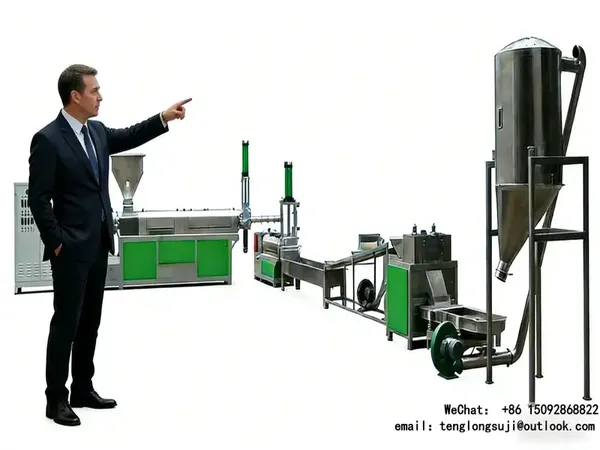
Woven Bag Recycling Machine: Technical Parameters, Efficiency, and Engineering Best Practices
For environmental project engineers and procurement professionals, selecting a Woven Bag Recycling Machine requires a deep understanding of technical parameters, processing capabilities, and energy efficiency ratios. Woven bag recycling is a complex process that demands precision—from shredding and washing to granulation—and the right machine must align with your project’s capacity, environmental goals, and long-term operational needs. With the EU’s PPWR regulation imposing stricter recyclability targets and energy efficiency requirements, choosing a technically superior Woven Bag Recycling Machine is critical to compliance and project success. This guide provides a detailed technical analysis of key parameters, efficiency metrics, and engineering best practices to help you select and optimize the ideal machine for your project.
Core Technical Parameters to Evaluate
When evaluating a Woven Bag Recycling Machine, engineers must focus on parameters that directly impact processing capacity, energy efficiency, and end-product quality. The table below outlines the most critical technical specifications, along with industry benchmarks and their practical implications for your project:
| Technical Parameter | Industry Benchmark | Implication for Performance |
| Processing Capacity (kg/h) | 50 – 5,000 (varies by scale) | Determines project throughput; must align with waste input volume. Undersized machines cause bottlenecks that slow down the entire recycling line, while oversized machines waste energy and increase operational costs. |
| Motor Power (kW) | 15 – 200 (based on capacity) | Higher power enables faster processing but increases energy consumption. The optimal power-to-capacity ratio is 0.03-0.04 kW per kg/h, ensuring efficient performance without unnecessary energy waste. |
| Energy Efficiency (kWh/kg) | 0.2 – 0.33 kWh/kg | Lower values indicate higher efficiency. A machine with 0.25 kWh/kg uses 30% less energy than one with 0.35 kWh/kg, reducing long-term operational costs and supporting sustainability goals. |
| Granule Size (mm) | 2 – 8 mm (adjustable) | Determines end-product usability; 3-5 mm is ideal for most manufacturing applications (e.g., new woven bags, injection molding), ensuring compatibility with downstream processes. |
| Washing Efficiency (%) | ≥ 95% | Critical for meeting GRS/ISCC standards; poor washing leads to contaminated granules, reduced market value, and potential non-compliance with regulatory requirements. |
| MFI (Melt Flow Index) Range | 2 – 10 g/10min (230°C/2.16kg) | MFI measures the flowability of molten plastic; a consistent MFI (±1 g/10min) ensures granule quality and compatibility with downstream processes, reducing production issues for end-users. |
Energy Efficiency: Key to Sustainable and Cost-Effective Operations
Energy consumption is one of the largest operational costs for woven bag recycling projects, and engineers play a critical role in optimizing energy efficiency ratios. A Woven Bag Recycling Machine with poor energy efficiency can increase operational costs by 20-30% annually, while an efficient model can reduce carbon emissions and align with global sustainability goals. Below are three technical strategies to improve energy efficiency, tailored to the needs of environmental project engineers:
- Variable-Frequency Drives (VFDs)
VFDs adjust motor speed based on the machine’s load, reducing energy consumption during periods of low demand. For example, when processing lighter or less dense woven bags, the motor speed can be reduced, cutting energy use by 10-15% compared to fixed-speed motors. All modern, high-efficiency Woven Bag Recycling Machine models should include VFDs as a standard feature, as they deliver immediate energy savings and operational flexibility.
- Heat Recovery Systems
The granulation process generates significant heat, which can be recovered and reused to preheat incoming materials or power other parts of the recycling line. A well-designed heat recovery system can reduce energy consumption by 8-12%, translating to $10,000-$15,000 in annual savings for medium-scale projects— a critical benefit for cost-conscious engineering teams.
- Optimized Screw Design
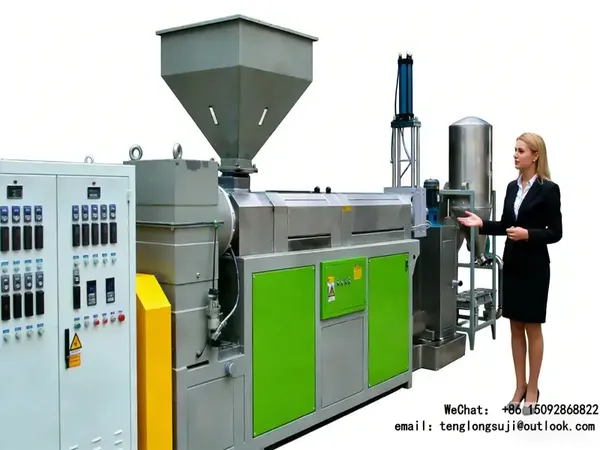
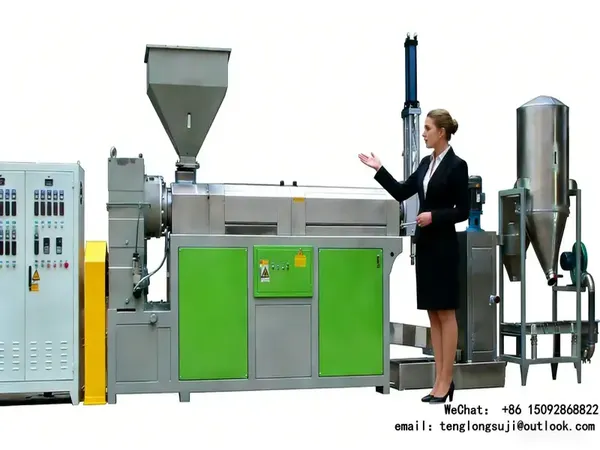
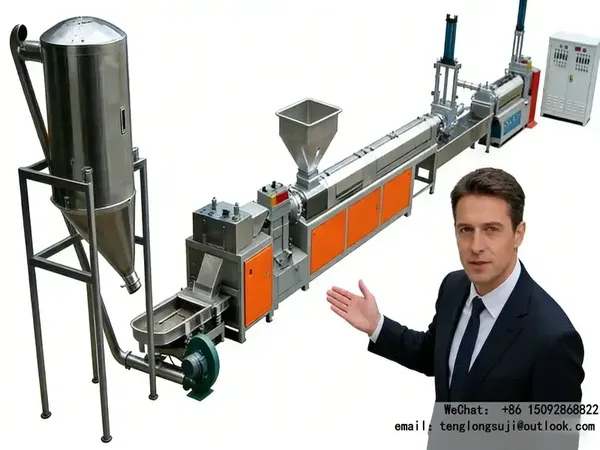
The screw is the heart of the granulation unit, and its design directly impacts energy efficiency. A twin-screw design with a length-to-diameter (L/D) ratio of 30-40:1 provides better mixing and melting efficiency, reducing energy use by 5-10% compared to single-screw designs. Additionally, screw flights made from high-wear materials (e.g., nitrided steel) reduce friction and energy loss over time, extending component life and maintaining efficiency.
Engineering Best Practices for Woven Bag Recycling Machines
To ensure your Woven Bag Recycling Machine operates at peak performance, minimizes downtime, and meets compliance requirements, engineers should implement the following best practices:
- Material Preprocessing Optimization
Woven bags often contain contaminants (e.g., dirt, sand, metal, paper labels) that can damage the machine and reduce granule quality. Implement a preprocessing stage with the following components to protect your equipment and ensure quality:
- Magnetic separators to remove metal contaminants (prevents blade damage and extends component life)
- Air classifiers to separate light contaminants (e.g., paper, dust) and improve granule purity
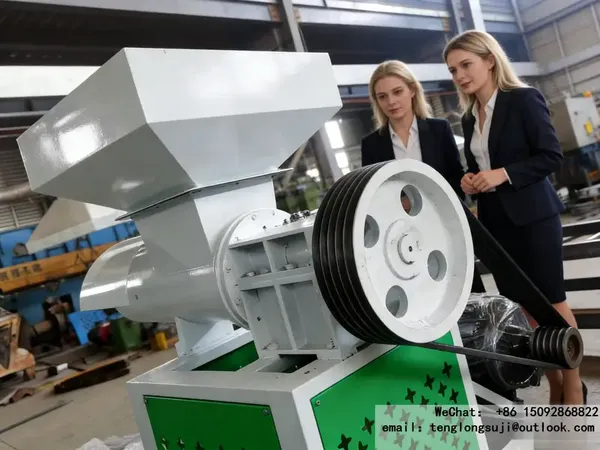
- Shredding pre-treatment to reduce bag size (improves washing and granulation efficiency, reducing energy consumption)
- Process Control and Monitoring
Implement a real-time monitoring system to track key parameters such as motor load, energy consumption, granule size, and MFI. This allows engineers to identify inefficiencies (e.g., overloading, poor material feed) and make adjustments in real time, preventing costly downtime. Advanced systems can even send alerts for maintenance needs, reducing unexpected downtime by 30% or more and ensuring consistent performance.
- Compliance with International Standards
To meet GRS, ISCC, and EU PPWR requirements, the Woven Bag Recycling Machine must be designed to produce consistent, traceable, and contaminant-free granules. Key design features for compliance include:
- Separate processing lines for different plastic types (PP vs. PE) to avoid cross-contamination and meet quality standards
- Traceability software to track material from input to output (required for GRS certification and regulatory compliance)
- Washing systems with multiple stages (e.g., hot water, chemical cleaning) to achieve ≥95% cleaning efficiency, ensuring compliance with global standards

Woven Bag Recycling Machine
FAQ: Technical Guide to Woven Bag Recycling Machines
Q1: What is the ideal L/D ratio for a Woven Bag Recycling Machine’s granulation screw?
A 30-40:1 L/D ratio is optimal for woven bag recycling. This ratio balances mixing efficiency, melting performance, and energy consumption, ensuring consistent granule quality and reducing operational costs—critical for engineering teams focused on efficiency.
Q2: How can I measure the energy efficiency of a Woven Bag Recycling Machine?
Energy efficiency is measured in kWh per kg of processed material. Use the formula: Energy (kWh) = Power (kW) × Operating Time (hours) ÷ Total Processed Material (kg). Compare this value to the industry benchmark of 0.2-0.33 kWh/kg to evaluate efficiency and identify opportunities for optimization.
Q3: What is the maximum contaminant level allowed for GRS-certified recycled granules?
GRS certification requires a maximum contaminant level of 0.5% (by weight) for recycled plastic granules. A high-qualityWoven Bag Recycling Machine with an efficient washing system can easily achieve this, ensuring compliance and marketability.
Q4: Can a Woven Bag Recycling Machine be integrated into an existing recycling line?
Yes—most modern machines are designed for modular integration. Engineers should ensure the machine’s capacity, granule size, and output rate align with existing equipment (e.g., extruders, pelletizers) to avoid bottlenecks and maintain overall line efficiency.
Conclusion
Selecting and optimizing a Woven Bag Recycling Machine requires a technical, data-driven approach that prioritizes processing capacity, energy efficiency, and compliance with global standards. For environmental project engineers and procurement professionals, understanding key technical parameters and implementing best practices is critical to delivering a successful, sustainable, and cost-effective recycling project. By focusing on efficiency, process control, and compliance, you can ensure your machine delivers consistent performance and meets the growing demand for high-quality recycled plastic materials.
Take Action Today
Need help selecting the right Woven Bag Recycling Machine for your project? Download our free 《Woven Bag Recycling Machine Technical Specification Guide》 to access detailed parameter comparisons, efficiency calculations, and engineering checklists. For personalized support,contact our team of engineering experts for a free process evaluation and custom equipment quote—we’ll help you design a solution that meets your technical and sustainability goals.