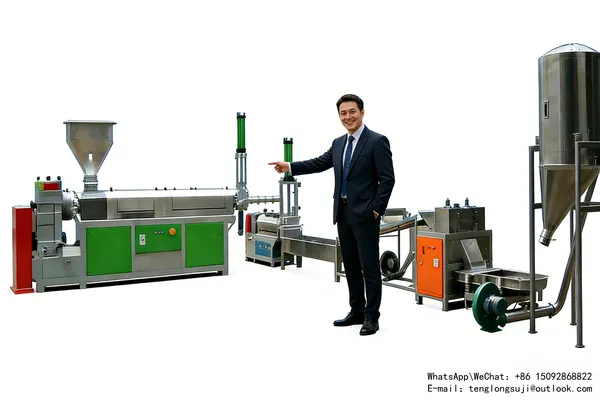
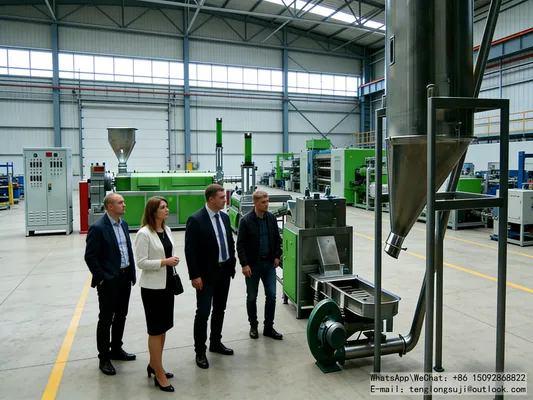
Key to Quality Improvement and Profit Growth in Foam Recycling: Two-stage Process of180-type EPS Pelletizing Machine Solves Industry Pain Points
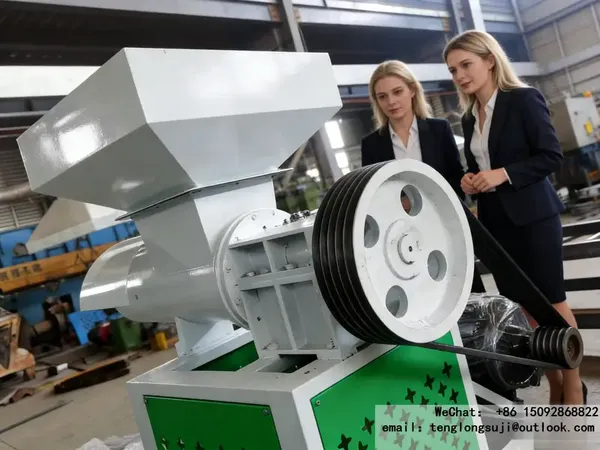
In the EPS foam recycling industry, hot-melt blocks and cold-pressed blocks are the mainstream raw materials for recycling and processing. However, most processing factories adopt ordinary single-stage foam pelletizing machines, facing long-term unsolvable pain points: lightweight and loose foam materials cannot be completely plasticized by single-stage extrusion, resulting in loose, low-quality pellets with low selling prices; frequent shutdown for screen replacement causes capacity interruption and increased waste; screws are not wear-resistant and easy to scratch and accumulate carbon when processing impurity-containing foam materials; uneven heating leads to frequent pellet black spots and bubbles, continuously compressing profits. The 180-type EPS pelletizing machine accurately solves the problems of low efficiency, low quality and high loss in the foam recycling industry with its exclusive two-stage extrusion process, non-stop screen changing and high-grade wear-resistant hardware, becoming the preferred model for the upgrading and transformation of medium-sized foam recycling factories.
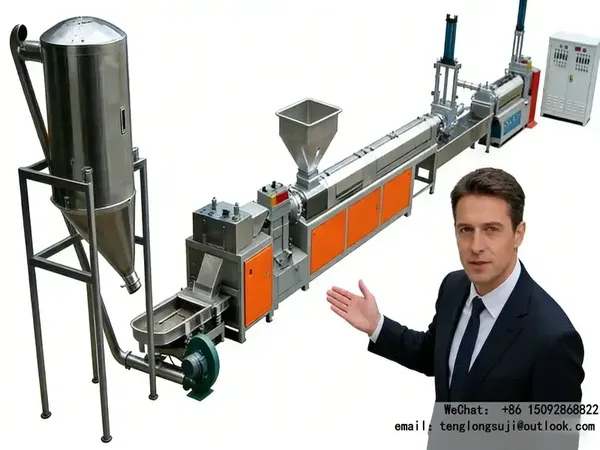
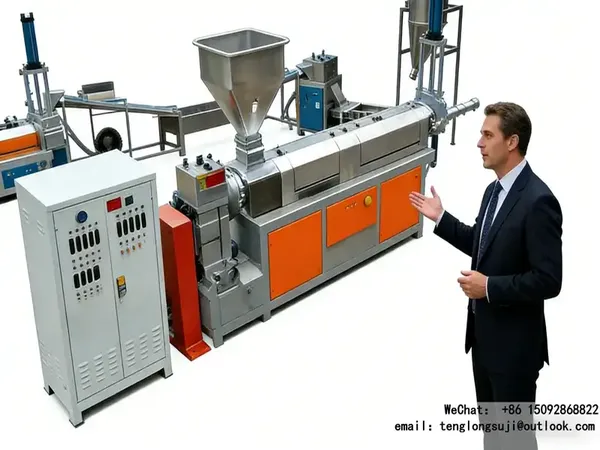
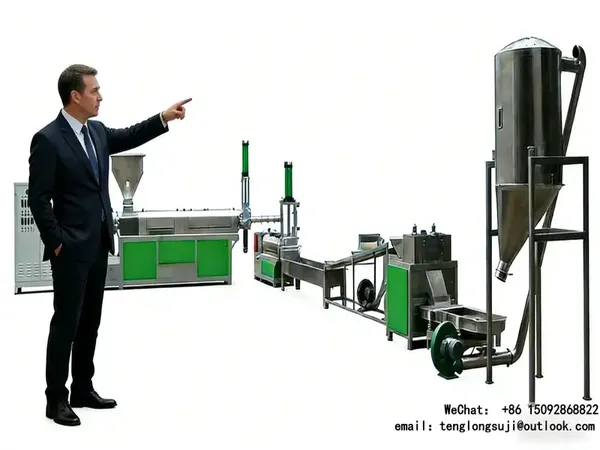
Many practitioners mistakenly believe that the foam pelletizing process is simple and ordinary equipment can meet production needs. In fact, EPS hot-melt blocks and cold-pressed blocks are compressed with uneven density, high impurity content and special melting range, putting forward extremely high requirements for equipment plasticization capacity, filtration accuracy and temperature control stability. Ordinary single-stage pelletizing machines can only complete simple melting and extrusion, unable to realize refined plasticization and purification, producing loose, low-strength and impure pellets that can only be sold at low prices without access to mid-to-high-end orders. The innovative linked structure of 180-type main machine + 165-type auxiliary machine adopted by the 180-type EPS pelletizing machine is specially adapted to foam material characteristics, realizing dual plasticization of primary refining and secondary refining, and fundamentally improving pellet quality and compactness.
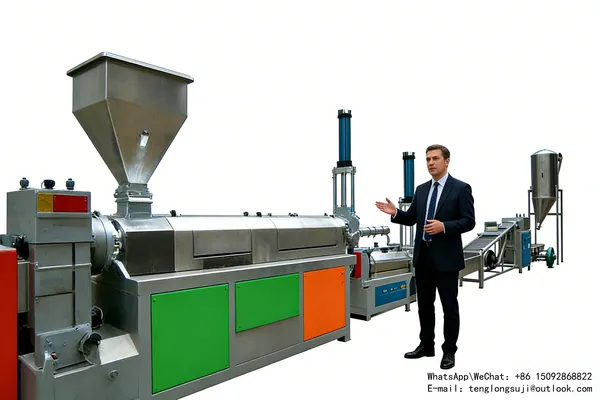
All core hardware of the equipment adopts industrial-grade reinforced configuration, completely getting rid of the low-grade shortcomings of ordinary models. The 180-type main machine is equipped with a 315-type low-noise hard-tooth reducer, and the 75KW high-power motor provides sufficient extrusion power. The 180×3000mm 40CR high-frequency screw matches the 3000mm high-frequency barrel, with alloy wear-resistant reinforcement at the feeding port, resisting wear from foam impurities, high temperature and carbon deposition, ensuring strong stability in long-term continuous mass production. The heating system adopts 80KW electromagnetic heating matched with two groups of auxiliary heating rings for zoned precise temperature control and uniform overall temperature, perfectly fitting the process characteristics of low-temperature melting and high-temperature carbonization prevention of EPS foam, ensuring sufficient material plasticization while avoiding scorching and blackening.
The rear 165-type auxiliary machine is the core key to improving finished product premium. The high-quality 225-type Changzhou-made reducer ensures stable transmission, the 30KW special motor delivers reasonable power matching, and the 165×1500mm high-frequency screw performs secondary extrusion and refining on materials melted by the main machine, making loose foam materials denser and more thoroughly plasticized. Matched with a 350 large-diameter mesh left-right hydraulic screen changing head and stable pressure supply from a 4KW hydraulic pump station, it realizes alternating non-stop screen changing, completely solving the pain points of shutdown, strip breakage and excessive waste of traditional equipment, greatly improving production continuity and increasing effective capacity by 15%–20%.
The complete production line has perfect front and rear end configurations and a mature closed-loop process. The 600×600 large-caliber forced variable-frequency feeder solves the problems of bridging, blockage and uneven feeding of lightweight foam materials, with 15KW variable-frequency speed regulation accurately matching the extrusion rhythm. The 4000×350×260 extended stainless steel water tank ensures sufficient cooling and shaping of foam strips to avoid adhesion and deformation. The 180-type variable-frequency alloy pelletizer produces uniform and regular pellets without debris or burrs. The 1-ton 201 stainless steel storage bin matched with a 3KW fan realizes automatic dust removal and air drying, delivering dry and uniformly-shaped finished pellets. The national standard dual variable-frequency distribution box realizes full-line linkage speed regulation with stable operation, controllable energy consumption and extremely low failure rate.
According to actual industry production tests, hot-melt and cold-pressed pellets produced by the 180-type EPS pelletizing machine feature high compactness, transparency, no impurities, black spots or bubbles, with appearance far exceeding products of ordinary single-stage equipment, achieving a premium of hundreds of yuan per ton. Meanwhile, the equipment features wear resistance, low consumption, non-stop mass production and low labor cost, greatly reducing comprehensive production costs. It is the most cost-effective and stable upgrade model for foam recycling factories aiming to get rid of low-price involution, improve quality and increase profits.
FAQ
180-type EPS pelletizing machineQ1: What are the specific advantages of the two-stage extrusion over single-stage models?
A: Single-stage equipment only realizes simple melting and extrusion, resulting in incomplete foam plasticization, loose pellets and unclean impurity filtration. The two-stage process of the 180-type EPS pelletizing machine achieves dual plasticization and dual filtration with more thorough material melting, denser and purer pellets, as well as more stable capacity, less waste and higher finished product premium. The long-term production income is far higher than that of single-stage equipment.
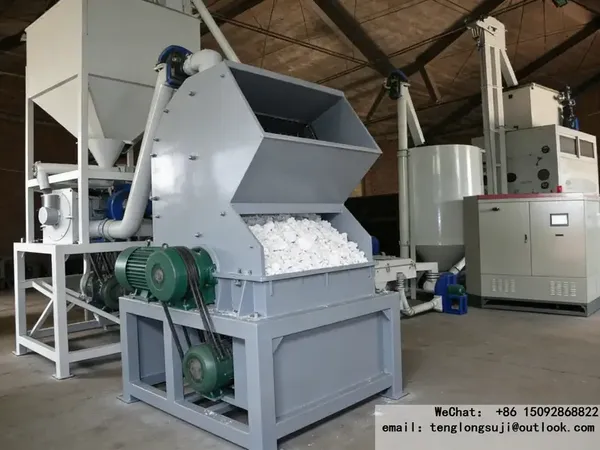
Q2: Is strip breakage and caking prone to occur when processing cold-pressed foam with this equipment?
A: No. Aiming at the characteristics of uneven density and unstable feeding of cold-pressed blocks, the equipment optimizes the variable-frequency ratio of forced feeding and two-stage extrusion pressure, matched with a constant-temperature control system and non-stop screen changing structure, realizing uniform feeding and stable plasticization without strip breakage, completely eliminating caking, strip breakage and frequent defective problems in cold-pressed block production.
Call to Action
Feel free to consult for detailed energy-saving data, production capacity parameters and exclusive foam material production processes of the 180-type EPS pelletizing machine!
WhatsApp/WeChat: +86 15092868822 | Email: [email protected]