Thermal-sensitive Material Regeneration Secret: Zoned Temperature Control Process of 180 Type PVC granulator Solves Carbonization Pain Points
In the plastic recycling industry, PVC (polyvinyl chloride) is a typical thermally sensitive plastic with a huge recycling volume. The market demand for granulation regeneration of waste PVC pipes, plastic steel profiles, soft films and wire sheaths is booming. However, most processing plants use general granulation equipment for PVC production, facing unsolvable long-term industry pain points: PVC has an extremely narrow heat tolerance range, and single-temperature-control equipment easily causes local high-temperature carbonization decomposition and low-temperature incomplete plasticization, resulting in yellowing, blackening and porous loose particles. Ordinary equipment lacks professional water removal structures, causing severe particle adhesion and agglomeration of cleaned wet materials. Frequent shutdowns for screen changes lead to production capacity loss and waste accumulation. Many factories can only sell products at low prices due to unqualified particle quality, resulting in severely squeezed profit margins. The customized exclusive process of the 180 type PVC granulator perfectly solves the core problems of PVC regeneration.
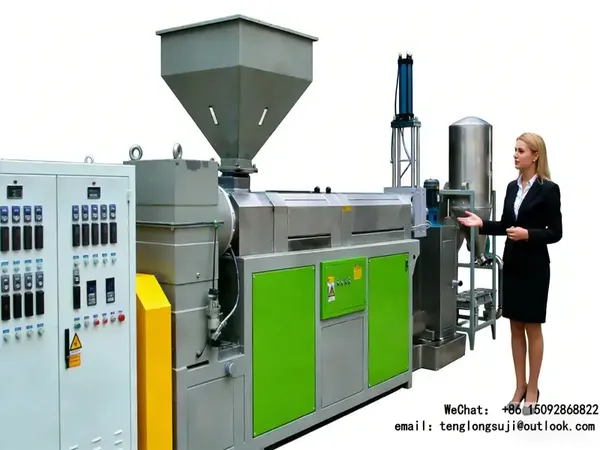
Many industry practitioners mistakenly believe that general PE and PP granulators can be universally used for PVC production. In fact, PVC has completely different material characteristics with high tendency of high-temperature decomposition and impurity generation, requiring extremely high plasticization accuracy. General granulators have few heating groups, extensive temperature control and single plasticization rhythm, which cannot meet PVC production requirements. Recycled PVC particles produced by general equipment have many impurities, poor quality and insufficient stability, failing to meet high-end modification, injection molding and pipe production orders. In contrast, the 180 type PVC granulator is a special equipment independently developed for the thermal sensitivity of PVC. Its core upgrade is the 11-group independent zoned heating system, which realizes precise fine-tuning of temperature in each section of the machine body, perfectly fitting the PVC melting curve and eliminating carbonization and unplasticized defects at the hardware level.
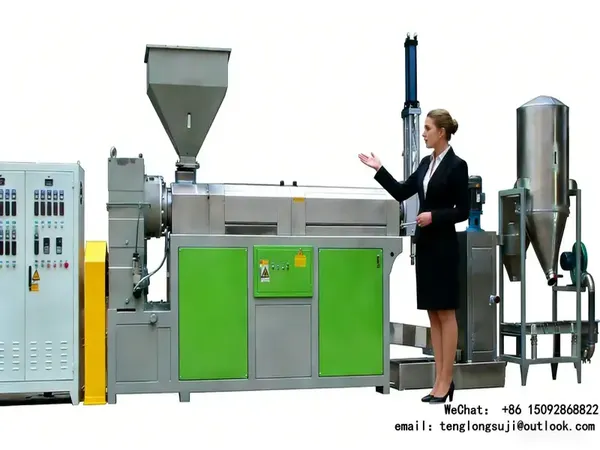
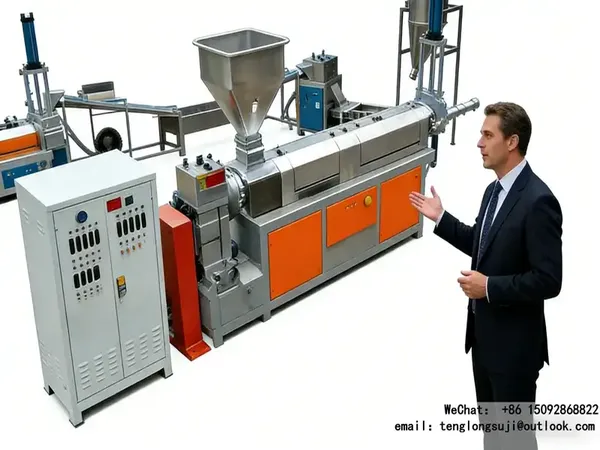
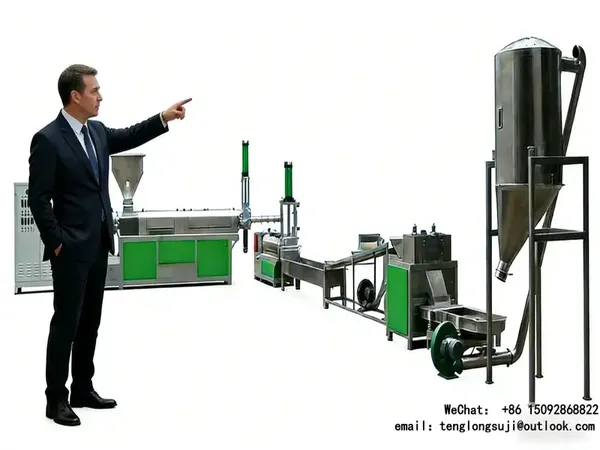
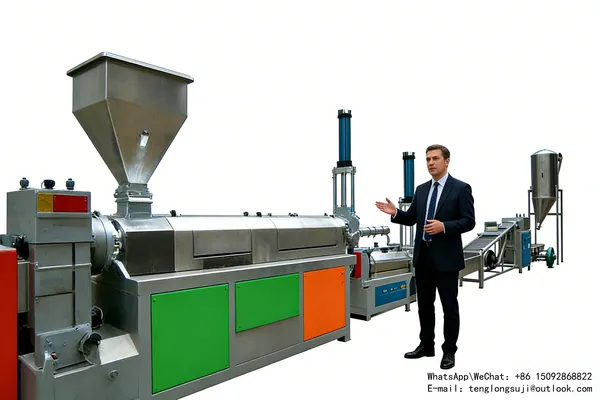
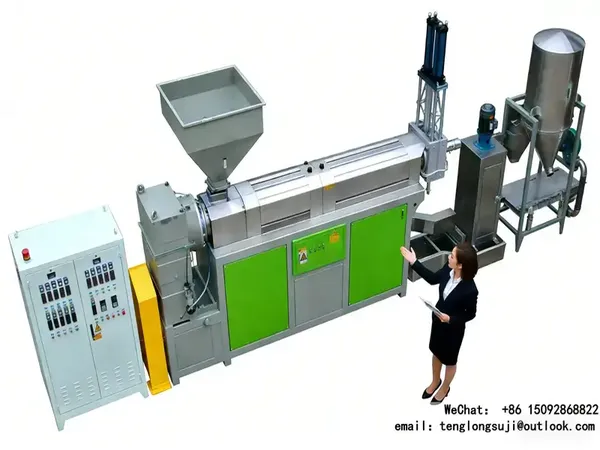
All core hardware of the equipment adopts industrial high-grade wear-resistant configuration, adapting to long-term mass production under complex PVC working conditions. The 180 type main machine is equipped with a 315 type low-noise hard tooth surface reducer, and the 75KW high-power motor provides sufficient extrusion power to ensure stable operation without jamming during high-resistance extrusion of hard PVC materials. The 180×3000mm 40CR high-frequency quenched screw matches the 232×3000mm high-frequency treated barrel with alloy wear-resistant reinforcement at the feed inlet, resisting sediment, wear and high-temperature deformation, avoiding carbon deposition and scratching during long-term processing of waste PVC miscellaneous materials. The 11-group independent heating rings realize segmented temperature control, which can flexibly adjust temperature parameters according to soft and hard PVC materials with uniform heating and precise temperature control, completely solving the common problem of temperature imbalance in traditional equipment.
The rear 165 type auxiliary machine undertakes the core function of fine purification and quality improvement. The high-quality 225 Changzhou-made reducer ensures stable transmission, and the 30KW special motor adopts a scientific power ratio. The 165×1500mm high-frequency fine screw performs secondary low-speed uniform plasticization and mixing purification on preliminarily melted PVC materials from the main machine, making the material structure denser and components more uniform, effectively improving the compactness and transparency of particles. Equipped with a 350 large-diameter screen left-right hydraulic screen changing head and a 4KW hydraulic pump station for stable pressure supply, it realizes non-stop alternating screen replacement without strip breakage or disassembly cleaning, greatly increasing the effective production time of the equipment and significantly reducing the waste rate, with far higher mass production stability than ordinary equipment.
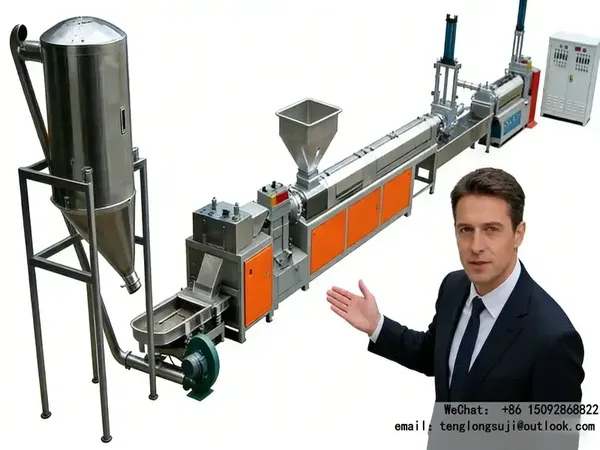
Targeting the exclusive pain point of moisture-induced PVC adhesion, the machine is equipped with a complete rear water removal and shaping assembly line to make up for finished product quality defects. The 600×600 large-diameter variable frequency forced feeder solves uneven feeding, jamming and bridging problems of soft and hard PVC materials. The 4-meter extended stainless steel water tank realizes gradient water cooling shaping adapted to PVC cooling characteristics, producing flat and undeformed plastic strips. The 2500×300 stainless steel water shaking and strip blowing machine cooperates with a 1.1KW shaking motor and a 1.5KW blowing motor to completely remove residual water on plastic strips through all-round purging, thoroughly eliminating particle adhesion and mildew. The variable frequency alloy granulator delivers neat cutting without burrs, and the 3KW fan of the 1-ton stainless steel storage bin performs secondary air drying and dust removal to ensure dry, clean and uniform particle appearance. The national standard variable frequency distribution box realizes full-line intelligent linkage with stable operation and controllable energy consumption, adapting to 24-hour continuous mass production.
According to industry measured data, recycled PVC particles produced by the 180 type PVC granulator are free from carbonization, yellowing, bubbles and looseness, dry, clean and stable in quality, fully meeting industrial secondary processing standards with a much higher market premium than products of ordinary equipment. Meanwhile, the equipment features low failure rate, simple maintenance and low production capacity loss, serving as a core upgrading device for small and medium-sized PVC recycling factories to get rid of low-price involution and achieve quality improvement and profit growth.
FAQ
Q1: What are the advantages of 11-group zoned temperature control compared with ordinary heating configurations?
A: Ordinary granulators only have several heating rings with integral non-adjustable temperature control, easily causing local overheating decomposition and insufficient plasticization of PVC materials. The 11-group independent zoned temperature control of the 180 type PVC granulator precisely matches the PVC melting range and adjusts the temperature of each section on demand, completely solving carbonization, unplasticized material and yellowing problems and greatly upgrading finished product quality.
Q2: Can this equipment process hard and soft PVC materials simultaneously?
A: Yes. By adjusting the 11-group zoned heating temperature, variable frequency feeding speed and extrusion pressure, the 180 type PVC granulator can flexibly adapt to the production of hard materials such as PVC pipes and profiles and soft materials such as films and sheaths. It is a multi-functional machine meeting the diversified material processing needs of factories.
Call to Action
Feel free to consult us for free to obtain detailed energy-saving data, production capacity parameters and exclusive commissioning processes for soft and hard PVC materials of the 180 type PVC granulator!
WhatsApp/WeChat: +86 15092868822 | Email: [email protected]