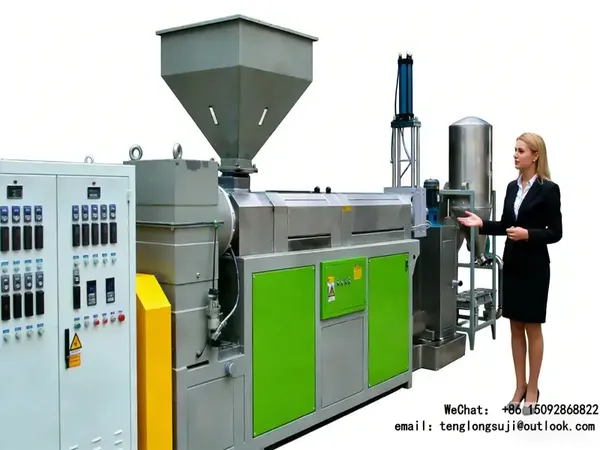
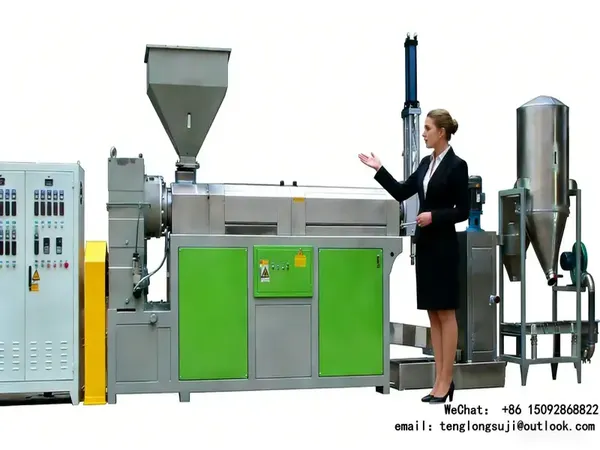
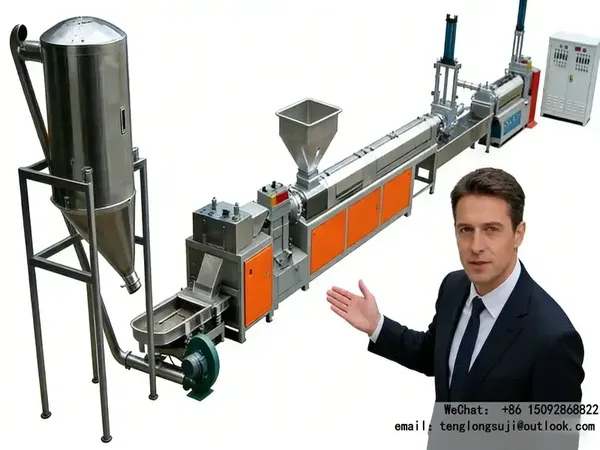
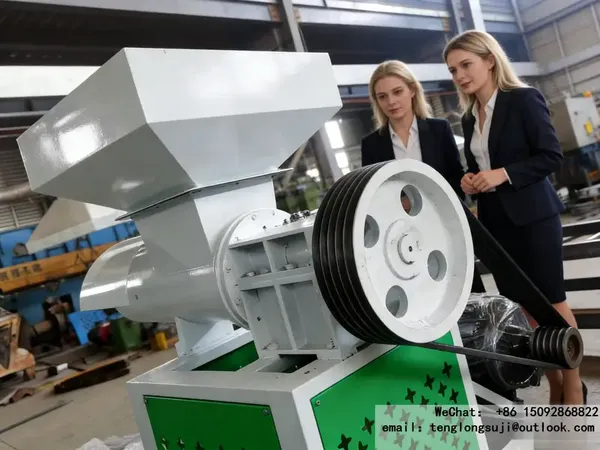
Plastic Granulator Hopper/Force Feeder: Core of Stable Feeding, Key Component for Improving Granulation Efficiency

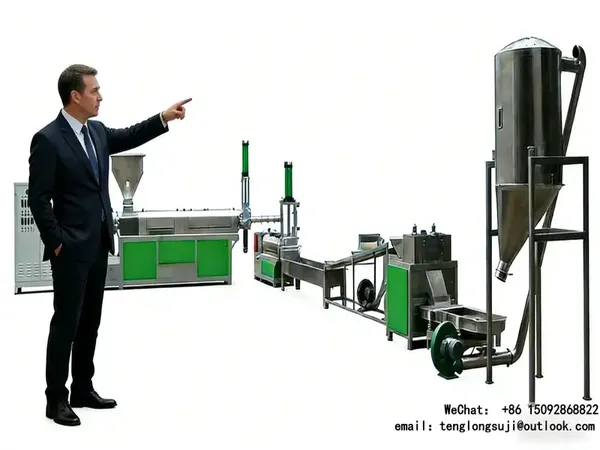
In the entire plastic granulation production process, the plastic granulator hopper and force feeder act as the core hubs connecting raw materials to the granulation host. They directly determine the continuity and stability of granulation operations while significantly influencing the uniformity and quality of finished pellets. Whether for woven bag recycling granulation, PP plastic granulation, or beverage bottle flake granulation, high-quality hoppers and force feeders effectively resolve common industry pain points—including unsmooth feeding, bridging, clogging, and uneven material supply. Fully compatible with best-selling models worldwide, such as those in Europe, America, and Southeast Asia, these components are essential equipment accessories for plastic recycling and granulation enterprises aiming to reduce costs, improve efficiency, and increase production capacity.
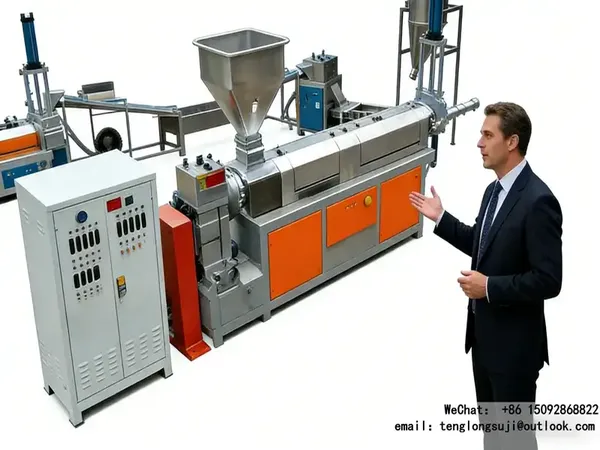
Known as the “feeding throat” of the plastic granulator, the hopper is mainly responsible for raw material storage and preliminary material conditioning. In contrast, the force feeder ensures a steady, uniform feed of raw materials from the hopper into the screw barrel. Working in tandem, they form the core of the granulator’s feeding system. Unlike standard feeding devices, high-quality hoppers and force feeders offer excellent adaptability, seamlessly handling various raw material forms—from loose woven bag fragments and granular PP materials to flaky beverage bottle flakes—while delivering efficient, consistent feeding. They eliminate issues associated with traditional feeding methods, such as host load fluctuations, uneven finished pellets, and unstable production capacity caused by raw material agglomeration, material backflow, and uneven feeding, thus ensuring continuous, high-efficiency operation of the production line.
High-quality plastic granulator hoppers are integrally formed from high-strength Cr12MoV or 304 stainless steel, featuring core advantages of corrosion resistance, wear resistance, and non-stick performance. This structure greatly extends the equipment’s service life and is suitable for a wide range of plastic recycling and granulation scenarios, even in acidic or alkaline environments. The hopper’s interior adopts a professionally optimized conical design with anti-bridging baffles, which fundamentally prevents raw material accumulation, agglomeration, and the formation of “bridging” clogs—a long-standing challenge for most granulation enterprises. Especially when processing low-bulk-density films and woven bag fragments, the anti-bridging design enhances feeding stability and reduces downtime for cleaning. Additionally, the hopper is equipped with a sealed cover to protect raw materials from moisture and dust, ensuring material purity, improving finished pellet quality, and easily meeting the requirements of both food-grade and industrial-grade plastic granulation standards.
The force feeder, paired with the hopper, is a critical component for boosting granulation efficiency, as its performance directly determines the overall machine’s production capacity and operational stability. High-quality force feeders adopt a modular co-rotating intermeshing twin-screw propulsion design, combined with a 40CrNiMoA mandrel and W6Mo5Cr4V2 thread elements, providing strong pushing force, wear resistance, and durability. These feeders easily overcome the pressure inside the extruder, ensuring stable, uniform feeding of raw materials into the host barrel, and completely eliminating problems such as “idle running with material leakage” and “feeding interruptions.” Tailored to different raw material characteristics, the force feeder offers stepless speed regulation, with precise feeding speed control via a frequency converter that perfectly synchronizes with screw speed and heating temperature. This not only prevents excessive temperature rise and raw material decomposition caused by over-compression but also avoids host idle loss due to insufficient feeding, truly achieving energy savings, reduced consumption, and improved production efficiency.
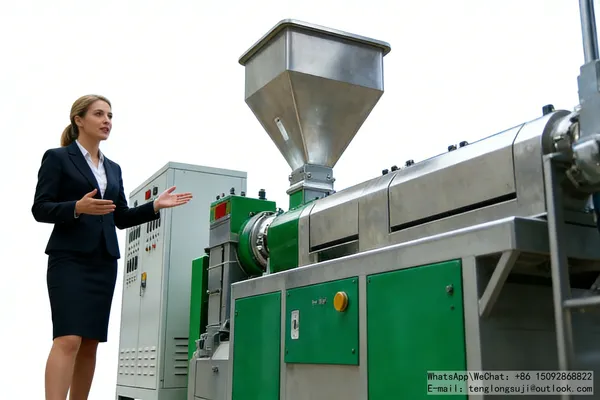
In practical production applications, thehopper/force feeder demonstrates strong compatibility, easily adapting to various types of plastic granulators—including single-screw and twin-screw models. Whether for small laboratory-scale granulators or large industrial-grade production lines, customization is available based on model specifications and production capacity requirements. To meet the high production efficiency and environmental standards of the European and American markets, the hopper/force feeder is equipped with an optimized sealing structure that minimizes dust leakage, strictly complying with EU environmental regulations and meeting overseas market access requirements. For the Southeast Asian market, where raw materials are diverse and often contain impurities, the feeding mechanism’s wear resistance and anti-clogging capabilities are enhanced, allowing direct use with wet, impurity-containing recycled materials without additional pretreatment—greatly reducing enterprise labor and raw material pretreatment costs.
Notably, high-quality hoppers and force feeders not only improve production efficiency but also effectively protect the core components of the granulator host. By ensuring uniform, stable feeding, they prevent local wear and overload of the screw and barrel caused by uneven material supply, extending the host’s service life, reducing maintenance costs, and lowering long-term enterprise investment. Additionally, the force feeder is equipped with vacuum exhaust and filtration separation technology, which efficiently completes gas-solid separation, reduces gas-induced resistance to material transportation, prevents material backflow, and further enhances feeding stability. It is particularly suitable for feeding loose materials such as powders and fibers, accommodating a wider range of plastic recycling and granulation scenarios.
Currently, the market offers a wide variety of hoppers and force feeders with varying quality standards. For plastic recycling enterprises, selecting products tailored to their specific production needs is crucial. High-quality solutions are customized based on raw material characteristics, model specifications, and production capacity—for example, integrated forced compaction and drying functions for woven bag granulation, optimized feeding channels for beverage bottle flake granulation, and adjusted screw pitches for PP granulation—ensuring each piece of equipment delivers optimal performance. As a core auxiliary component of the plastic granulator, the quality of the hopper and force feeder directly affects the stability and profitability of the entire production line, making them indispensable for plastic recycling enterprises pursuing large-scale, efficient production.
In summary, the plastic granulator hopper and force feeder are key “connecting” components in plastic granulation production. Their stability, adaptability, and durability directly determine granulation efficiency, finished product quality, and equipment wear. Investing in high-quality hoppers and force feeders not only solves feeding challenges and increases production capacity but also reduces operational costs, adapts to the differentiated needs of global markets, and helps plastic recycling enterprises enhance their core competitiveness and achieve sustainable development.