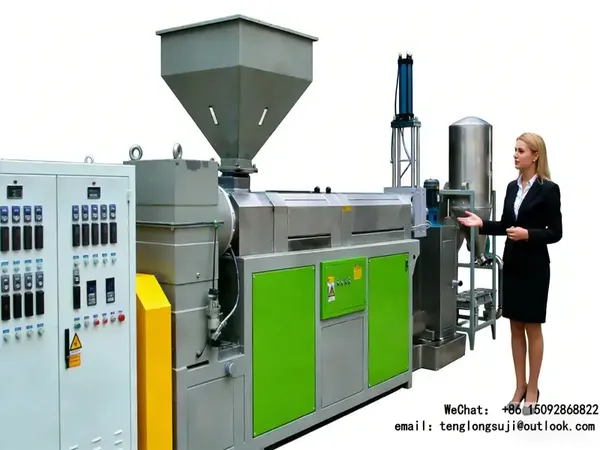
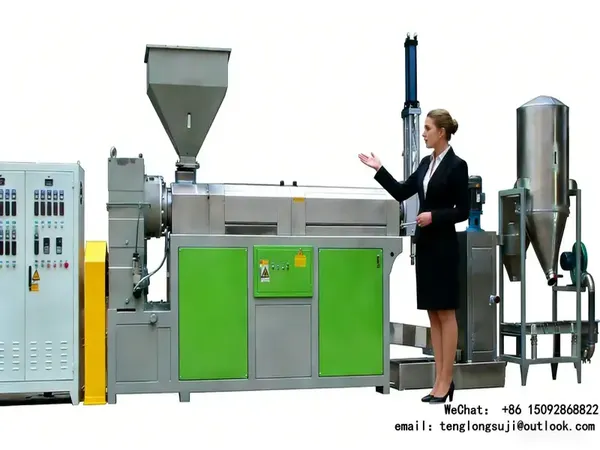
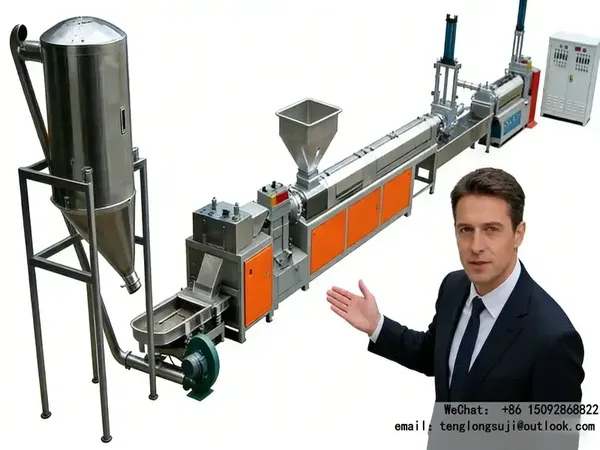
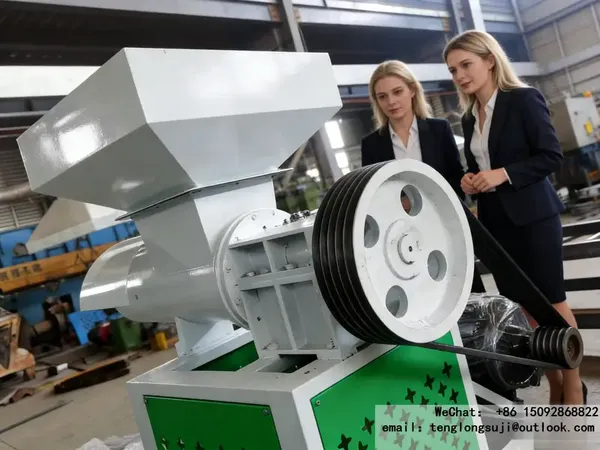
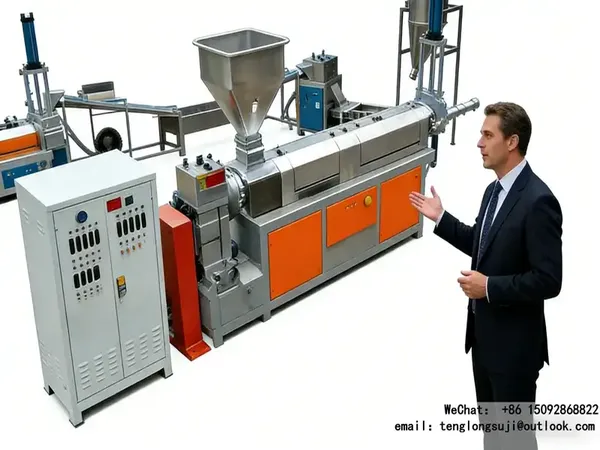
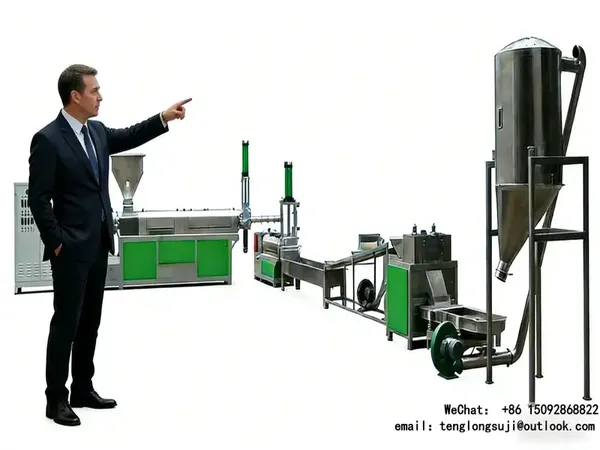
Plastic Granulator Gearbox: This “Invisible” Component Determines How Long the Equipment Can Last

Bosses in plastic recycling usually ask three questions when buying a plastic granulator: What is the size of the screw? How many kilowatts is the motor? How much material can it produce per hour?
Gearbox? Hardly anyone asks.
But veterans who have been in recycling for three to five years have all suffered losses from the plastic granulator gearbox. As the equipment is used, the noise becomes louder and louder, just like a tractor; later, the machine trips frequently; in the worst case, the gears break directly, the entire production line shuts down for half a month, and a single repair costs tens of thousands of yuan.
Today, we won’t beat around the bush. We’ll make it clear from the perspective of actual production: the deceleration transmission system of the granulator from start to finish, helping you avoid pitfalls in selection and use.
- What Exactly Does a Gearbox Do? Two Sentences to Understand It
The motor rotates fast, generally around 1500 revolutions per minute. But the screw of thegranulator doesn’t need to rotate that fast—usually only 30-40 revolutions per minute is enough.
One is fast, the other is slow. Something is needed in between to “reduce speed and increase force”. That’s the plastic granulator gearbox.
It mainly does two things:
- Speed Reduction: Reduce the high speed of the motor to the low speed required by the screw, ensuring stable plasticizing and extrusion of materials;
- Force Enhancement: When the speed is reduced, the force will be amplified dozens of times, which is the “twisting force” that pushes the molten plastic out.
Without a gearbox, the motor directly drives the screw. Not to mention granulation, it’s even difficult to idle—either the motor is overloaded and trips, or the screw is stuck and damaged.
So, a reliable plastic granulator must have a high-quality gearbox. If the motor is the “heart” of the granulator, then the gearbox is the “joint”—no matter how strong the heart is, if the joint is not good, the force can’t be transmitted at all.
- Two Types of Gearboxes, Each for Its Own Purpose
There are mainly two types of gearboxes for granulators on the market, which are suitable for different production scenarios. Choosing the right one can save a lot of trouble later.
2.1 Hardened Gear Surface Gearbox
This is the most common configuration, basically used in small and medium-sized plastic granulators, and it’s also the first choice for small and medium-sized recycling plants.
Features:
- Gears are made of high-strength alloy steel, treated by carburizing, quenching and other processes, with high surface hardness and wear resistance;
- Mature technology, stable operation, few faults, simple later maintenance;
- Low maintenance cost, easy to buy accessories, no need to worry about after-sales problems.
Who is it suitable for: Small and medium-sized recycling plants that process conventional waste plastics such as woven bags, agricultural films and pipes, working about 10 hours a day. With normal maintenance, it can be used for seven to eight years.
How to judge its quality: After using the new machine for one month, listen to the sound. If it runs quietly without “clicking” abnormal noise, it means the gear meshing precision is high; if there is noise, it is either the gear precision is not up to standard or the assembly is not in place.
2.2 Planetary Gearbox
This is a high-end configuration, only used in large twin-screw plastic granulators or fully automatic production lines.
Features:
- Compact structure, small volume but strong power, able to bear greater load;
- It can realize the cooperation of dual motors, one main motor provides high power, and one auxiliary motor adjusts the speed, adapting to different production processes;
- Stable start-up, no “bang” impact, protecting the screw and motor and extending the service life of the whole machine.
Who is it suitable for: Large-scale petrochemical supporting recycling lines, large-scale plastic recycling bases that need 24-hour continuous operation and high output.
Price difference: Planetary gearboxes are much more expensive than hardened gear surface gearboxes. If you are not running at full load 24 hours a day, there is no need to spend extra money on this configuration.
- Choose a Gearbox, Look at These Three Hard Indicators
No matter which type of gearbox you choose, the quality can be judged by three indicators. Remember these three points, and you won’t be cheated.
3.1 Precision: The Speed Must Be Stable
The screw speed of the plastic granulator must be stable. If the speed fluctuates, the produced plastic particles will be uneven in size and density, and customers will not accept them.
Hard indicator: The reduction ratio error is controlled within ±1%. Manufacturers generally won’t take the initiative to tell you this data. You can ask for the factory inspection report to confirm.
How to judge: Stare at the ammeter during production. If the pointer shakes back and forth, it means the power output is unstable, and the precision of the gearbox is not up to standard.
3.2 Bearing Capacity: Able to Withstand Impact
When the granulator is working, it is not always stable. When encountering wet materials, hard materials or more impurities, the screw will be subjected to great impact. If the gearbox can’t bear it, the gears will break.
Hard indicator: Equipped with high-strength thrust bearing + reinforced box body. Knock the box body with your hand. If it feels thick and heavy, it means the material is sufficient; if it feels light, it means the material is thin and can’t bear impact.
How to judge: During normal production, if there is a pot of materials with poor quality occasionally, the equipment can operate normally without tripping, which means the bearing capacity is sufficient; if it trips easily, it means the gearbox is undersized.
3.3 Heat Dissipation and Lubrication: Don’t Let the Gearbox “Fever”
The plastic granulator works continuously for several hours, and the internal gears of the gearbox mesh at high speed, generating a lot of heat. If the temperature is too high, the lubricating oil will become thin, and the gears will be worn by dry friction.
Solution:
- Built-in plate cooler or external air cooling system to force heat dissipation;
- Equipped with precise oil circuit design to ensure that the lubricating oil can be evenly sprayed on each gear and bearing.
How to judge: After continuous production for half a day, touch the gearbox shell with your hand. If it is warm or slightly hot (50-60℃), it is normal; if it is so hot that you can’t touch it (above 70℃), it means the heat dissipation is not up to standard.
- Three Common Faults, You Can Judge by Yourself
Before the plastic granulator gearbox breaks down, there must be signs. Master these three common faults, find and solve them early, and save tens of thousands of yuan in maintenance costs.
Fault 1: Abnormal Noise
What it sounds like: Normal operation is a uniform “buzzing” sound; if there is a “clicking” or sharp “squeaking” sound, it means there is a problem.
Possible reasons: Gear wear, bearing damage, or excessive gear clearance and inaccurate meshing.
What to do: Stop the machine in time, open the inspection cover to check for iron filings. If there are iron filings, it means the gear is worn; if there is no iron filings, check the bearing or gear clearance.
Fault 2: Overheating
How to judge: The shell temperature exceeds 80℃, and it is too hot to touch; or the lubricating oil becomes black and has a peculiar smell.
Possible reasons: Insufficient oil level, blocked cooling system, or long-term overload operation.
What to do: First check the oil level and cooling system, add oil or unblock the cooling pipeline; if it is still overheated after handling, it means the gearbox is undersized and needs to be replaced with a larger one.
Fault 3: Oil Leakage
How to see: There are oil stains at the bottom of the gearbox and oil marks on the ground.
Possible reasons: Aging oil seal, damaged gasket, or cracks in the box body.
What to do: Small leakage can be solved by replacing the oil seal or gasket; large leakage needs to be disassembled to check whether the box body is cracked.
Industry data: More than half of the gearbox faults are caused by lubricating oil pollution. Plastic powder and impurities seep into the oil circuit, wearing gears and bearings. Therefore, regular oil change is more important than anything else.
- Daily Maintenance, Three Things Are Enough
The plastic granulator gearbox is not “delicate”, but it needs regular maintenance. Spending ten minutes a day can extend its service life by several years.
First: Check the oil level once a month
There is an oil window or oil gauge on the side of the gearbox. Check it before starting the machine every month. If the oil level is lower than the lower limit, add oil immediately.
Note: Running without oil for a week will basically scrap the gears of the gearbox, and the later maintenance cost is extremely high.
Second: Change the oil once every six months to one year
After the new plastic granulator runs for the first month, it is recommended to change the oil—drain all the iron filings and impurities generated during the running-in period to protect the gears and bearings. Later, change the oil once every six months to one year according to the production intensity.
What oil to use: Special gear oil of ISO VG 320 grade. Don’t use other grades casually. Using the wrong oil is more harmful to the gears than lacking oil, which will directly shorten the service life of the gearbox.
Note for oil change: Drain the old oil completely, clean the sediment at the bottom of the oil tank, and then pour in new oil to avoid old oil residue polluting the new oil.
Third: Listen to the sound and touch the temperature every day
Spend one minute each after starting and stopping the machine every day:
- Listen: Is there any abnormal noise in the gearbox? If there is a “clicking” or “squeaking” sound, check it in time;
- Touch: Is the temperature of the gearbox shell abnormally high? If it is much hotter than usual, check the oil level and cooling system immediately.
Develop these three habits, and a plastic granulator gearbox can be used normally for ten years.
- New Trend: Intelligent Monitoring, Early Warning Before Breakdown
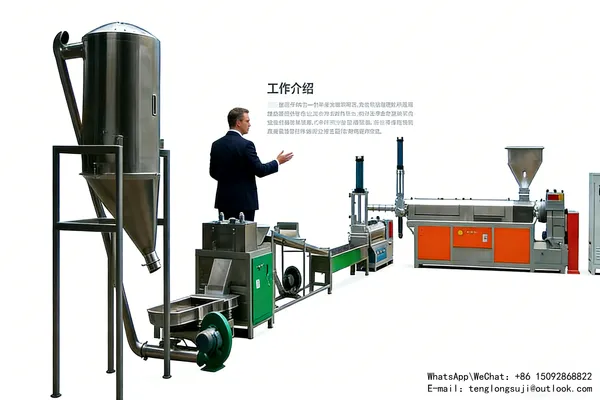
Plastic granulator
Now some high-end plastic granulators are equipped with intelligent sensors on the gearbox, which can monitor the operation status of the deceleration transmission system in real time, including:
- Bearing vibration;
- Gearbox oil temperature;
- Output torque.
The data is transmitted to the control system in real time. Once there is an abnormality, it will alarm in advance, reminding the staff to maintain it in time before the gearbox breaks down.
Effect: The unplanned downtime is reduced by more than half. For large-scale recycling bases that operate 24 hours a day, the money saved in one year is enough to buy a new gearbox.
- Summary: When Buying a Plastic Granulator, Remember These Three Sentences About the Gearbox
If you are buying a plastic granulator, remember these three sentences about the deceleration transmission system, and you won’t step on the pit:
- Hardened gear surface is the bottom line. Don’t buy soft gear surface no matter how cheap it is. It will have constant faults later;
- Pay attention to the details of sealing and heat dissipation. Oil leakage and high temperature are taboos of the gearbox and must be avoided;
- Maintenance is more important than selection. No matter how good the gearbox is, it will be scrapped in advance if it is not maintained.
We have been deeply engaged in the plastic recycling machinery industry for 20 years, and have delivered thousands of plastic granulators. The deceleration transmission system of each machine is not randomly matched, but calculated and selected accurately according to the customer’s production capacity requirements, material viscosity and local working conditions to ensure adaptability and stability.
If you are not sure whether the gearbox of your equipment is sufficient, or want to know the difference between different configurations—
You can add WeChat / WhatsApp: +86 15092868822, send your equipment model and production requirements, and we will send you a copy of the “Gearbox Selection Comparison Table” and “Daily Maintenance Checklist” for free. You can judge whether your plastic granulator deceleration transmission system is healthy by following it, and easily avoid pitfalls in selection and maintenance.