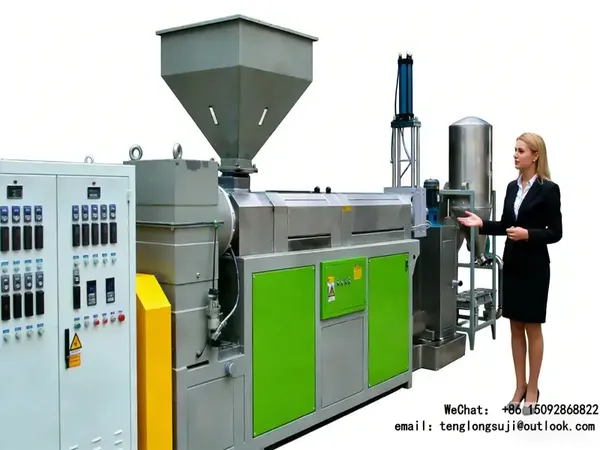
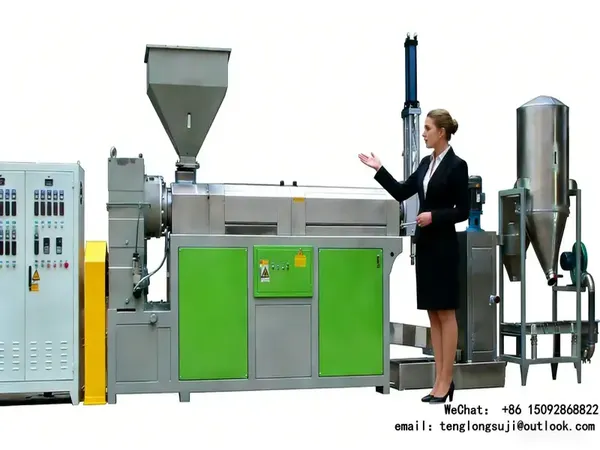
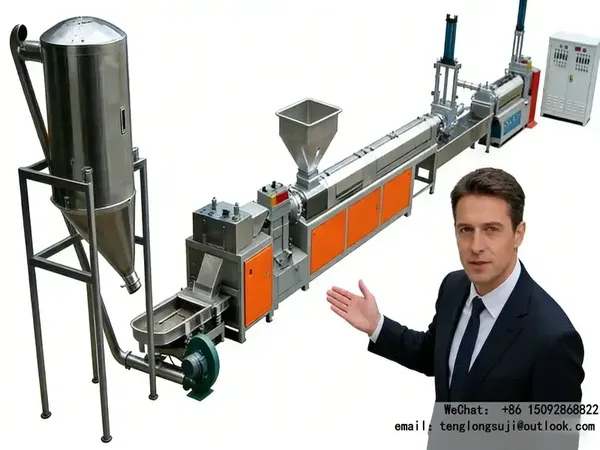
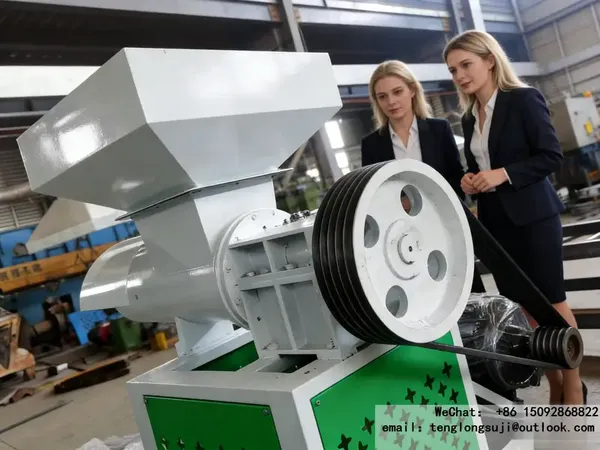
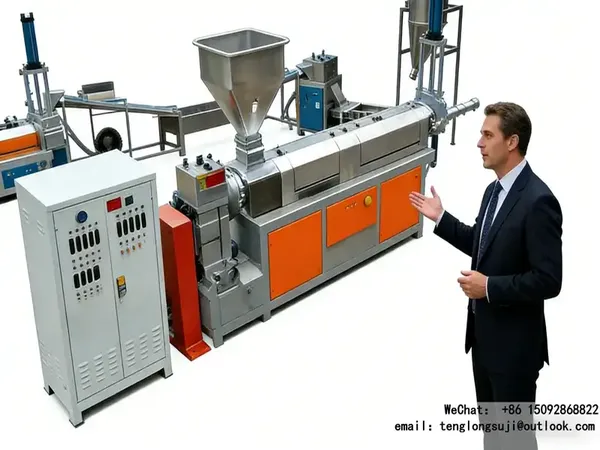
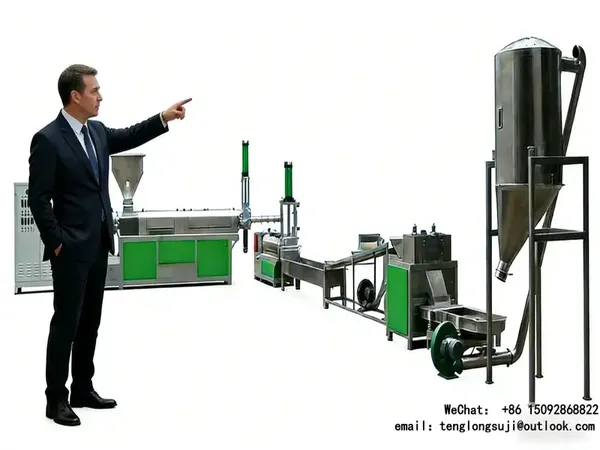
Cooling Device of Plastic Recycling Machine: Core Technology, Parameters and Compliance Solutions
[Release Date: May 1, 2026] [Multilingual Support: Chinese/Spanish]
Author: Senior Plastic Recycling Technology Engineer (Certifications: CE, ISO 9001:2008, SGS International Certification)
Against the backdrop of the deepening global circular economy initiative and the official implementation of the EU PPWR (Packaging and Packaging Waste Regulation), plastic recycling machines have become the core equipment in the waste plastic recycling industry chain. As a key core component of plastic granulators, the cooling device directly determines the quality grade of recycled pellets, production efficiency, and the overall service life of the equipment. Traditional plastic recycling machine generally have the industry pain points of single-material recycling and low resource utilization. In particular, the unreasonable design of the cooling system often leads to problems such as pellet agglomeration, excessive dimensional deviation, and insufficient Intrinsic Viscosity (IV) retention rate, which are difficult to meet the strict quality control requirements of recycled plastics specified in the PPWR regulation. This article focuses on the cooling device of plastic granulators, systematically explaining its technical principle, core parameters, global differentiated adaptation schemes, and user practice feedback, helping enterprises efficiently solve industry pain points and achieve compliant, efficient, and low-cost production.
Cooling Device of Plastic Recycling Machine: The “Cornerstone” of Granulation Quality
The core process of plastic granulation is as follows: waste plastics are crushed, cleaned, melted and plasticized, then extruded through the die head, and finally processed into qualified recycled pellets through cooling and solidification, and pelletizing. Among them, the core function of the cooling device is to quickly cool the molten plastic melt at 180-220℃ to below the glass transition temperature to solidify it into shape, while accurately ensuring the uniformity, compactness and mechanical properties of the pellets. Compared with traditional cooling systems, the cooling device of the new generation full-automatic plastic recycling machine can flexibly adapt to the recycling of various waste plastics such as PE/PP/PET/ABS, effectively solving the pain point of low single-material recycling utilization rate, and fully complying with the dual core requirements of recyclability and environmental protection for recycled plastics in the EU PPWR regulation.
According to the latest 2026 industry test data, the qualification rate of recycled pellets of plastic recycling machines equipped with efficient cooling devices can be increased to more than 98%, the Intrinsic Viscosity (IV) retention rate is ≥85%, the fluctuation of Melt Flow Index (MFI) is strictly controlled within ±0.5g/10min, the production efficiency is 30% higher than that of traditional equipment, and the energy consumption is reduced by 18%. At the same time, it greatly reduces the waste of cooling water, truly realizing the dual improvement of environmental and production benefits.
Core Types and Technical Parameters of Cooling Devices for Full-Automatic Plastic Recycling Machines
At present, the cooling devices of plastic granulators popular in the global market are mainly divided into three categories, which are respectively suitable for the recycling needs of different production scales and different material types. Their core technical parameters strictly follow international industry standards and have all passed the three international certifications of CE, ISO 9001:2008 and SGS, ensuring the compliance and operational reliability of the equipment. The following is a comparison of the core parameters of the three types of cooling devices, which can accurately adapt to the production scenario needs of different regions such as Europe, America and Southeast Asia:
| Type of Cooling Device | Adapted Model (Plastic Recycling Machine) | Cooling Medium | Temperature Control Precision | Cooling Efficiency | Adapted Materials | Motor Power | Compliance Certifications |
| Water Ring Cooling Device | Small Full-Automatic Plastic Recycling Machine (Output: 1-5t/d) | Circulating Soft Water | ±2℃ | ≤15s (Melt cooled to below 80℃) | PE, PP | 0.75-2.2kw | CE, ISO 9001:2008, SGS |
| Underwater Cooling Device | Medium Full-Automatic Plastic Recycling Machine (Output: 5-20t/d) | Purified Water | ±1℃ | ≤10s (Melt cooled to below 70℃) | PE/PP/PET/ABS | 3-7.5kw | CE, ISO 9001:2008, SGS |
| Air-Cooled Cooling Device | Large Full-Automatic Plastic Recycling Machine (Output: above 20t/d) | Clean Air | ±3℃ | ≤20s (Melt cooled to below 90℃) | PP, ABS, PET | 11-15kw | CE, ISO 9001:2008, SGS |
Supplementary Note: All the above three types of cooling devices are equipped with a standard Heat Recovery Unit, which can efficiently recover the waste heat generated during the cooling process with a waste heat utilization rate of ≥70%, further reducing the overall energy consumption of the equipment. At the same time, it is equipped with an intelligent temperature control system that supports PLC automatic adjustment, greatly reducing manual intervention and effectively solving the pain points of cumbersome manual operation and insufficient temperature control precision of traditional cooling devices. Among them, the underwater cooling device can realize multi-material compatible recycling, completely solving the industry problem of single-material recycling and low utilization rate of traditionalplastic recycling machines. It is currently the mainstream choice in the European and American markets and fully complies with the strict requirements of the EU PPWR regulation on the quality and environmental protection of recycled plastics.
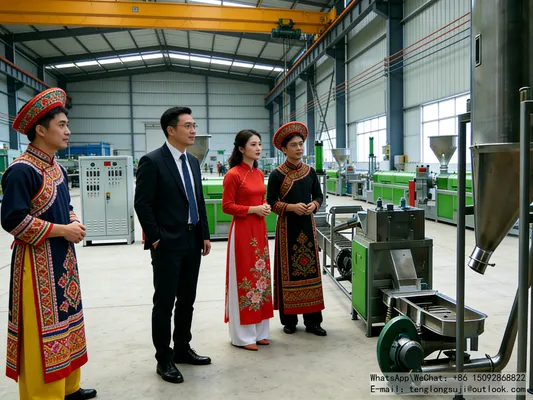
Core Technical Advantages of Cooling Devices for Plastic Recycling Machines (GEAF Framework · Evidence)
Based on years of experience in R&D and practice of plastic recycling equipment, combined with the differences in production needs in different regions around the world, the cooling device optimized and designed by us has four core technical advantages. The relevant performance data have been authenticated by SGS authoritative testing, which can be directly used as the core reference basis for enterprise procurement and selection:
- Efficient Cooling Technology: Adopting countercurrent heat exchange structure design, the cooling medium is fully contacted with the plastic melt in the opposite direction, and the heat exchange efficiency is increased by more than 25% compared with traditional devices. It effectively avoids problems such as pellet deformation and agglomeration caused by uneven cooling of the melt. The dimensional tolerance of recycled pellets is strictly controlled within ±0.1mm, which can meet the production and use needs of high-end recycled plastics.
- Multi-Material Adaptation Technology: Breaking through the material adaptation limitations of traditional cooling devices, it can automatically adjust the cooling temperature and medium flow rate according to the melting characteristics of different plastics such as PE, PP, PET, and ABS, flexibly adapting to multi-material mixed recycling scenarios. The material utilization rate is increased to more than 95%, fundamentally solving the industry pain point of single-material recycling.
- Environmental Protection and Energy Saving Technology: Adopting a closed-loop cooling system, the recycling rate of cooling water is ≥98% without wastewater discharge, which is fully in line with global environmental protection policies and the requirements of the EU PPWR regulation. The heat recovery unit can use the recovered waste heat for material preheating, effectively reducing the energy consumption of the main engine by 18%. Calculated by the continuous operation of medium-sized equipment throughout the year, the annual electricity cost can be saved by about 30,000-80,000 yuan.
- Intelligent Stability Technology: Equipped with Omron high-precision intelligent temperature control instrument, it supports remote monitoring and automatic fault alarm functions. The continuous operation stability of the cooling system is ≥99%, and the trouble-free operation time can reach more than 8000 hours, which greatly reduces the equipment shutdown and maintenance costs and improves the continuity and stability of production.
Global Differentiated Adaptation Schemes and User Feedback (GEAF Framework · Action and Feedback)
In view of the climate conditions, production needs and regulatory requirements in different regions around the world such as Europe, America and Southeast Asia, we have customized differentiated adaptation schemes for the cooling devices of plastic recycling machine. At the same time, we have collected the actual use feedback from thousands of cooperative users around the world, showing the core value of the product with real cases (social proof):
- Adaptation Scheme for Europe and America (Focus on Compliance and Efficiency)
Europe and America strictly follow the EU PPWR regulation and have extremely high requirements for the quality and environmental protection of recycled plastics. Therefore, the underwater cooling device is preferred, which is matched with a Centrifugal Separator to realize integrated cooling and dehydration treatment. The water content of recycled pellets is ≤0.5%, which fully meets the recyclability standard of recycled plastics in the PPWR regulation and can directly meet the access requirements of the European and American markets.
User Feedback (A German plastic recycling enterprise): “After replacing with the new generation cooling device, the qualification rate of our recycled pellets has increased from 82% to 98.5%, the Intrinsic Viscosity (IV) retention rate is stably at 88%, and we have successfully passed the EU PPWR compliance certification. The product export volume has increased by 40%, while the labor cost has been reduced by 70% and the equipment maintenance frequency has been reduced by 60%, which has greatly improved the core competitiveness of the enterprise.”
- Adaptation Scheme for Southeast Asia (Focus on Energy Saving and Durability)
Southeast Asia has a hot climate and tight power resources. Combined with the local production scenario needs, the water ring cooling device is preferred. The heat dissipation structure is optimized to stably adapt to high-temperature environment operation. At the same time, the motor power configuration is optimized, and the energy consumption is reduced by 20% compared with traditional devices. It is made of high anti-corrosion materials, which can effectively resist corrosion in humid and high-temperature environments. The service life of the equipment is extended to more than 10 years, reducing the equipment replacement cost.
User Feedback (A Thai recycled plastic factory): “This cooling device is perfectly adapted to our full-automatic plastic recycling machine, which can efficiently process PE and PP waste plastics at the same time. The material utilization rate has increased from 75% to 95%, saving about 2,000 US dollars in electricity costs per month. Moreover, it is simple and convenient to operate, without the need for professional and technical personnel on duty, completely solving the core problems of single-material recycling and high energy consumption of traditional equipment.”
Key Points for Selection and Maintenance of Cooling Devices for Plastic Recycling Machines
To help enterprises select models accurately and maintain scientifically, improve the service life and operation efficiency of cooling devices, combined with the international certification standards of CE and ISO 9001:2008, the following core selection and maintenance points are summarized for reference by industry practitioners:
- Selection Points: It is necessary to scientifically select the cooling device according to the actual output of the plastic recycling machine, the type of adapted materials, combined with the climate conditions and regulatory requirements of the region where it is located – water ring cooling device is preferred for small equipment, underwater cooling device is preferred for medium-sized multi-material recycling scenarios, and air-cooled cooling device is preferred for large-scale high-output production scenarios; at the same time, it is necessary to confirm whether the equipment has passed CE and SGS international certifications to ensure compliance with international regulatory requirements such as the EU PPWR and avoid compliance risks.
- Maintenance Points: Daily inspection of the purity and liquid level of the cooling medium is required, the filter impurities are cleaned weekly, the scaling of the heat exchange tube is inspected monthly, and a comprehensive maintenance is carried out quarterly; the cooling water should use purified soft water to avoid scaling and blocking the pipeline, which affects the cooling efficiency and equipment life; the temperature control instrument should be calibrated regularly to ensure that the temperature control precision meets the production requirements and ensure the stable quality of recycled pellets.
[Technical White Paper Download]: PDF “Multi-Material Plastic Recycling Technology Guide”, which contains detailed core parameters, selection manual, maintenance process and common fault solutions of the cooling device of plastic recycling machines. It can be downloaded directly to accurately meet the precise search and use needs of professional purchasers and technical personnel.
FAQ Module (Adapted to SEO Featured Snippet, Solving Core User Pain Points)
Q1: What are the main pain points of the cooling device of traditional plastic recycling machines? How to solve them?
A1: The core pain points of traditional cooling devices are single-material recycling, low resource utilization, low cooling efficiency and insufficient temperature control precision, leading to uneven quality of recycled pellets and high energy consumption. The solution is to adopt a new generation of multi-material adaptive cooling device, equipped with intelligent temperature control and heat recovery technology, which can be compatible with the recycling of various materials such as PE/PP/PET/ABS, increase the material utilization rate to more than 95%, and at the same time reduce energy consumption and stabilize pellet quality, fully complying with the requirements of the EU PPWR regulation.
Q2: What impact does the temperature control precision of the cooling device of plastic recycling machines have on the quality of recycled pellets?
A2: Temperature control precision is the core factor determining the quality of recycled pellets, which directly affects the Intrinsic Viscosity (IV) retention rate, Melt Flow Index (MFI) and dimensional uniformity of the pellets. When the temperature control precision is controlled within ±1-3℃, the Intrinsic Viscosity (IV) retention rate of recycled pellets is ≥85%, and the dimensional tolerance is ±0.1mm, which can meet the use needs of high-end recycled plastics; if the temperature control deviation is too large, it will lead to pellet agglomeration and deformation, which cannot pass the compliance test and affect the product market access.
Q3: What is the energy consumption difference between different types of cooling devices?
A3: The energy consumption difference between different types of cooling devices mainly depends on the motor power and heat exchange efficiency: the energy consumption of small water ring cooling devices (0.75-2.2kw) is 15% lower than that of traditional devices, the energy consumption of medium-sized underwater cooling devices (3-7.5kw) is 18% lower, and the energy consumption of large air-cooled cooling devices (11-15kw) is 20% lower; with the heat recovery unit, the energy consumption can be further reduced by 7-10%, and long-term continuous operation can greatly save enterprise production costs.
Q4: How can the cooling device meet the requirements of the EU PPWR regulation?
A4: It mainly meets the requirements of the EU PPWR regulation from three aspects: first, the equipment has passed CE and SGS international certifications, complying with the EU industrial equipment compliance standards; second, it adopts a closed-loop cooling system with no wastewater discharge, and the cooling water recycling rate is ≥98%, which is in line with environmental protection requirements; third, it improves the quality of recycled pellets, ensuring that the Intrinsic Viscosity (IV) retention rate and Melt Flow Index (MFI) meet the quality control of recycled plastics in the PPWR regulation, and supports multi-material recycling to improve the plastic recycling utilization rate, which is in line with the concept of circular economy.