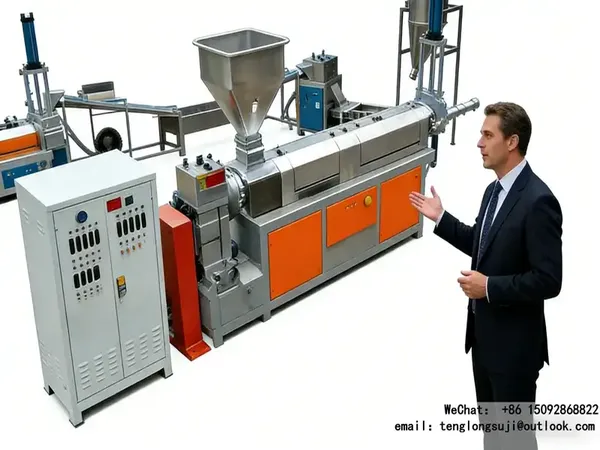
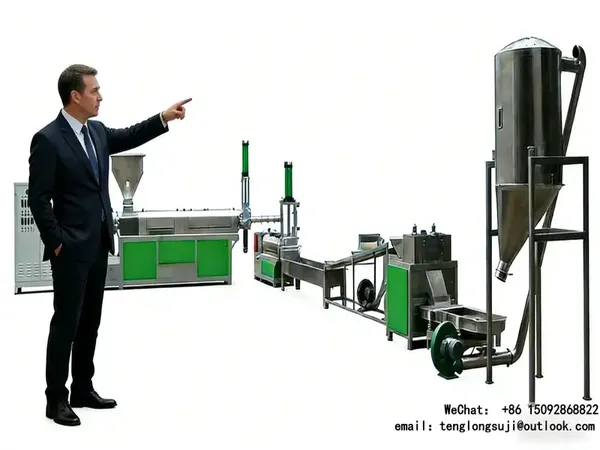
Plastic Bottle Recycling Machine: Technical Parameters and Efficiency Optimization for Engineers
For environmental project engineers and procurement professionals, selecting a Plastic Bottle Recycling Machine requires a deep dive into technical parameters, processing capacity, and能效比 (energy efficiency ratio)—factors that directly impact project success and compliance with environmental regulations. With the EU SUP Directive updating recycled content rules for PET bottles (maintaining EU-origin PCR requirements until 2027), engineers must ensure their recycling systems are efficient, scalable, and capable of producing high-quality recycled materials. This guide provides a technical breakdown of Plastic Bottle Recycling Machine specifications, performance optimization strategies, and how to align equipment selection with project goals.
Core Technical Parameters to Evaluate
When selecting a Plastic Bottle Recycling Machine, engineers must prioritize parameters that align with project capacity, material type, and environmental targets. Below is a detailed breakdown of the most critical technical specifications, along with benchmarks for high-performance machines.
- Processing Capacity and Throughput
Processing capacity (measured in kg/h or tons/day) is the foundation of any recycling project, and it must match the project’s waste input volume and output requirements. However, throughput alone is not enough—engineers must also consider material recovery rate (MRR), which measures the percentage of raw plastic bottles converted into usable recycled material. The table below compares different machine sizes and their performance metrics:
| Machine Size | Processing Capacity (kg/h) | Material Recovery Rate (MRR) | Screw Diameter (mm) | Motor Power (kW) |
| Small-Scale (Compact) | 50-200 | 85-90% | 30-50 | 15-30 |
| Medium-Scale (Industrial) | 200-500 | 90-95% | 50-80 | 30-75 |
| Large-Scale (High-Volume) | 500+ | 95-98% | 80-120 | 75-150 |
Key Insight: A higher MRR directly reduces waste and increases project profitability. For example, a medium-scale Plastic Bottle Recycling Machine with a 95% MRR processing 300 kg/h will generate 285 kg of usable material per hour—5% more than a machine with 90% MRR, translating to 12 tons of additional recycled material per month.
- Energy Efficiency Ratio (EER) and Sustainability
Energy efficiency is a critical parameter for environmental projects, as it reduces carbon emissions and operational costs. The Energy Efficiency Ratio (EER) for a Plastic Bottle Recycling Machine is calculated as processing capacity (kg/h) divided by energy consumption (kWh). A higher EER indicates a more efficient machine. The table below outlines EER benchmarks for different machine types:
| Machine Type | EER (kg/kWh) | Carbon Emissions (kg CO2/kg recycled plastic) | Energy Savings vs. Standard Machines |
| Standard Semi-Automatic | 1.5-2.0 | 0.8-1.0 | 0% |
| Energy-Efficient Semi-Automatic | 2.0-2.5 | 0.6-0.8 | 25-30% |
| Fully Automatic (High-Efficiency) | 2.5-3.0 | 0.4-0.6 | 40-50% |
Technical Tip: Opt for machines with IE3 or IE4 premium efficiency motors, which reduce energy consumption by 10-15% compared to standard motors. Additionally, machines with regenerative drives can recover 12-18% of power during operation, further improving EER.
- Material Quality Parameters: MFI, IV, and Purity
The quality of recycled plastic is determined by three key parameters: Melt Flow Index (MFI), Intrinsic Viscosity (IV), and purity. These parameters directly impact the usability of the recycled material for downstream applications (e.g., packaging, textiles).
- MFI (Melt Flow Index): Measures the flowability of melted plastic. For PET bottles, the ideal MFI range is 1.5-2.5 g/10min (230°C, 2.16 kg). A higher MFI indicates lower viscosity, which is suitable for injection molding; a lower MFI is better for extrusion.
- IV (Intrinsic Viscosity): Measures the molecular weight of the plastic. For recycled PET, an IV of 0.70-0.85 dL/g is required for food-grade applications. A Plastic Bottle Recycling Machinewith a twin-screw extruder can maintain higher IV by reducing molecular degradation during processing.
- Purity: The recycled material must have less than 0.5% contaminants (e.g., paper, metal, other plastics). Machines with advanced sorting systems (e.g., eddy current separators, optical sorters) can achieve purity levels of 99.5% or higher.
Example: A twin-screw Plastic Bottle Recycling Machine with a degassing system can maintain IV levels above 0.75 dL/g, making the recycled PET suitable for food packaging applications that require GRS certification.
Efficiency Optimization Strategies for Plastic Bottle Recycling Machines
Engineers can optimize the performance of a Plastic Bottle Recycling Machine by implementing the following technical adjustments, which improve throughput, energy efficiency, and material quality:
- Pre-Processing Optimization
Proper pre-processing (sorting, cleaning, drying) reduces the load on the recycling machine and improves MRR. Key steps include:
- Installing optical sorters to separate PET, HDPE, and PP bottles (reduces contamination by 80%)
- Using hot wash systems to remove labels and adhesives (improves purity to 99.5%+)
- Drying the plastic to a moisture content of less than 0.1% (prevents molecular degradation and improves IV)
- Process Parameter Tuning
Adjusting the machine’s process parameters can significantly improve efficiency. For twin-screw extruders, optimize:
- Screw speed (100-600 rpm): Higher speeds increase throughput but may reduce IV; balance speed with material quality.
- Barrel temperature (250-270°C for PET): Uniform temperature distribution prevents overheating and molecular degradation.
- Die pressure (10-20 MPa): Maintaining consistent pressure ensures uniform pellet size and quality.
- Predictive Maintenance for Maximum Uptime
Unplanned downtime can reduce project efficiency by 20-30%. Implement a predictive maintenance program that includes:
- Vibration monitoring (detect bearing wear before failure)
- Temperature sensors (identify overheating components)
- Regular screw and barrel inspection (replace wear parts every 8,000-10,000 operating hours)
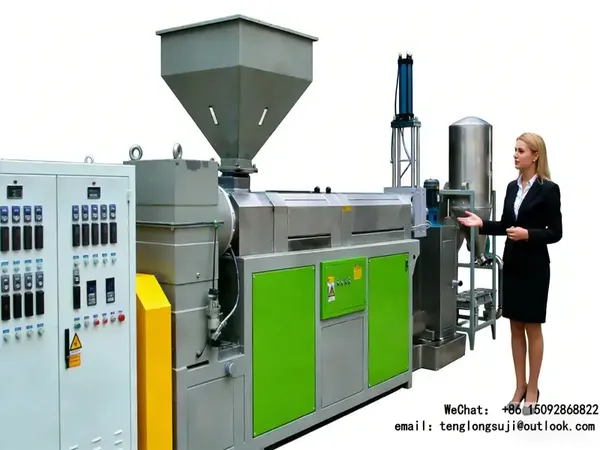
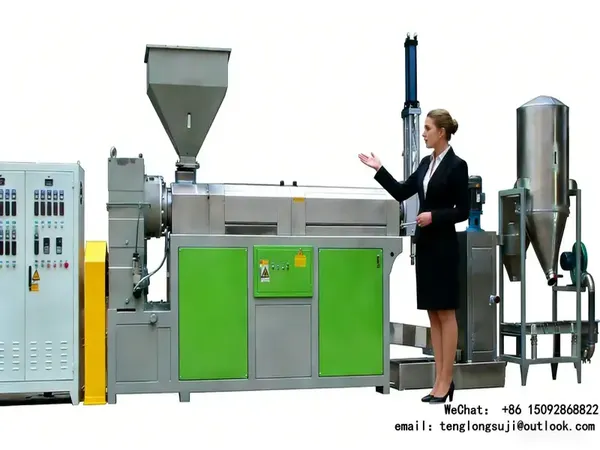
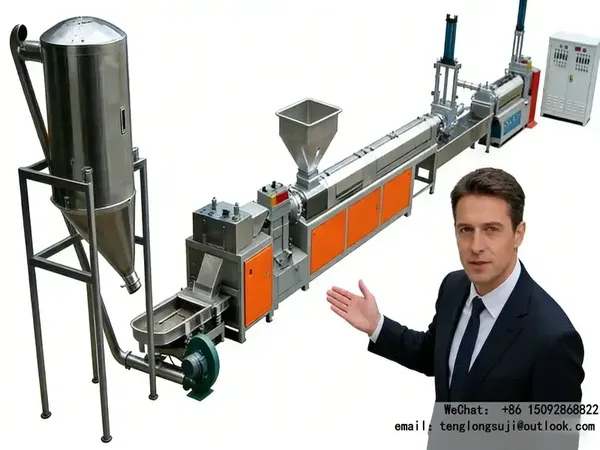
Plastic Bottle Recycling Machine
FAQ: Technical Questions for Engineers
- What is the difference between single-screw and twin-screw Plastic Bottle Recycling Machines?Twin-screw machines offer better mixing, higher throughput, and lower molecular degradation than single-screw machines, making them ideal for high-quality recycled material production. Single-screw machines are more cost-effective for small-scale, low-quality applications.
- How can I ensure the machine meets EU SUP Directive requirements?Select a machine with a high MRR (≥90%), advanced sorting systems to ensure EU-origin PCR content, and the ability to produce material with consistent MFI and IV levels.
- What is the typical lifespan of a Plastic Bottle Recycling Machine?With proper maintenance, a high-quality machine can last 10-15 years. Key components (screws, barrels) may need replacement every 5-7 years.
- Can the machine be scaled to handle increased capacity?Yes—most industrial machines are modular and can be upgraded with additional extruders, sorting systems, or drying units to increase throughput by 50-100%.
Conclusion
For environmental project engineers, selecting the right Plastic Bottle Recycling Machine requires a technical approach that balances processing capacity, energy efficiency, and material quality. By focusing on key parameters like MRR, EER, MFI, and IV, and implementing optimization strategies for pre-processing and maintenance, engineers can ensure their recycling projects are efficient, compliant, and sustainable. The EU’s upcoming changes to the SUP Directive make it more important than ever to invest in high-performance machines that can meet strict recycled content and quality requirements.
Take Action Now
Low-threshold lead generation: Download our free 《Small-Scale Post-consumer Plastic Recycling Startup Guide》 now to access detailed cost breakdowns, ROI calculators, and GRS certification tips.
High-intent sales conversion: Contact us for a free business plan consultation. we show you how our Plastic Bottle Recycling Machine can deliver consistent, high-quality pellets for your manufacturing needs.